
The Reality of Outlet EMF: Electric vs. Magnetic Fields
When homeowners and biohackers research how to block EMF from electrical outlet installations, they are usually confronting a misunderstanding of basic electromagnetics. Electromagnetic fields (EMF) emitted by standard wall receptacles are not a single phenomenon; they consist of two distinct forces: Electric Fields (EF) and Magnetic Fields (MF). According to the U.S. Environmental Protection Agency (EPA), electric fields are produced by voltage and are easily shielded by grounded conductive materials. Magnetic fields, however, are produced by current flow and pass right through standard building materials, requiring specialized mitigation or simple distance.
As of 2026, the building science community has moved past the 'snake oil' era of EMF mitigation. Blocking EMF from an outlet requires a systematic upgrade to grounded metal boxes, shielded cabling, and proper bonding techniques. This guide details the exact materials, measurements, and installation protocols required to create a truly low-EMF outlet environment, particularly for high-occupancy zones like bedrooms and home offices.
Assessing Your Baseline: Tools for Measuring Outlet EMF
Before tearing into your drywall or swapping receptacles, you must quantify the problem. You cannot mitigate what you do not measure. For residential outlet auditing, you need a combination meter capable of measuring both AC magnetic fields in milligauss (mG) and AC electric fields in Volts per meter (V/m).
- TriField TF2 ($179): The industry standard for prosumers. It measures magnetic, electric, and RF fields. For outlet EF, use the 'Electric' setting. A reading above 10 V/m near a bed is a prime candidate for shielding.
- Safe and Sound ME3030B ($195): A specialized low-frequency meter that isolates magnetic and electric fields with high precision, favored by European building biologists.
- Greenwave Broadband Meter ($159): Useful for measuring high-frequency voltage transients (HFVT), often colloquially called 'dirty electricity,' which ride along standard wiring.
Expert Baseline Target: For sleeping environments, building biology standards (such as the SBM-2015 guidelines) recommend keeping AC magnetic fields below 1.0 mG and AC electric fields below 5 V/m at the point of human contact.
Step-by-Step Upgrade Guide: How to Block EMF From Electrical Outlets
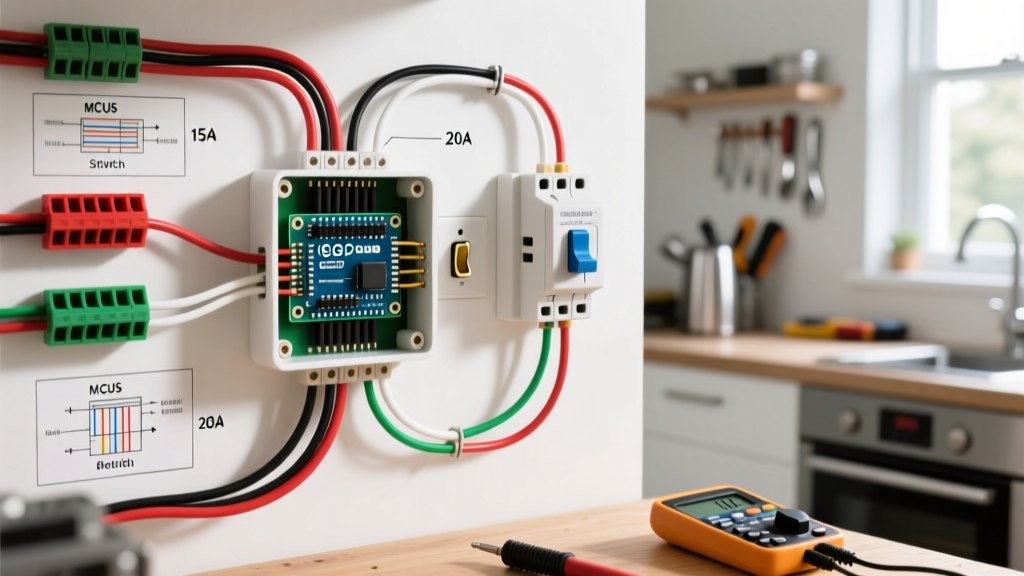
Upgrading an outlet for EMF shielding is not as simple as snapping on a plastic cover. It requires replacing the internal infrastructure. Below is the definitive 2026 protocol for shielding a standard 15A or 20A branch circuit.
Phase 1: Swapping Plastic Nail-On Boxes for Grounded Steel
Standard modern construction uses plastic PVC nail-on boxes (like the Carlon B618R). Plastic offers zero electric field shielding. To block EF, you must upgrade to a galvanized steel box, which acts as a Faraday cage when properly grounded.
- Shut off the breaker and verify zero voltage using a non-contact tester (e.g., Klein NCVT-4) and a multimeter.
- Extract the existing plastic box. This usually requires cutting the drywall slightly to free the nail brackets.
- Install a 4-inch square steel box (e.g., Raco 186 Steel Box, approx. $4.50). Use retrofit bracket mounts or secure it directly to the stud.
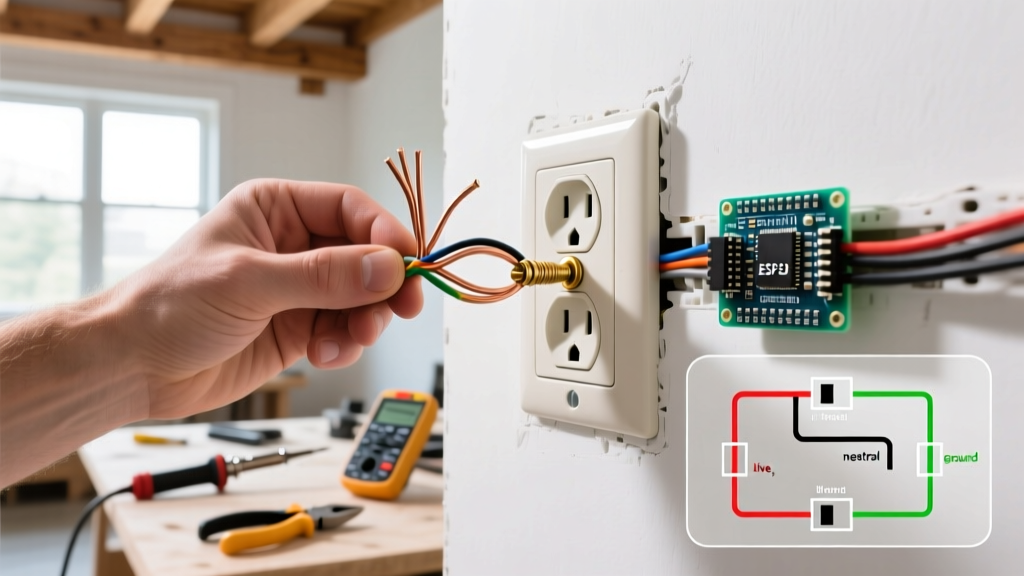
- Ensure the ground wire is bonded to the steel box using a green grounding screw and a pigtail. The box itself must be part of the continuous ground path to drain the electric field.
Phase 2: Upgrading to Shielded MC Cable
Standard NM-B (Romex) cable emits an electric field along its entire length because the plastic sheathing does not contain the voltage field. To truly block EMF from the electrical outlet's supply line, you must replace the NM-B feed with Metal Clad (MC) Cable.
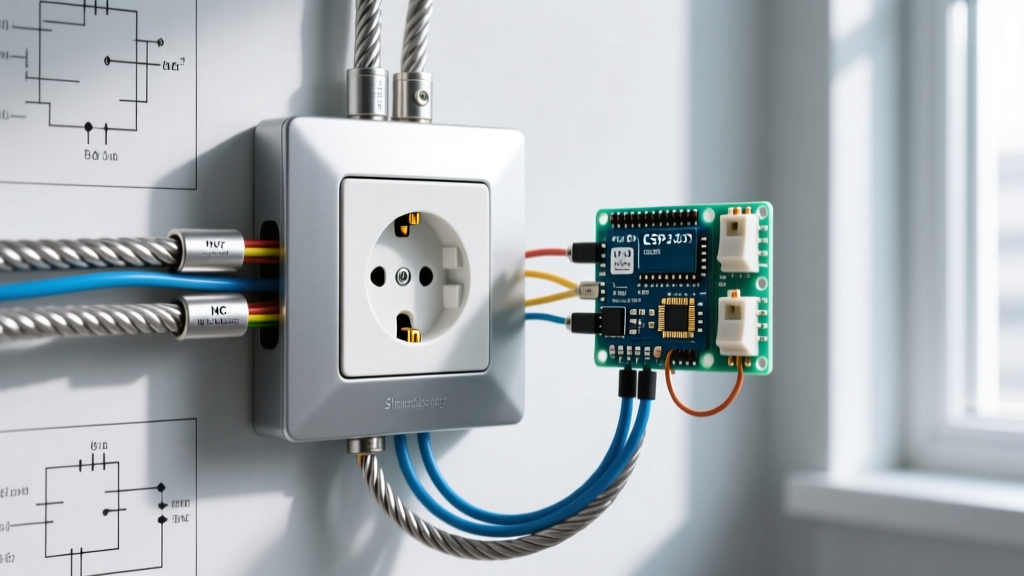
Southwire's MC cable features a continuous aluminum interlock armor. When this armor is properly bonded to the ground at both the panel and the receptacle box, it absorbs and drains the electric field. Note that MC cable does not block magnetic fields; to reduce magnetic fields, the hot and neutral wires inside the cable must carry equal and opposite current, which naturally cancels the magnetic field at a distance of just a few inches.
Phase 3: Receptacle Selection and EMI Filtering
For the receptacle itself, avoid expensive 'specialty EMF outlets' that are often just standard receptacles with a marketing markup. A high-quality commercial-grade Tamper Resistant (TR) receptacle, such as the Leviton 5320-WMP ($3.80), is ideal. Ensure the metal yoke of the receptacle makes firm contact with the steel box. If using a mud ring, use grounding clips to bond the receptacle yoke to the box.
If your area suffers from 'dirty electricity' (high-frequency noise from solar inverters or smart meters), install an inline EMI/RFI filter. The Corcom 3EQ1 ($45) is a medical-grade filter that can be wired behind the receptacle to clean high-frequency transients before they enter the room's local environment.
Material Cost & Product Comparison Matrix
Understanding the cost-to-benefit ratio of different shielding materials is critical for planning your upgrade budget. Below is a comparison of standard versus EMF-optimized materials.
| Component | Standard Material | EMF Shielded Upgrade | Cost Difference (per unit/ft) | Primary EMF Benefit |
|---|---|---|---|---|
| Wall Box | Carlon PVC Nail-On | Raco 186 Galvanized Steel | +$3.00 | Blocks Electric Fields (EF) |
| Branch Wiring | 14/2 NM-B (Romex) | 14/2 MC (Metal Clad) | +$0.90 / ft | Contains and drains EF |
| Receptacle | Residential Grade 15A | Commercial TR (Leviton 5320) | +$2.50 | Ensures solid yoke-to-box grounding |
| Dirty Electricity | None | Corcom 3EQ1 EMI Filter | +$45.00 | Filters HFVT noise on the line |
Common Failure Modes and Edge Cases in EMF Shielding
Even experienced electricians make mistakes when executing low-EMF upgrades. The National Institute of Environmental Health Sciences (NIEHS) notes that improper grounding can inadvertently exacerbate exposure issues. Avoid these critical failure modes:
- The Unbonded Armor Antenna Effect: If you install MC cable but fail to bond the aluminum armor to the ground bus in the main panel, the metal sheath acts as a giant antenna, picking up ambient RF and EF and radiating it directly into your room. The armor must be terminated with proper MC cable fittings and bonded to ground.
- Ground Loops: Creating multiple paths to ground between the neutral and ground wires downstream of the main panel will cause stray neutral currents to flow through your grounding system (including your steel boxes and MC armor). This generates a localized magnetic field. Always ensure neutral and ground are strictly separated at the subpanel and receptacle level.
- Misunderstanding Magnetic Fields: No standard outlet shield blocks 60Hz magnetic fields. If you measure high mG at an outlet, it is usually caused by a 'net current' imbalance (where the hot and neutral currents do not match, often due to a shared neutral multi-wire branch circuit error). Fixing the wiring topology is the only way to eliminate this; shielding tape will not work.
Expert FAQ: Grounding Myths and Shielding Realities
Do I need to paint the wall with EMF shielding paint behind the outlet?
No. Carbon-based EMF shielding paints (like Y-Shield) are designed to block high-frequency Radio Frequencies (RF) from cell towers and Wi-Fi routers. They do absolutely nothing to block the 60Hz low-frequency electric or magnetic fields emitted by the outlet itself. Stick to grounded steel boxes and MC cable for low-frequency mitigation.
Can I just use copper foil tape inside my existing plastic box?
While 3M 1181 copper foil tape is conductive, applying it inside a plastic box is a temporary and unreliable hack. The tape must be connected to a continuous ground wire, and the sharp edges inside a crowded plastic box often lead to torn tape, compromising the Faraday cage effect. A $4.50 steel box is vastly superior, safer, and code-compliant.
Will a GFCI outlet reduce EMF emissions?
No. A Ground Fault Circuit Interrupter (GFCI) monitors current leakage to protect against electrical shock. Its internal electronics actually draw a tiny amount of standby current and generate a very localized, low-level magnetic field. While necessary for code compliance in wet areas (kitchens, bathrooms), GFCIs are not EMF mitigation devices. For a bedroom outlet upgrade, a standard TR receptacle is preferred.