
The Hidden Hazards of Aging Thai Wall Sockets
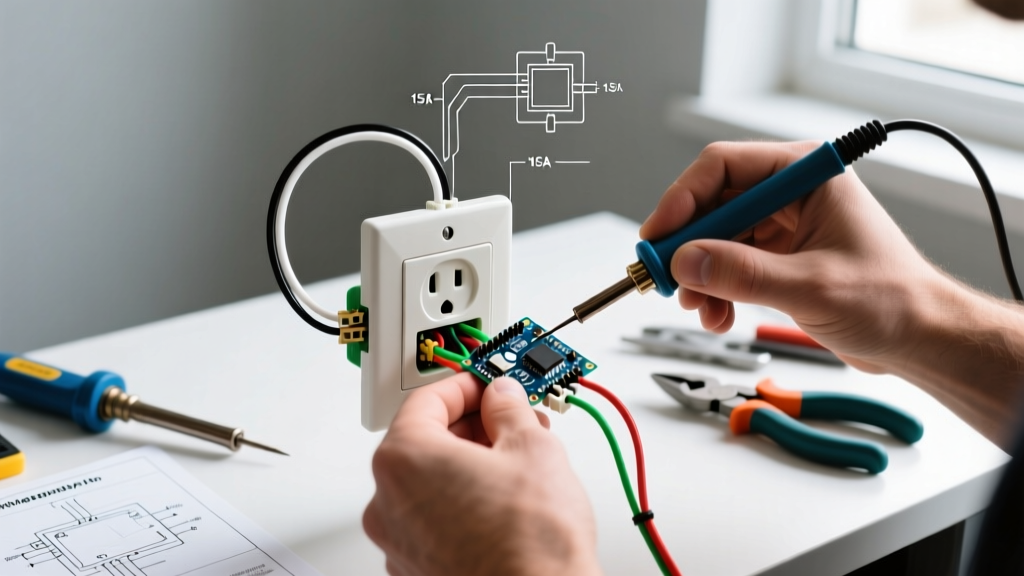
If you own property in Thailand or are managing a renovation in Bangkok, Chiang Mai, or Phuket, you have likely encountered the infamous 'universal' wall socket. Designed to accept Type A, B, C, and O plugs, these hybrid receptacles were installed by the millions in the 1990s and 2000s. However, as Thailand's electrical infrastructure has modernized, these multi-standard sockets have proven to be a significant fire and arcing hazard. The internal contact springs wear out rapidly when subjected to the heavy 16-ampere loads of modern air conditioners and microwaves, leading to loose connections, melted faceplates, and dangerous electrical arcing.
Upgrading your Thailand electrical outlet to a dedicated, modern standard is not just an aesthetic choice; it is a critical safety intervention. This comprehensive guide covers the transition from outdated hybrid sockets to dedicated Type O (TIS 166-2549) receptacles, modern smart outlets, and the critical wiring standards required for 220V/50Hz systems.
Understanding the Thailand Electrical Outlet Standards
Thailand officially adopted the Type O plug and socket standard (TIS 166-2549) in 2006, aligning closely with the European Type C but adding a dedicated grounding pin. The system operates on 220V at 50Hz. While the IEC World Plugs database recognizes Type O as the national standard, millions of older homes and condos still rely on ungrounded Type A/C hybrid sockets.
⚠️ SAFETY CALLOUT: The Grounding IllusionMany older Thai homes feature 3-pin hybrid sockets that look grounded but are actually wired with only Live and Neutral. Connecting a grounded appliance (like a washing machine) to these fake-ground sockets removes the path for fault currents, creating a severe shock hazard. Always verify the physical presence of an earth wire in the wall box before installing a true grounded receptacle.
Receptacle Comparison: Hybrid vs. Dedicated vs. Smart
| Feature | Legacy Hybrid (Universal) | Dedicated Type O (TIS Standard) | 220V Smart Outlet (e.g., Sonoff) |
|---|---|---|---|
| Plug Compatibility | Type A, B, C, O (Loose fit) | Type C, O (Secure fit) | Type C, O (Secure fit) |
| Max Current Rating | 10A - 16A (Degrades fast) | 16A Continuous | 10A - 16A (Relay dependent) |
| Arcing Risk | High (Poor contact tension) | Very Low | Low |
| Average Cost (THB) | 80 - 150 THB ($2 - $4) | 150 - 450 THB ($4 - $12) | 400 - 900 THB ($11 - $25) |
Step-by-Step Replacement Guide: Upgrading to Type O
When selecting a replacement, opt for high-quality brands manufactured to Thai Industrial Standards (TIS). The Panasonic WEG1101 and the Schneider Electric AvatarOn series are excellent, durable choices widely available at HomePro or Thai Watsadu. According to the Type O plug and socket standard guidelines, ensuring tight mechanical tolerance is key to preventing overheating at 220V.
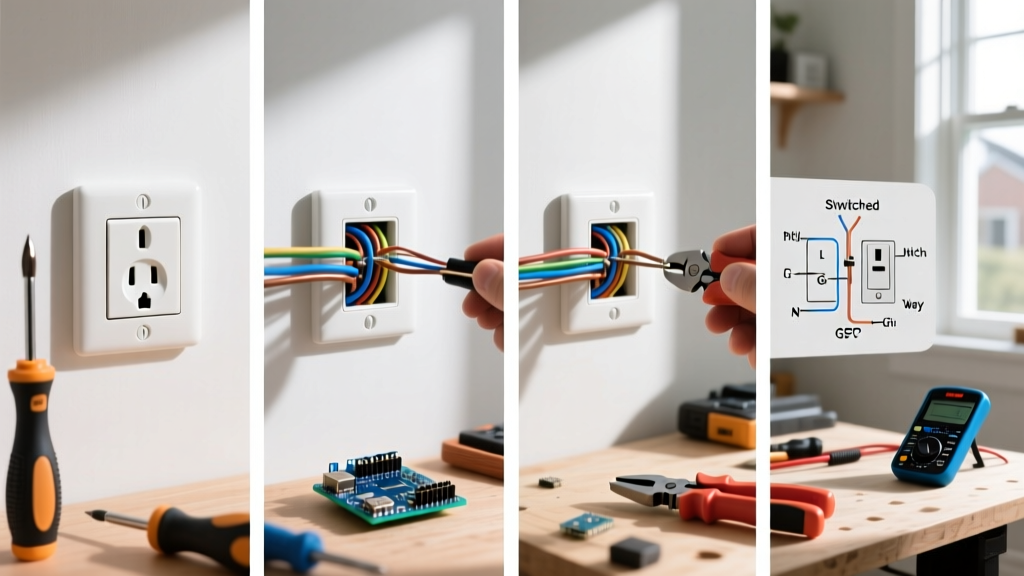
Phase 1: Isolation and Verification
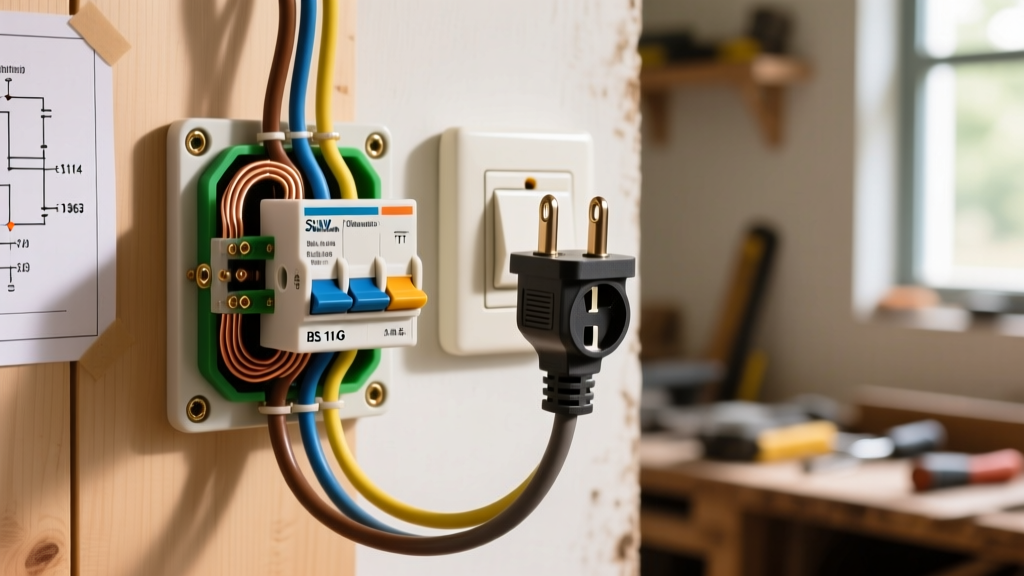
- Locate the Consumer Unit: Identify the specific MCB (Miniature Circuit Breaker) or RCBO (Residual Current Breaker with Overcurrent) controlling the room. In Thailand, earth leakage breakers are often colloquially referred to by the dominant local brand name, 'Safe-T-Cut'. Switch the breaker to the OFF position.
- Test for Voltage: Never assume the labeling is correct. Insert a non-contact voltage tester (such as the Fluke 1AC-II VoltAlert) into the top and bottom slots of the existing outlet. The tester must remain completely dark and silent.
- Remove the Faceplate: Use a Philips #2 screwdriver to remove the center mounting screw. Gently pry the faceplate off the wall using a flathead screwdriver wrapped in electrical tape to prevent scoring the paint.
Phase 2: Assessing the Wiring and TIS Color Codes
Thailand updated its wire color code standard (TIS 2432) to align with European IEC standards, but older homes will feature legacy colors. Identify your wires before disconnecting anything:
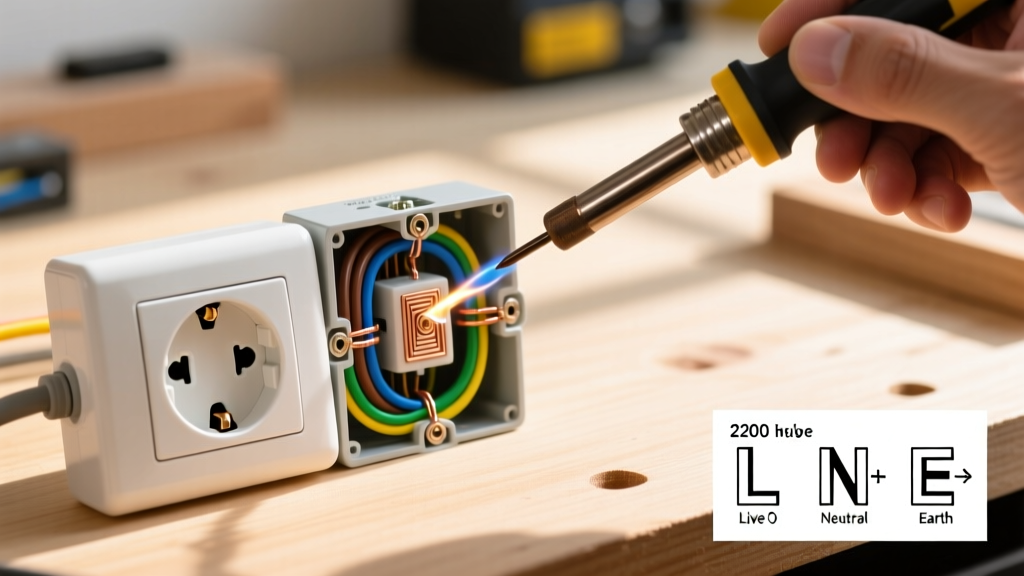
- Modern TIS 2432 Standard: Live/Phase = Brown, Neutral = Blue, Earth = Green/Yellow Stripe.
- Legacy Standard (Pre-2000s): Live/Phase = Red or Black, Neutral = White or Black, Earth = Solid Green.
Pro-Tip: If you encounter a legacy black wire for Live and a white wire for Neutral, wrap a piece of brown electrical tape around the black wire and blue tape around the white wire to update the visual coding for future electricians.
Phase 3: Termination and Mounting
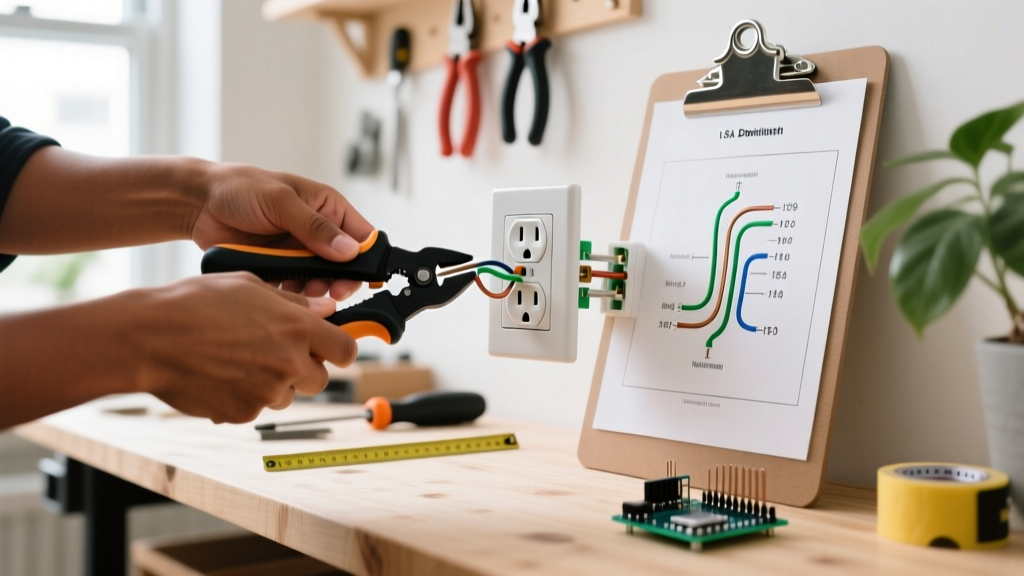
- Strip and Prep: Use precision wire strippers (like the Klein 11055) to strip exactly 12mm (1/2 inch) of insulation. Do not nick the copper conductor, as this creates a weak point that will snap under the torque of the terminal screw.
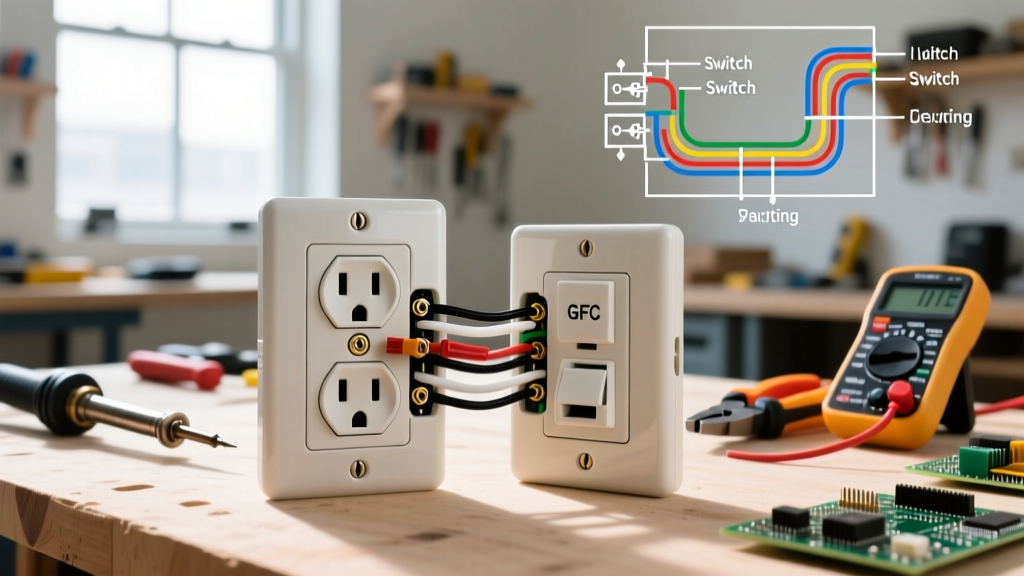
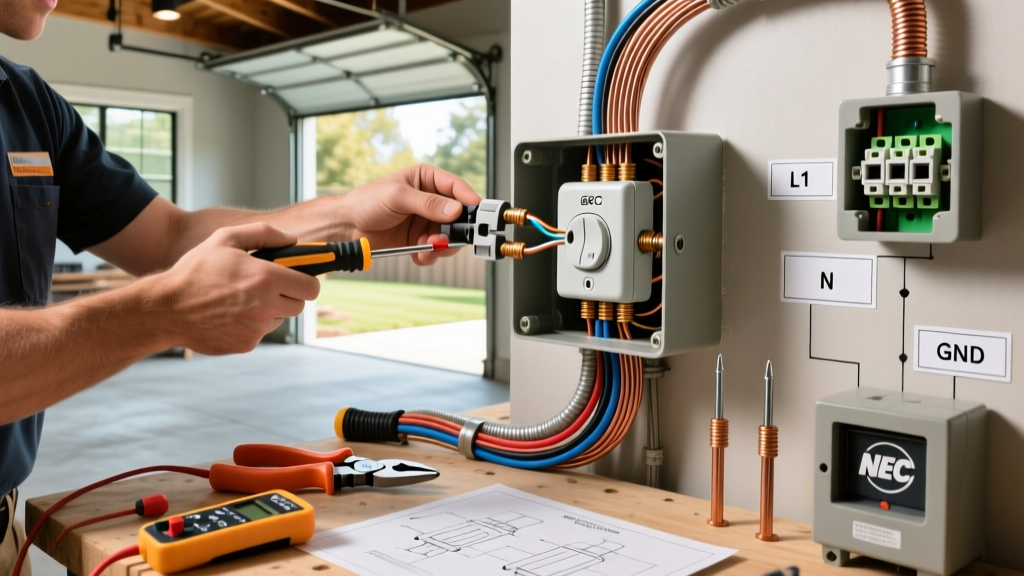
- Connect to the Type O Receptacle: Insert the Live (Brown/Red) into the L terminal, Neutral (Blue/White) into the N terminal, and Earth (Green-Yellow/Green) into the E or ground symbol terminal.
- Torque the Screws: Tighten the terminal screws firmly. For 16A receptacles, the ideal torque is between 0.5 Nm and 1.2 Nm. A loose screw will cause high resistance, leading to thermal runaway and melted plastic.
- Secure the Yoke: Push the wires neatly into the backbox using a star-pattern fold. Mount the receptacle yoke to the wall box using the provided M4 machine screws. Ensure the outlet is perfectly level before tightening the decorative faceplate.
The 'No Ground' Edge Case: What to Do in Older Thai Condos
A frequent challenge when upgrading a Thailand electrical outlet in buildings constructed before 2005 is the absence of an earth wire in the wall cavity. Pulling a new ground wire through concrete conduits is often impossible without major structural damage.
The RCBO Solution: If your wall box lacks a physical ground wire, you MUST NOT install a 3-pin grounded socket and leave the earth terminal empty. This creates a false sense of security. Instead, install a 2-pin dedicated Type C socket, OR ensure the circuit is protected by a highly sensitive 30mA RCBO at the main distribution board. The NFPA electrical safety guidelines emphasize that while an RCBO does not provide a true equipment ground, it will trip fast enough to prevent lethal electrocution in the event of a ground fault.
Upgrading to 220V Smart Outlets in Thailand
For tech-forward homes, replacing a standard wall socket with a smart outlet is a popular 2026 upgrade. When shopping for smart receptacles in Thailand, you must ensure the internal relay is rated for 220V-240V AC. Many cheap imports from global marketplaces are only rated for 110V (US standard) and will fail catastrophically when connected to the Thai grid.
Look for in-wall smart modules like the Shelly Plus 1PM or Sonoff MINI R3. These can be wired behind a standard Panasonic Type O faceplate, provided your wall box is deep enough (at least 45mm depth is recommended to accommodate the module and the 2.5mm² THHN wiring). Ensure the smart module supports 'dry contact' or 'edge switching' if you plan to use it with physical wall switches.
Final Inspection and Testing
Once the new Thailand electrical outlet is installed and the faceplate is secured, restore power at the consumer unit. Use a digital multimeter to verify the voltage between Live and Neutral reads between 215V and 230V. If you installed a grounded Type O socket, verify the voltage between Live and Earth is identical to Live and Neutral, and that Neutral to Earth reads close to 0V (typically less than 2V). Finally, press the 'TEST' button on your consumer unit's RCBO/Safe-T-Cut to ensure the earth leakage protection trips immediately, confirming your upgraded circuit is safe, modern, and fully compliant.