
Modernizing Kentucky Homes: The Outlet Upgrade Blueprint
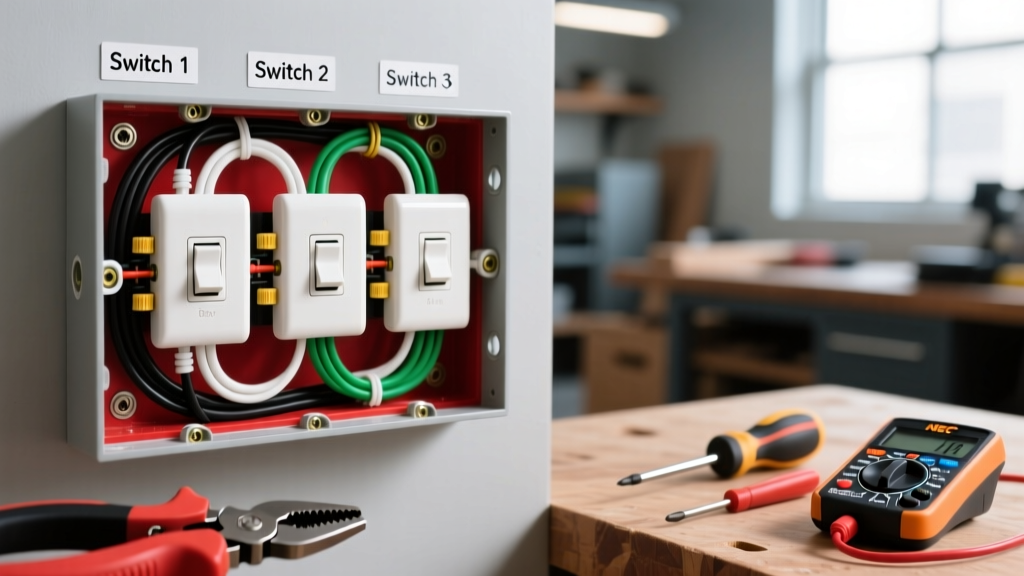
Kentucky’s housing stock is as diverse as its geography. From the historic 1920s shotgun houses in Louisville’s Highlands neighborhood to the mid-century ranches sprawling across Lexington, many Bluegrass State homes are operating on outdated electrical infrastructure. If you are planning an upgrade, understanding the nuances of electrical outlet installation Kentucky regulations, local labor rates, and modern safety codes is critical. Replacing a simple 15-amp duplex receptacle is no longer just about swapping plastic faceplates; it involves navigating Arc-Fault (AFCI) and Ground-Fault (GFCI) mandates, addressing ungrounded legacy wiring, and integrating high-amperage USB-C charging ports.
This 2026 upgrade and replacement guide provides actionable, code-compliant frameworks for Kentucky homeowners and DIY electricians looking to modernize their receptacle layouts safely and efficiently.
Kentucky Electrical Code Nuances for Outlet Upgrades
The state of Kentucky adopts the National Electrical Code (NEC) with specific state-level amendments through the Kentucky Department of Housing, Buildings and Construction (DHBC). When replacing or upgrading outlets, you are legally required to bring the specific circuit up to current safety standards. Here is what you must know for 2026:
- AFCI Requirements (NEC Article 210.12): If you are replacing an outlet in a bedroom, living room, hallway, or closet in an older Kentucky home, the circuit must now be protected by an Arc-Fault Circuit Interrupter (AFCI). If your panel lacks AFCI breakers, you must install an AFCI receptacle at the first outlet in the branch circuit to protect downstream devices.
- GFCI Expansion (NEC Article 210.8): Ground-Fault protection is mandatory in kitchens, bathrooms, garages, crawlspaces, and outdoor areas. Kentucky’s high summer humidity makes weather-resistant (WR) GFCI outlets strictly enforced for exterior patio and porch installations.
- Tamper-Resistant (TR) Mandate: Per NEC Article 406.12, all 15-amp and 20-amp, 125-volt receptacles in dwelling units must be listed as Tamper-Resistant. The internal shutter mechanism prevents children from inserting foreign objects. Standard non-TR outlets are illegal to install in Kentucky living spaces.
Cost Breakdown: Electrical Outlet Installation Kentucky (2026)
Labor rates for licensed electricians in Kentucky vary significantly between the urban corridors (Louisville, Lexington, Northern KY) and rural Appalachia or western regions. Below is a realistic 2026 pricing matrix for professional outlet upgrades, including materials and labor.
| Upgrade Scenario | Material Cost | Labor (Urban KY) | Labor (Rural KY) | Total Estimated Cost |
|---|---|---|---|---|
| Standard 15A TR Duplex (Like-for-Like) | $4 - $8 | $95 - $135 | $75 - $110 | $99 - $143 |
| 20A Kitchen/Bath GFCI Receptacle | $22 - $35 | $140 - $185 | $115 - $150 | $137 - $220 |
| USB-C / USB-A Combo Receptacle (15A) | $28 - $45 | $110 - $150 | $90 - $125 | $118 - $195 |
| 2-Prong to 3-Prong (GFCI Method) | $25 - $35 | $150 - $190 | $120 - $160 | $145 - $225 |
| 2-Prong to Grounded 3-Prong (Rewire) | $40 - $80 | $350 - $600+ | $280 - $450+ | $390 - $680+ |
Note: Urban rates reflect Jefferson, Fayette, and Boone counties. Rural rates reflect areas outside major metropolitan statistical areas. Panel upgrades or drywall repair are not included.
The 2-Prong Dilemma: Upgrading Ungrounded Kentucky Homes
Homes built in Kentucky before 1965 frequently feature ungrounded 2-prong receptacles or degraded knob-and-tube wiring. Homeowners often ask if they can simply swap a 2-prong outlet for a standard 3-prong outlet. The answer is no, unless specific NEC exceptions are met.
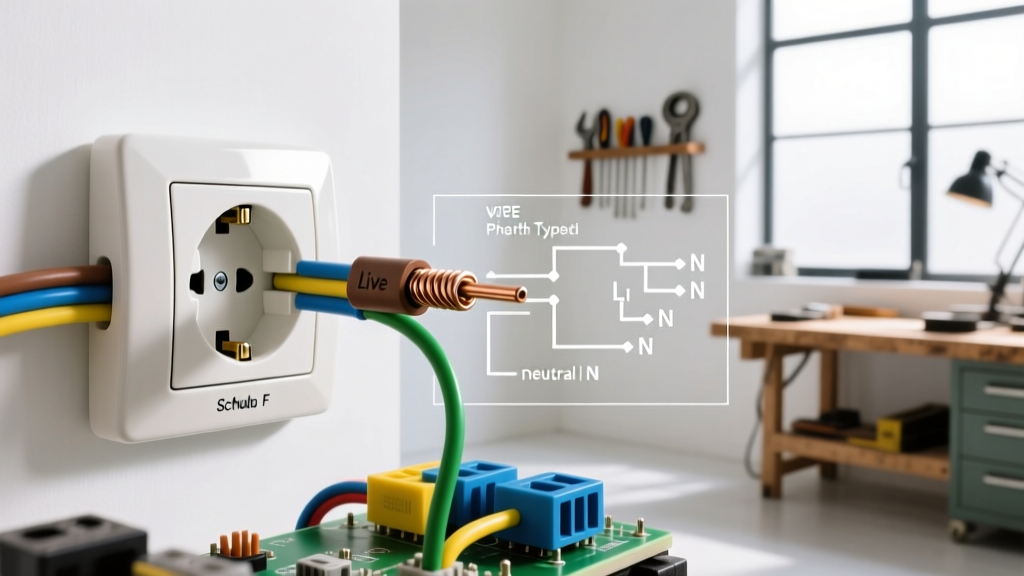
NEC Article 406.4(D) Warning: Installing a standard 3-prong outlet on an ungrounded circuit creates a severe shock hazard and a false sense of security. Surge protectors plugged into these outlets will fail to protect your electronics, as they require a true equipment grounding conductor (EGC) to divert voltage spikes.
Code-Compliant Replacement Methods
According to the National Fire Protection Association (NFPA 70), you have two legal paths for replacing ungrounded 2-prong outlets:
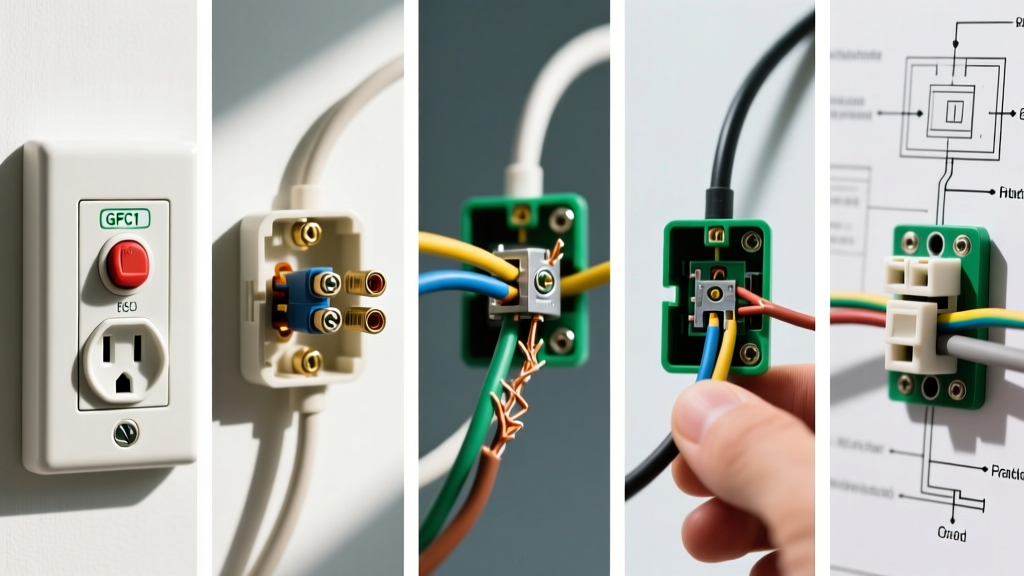
- The GFCI Protection Method (NEC 406.4(D)(2)(c)): You may install a GFCI receptacle (or protect the circuit with a GFCI breaker) and replace downstream 2-prong outlets with standard 3-prong receptacles. Crucial Step: You must apply the included "GFCI Protected" and "No Equipment Ground" stickers to the faceplates. This protects humans from shock but does not provide a ground for surge protectors.
- The True Ground Method (NEC 250.130(C)): To get a true equipment ground without rewiring the entire house, you can run a new bare copper or green insulated EGC from the outlet back to the main panel's grounding bus bar, or to a grounded metal water pipe that is bonded to the panel. This allows the use of sensitive electronics and surge suppression.
Top 2026 Outlet Upgrades for Modern Kentucky Living
When opening up the wall, maximize your investment by installing receptacles designed for modern power demands and Kentucky's specific climate challenges.
1. High-Wattage USB-C Receptacles (Leviton T5636)
With the universal adoption of USB-C for laptops, tablets, and smartphones, standard 5W USB-A outlets are obsolete. The Leviton T5636 delivers up to 30W of USB-C Power Delivery (PD) directly from the wall, alongside two standard 15A tamper-resistant plugs. This eliminates the need for bulky "wall warts" that block adjacent sockets.
2. Weather-Resistant (WR) Outlets for Humid Summers (Hubbell WR2097)
Kentucky summers bring intense humidity and severe thunderstorms. Standard outdoor outlets corrode rapidly, leading to internal arcing. The Hubbell WR2097 features UV-stabilized thermoplastic and nickel-plated brass contacts that resist corrosion. Always pair this with an extra-duty "in-use" bubble cover to meet NEC Article 406.9(B)(1) requirements for damp locations.
3. Point-of-Use Surge Receptacles (Eaton 3S15G)
Given Kentucky’s position in a high-lightning-density zone, whole-home surge protectors at the panel are recommended, but point-of-use protection adds a vital secondary layer. The Eaton 3S15G surge receptacle fits in a standard single-gang box and provides 150 joules of protection for expensive home office equipment, complete with an LED status indicator that alerts you when the MOV (Metal Oxide Varistor) has been depleted by a spike.
Permitting and Inspection in Kentucky
Do you need a permit for electrical outlet installation in Kentucky? The rule of thumb dictated by the Kentucky DHBC is based on the scope of work:
- No Permit Required: Like-for-like replacement of existing receptacles (e.g., swapping a broken 15A TR outlet for a new 15A TR outlet on an already grounded, code-compliant circuit).
- Permit Required: Adding new outlet circuits, upgrading a 2-prong ungrounded system to a grounded system, or installing new GFCI/AFCI circuits where none existed previously. In counties like Jefferson (Louisville), all electrical work, including minor replacements, technically requires a licensed contractor to pull a permit, whereas homeowner permits may be available in rural jurisdictions if you pass a competency exam.
Frequently Asked Questions (FAQ)
Can I use a 20-amp outlet on a 15-amp circuit in my Kentucky kitchen?
No. While you can install a 15-amp receptacle on a 20-amp circuit (per NEC 210.21(B)(3)), you cannot install a 20-amp receptacle (identified by the T-shaped neutral slot) on a 15-amp circuit. The breaker will not trip if a device drawing 18 amps is plugged in, potentially melting the 14-gauge wire inside your walls. Always match the receptacle rating to the breaker and wire gauge.
Are smart outlets legal for hardwired kitchen appliances?
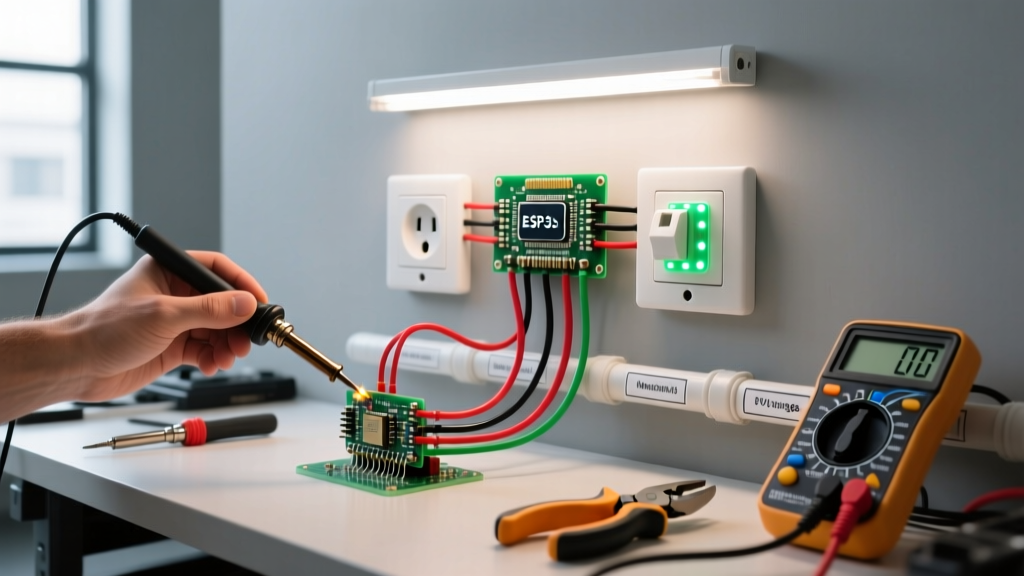
Smart receptacles, like the Lutron Caseta or Eve Energy, are excellent for lamps and living room electronics. However, NEC Article 210.23 restricts the use of plug-in smart switches for major kitchen appliances (refrigerators, dishwashers, microwaves) due to the risk of the smart relay failing under continuous high-amperage loads or accidentally being turned off via an app, spoiling food or disrupting cycles.
How do I test if my older Lexington home has a true ground?
Do not rely solely on a cheap $10 neon receptacle tester. Older homes sometimes feature "bootleg grounds"—an illegal jumper wire connecting the neutral terminal to the ground terminal behind the outlet to trick inspectors. To verify a true ground, use a digital multimeter. Measure the voltage between the Hot (short slot) and Ground (U-shaped hole). It should read ~120V. Then measure Neutral (long slot) to Ground; it should read less than 2V. If Hot-to-Ground reads 0V, you have an open or missing ground.