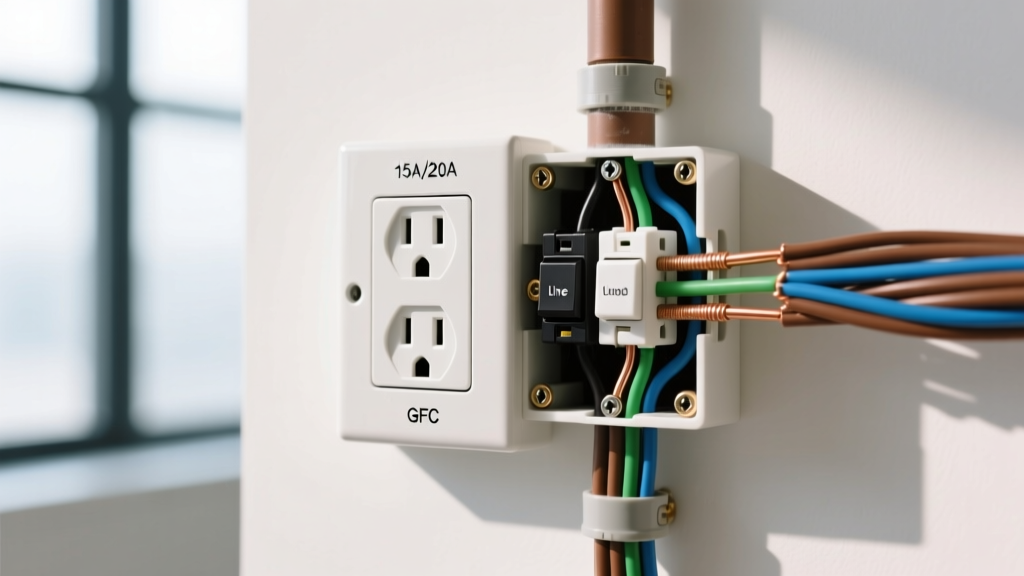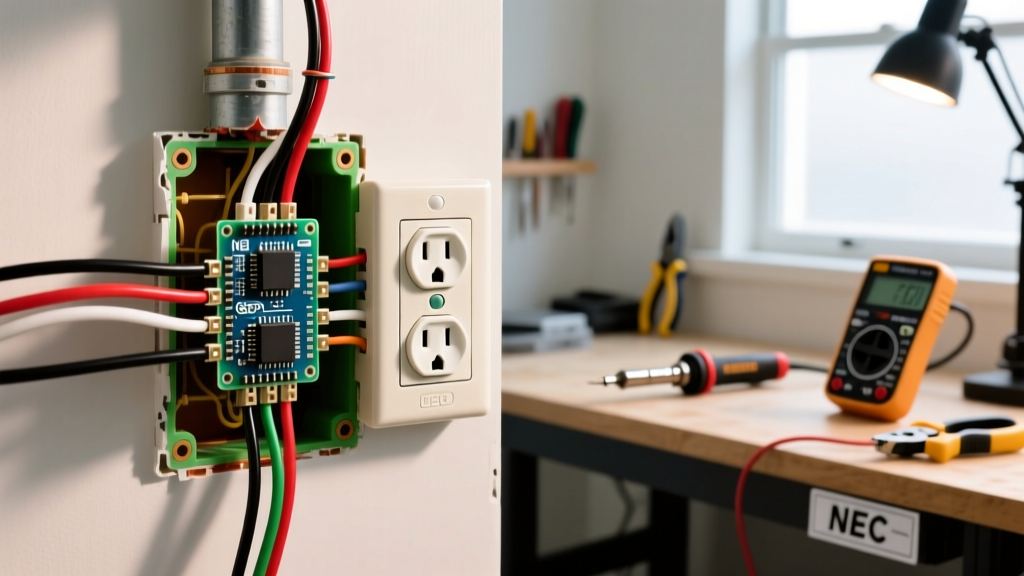

Why Inspecting a 4-Prong Electrical Outlet is Critical
With the massive surge in Level 2 EV chargers and high-efficiency electric dryers, the 4-prong electrical outlet (specifically NEMA 14-50 and 14-30 configurations) has become a staple in modern residential electrical systems. However, a poorly installed or degraded 4-prong receptacle is a leading cause of high-amperage electrical fires. Unlike standard 15A duplex receptacles, a 4-prong electrical outlet handles continuous loads of 40A to 50A, meaning any loose connection generates severe resistive heating.
According to the Department of Energy, home EV charging infrastructure must be treated as continuous-duty industrial equipment. In this 2026 inspection guide, we will walk through the exact professional methodology for visually inspecting, mechanically verifying, and electrically testing a 4-prong electrical outlet to ensure it meets modern safety and code requirements.
Essential Tools for 4-Prong Outlet Testing
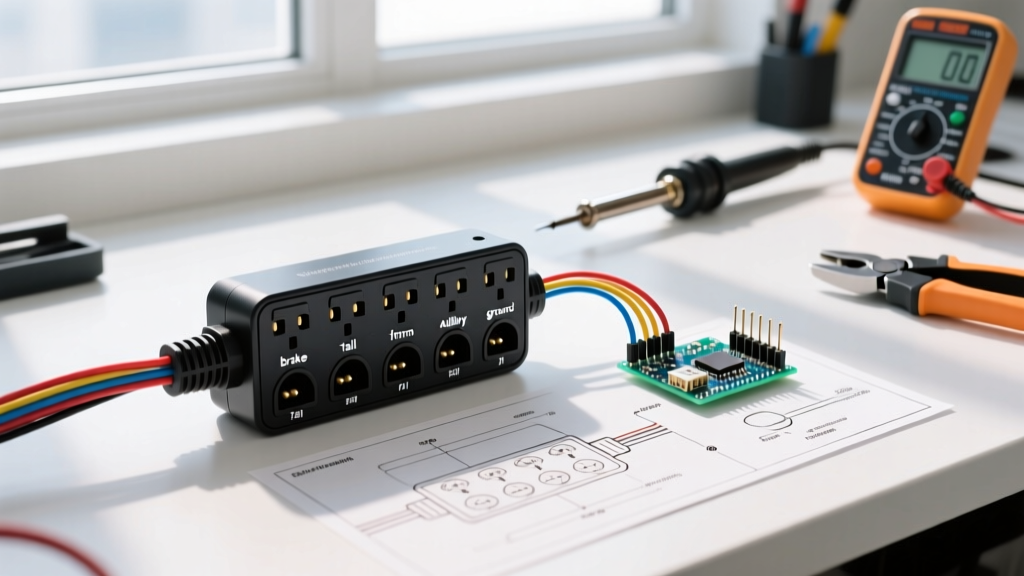
Standard plug-in receptacle testers are insufficient for diagnosing high-amperage 4-prong circuits under load. To perform a comprehensive inspection, you need precision diagnostic equipment. Below is the recommended toolkit for professional-grade testing.
| Tool | Recommended Model | Avg Cost (2026) | Purpose |
|---|---|---|---|
| Digital Multimeter | Fluke 117 True RMS | $190 - $210 | AC Voltage, Continuity, & Frequency |
| Torque Screwdriver | Wiha 28506 (45 in-lbs) | $130 - $150 | Verifying terminal screw tension |
| Thermal Camera | FLIR C5 or Seek Thermal | $250 - $400 | Load heat mapping & hotspot detection |
| Receptacle Tester | Klein Tools RT250 | $45 - $55 | Basic GFCI and wiring fault check |
Visual & Mechanical Inspection: Catching Failure Modes
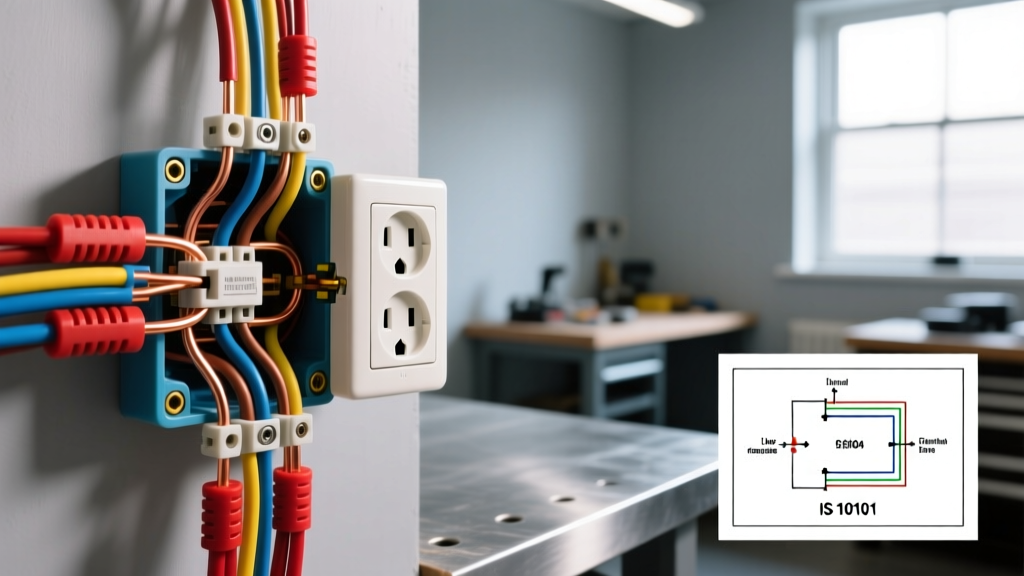
Before applying power, the physical installation of the 4-prong electrical outlet must be scrutinized. The most common failure mode in NEMA 14-50 installations is terminal arcing caused by inadequate clamping force or improper wire preparation.
The Hubbell vs. Leviton Debate
For standard dryer use, a residential-grade Leviton 278-S00 (approx. $12) is often sufficient. However, for EV chargers drawing a continuous 40A load for 8+ hours, industry experts overwhelmingly recommend the industrial-grade Hubbell 9450A (approx. $45). The Hubbell features a much higher clamping force and superior internal contact geometry, which prevents the heavy EV plug from sagging and creating high-resistance arcing points.
Mechanical Inspection Checklist
- Wire Stripping Length: Ensure exactly 5/8-inch of insulation is stripped. Exposed copper outside the terminal housing is a severe shock and short-circuit hazard.
- Terminal Torque: NEC 2023 and 2026 codes strictly mandate the use of a listed torque screwdriver. Hubbell specifies 45 in-lbs for their 14-50R terminal screws. Hand-tightening is no longer compliant.
- Strain Relief: Verify that the cable clamp in the gang box is securing the outer jacket of the 6 AWG (or 10 AWG for 30A) ROMEX/THHN, not just the individual conductors.
- Box Fill Volume: A standard single-gang box is illegal for a 14-50. You must use an extra-duty, deep two-gang or specialized 4x4 metallic box to accommodate the thick 6 AWG bending radius.
Step-by-Step Multimeter Testing Guide
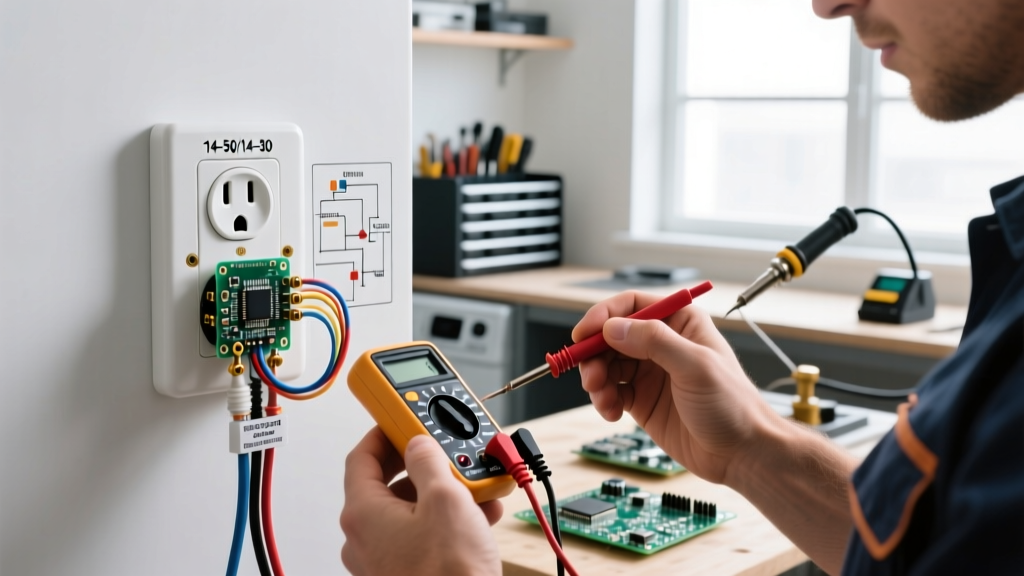
Once the mechanical inspection passes and the breaker is energized, it is time to verify the electrical characteristics. Set your True-RMS multimeter to AC Voltage (V~) with a range of at least 200V. Always wear arc-flash rated PPE and follow OSHA electrical safety guidelines when probing live high-amperage terminals.
- Hot 1 (X) to Hot 2 (Y): Insert probes into the two vertical hot slots. You should read exactly 240V (±5%). If you read 120V, both breaker poles are on the same phase leg (a critical installation error).
- Hot 1 (X) to Neutral (W): Probe the right hot slot and the top horizontal neutral slot. Expected reading: 120V.
- Hot 2 (Y) to Neutral (W): Probe the left hot slot and the neutral slot. Expected reading: 120V.
- Hot 1 (X) to Ground (G): Probe the right hot and the bottom U-shaped ground. Expected reading: 120V.
- Hot 2 (Y) to Ground (G): Probe the left hot and the ground. Expected reading: 120V.
- Neutral (W) to Ground (G): This is the most critical safety test. The reading must be less than 2V. A reading of 120V indicates an open neutral or a dangerous bootleg ground where the neutral and ground are improperly bonded downstream.
Voltage Matrix: NEMA 14-50 vs. 14-30
| Test Points | NEMA 14-50 (50A) | NEMA 14-30 (30A) | Failure Indication |
|---|---|---|---|
| Hot X to Neutral W | 120V (±5%) | 120V (±5%) | Open neutral or dropped leg |
| Hot Y to Neutral W | 120V (±5%) | 120V (±5%) | Open neutral or dropped leg |
| Hot X to Hot Y | 240V (±5%) | 240V (±5%) | Single-phasing or breaker fault |
| Neutral W to Ground G | < 2V | < 2V | Bootleg ground or neutral bond |
NEC Code Compliance & The GFCI Nuance
2026 NEC Code Alert: Under recent NFPA 70 updates, 4-prong electrical outlets installed in garages for EV charging require GFCI protection. Because many EVSE units have internal DC leakage detection that conflicts with standard AC GFCI breakers, nuisance tripping is a massive issue. The 2026 industry best practice is to hardwire the EVSE directly (bypassing the 4-prong receptacle) or use a specialized EV-rated GFCI breaker to maintain compliance without interrupting charge cycles. Read more at the NFPA 70 NEC portal.
If you are testing an existing 4-prong outlet in a garage and the GFCI breaker trips immediately upon plugging in an EV charger, do not assume the outlet is wired incorrectly. The internal capacitors and power supplies of the EVSE are often misinterpreted by standard 5mA GFCI breakers as a ground fault. Upgrading to a 30mA EV-specific GFCI breaker or hardwiring the unit are the only code-compliant solutions.
Load Testing & Thermal Imaging
A 4-prong electrical outlet might show perfect voltages with no load, but fail catastrophically when pulling 40 continuous amps. After initiating an EV charge cycle or running a dryer on high heat, use a thermal camera to scan the receptacle face and the breaker panel after 30 minutes of operation.
- Normal Operation: The receptacle face should remain within 15°F of ambient room temperature.
- Warning Zone: A temperature delta of 30°F to 50°F above ambient indicates loose terminal screws or oxidized contacts. Power down and re-torque to 45 in-lbs.
- Critical Failure: Any reading exceeding 140°F (60°C) means the plastic housing is approaching its melting point. Immediately replace the receptacle with a Hubbell 9450A and inspect the wire insulation for heat damage.
Troubleshooting Common 4-Prong Faults
| Symptom | Probable Cause | Actionable Fix |
|---|---|---|
| EV Charger stops at 80% or throttles down | Voltage drop under load due to undersized wire or long run | Verify 6 AWG copper run; upgrade to 4 AWG if the run from the panel exceeds 50 feet to keep voltage drop under 3%. |
| Breaker trips instantly upon plugging in | Neutral-Ground bond downstream or GFCI incompatibility | Isolate neutral bar in subpanels; ensure ground and neutral are strictly separated. Check for EV-specific GFCI requirements. |
| Receptacle face warps or melts over time | Terminal torque below 45 in-lbs or using residential-grade 14-50R | Replace with industrial Hubbell 9450A; torque to exact manufacturer specs using a calibrated dial screwdriver. |
| Multimeter reads 120V Hot-to-Hot | Both breaker poles landed on the same phase bus bar | Move the 2-pole breaker to an adjacent slot so it spans across both alternating phase legs in the main panel. |
Frequently Asked Questions
Can I use a 4-prong electrical outlet for an older 3-prong dryer?
Yes, but you must use a UL-listed 4-prong to 3-prong adapter cord. When doing so, you must remove the bonding strap inside the dryer's terminal block and ensure the adapter's ground pigtail is properly bonded to the dryer chassis. Never use a cheater plug that leaves the equipment ungrounded.
Why does my 4-prong outlet read 0V on the Neutral to Ground test, but my EV charger still throws a fault code?
Many modern EVSE units perform an active impedance test on the ground wire, not just a voltage check. If your ground wire is undersized (e.g., using 14 AWG ground instead of the required 10 AWG or 8 AWG for a 50A circuit), the EVSE will detect high ground-path impedance and refuse to charge, even if a standard multimeter shows 0V potential difference.
How often should I re-torque the terminals on a 14-50 outlet?
For continuous-duty applications like EV charging, it is highly recommended to perform a thermal scan and mechanical torque check annually. Copper wire undergoes thermal expansion and contraction cycles (creep), which can gradually reduce terminal clamping force over 12 to 18 months of heavy use.