
The 2026 Landscape of Home EV Charging
As electric vehicle adoption accelerates in 2026, upgrading your home's electrical infrastructure is no longer a luxury—it is a necessity for reliable daily commuting. A proper tesla electric outlet installation bridges the gap between a sluggish Level 1 trickle charge and a high-speed Level 2 experience that replenishes your battery overnight. Whether you are replacing an aging dryer outlet or commissioning a brand-new 60-amp dedicated circuit, understanding the nuanced differences between receptacle-based and hardwired setups is critical for safety, efficiency, and long-term reliability.
According to the U.S. Department of Energy, over 80% of EV charging occurs at home, making the integrity of your 240-volt circuit paramount. This guide dissects the technical specifications, National Electrical Code (NEC) mandates, and real-world costs associated with upgrading your Tesla charging infrastructure this year.
NEMA 14-50 Receptacle vs. Hardwired Wall Connector
The first major decision in your upgrade path is choosing between a plug-in NEMA 14-50 receptacle and a hardwired Tesla Wall Connector (Gen 3). While a receptacle offers portability, a hardwired setup delivers superior electrical performance and fewer code-related headaches.
| Feature | NEMA 14-50 Receptacle | Hardwired Wall Connector (Gen 3) |
|---|---|---|
| Max Breaker Size | 50 Amps | 60 Amps |
| Continuous Charge Rate | 40 Amps (9.6 kW) | 48 Amps (11.5 kW) |
| Wire Gauge Required | 6 AWG Copper (NM-B) | 4 AWG Copper (or 6 AWG THHN in conduit) |
| GFCI Breaker Required? | Yes (NEC Article 625) | No (Built-in ground fault protection) |
| Portability | High (Unplug and take with you) | None (Fixed installation) |
| Estimated 2026 Install Cost | $450 - $850 | $600 - $1,200 |
The Verdict on Performance
If your electrical panel has the capacity for a 60-amp double-pole breaker, the hardwired route is unequivocally the superior choice. Hardwiring eliminates the physical connection points that generate heat, reduces voltage drop, and bypasses the costly GFCI breaker requirement mandated for receptacles in garages.
Critical Component Selection: Avoiding the 14-50 Melt Hazard
If you opt for the plug-in route, your choice of receptacle is the single most important safety decision you will make. For years, electricians routinely installed standard residential-grade Leviton 14-50 receptacles for EV charging. In 2026, this practice is widely recognized as a severe fire hazard.
WARNING: Standard residential 14-50 receptacles are not engineered for the continuous, high-amperage draw of EV charging. Using a cheap receptacle can lead to thermal runaway, melting the plastic housing and potentially igniting surrounding materials.
The Industrial-Grade Solution
For a safe tesla electric outlet installation, you must specify an industrial-grade receptacle. The industry gold standards are the Hubbell 9450A or the Bryant 9450FR. These units feature massive brass contacts and high-temperature thermoset housings designed to dissipate heat under continuous 40-amp loads. Expect to pay between $85 and $130 for the receptacle alone—a worthwhile premium over the $12 residential alternatives.
Torque Specifications Matter
NEC 110.14(D) strictly requires that terminal connections be torqued to the manufacturer's specifications. For the Hubbell 9450A, the terminal screws must be tightened to exactly 75 inch-pounds using a calibrated torque screwdriver. Under-torqued connections create micro-arcing and excessive resistance, leading to localized heating and eventual failure.
The GFCI Breaker Dilemma and NEC Code Compliance
One of the most frustrating aspects of modern EV charging installations is the GFCI (Ground Fault Circuit Interrupter) requirement. Under recent iterations of the NEC, specifically enforced in most municipalities by 2026, any 14-50 receptacle installed in a garage or outdoors must be protected by a GFCI breaker.
- The Cost Factor: A 50-amp, 240-volt GFCI breaker costs between $150 and $220, significantly inflating your material costs.
- The Nuisance Trip Factor: EV chargers and GFCI breakers both utilize internal ground-fault monitoring. This redundancy often causes 'nuisance tripping,' where the breaker shuts off randomly due to minor, harmless electrical noise generated by the vehicle's onboard charger.
The Hardwired Loophole: The Tesla Wall Connector features integrated ground fault protection that meets and exceeds NEC requirements. Because it is hardwired directly to the panel, it is not classified as a 'receptacle,' thereby exempting the circuit from the GFCI breaker mandate. This saves you money and eliminates the headache of nuisance tripping.
Step-by-Step Tesla Electric Outlet Installation Workflow
Upgrading your circuit requires meticulous planning and strict adherence to electrical codes. Here is the professional workflow for a 2026-compliant installation.
- Perform a Load Calculation: Before adding a 50A or 60A load, calculate your home's existing electrical demand per NEC Article 220. If your home has a 100-amp main service, you will likely need a panel upgrade to 200 amps before proceeding.
- Verify Panel Space: Ensure you have two adjacent, available slots in your main service panel for the double-pole breaker.
- Route the Conductor: For a 50A NEMA 14-50, pull 6 AWG copper NM-B (Romex) or 6 AWG THHN in conduit. For a 60A hardwired setup, pull 4 AWG copper NM-B or 6 AWG THHN in conduit. Maintain a minimum of 1.25 inches of clearance from the edge of framing members when drilling studs.
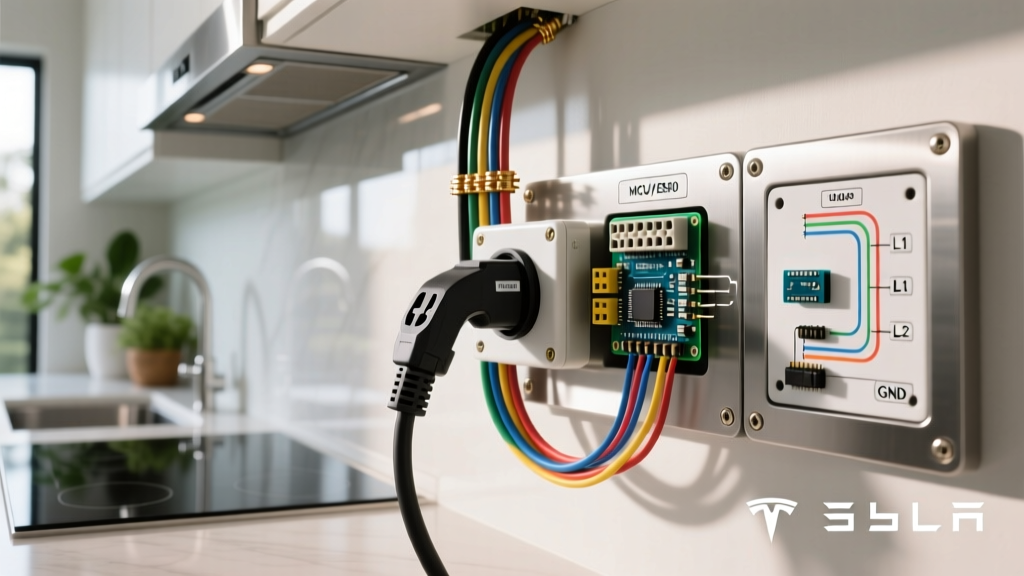
- Terminate at the Panel: Connect the black and red hot wires to the double-pole breaker, the white neutral wire to the neutral busbar (for 14-50 only; hardwired Wall Connectors do not require a neutral), and the bare copper to the ground busbar. Torque all lugs to the panel manufacturer's specifications.
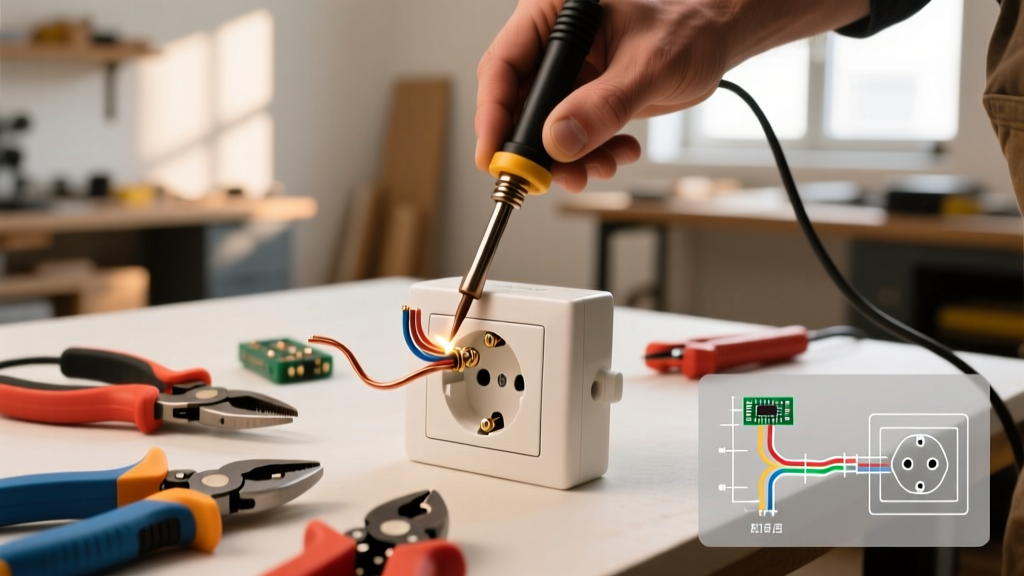
- Terminate at the Receptacle/Whip: Strip the wires to the exact length specified by the device manufacturer. Secure the wires under the terminal plates and apply the precise torque setting using a calibrated torque screwdriver.
- Test and Commission: Use a digital multimeter to verify 240V across the hot terminals and 120V from each hot to ground/neutral. Plug in the Mobile Connector or power on the Wall Connector and initiate a test charge while monitoring the breaker and receptacle temperature with an infrared thermal camera for the first 30 minutes.
2026 Cost Breakdown: What to Expect
Pricing for electrical work has stabilized in 2026, though regional variations persist based on local labor rates and permitting fees. Below is a realistic cost matrix for a standard residential upgrade.
| Installation Scenario | Materials (Avg) | Labor & Permitting | Total Estimated Cost |
|---|---|---|---|
| Basic 14-50 (Near Panel) | $180 - $250 | $300 - $500 | $480 - $750 |
| 14-50 (Long Run, Conduit) | $350 - $600 | $500 - $900 | $850 - $1,500 |
| Hardwired 60A (Near Panel) | $200 - $300 | $400 - $600 | $600 - $900 |
| Main Panel Upgrade (200A) | $1,200 - $1,800 | $1,500 - $2,500 | $2,700 - $4,300 |
Note: Always check with your local utility provider. Many municipalities and utility companies offer rebates ranging from $250 to $1,000 for installing smart, Wi-Fi-enabled Level 2 chargers, which can drastically offset your hardwired installation costs.
Final Thoughts on Safety and Longevity
A tesla electric outlet installation is not a standard appliance hookup; it is the creation of a continuous-duty, high-current microgrid within your home. Cutting corners on wire gauge, bypassing torque specifications, or utilizing residential-grade receptacles will inevitably lead to thermal degradation and system failure. By prioritizing industrial-grade components, understanding the implications of NEC GFCI mandates, and choosing the hardwired route when panel capacity allows, you ensure a safe, rapid, and future-proof charging experience for years to come. For comprehensive safety standards and code definitions, always refer to the National Fire Protection Association's NEC guidelines or consult a licensed master electrician in your jurisdiction.