
Navigating Taiwan's Unique Electrical Infrastructure
Installing or replacing a Taiwan electrical outlet requires more than just basic wiring knowledge; it demands an understanding of the island's specific electrical grid, construction methods, and safety standards. Taiwan operates on a 110V, 60Hz alternating current (AC) system, which is electrically compatible with North American standards. However, the physical installation environment—particularly the reinforced concrete (RC) wall structures and the transition from legacy ungrounded systems to modern grounded networks—presents unique challenges for DIYers and electricians alike.
Whether you are upgrading an older apartment in Taipei or wiring a new build in Kaohsiung, this comprehensive guide will walk you through the step-by-step installation of a grounded Type B receptacle, ensuring compliance with local safety regulations and optimal long-term performance.
Taiwan Grid & Outlet Quick Specifications
- Voltage: 110V (Nominal)
- Frequency: 60Hz
- Primary Plug Types: Type A (NEMA 1-15, ungrounded) and Type B (NEMA 5-15, grounded)
- Regulatory Body: Bureau of Standards, Metrology and Inspection (BSMI)
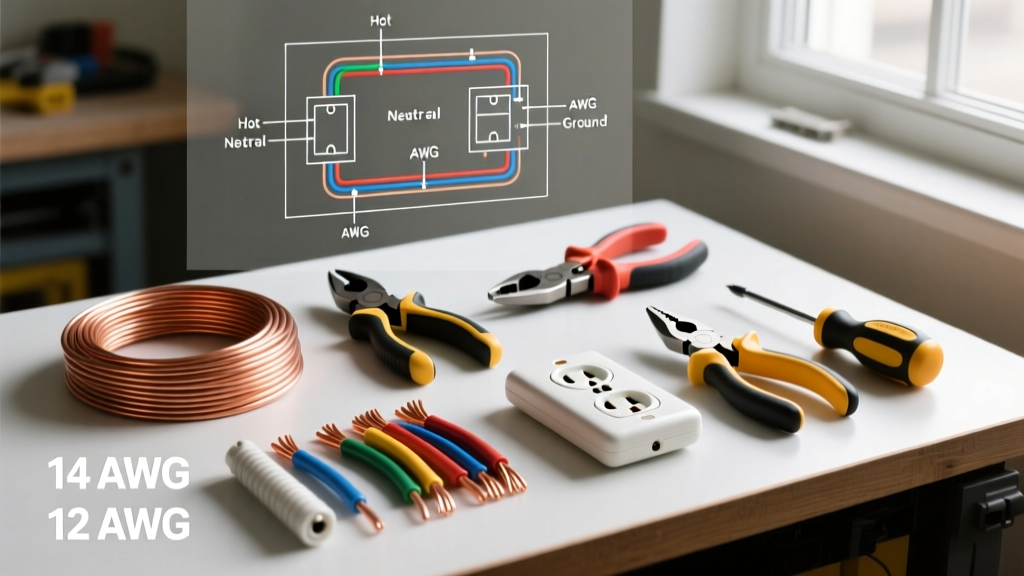
- Standard Wire Gauge: 12 AWG (for 20A circuits) or 14 AWG (for 15A circuits)
Source: CIA World Factbook - Taiwan Energy & Infrastructure
Tools and BSMI-Certified Materials Required
Before beginning any electrical work, ensure you have the correct tools and materials. In Taiwan, all electrical fixtures sold legally must carry the BSMI certification mark. Using uncertified, cheap imports can lead to poor terminal contact, arcing, and fire hazards.
Essential Tool List
- Non-Contact Voltage Tester (NCVT): Essential for verifying power isolation.
- Wire Strippers: Calibrated for 12 AWG and 14 AWG solid copper wire.
- Phillips Head Screwdriver (#2): For terminal and yoke screws.
- Needle-Nose Pliers: For forming precise J-hooks on solid wire.
- Tape Measure & Utility Knife: For precise insulation stripping.
- Torque Screwdriver (Optional but Recommended): To meet modern BSMI terminal tightening specifications.
Material Selection
Purchase a BSMI-certified NEMA 5-15R duplex receptacle. Brands like Panasonic, Legrand, and local manufacturers like Taihan dominate the Taiwanese market. Ensure the receptacle features 'back-wire' clamping plates rather than simple push-in stab connectors, which are notorious for failing under heavy thermal loads (like space heaters or high-wattage kitchen appliances).
Understanding Taiwan CNS Wiring Color Codes
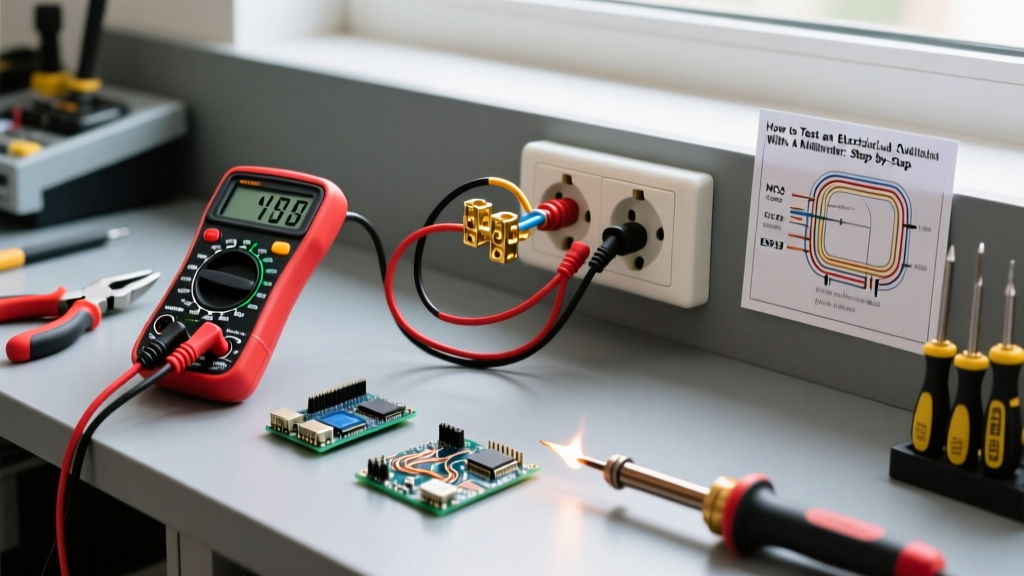
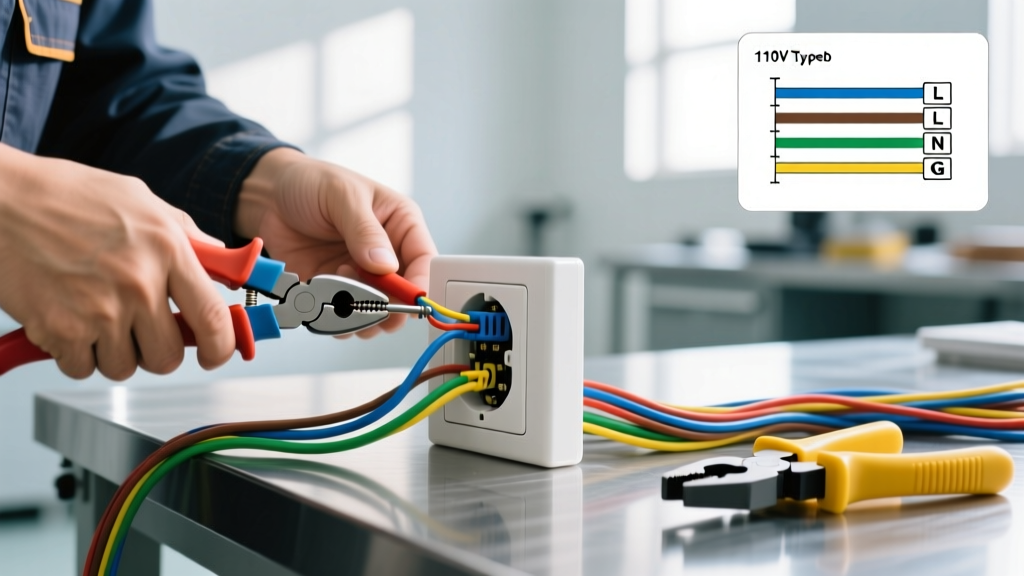
The Chinese National Standards (CNS) dictate specific color codes for electrical wiring. While modern installations strictly follow these codes, older buildings (pre-1990s) may feature legacy Japanese-influenced or non-standard wiring. Always test wires with a multimeter before assuming their function based on color.
| Function | Modern CNS Standard Color | Legacy / Older Installations | Terminal Screw Color |
|---|---|---|---|
| Line (Hot) | Black (or Red for 220V) | Black, Red, or sometimes Blue | Brass / Gold |
| Neutral | White | White or Light Gray | Silver |
| Ground | Green (or Green/Yellow) | Often Missing / Bare Copper | Green |
For a complete global breakdown of plug and grounding types, refer to the IEC World Plugs Database.
Step-by-Step Installation: Type B Grounded Outlet
Step 1: Power Isolation and Verification
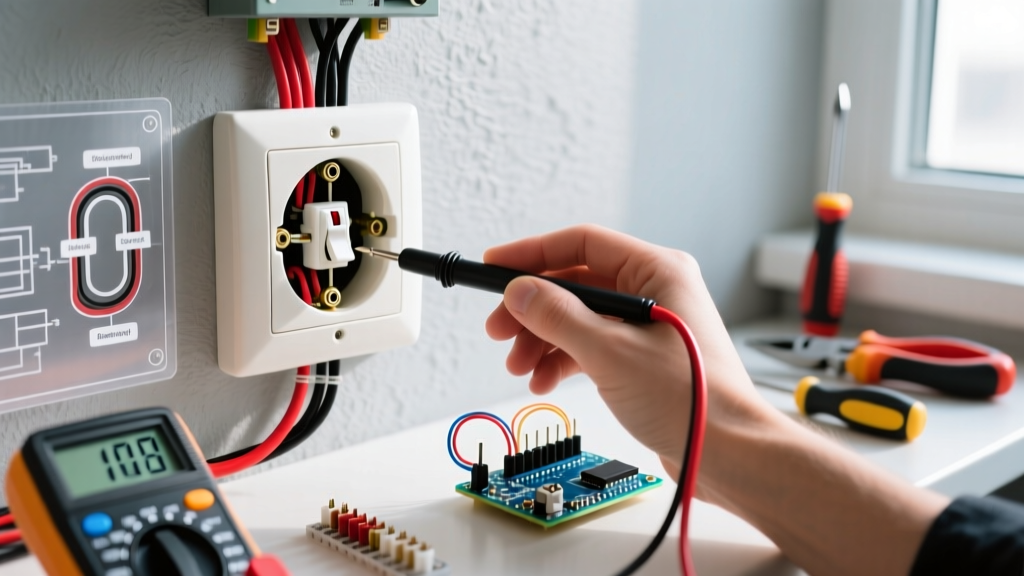
Navigate to your main distribution board (breaker panel). Identify the breaker controlling the circuit you are working on and switch it to the OFF position. In many older Taiwanese apartments, breaker labeling is inaccurate or non-existent. Use your Non-Contact Voltage Tester (NCVT) on the existing outlet face to confirm it is dead. Remove the faceplate, insert the NCVT probe directly into the wall box near the wire nuts, and verify again. Never skip this double-verification step.
Step 2: Extracting and Preparing the Wires
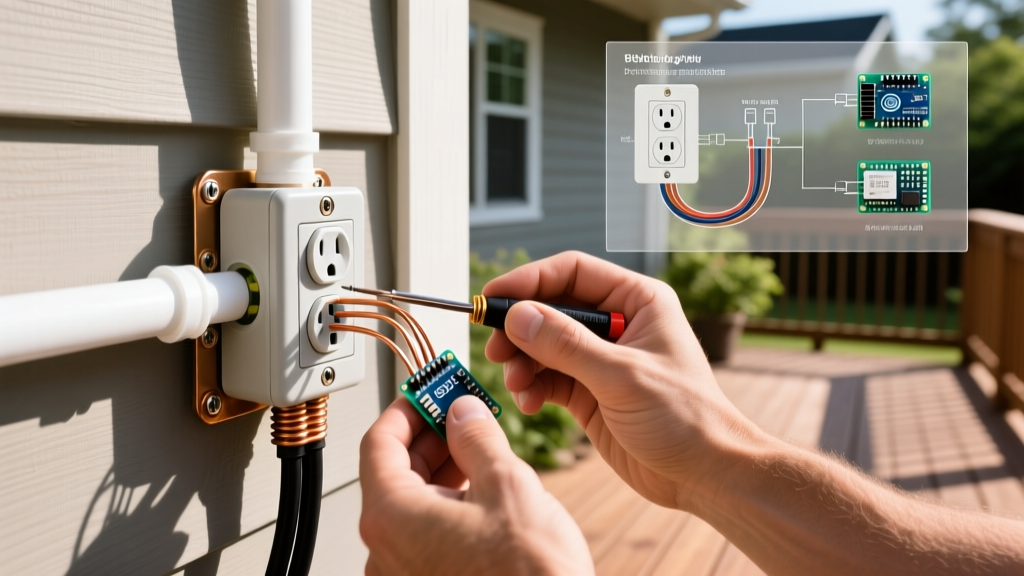
Unscrew the existing receptacle and gently pull it out of the wall box. Crucial Edge Case: Wall boxes in Taiwanese RC (reinforced concrete) construction are often embedded directly into the concrete and can be exceptionally shallow (sometimes only 1.25 to 1.5 inches deep, compared to the US standard 2.125 inches). Be careful not to kink the stiff 12 AWG solid copper wires when pulling the device out.
If the existing wires are damaged, scorched, or have old, brittle insulation, use your wire strippers to cut back to fresh copper. Strip exactly 15mm (approx. 5/8 inch) of insulation from the Line, Neutral, and Ground wires. Stripping too little will result in exposed screw threads; stripping too much leaves bare copper exposed outside the terminal, creating a shock hazard.
Step 3: Terminating the Receptacle
Using your needle-nose pliers, form a tight 'J-hook' at the end of each stripped wire. The hook should curve clockwise. This ensures that when you tighten the terminal screw, the loop closes tightly around the screw shaft rather than being pushed outward.
- Ground Wire (Green/Bare): Attach to the green grounding screw at the bottom of the yoke. Tighten firmly.
- Neutral Wire (White): Attach to the silver terminal screw on the left side (when facing the front of the receptacle).
- Line Wire (Black): Attach to the brass terminal screw on the right side.
Pro Tip: If your BSMI-certified receptacle features 'back-wire' clamping plates (where you insert the straight stripped wire into a hole and tighten the screw to clamp it down), use this method instead of the J-hook. It provides a superior, gas-tight connection that resists thermal expansion and contraction over time.
Step 4: Seating and Securing the Device
Carefully fold the wires back into the shallow wall box. In tight Taiwanese concrete boxes, fold the ground wire in first, followed by the neutral, and finally the hot wire, creating a neat 'Z' pattern. Push the receptacle flush against the wall. Secure it using the top and bottom mounting screws.
Use a small level to ensure the outlet is perfectly plumb before fully tightening the mounting screws. Attach the BSMI-certified faceplate, ensuring it sits flush without cracking the plastic (which happens if the wall box is crooked and you overtighten the faceplate screws).
Step 5: Restore Power and Test
Turn the breaker back on. Use a commercial receptacle tester (a small plug-in device with three LED lights) to verify correct wiring. The tester should indicate 'Correct' (usually two amber lights). If it indicates 'Open Ground' or 'Hot/Neutral Reverse,' turn the power back off and re-check your terminal connections.
Troubleshooting Common Taiwan Outlet Failures
Expert Insight: The 'Missing Ground' Problem in Older Buildings
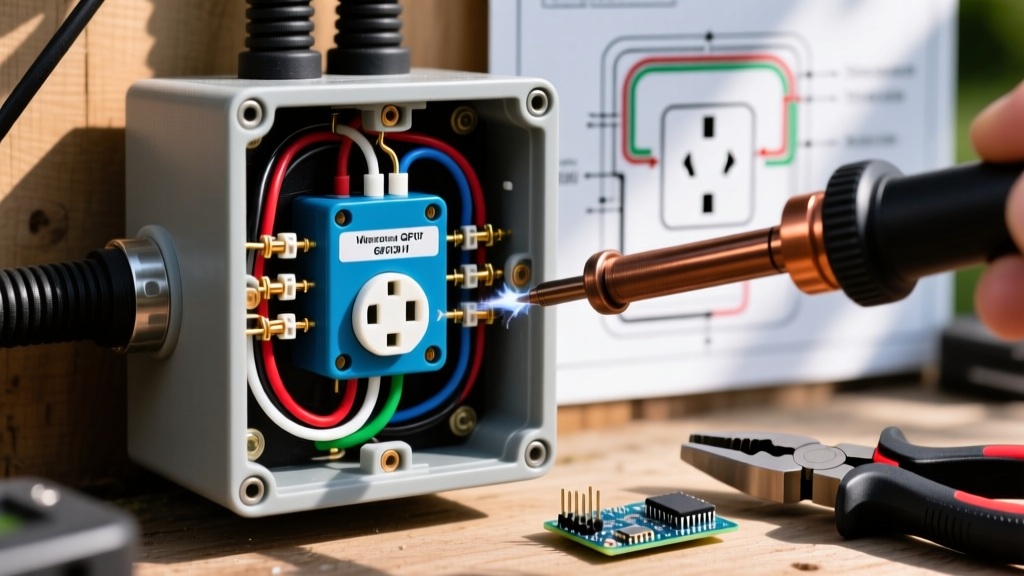
Many apartments built in Taiwan before the late 1980s lack a dedicated equipment grounding conductor in the wall boxes. If you open the box and find only a Black and White wire (no ground), do not install a standard Type B outlet and bridge the neutral to the ground. This is a severe shock hazard. Instead, install a GFCI (Ground Fault Circuit Interrupter) receptacle and label it 'No Equipment Ground' as permitted by safety codes. This provides life-saving ground-fault protection even without a physical ground wire.
Thermal Overload and Melting Faceplates
If you are replacing an outlet that shows brown scorch marks around the slots, the previous receptacle likely suffered from 'blade retention fatigue.' The internal brass contacts lost their tension, causing high resistance and heat when running heavy loads like space heaters or rice cookers. Always use 'spec-grade' or 'commercial-grade' BSMI receptacles for kitchen and living room circuits to ensure long-lasting contact tension.
Frequently Asked Questions (FAQ)
Can I use a US-bought outlet in Taiwan?
Physically and electrically, a US NEMA 5-15R outlet will fit and function perfectly on a Taiwan 110V/60Hz grid. However, for legal compliance, insurance purposes, and guaranteed safety testing under local conditions, it is highly recommended to purchase a receptacle bearing the local BSMI certification mark from a Taiwanese hardware store.
Why are my wall boxes so shallow, and how do I manage the wires?
Taiwanese residential construction heavily utilizes reinforced concrete (RC) walls. Electrical boxes are nailed to the wooden forms before the concrete is poured, often resulting in shallow embedment. If you cannot fit the wires, consider using a 'box extender' ring, or upgrade to ultra-shallow depth receptacles specifically designed for tight-clearance applications.
Do I need a special outlet for 220V appliances like air conditioners?
Yes. Taiwan uses 220V for high-draw appliances like split-system air conditioners and large water heaters. These require entirely different receptacles (such as NEMA 6-15R or 6-20R) and are wired using two hot lines (Red and Black) and a Ground, with no Neutral. Never attempt to wire a 220V appliance to a standard 110V Type B outlet.
For official safety regulations and product certification lookups, always consult the Bureau of Standards, Metrology and Inspection (BSMI) before purchasing bulk electrical materials.