
The 230V Reality: Why London Demands Strict Code Adherence
Installing or upgrading an electrical outlet in London is fundamentally different from North American wiring practices. The UK operates on a 230V AC, 50Hz single-phase supply, meaning the risk of lethal electric shock and arc flash is significantly higher. Furthermore, London’s diverse housing stock—ranging from Victorian terraces with degraded legacy wiring to modern high-density apartments—presents unique earthing and circuit-loading challenges.
As a core tenet of the IET Wiring Regulations (BS 7671), specifically the 18th Edition Amendment 3, every socket installation must prioritize fault protection, thermal stability, and mechanical resilience. This guide dissects the exact code requirements, testing parameters, and material specifications required to safely install a BS 1363 socket in the Greater London area in 2026.
Understanding the BS 1363 Standard
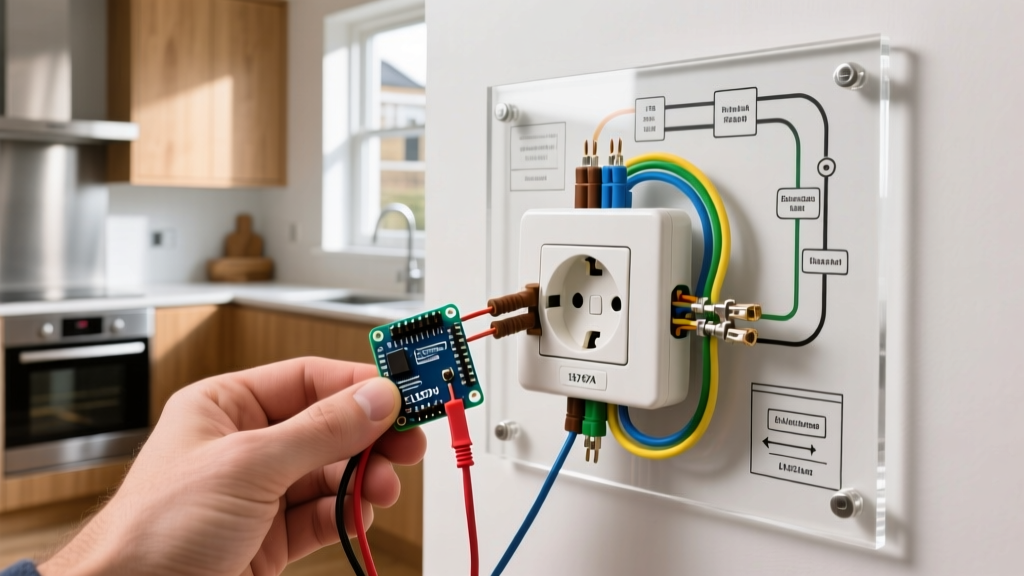
Unlike the NEMA 5-15 receptacles used in the US, the UK utilizes the BS 1363 Type G socket. This standard is globally recognized for its integrated safety features, but it demands precise installation techniques to function as designed.
- Integral Fusing: The plug contains a BS 1362 fuse (typically 3A or 13A), protecting the flexible appliance cord. The wall socket itself is protected by a 16A, 20A, or 32A Miniature Circuit Breaker (MCB) at the consumer unit.
- Shutter Mechanism: Live and neutral apertures are blocked by mechanical shutters that only open when the longer earth pin is inserted.
- CPC Sleeving: The Circuit Protective Conductor (earth wire) must be sleeved with green-and-yellow PVC at the termination point. Bare earth wires inside the backbox are a direct violation of BS 7671 Regulation 543.4.1.
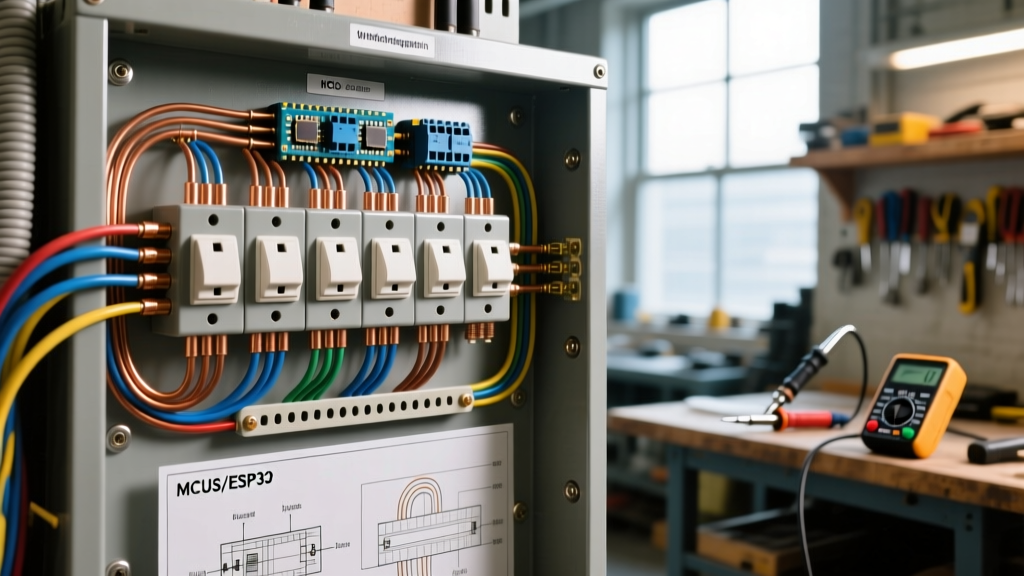
Circuit Topologies: Ring Final vs. Radial
When adding an electrical outlet in London, you must first identify whether you are spurring into a Ring Final Circuit (RFC) or extending a Radial Circuit. Misidentifying the topology can lead to catastrophic cable overloading.
| Feature | Ring Final Circuit (RFC) | Radial Circuit |
|---|---|---|
| Cable Size | 2.5mm² Twin & Earth (T&E) | 2.5mm² or 4.0mm² T&E |
| MCB Rating | 32A (Type B or C) | 20A (2.5mm²) or 32A (4.0mm²) |
| Max Floor Area | 100m² per ring | 50m² (20A) or 75m² (32A) |
| Spur Limitations | Max 1 single or 1 double socket per unfused spur | Unlimited sockets within load limits |
Expert Note: If you are adding a socket to an RFC, you must perform a continuity test on the ring conductors (r1, rn, r2) to verify the ring is unbroken before and after your work. An open ring on a 32A breaker will force 2.5mm² cable to carry the full 32A load, exceeding its current-carrying capacity and creating a severe fire hazard.
RCD Protection and Earth Fault Loop Impedance (Zs)
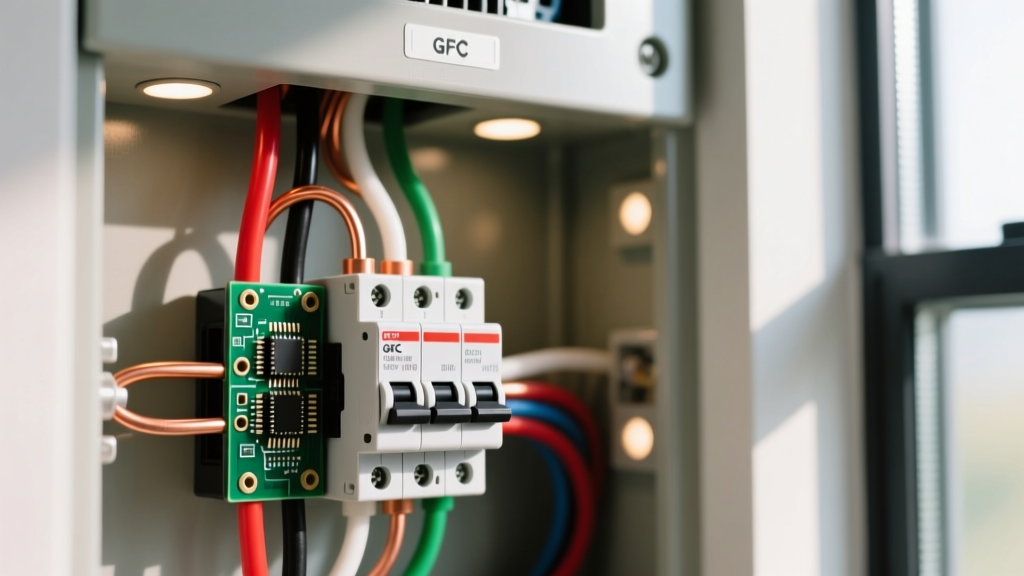
Under BS 7671 Regulation 411.3.3, additional protection by a 30mA Residual Current Device (RCD) is mandatory for all socket outlets rated up to 32A intended for use by ordinary persons. In London’s older properties, you may encounter outdated consumer units lacking RCBOs or RCDs. Upgrading the socket is insufficient; the circuit protection at the distribution board must be brought up to code.
Earth Fault Loop Impedance (Zs) Testing
Before energizing a new socket, an electrician must measure the external earth fault loop impedance (Ze) and the total loop impedance (Zs) at the furthest point of the circuit. For a standard 32A Type B MCB protecting an RFC, the maximum permitted Zs is 1.37 ohms (at 10°C correction).
Many Victorian and Edwardian homes in London rely on TN-S earthing systems (lead sheath) or have high-impedance TT systems. If your Zs reading exceeds the threshold, the MCB will not trip fast enough (within 0.4 seconds) to clear a fault, rendering the outlet lethally dangerous. In such cases, upgrading to an RCBO with a 30mA earth leakage trip is the only compliant solution.
Part P Building Regulations & Heritage Constraints
Electrical work in domestic properties in England and Wales is governed by Part P of the Building Regulations. According to the GOV.UK Part P Guidelines, installing a new socket is generally non-notifiable unless it involves:
- Installing a completely new circuit (requires an Electrical Installation Certificate - EIC).
- Working in a ‘special location’ such as a bathroom, shower room, or outdoors.
London Heritage Warning: If your property is a Grade I or II listed building in boroughs like Kensington & Chelsea or Westminster, altering the physical structure to chase walls for new socket cables may require Listed Building Consent. Surface-mounted trunking or bespoke wooden conduit is often mandated by conservation officers to preserve original lath and plaster walls.
For standard replacements or additions to an existing circuit in a living room or bedroom, a Minor Electrical Installation Works Certificate (MEIWC) must be issued upon completion. As of 2026, hiring a NICEIC or NAPIT registered electrician in London to supply, install, test, and certify a single double socket on an existing circuit typically costs between £140 and £220, factoring in London congestion charges and premium labor rates.
Step-by-Step: Precision Termination & Torque Specs
The leading cause of electrical fires in UK sockets is loose terminal connections leading to thermal runaway. The days of tightening terminal screws by ‘feel’ are over. BS 7671 Chapter 52 requires terminations to be made according to the manufacturer’s instructions.
Installation Procedure
- Isolate & Prove: Turn off the MCB/RCBO. Use a calibrated two-pole voltage indicator (not a multimeter) to prove the circuit is dead at the backbox.
- Strip to Length: Strip the outer grey PVC sheath of the 2.5mm² T&E cable, leaving exactly 10mm to 12mm of exposed copper for the live and neutral cores. Do not nick the copper conductor; a nicked wire will snap under torque.
- Sleeve the CPC: Slide green-and-yellow sleeving over the bare earth wire, ensuring it extends right up to the terminal block.
- Terminate: Insert the wires into the BS 1363 socket terminals (Brown to Live/Right, Blue to Neutral/Left, Green-Yellow to Earth/Center).
- Apply Calibrated Torque: Using a calibrated torque screwdriver, tighten the terminal screws to the manufacturer’s specification. For industry-standard MK Logic Plus and Schneider Ultimate sockets, the required torque is typically 1.2Nm to 1.5Nm.
- Dress the Wires: Carefully fold the cables into a 35mm deep backbox. Ensure no bare copper is visible outside the terminal and that the earth wire is not trapped behind the live terminal.
Material Selection for 2026
When sourcing materials for an electrical outlet in London, avoid unbranded, uncertified imports from online marketplaces. They frequently fail UKAS-accredited thermal testing. Stick to BS 1363-2 certified brands:
- MK Sentry / Logic Plus: The gold standard for durability. Features backed-out terminals that prevent mis-wiring and robust 3-pin earth contacts.
- Schneider Electric Ultimate: Preferred for high-end London renovations. Offers superior arc-quenching chambers and sleek, screwless front plates.
- Hamilton IT: Excellent for smart-home integrations, offering integrated USB-C PD (Power Delivery) modules that comply with BS 1363 safety shutters while delivering up to 30W to modern devices.
Frequently Asked Questions
Can I install an outdoor socket on my London balcony?
Yes, but it must be IP65-rated, mounted outside of Zone 1 if near a balcony sink, and protected by a 30mA RCD. Furthermore, outdoor sockets must be weather-resistant (WR) and ideally supplied via a dedicated radial circuit rather than spurred from an internal RFC, as per Electrical Safety First guidelines on outdoor electrical safety.
Do I need to replace my old rubber-insulated wiring?
If you open a backbox in a pre-1960s London home and find Vulcanized Indian Rubber (VIR) insulation, stop immediately. VIR degrades into a black powder when disturbed, leaving live copper exposed. You cannot safely add a socket to this circuit; a full property rewire is legally and practically required.
What happens if the polarity is reversed?
Because UK plugs are polarized and fused, reversing Live and Neutral at the socket means the appliance’s internal switch will break the neutral return instead of the live feed. The appliance will remain energized at 230V even when switched off, posing a severe shock risk during maintenance or bulb changes. Always verify L/N polarity with a socket tester and loop impedance tester before signing off the MEIWC.