
Introduction to the Slovenian Electrical Grid
If you are renovating a home in Ljubljana, setting up a workshop in Maribor, or simply replacing a damaged receptacle, understanding the local electrical standards is critical. The slovenia electrical outlet standard operates on a 230V, 50Hz alternating current (AC) system and utilizes the Type F plug and socket configuration, universally known as the 'Schuko' (Schutzkontakt) system. As of 2026, all electrical installations in Slovenia must strictly adhere to the harmonized European CENELEC standards and local Slovenian technical regulations (SIST).
Working with 230V systems carries a significant risk of fatal electric shock and arc flashes. This beginner installation tutorial is designed to give you a foundational understanding of the wiring process, the required tools, and the safety protocols necessary for replacing or installing a standard 16A Schuko wall outlet in Slovenia. Always remember that final inspections and new circuit installations must be certified by a licensed Slovenian electrician.
CRITICAL SAFETY WARNING: Never attempt to work on a live 230V circuit. Always isolate the power at the main distribution board (razdelilna omara) and verify the absence of voltage using a certified two-pole voltage tester before touching any wires.
Understanding the Type F (Schuko) Standard
Before picking up a screwdriver, you must understand the physical and electrical characteristics of the receptacle you are installing. According to the IEC World Plugs database, Slovenia uses the CEE 7/3 (socket) and CEE 7/4 (plug) standard.
| Specification | Slovenian Standard Detail |
|---|---|
| Socket Type | Type F (Schuko / CEE 7/3) |
| Nominal Voltage | 230V AC |
| Frequency | 50 Hz |
| Standard Breaker Rating | 16A (MCB Type B or C) |
| Grounding Mechanism | Twin lateral metal grounding clips |
| Mandatory Protection | 30mA RCD (FI stikalo) |
The defining feature of the Schuko outlet is its recessed circular design and the two grounding clips on the top and bottom inner edges. This ensures that the earth connection is made before the live and neutral pins engage, providing superior safety for the user.
Required Tools and Materials
Do not use standard hardware store tools for 230V work. You must use VDE-certified insulated tools rated for at least 1000V.
- Voltage Tester: Fluke T6-1000 or a local equivalent two-pole tester (do not rely solely on non-contact voltage pens).
- Screwdrivers: Wiha or Wera VDE-insulated slotted and Pozidriv (PZ2) screwdrivers.
- Wire Strippers: Knipex MultiStrip 10 (set to 2.5mm² to avoid nicking the copper core).
- Cable: 3-core NYM-J or PP-Y cable, 2.5mm² cross-section (standard for 16A socket circuits in Slovenia).
- Outlet: A high-quality Type F Schuko socket (e.g., Legrand Valena Life, Schneider Electric Odace, or Kopp).
EU Harmonized Wire Color Codes
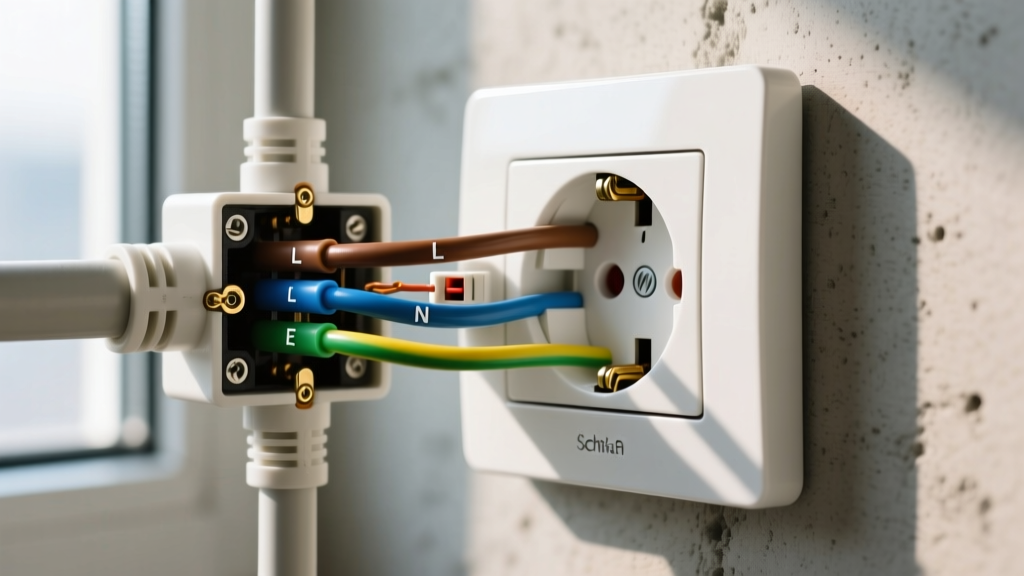
Slovenia follows the strict International Electrotechnical Commission (IEC) 60446 color codes, which were fully harmonized across the EU. Misidentifying these wires is the most common cause of RCD tripping and electrical fires.
| Function | Wire Color | Terminal Marking |
|---|---|---|
| Phase (Live) | Brown | L |
| Neutral | Blue | N |
| Protective Earth | Green/Yellow Stripe | PE (Earth Symbol) |
Note: In older Slovenian homes built before the 1990s, you may encounter legacy colors (e.g., black for phase, grey for neutral, red/yellow for earth). If you encounter non-standard colors, stop immediately and consult a professional to map the circuit.
Step-by-Step Installation Tutorial
Step 1: Isolate and Verify Power
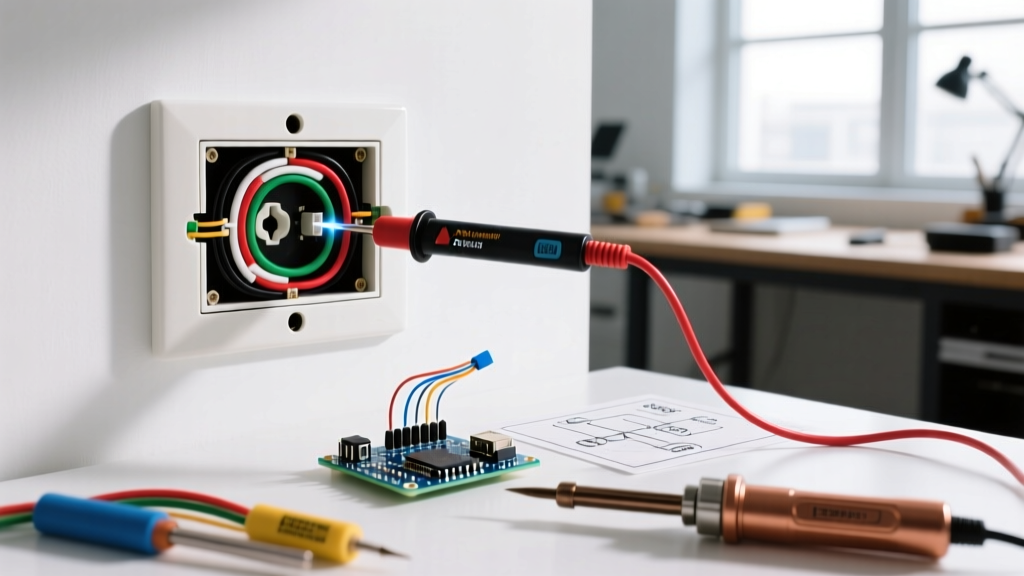
Locate your main electrical panel and switch off the specific 16A MCB (Miniature Circuit Breaker) controlling the room. Next, switch off the 30mA RCD (Residual Current Device, known locally as the FI stikalo). Remove the faceplate of the old outlet and use your two-pole voltage tester across the L and N terminals, then L and PE, to confirm zero voltage.
Step 2: Prepare the Wires
Using your Knipex wire strippers, remove exactly 12mm of insulation from the Brown, Blue, and Green/Yellow wires. Do not strip more than 12mm; exposed copper outside the terminal block is a severe shock hazard and a common failure point for arc faults. If the copper ends are frayed or oxidized from a previous installation, snip them back and re-strip.
Step 3: Connect to the Schuko Terminals
Modern Schuko outlets feature push-in or screw-clamp terminals on the rear ceramic or thermoplastic block.
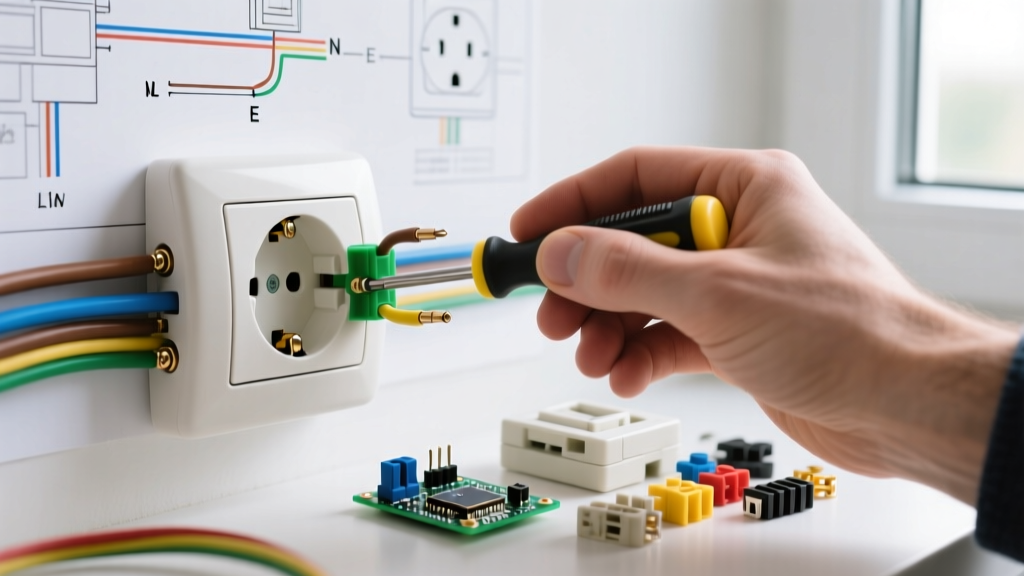
- Connect the Earth (PE): Insert the Green/Yellow wire into the central terminal marked with the earth symbol (⏚). This terminal is physically wired to the two side grounding clips. Tighten the screw to approximately 0.5 Nm. Give the wire a firm tug to ensure it is seated.
- Connect the Neutral (N): Insert the Blue wire into the terminal marked 'N'. In a standard AC circuit, polarity technically alternates, but Slovenian electrical inspectors (pooblaščeni inšpektorji) strictly enforce correct L/N orientation for safety and troubleshooting.
- Connect the Phase (L): Insert the Brown wire into the terminal marked 'L'.
Step 4: Mount the Receptacle
Carefully fold the wires into the back of the wall box (doz). Ensure the Green/Yellow earth wire is pushed to the back so it is not pinched by the mounting screws. Align the outlet frame and tighten the two lateral M4 mounting screws into the wall box claws or direct-screw holes. Use a spirit level to ensure the faceplate is perfectly horizontal before fully tightening. Snap the outer decorative frame into place.
Common Beginner Mistakes and Troubleshooting
Even with careful preparation, beginners often encounter specific edge cases when wiring a Slovenia electrical outlet.
- The RCD (FI stikalo) trips immediately upon resetting: This almost always means the Neutral (Blue) and Earth (Green/Yellow) wires are swapped, or they are touching inside the wall box. The RCD detects an imbalance between L and N; if N is bonded to PE downstream of the RCD, it will trip instantly.
- The outlet feels warm under load: This indicates high resistance at the terminal connections. You likely under-torqued the terminal screws or stripped too much insulation, causing the copper strands to splay and reduce the contact surface area. Turn off the power, disassemble, and re-terminate.
- Using 1.5mm² wire on a 16A breaker: In Slovenia, 1.5mm² wire is strictly reserved for lighting circuits (protected by a 10A breaker). Socket circuits must use 2.5mm² wire. If you are extending a circuit and find 1.5mm² wire feeding a socket, you must downgrade the breaker to 10A or replace the cable to prevent a hidden wall fire.
Frequently Asked Questions (FAQ)
Can I install a USB-C integrated Schuko outlet in Slovenia?
Yes, USB-C integrated Type F outlets are widely available in 2026 from brands like Legrand and Schneider Electric. However, ensure the built-in power supply carries the CE mark and is rated for 230V/50Hz input. These outlets require the exact same L, N, and PE wiring as a standard receptacle.
Do I need a special outlet for bathrooms?
Absolutely. According to SIST HD 60364 standards, any outlet installed in a bathroom must be located outside of Zones 0, 1, and 2 (typically at least 60cm away from the edge of a bathtub or shower). Furthermore, it must be protected by a 30mA RCD, and in many cases, an IP44-rated splash-proof cover is legally required depending on the exact proximity to water sources.
Where can I find official local grid regulations?
For authoritative information on grid connections and distribution standards in Slovenia, refer to SODO (Sistemski operater distribucijskega omrežja), the national distribution system operator. They provide the technical guidelines that all certified local electricians must follow.
Final Thoughts
Installing a slovenia electrical outlet is a straightforward process if you respect the 230V environment and adhere strictly to the EU harmonized color codes. By using VDE-certified tools, ensuring proper 12mm wire stripping, and verifying your connections before restoring power, you can achieve a safe, code-compliant installation. When in doubt, or if your home features pre-1990s legacy wiring, always hire a registered local electrician to ensure your safety and compliance with Slovenian law.