
Navigating the Electrical Outlet Netherlands Standards
Whether you are an expatriate renovating a 1930s Amsterdam apartment, a facility manager upgrading commercial spaces, or a DIY enthusiast, understanding the electrical outlet Netherlands ecosystem is critical for safety and legal compliance. Unlike the US NEC or the UK's BS 7671, the Netherlands operates under the NEN 1010 standard. This framework, heavily based on the international IEC 60364 but with strict local amendments, governs everything from the physical dimensions of the receptacle to the mandatory earth leakage protection in your meterkast (meter cupboard).
In 2026, with the surge in high-draw domestic appliances like portable EV chargers and induction cooktops, adhering to NEN 1010 is no longer just about passing an inspection—it is about preventing catastrophic thermal failures. This guide provides a deep-dive into Dutch receptacle specifications, circuit grouping mathematics, and step-by-step compliant wiring procedures.
The Governing Framework: NEN 1010 Explained
The Netherlands Standardization Institute (NEN) maintains NEN 1010, the definitive safety code for low-voltage installations. While it aligns with broader European harmonization efforts, NEN 1010 includes unique Dutch mandates, particularly regarding earth leakage protection and bathroom zoning. According to the Rijksoverheid (Dutch Government), any structural modification to a home's electrical system must comply with the current iteration of NEN 1010 and the Bouwbesluit (Building Decree) to ensure insurability and safety.
Technical Specifications: The Type F (Schuko) Receptacle
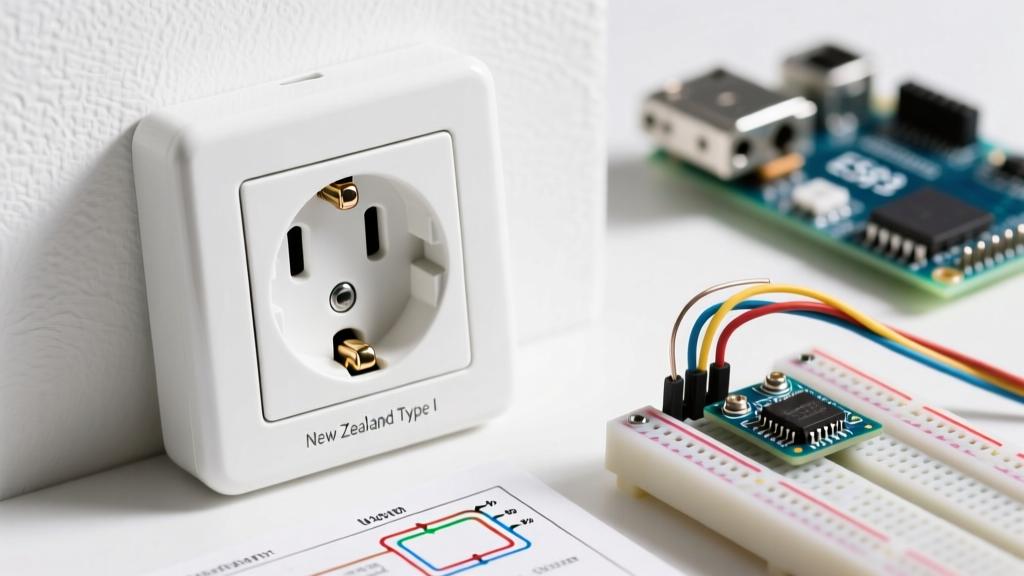
The standard electrical outlet Netherlands uses the Type F plug and socket system, officially known as CEE 7/3 or "Schuko" (short for Schutzkontakt). It is crucial to understand that while Type F is used across much of Europe, the Dutch implementation has specific tolerance and safety requirements.
| Feature | Netherlands (Type F / CEE 7/3) | UK (Type G / BS 1363) | USA (Type B / NEMA 5-15) |
|---|---|---|---|
| Nominal Voltage | 230V AC | 230V AC | 120V AC |
| Frequency | 50 Hz | 50 Hz | 60 Hz |
| Max Rated Current | 16A (Continuous) | 13A (Fused in plug) | 15A |
| Earth Connection | Side metal clips | Top rectangular pin | Bottom round pin |
| Pin Diameter | 4.8 mm | N/A (Rectangular) | 6.35 mm (Blades) |
| Child Safety Shutters | Mandatory (Kinderbeveiliging) | Mandatory | Rare / Optional |
The "Kinderbeveiliging" Mandate
Since the late 1990s, internal child safety shutters (kinderbeveiliging) have been strictly mandatory for all indoor Dutch receptacles. These mechanical barriers require simultaneous, equal pressure on both the Live and Neutral pins to open. Warning: Never purchase cheap, non-certified replacement outlets from overseas marketplaces that lack these shutters. Doing so violates NEN 1010 and voids home insurance policies in the event of an electrical fire.
Mandatory Circuit Protection: The Aardlekschakelaar
A cornerstone of Dutch electrical safety is the Aardlekschakelaar (Residual Current Device or RCD). NEN 1010 mandates that all socket outlets intended for general use by ordinary persons must be protected by an RCD with a maximum tripping threshold of 30mA.
- Standard RCDs (Aardlekschakelaar): Historically, Dutch meter cupboards utilized a single 30mA RCD to protect the entire home. This is now considered obsolete due to nuisance tripping.
- Modern RCBOs (Aardlekautomaat): In 2026, best practice and modern code interpretations heavily favor RCBOs, which combine overcurrent protection (MCB) and earth leakage protection in a single module per circuit. This ensures a fault on a garden outlet does not plunge the entire house into darkness.
- Grouping Limits: If using standard RCDs, NEN 1010 dictates a maximum of four final circuits (groups) per 30mA RCD to limit cumulative capacitive leakage from modern switch-mode power supplies (SMPS).
Circuit Grouping and Load Mathematics
Standard Dutch socket circuits are wired with 2.5 mm² solid copper wire (known locally as VD-draad or VMvK cable) protected by a 16A B-characteristic MCB (Installatieautomaat). This yields a theoretical maximum load of 3,680 Watts (230V x 16A).
While older electricians often cite a "maximum of four outlets per group" rule, NEN 1010 has evolved. The current standard relies on diversity factors and simultaneous usage calculations. However, specific high-draw areas require dedicated circuits:
- Kitchens: Induction hobs, combi-ovens, and dishwashers must have dedicated groups. A standard 16A Schuko outlet must never be used for a hardwired 7kW induction cooktop.
- Laundry Areas: Washing machines and dryers should be on separate 16A groups to prevent simultaneous startup surges from tripping the main breaker.
- EV Charging: Never use a standard 16A Type F wall outlet for continuous 16A EV charging. Standard Schuko contacts are rated for 16A peak, but continuous 100% duty-cycle loads cause thermal degradation and melting. Install a dedicated CEE 7/4 industrial socket or a hardwired Type 2 Wallbox.
Expert Insight: The most common cause of melted Schuko pins in the Netherlands is the use of portable "granny" EV chargers drawing a continuous 10A to 16A for 8+ hours. Standard residential outlets are not thermally designed for this duty cycle. Always derate continuous loads to 80% (approx. 13A or 3000W) for standard receptacles.
Wet Area Compliance: Bathrooms and Kitchens
NEN 1010 divides bathrooms into strict safety zones based on water exposure risk. Installing an electrical outlet Netherlands style in a bathroom is heavily restricted.
- Zone 0 (Inside bathtub/shower): No outlets permitted. Only IPX7 rated, SELV (max 12V) lighting allowed.
- Zone 1 (Directly above bath/shower to 2.25m): No standard socket outlets permitted. Water heaters must be hardwired and IPX4 rated.
- Zone 2 (0.6m radius outside Zone 1): Shaver sockets (isolated to max 50VA) are permitted. Standard 230V outlets are generally prohibited unless specific IP44 conditions and supplementary bonding are met.
- Zone 3 (Beyond Zone 2): Standard 230V Type F outlets are permitted, provided they are protected by a 30mA RCD. IP44 rating is highly recommended.
Equipotential Bonding (Vereffening): All extraneous conductive parts in a bathroom (metal water pipes, cast-iron drains, metal heating radiators) must be connected to the main earth terminal using 4 mm² or 6 mm² yellow/green earth wire. This prevents dangerous potential differences if a fault occurs.
Step-by-Step: Wiring a Compliant Type F Receptacle
When replacing or installing a new outlet, precision is paramount. Poorly torqued terminals are the leading cause of electrical fires in Dutch homes, as noted by the Dutch Fire Service (Brandweer).
- Isolate and Verify: Switch off the specific 16A MCB in the meterkast. Use a CAT III or CAT IV non-contact voltage tester, followed by a multimeter probe test across L-N, L-PE, and N-PE to confirm zero voltage.
- Prepare the Wire: Using a precision wire stripper (e.g., Knipex 12 62 180), strip exactly 12mm of insulation from the 2.5 mm² solid copper VD-wire. Stripping too little leaves exposed copper outside the terminal; stripping too much risks short circuits.
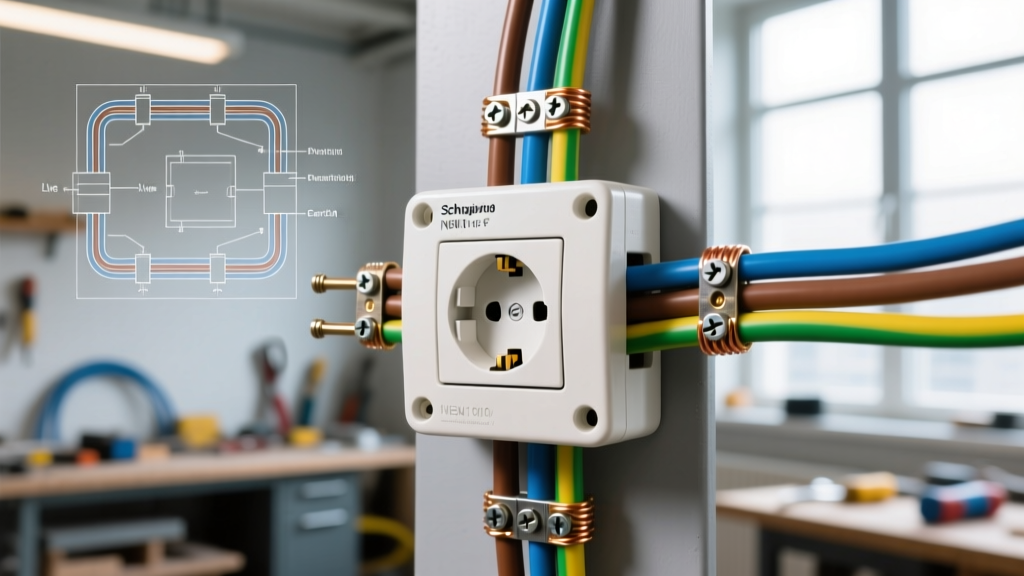
- Identify and Connect:
- Brown (Phase/Live): Connect to the right-hand terminal (L).
- Blue (Neutral): Connect to the left-hand terminal (N).
- Yellow/Green (Earth): Connect to the central earth terminal (PE).
- Torque to Spec: Tighten the terminal screws to the manufacturer's specification, typically 0.8 Nm to 1.2 Nm. Use a calibrated torque screwdriver. Hand-tightening often results in loose connections that arc under load.
- Secure the Faceplate: Ensure the mounting claws (klauwen) grip the flush-mounting box securely, or use the M3.5 machine screws for a rock-solid fit. The faceplate must sit flush against the wall with no gaps.
Common Failure Modes and Troubleshooting
1. Nuisance RCD Tripping (Aardlek eruit)
Cause: Cumulative earth leakage. Modern homes contain dozens of switch-mode power supplies (laptops, LED drivers, smart home hubs). Each leaks a tiny amount of current (1-2mA) to earth. When the cumulative leakage approaches 15mA (50% of the 30mA threshold), the RCD may trip randomly.
Solution: Redistribute circuits across multiple RCDs or upgrade to an earth leakage monitoring relay that provides early warnings before tripping.
2. Melted or Discolored Socket Faces
Cause: High-resistance connections due to improper stripping (nicking the copper core) or under-torqued screws. This creates a localized hot spot when drawing 10A+.
Solution: Immediately replace the outlet. Cut back the damaged wire to clean, unoxidized copper. Upgrade to premium brands like Hager, Busch-Jaeger, or Gira, which feature superior beryllium-copper contact springs that maintain clamping force over decades.
Summary
Working with an electrical outlet Netherlands setup requires strict respect for NEN 1010. From ensuring child safety shutters are present to calculating diversity factors for modern high-load kitchens, the Dutch system prioritizes robust earth leakage protection and precise mechanical installation. Always verify your wire stripping lengths, torque your terminals to spec, and never bypass the 30mA RCD mandate. When in doubt, consult a certified Dutch electrician registered with Sterkin or InstallQ to ensure your installation is legally compliant and, most importantly, safe.