
The Hidden Dangers of Aging and Un-Upgraded Receptacles
Most homeowners only think about their wall receptacles when a plug falls out or a device fails to power on. However, from an electrical safety perspective, aging outlets are a primary ignition source for residential fires. The internal brass contact springs in standard builder-grade receptacles suffer from metal fatigue over decades of thermal cycling. When the retention force on a plug blade drops below 150 grams, the resulting micro-arcing generates immense localized heat, melting the thermoplastic face and potentially igniting surrounding drywall paper or insulation.
If you are researching how to install electric outlet replacements in an older home built before the 1970s, you are likely dealing with ungrounded 2-prong receptacles or early 3-prong models lacking modern safety shutters. Upgrading to modern, specification-grade Tamper-Resistant (TR) receptacles is not just a cosmetic improvement; it is a critical safety intervention aligned with the 2026 National Electrical Code (NEC) Article 406.12, which mandates TR receptacles in virtually all dwelling unit areas.
Receptacle Upgrade Comparison Matrix (2026 Standards)
Before tearing into your drywall, you must select the correct replacement device. The market has evolved significantly, and standard 3-prong outlets are no longer the default for upgrades.
| Receptacle Type | Best Use Case | Avg 2026 Cost | NEC / Safety Requirement |
|---|---|---|---|
| Standard TR Duplex (15A/20A) | Bedrooms, hallways, living rooms | $2.50 - $4.50 | Mandatory TR shutters (406.12) |
| GFCI TR Receptacle | Kitchens, bathrooms, garages, exteriors | $16.00 - $24.00 | Mandatory ground-fault protection (210.8) |
| AFCI / GFCI Dual Function | Older homes lacking AFCI breaker panels | $38.00 - $45.00 | Required for arc-fault protection upgrades |
| USB-C / TR Combo (Type-C PD) | Kitchen islands, nightstands, home offices | $28.00 - $42.00 | Must be TR listed; requires deep 48cu-in box |
Essential Tooling and Material Specifications
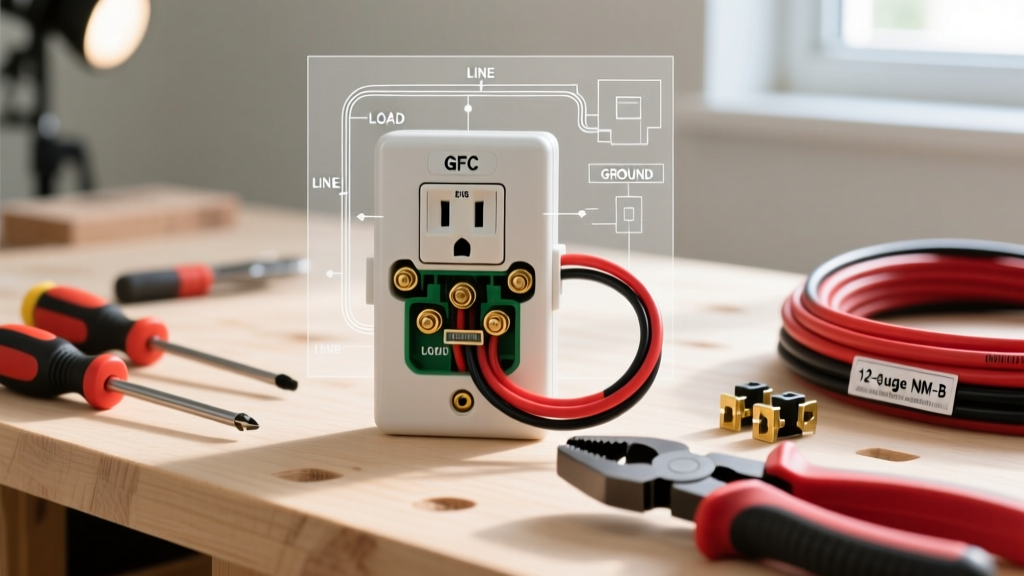
Professional results require professional tooling. Do not attempt an outlet upgrade with a generic hardware store toolkit. Here is the exact loadout required for a safe, code-compliant installation:
- Voltage Tester & Multimeter: Klein Tools RT100 (Receptacle Tester) and a Fluke 117 True-RMS Multimeter for verifying dead circuits and checking for bootleg grounds.
- Wire Strippers: Klein Tools 11055 (10-14 AWG). Stripping exactly 3/4-inch of insulation is critical for proper termination.
- Torque Screwdriver: Klein Tools 69100 or Wiha 61100. The 2026 NEC strictly enforces terminal torque specifications (typically 12 to 14 in-lbs for 12/14 AWG copper).
- Specification-Grade Receptacles: Leviton T5320-W (15A TR) or Hubbell 5262-SG (20A Spec-Grade). Avoid the $0.70 contractor-pack builder outlets.
Electrician's Rule of Thumb: Never rely on the 'push-in' backstab terminals found on cheap receptacles. Thermal expansion and contraction cause these spring-loaded contacts to loosen over time, leading to high-resistance arc faults. Always use side-wiring (the Shepherd's Hook method) or screw-and-clamp back-wiring on specification-grade devices.
Diagnostic Phase: The 'Bootleg Ground' Check
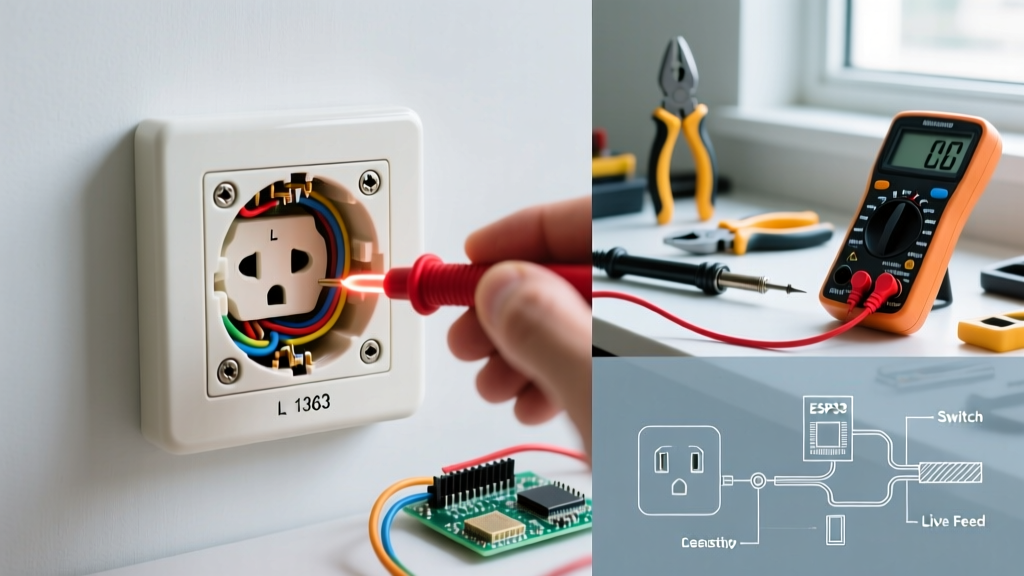
When learning how to install electric outlet upgrades in mid-century homes, the most dangerous trap is the 'bootleg ground.' This occurs when a previous DIYer installed a 3-prong outlet on a 2-wire (ungrounded) circuit by jumpering the neutral terminal to the ground screw. This fools a basic $5 plug-in tester into showing a 'correct' wiring status, but it energizes the entire grounding system of any plugged-in metal appliance, creating a lethal shock hazard.
- Visual Inspection: Remove the faceplate and look for a jumper wire connecting the silver (neutral) screw to the green (ground) screw.
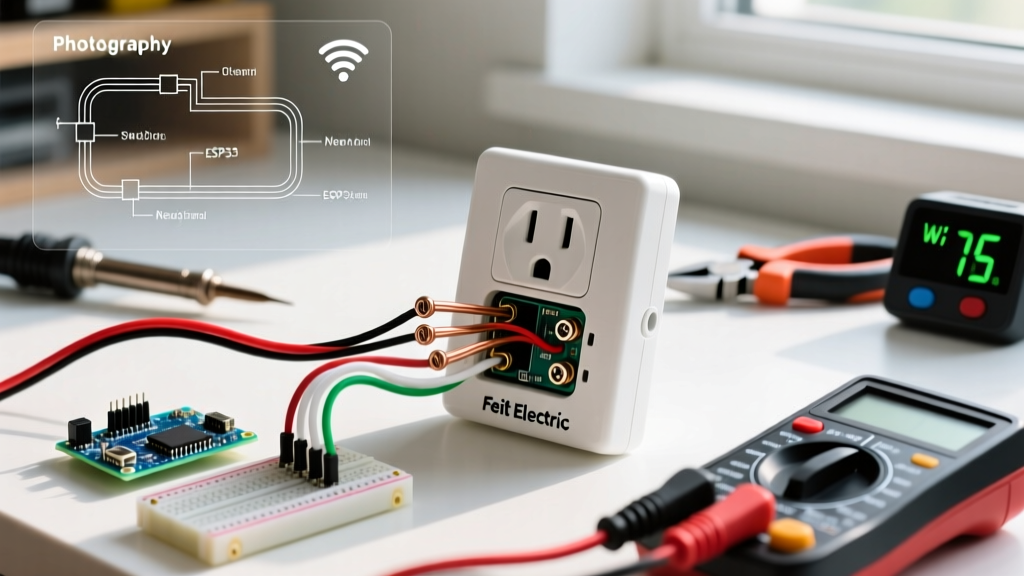
- Multimeter Verification: With the circuit energized, set your multimeter to AC Voltage. Measure Hot to Neutral (should read ~120V). Then measure Hot to Ground. If you read 0V, the circuit is truly ungrounded. If you read 120V on a known 2-wire system, suspect a bootleg ground or a neutral-to-ground bond downstream.
- The Legal Fix: If you have an ungrounded 2-wire system, the NEC allows you to install a GFCI receptacle to provide shock protection, but it must be labeled with the included 'No Equipment Ground' and 'GFCI Protected' stickers.
Step-by-Step Execution: Replacing the Receptacle
Step 1: Isolate, Lockout, and Verify
Shut off the branch circuit at the main service panel. Use a non-contact voltage tester (NCVT) to sweep the faceplate, then remove the mounting screws. Once the yoke is exposed, use your plug-in tester or multimeter to verify zero voltage across Hot-Neutral, Hot-Ground, and Neutral-Ground. Never assume a breaker label is accurate.
Step 2: Extract and Inspect the Conductors
Loosen the terminal screws and gently pull the receptacle out of the junction box. Inspect the wire insulation. If the thermoplastic sheathing is brittle, cracked, or shows signs of heat discoloration (brown/black scorch marks), the wire must be cut back to clean copper and re-stripped. If the wires are too short to extend at least 3 inches past the box face, you must use a push-in wire connector (like a Wago 221-413) to pigtail an extension.
Step 3: Terminate Using the Shepherd's Hook
For side-wiring, bend your freshly stripped 14 AWG or 12 AWG solid copper wire into a tight 'U' shape (the Shepherd's Hook). Loop the wire clockwise around the brass (hot) and silver (neutral) terminal screws. This ensures that as you tighten the screw, the loop pulls tighter around the shaft rather than splaying outward. Ensure no bare copper is exposed outside the terminal washer, and no insulation is trapped beneath it.
Step 4: Torque and Seat
Tighten the terminal screws using your calibrated torque screwdriver set to the manufacturer's specification (usually 12 in-lbs for 14 AWG, 14 in-lbs for 12 AWG). Fold the wires neatly into the back of the box using a 'Z-fold' pattern—neutral wires pushed deep into the back, ground wires tucked to the sides, and hot wires folded neatly behind the yoke. Secure the device to the box using the provided 6-32 machine screws, ensuring the yoke sits flush against the drywall or plaster ring.
Common Upgrade Failure Modes & Edge Cases
Multi-Wire Branch Circuits (MWBC)
If you open a box and find two hot wires (one black, one red) connected to the same receptacle on different phases, you are dealing with an MWBC. Critical Warning: You must break the hot-side fin tab on the new receptacle to keep the two circuits isolated. Failing to break this tab will result in a dead phase-to-phase short the moment you turn the breakers back on, causing an explosive arc flash.
Aluminum Wiring (1960s-1970s)
If your conductors are dull grey and marked 'AL', you have aluminum wiring. Standard copper-rated receptacles will cause galvanic corrosion and eventual thermal failure. You must either use CO/ALR rated receptacles (rare and expensive) or, preferably, pigtail the aluminum wires to copper using AlumiConn lug connectors, which are specifically listed and tested for this exact remediation.
Authoritative Safety References & Code Compliance
Electrical upgrades must always adhere to local and national safety standards. The methodologies detailed in this guide are derived from the following authoritative bodies:
- National Fire Protection Association (NFPA): The National Electrical Code (NEC) dictates all terminal torque requirements, TR mandates, and GFCI placement rules for residential dwellings.
- Electrical Safety Foundation International (ESFI): The ESFI guidelines on Tamper-Resistant Receptacles provide critical data on childhood shock prevention and the mechanical operation of internal safety shutters.
- U.S. Consumer Product Safety Commission (CPSC): The CPSC Electrical Safety portal offers vital statistics on residential arc-fault ignition sources related to degraded receptacle contacts and backstabbed terminations.
By prioritizing specification-grade materials, precise torque application, and rigorous pre-installation diagnostics, you ensure your home's electrical infrastructure remains safe, resilient, and fully compliant for decades to come.