
Understanding the Sweden Electrical Outlet Standard
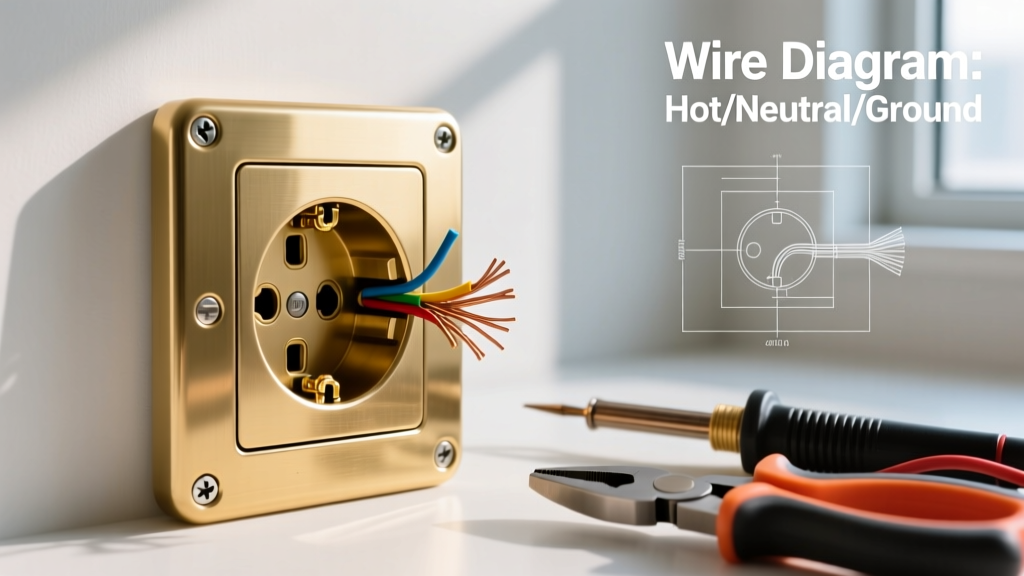
When working with residential or commercial wiring in Scandinavia, understanding the specific parameters of the Sweden electrical outlet is critical for safety and code compliance. Sweden utilizes the Type F (CEE 7/3) receptacle, universally known as the "Schuko" (Schutzkontakt) socket. Operating on a 230V / 50Hz AC supply, the Swedish electrical grid relies heavily on robust earthing protocols and strict adherence to the SS 43640000 (SEK) wiring regulations.
This comprehensive wiring diagram reference will guide you through the exact terminal configurations, harmonized wire color codes, and installation edge cases required for a compliant Type F outlet installation in 2026. Whether you are upgrading older ungrounded Class II sockets or installing new circuits in wet rooms, precision and adherence to Elsäkerhetsverket (The Swedish National Electrical Safety Board) guidelines are non-negotiable.
Technical Specifications & Breaker Sizing
Before terminating any wires, verify that your circuit protection matches the physical limitations of the Type F Schuko receptacle. Standard Swedish wall sockets are rated for 16 Amps. Overloading these with higher-rated miniature circuit breakers (MCBs) is a severe fire hazard and a direct violation of Swedish electrical codes.
| Parameter | Swedish Standard Specification |
|---|---|
| Outlet Type | Type F (CEE 7/3 / Schuko) |
| Nominal Voltage | 230V AC (Single Phase) |
| Frequency | 50 Hz |
| Max Current Rating | 16A (Continuous) |
| Standard MCB Size | 16A (Type B or Type C curve) |
| RCD Requirement | 30mA (Jordfelsbrytare) Mandatory |
| Child Safety | Integrated protective shutters required |
Swedish Wire Color Codes: HD 308 S2 vs. Legacy
One of the most dangerous pitfalls for electricians and DIYers working in Swedish homes built before 2007 is encountering legacy wiring colors. Sweden adopted the European harmonized standard HD 308 S2 in 2007. If you are retrofitting a Sweden electrical outlet in an older property, you must correctly identify the legacy conductors to avoid catastrophic reverse-polarity or earth-fault scenarios.
Modern Harmonized Colors (Post-2007)
- Brown (Brun): Phase / Live (L)
- Blue (Blå): Neutral (N)
- Green/Yellow (Grön/Gul): Protective Earth (PE / Skyddsjord)
Legacy Swedish Colors (Pre-2007)
- Black (Svart): Phase / Live (L)
- Grey (Grå): Neutral (N)
- Yellow (Gul): Protective Earth (PE)
CRITICAL SAFETY WARNING: Never assume wire colors are correct in older Swedish properties. Previous owners may have used non-standard cables or swapped phases. Always verify the absence of voltage using a CAT III 600V rated multimeter or a dedicated two-pole voltage tester (spänningsprovare) before touching any conductors.
Step-by-Step Type F Schuko Wiring Diagram Execution
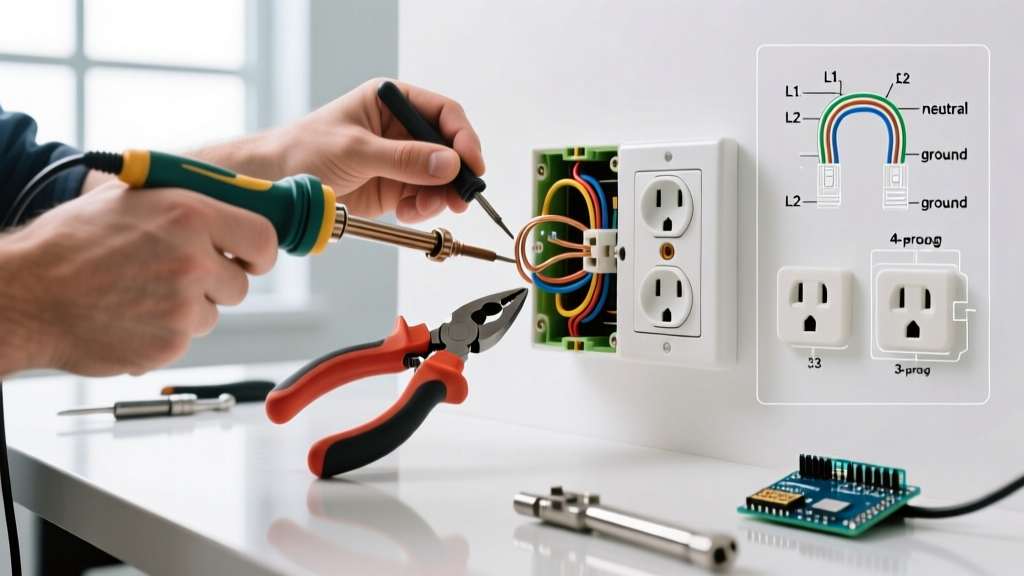
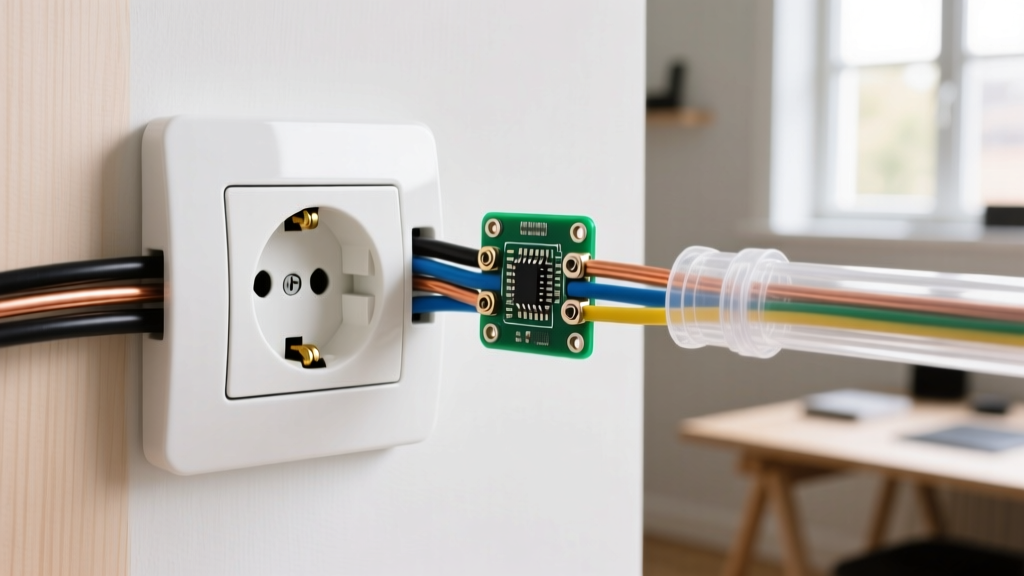
The physical wiring of a Sweden electrical outlet follows a strict sequence to ensure the protective earth is always the first connection made and the last to break in the event of a cable pull. High-quality brands commonly used in Sweden, such as Schneider Electric Exxact or Elko Plus, feature clearly marked screwless or screw terminals.
- Isolate the Circuit: Turn off the 16A MCB and the 30mA RCD at the main distribution board (Gruppcentral). Apply a Lockout/Tagout (LOTO) device to prevent accidental re-energization.
- Verify Zero Energy: Test your voltage tester on a known live source, test the target Sweden electrical outlet wires, then test the known source again (Live-Dead-Live method).
- Strip the Conductors: Remove the outer PVC sheath to expose the inner cores. Strip exactly 11mm to 12mm of insulation from the Brown, Blue, and Green/Yellow wires. Do not nick the copper; nicked wires create high-resistance hotspots.
- Connect Protective Earth (PE) First: Insert the Green/Yellow wire into the terminal marked with the earth symbol (⏚) or "PE". The earth pins on the side of the Schuko socket must be grounded. If using screw terminals, torque to 0.5 Nm - 0.8 Nm.
- Connect Neutral (N): Insert the Blue wire into the terminal marked "N". In a standard Swedish TN-S or TN-C-S system, the neutral is tied to earth at the main service entrance, but it still carries return current and must be treated as a live conductor.
- Connect Phase (L): Insert the Brown wire into the terminal marked "L". While Type F plugs are reversible and unpolarized, maintaining consistent L/N orientation across all outlets in a Swedish facility is best practice for troubleshooting and smart-home module installations.
- Secure and Mount: Push the wires neatly into the back of the flush-mounted box (infälld dosa). Use the expanding claws or M4 machine screws to secure the outlet chassis to the box. Ensure the outlet is perfectly level using a spirit level before tightening the faceplate.
Earthing (Jordning) and System Topologies in Sweden
Sweden predominantly uses TN-C-S and TN-S earthing systems. In a TN-C-S system, the Protective Earth and Neutral are combined into a single PEN conductor from the transformer to the building's main earthing terminal, where they are split into separate PE and N conductors for the rest of the installation.
According to SEK Svensk Elstandard, all newly installed Sweden electrical outlet circuits must include a continuous, unbroken Protective Earth (PE) conductor. Class II (double-insulated) ungrounded outlets are strictly prohibited in new installations, even in dry rooms. The Schuko design inherently relies on the side-mounted earth clips to provide a path for fault currents, triggering the 30mA RCD (Jordfelsbrytare) within milliseconds to prevent lethal electric shock.
Wet Room Regulations (Våtutrymmen)
Installing a Sweden electrical outlet in a bathroom or laundry room introduces strict IP (Ingress Protection) zoning laws enforced by Elsäkerhetsverket. Water and 230V AC are a lethal combination, and Swedish code divides wet rooms into specific zones:
- Zone 0 (Inside the bathtub/shower tray): No standard 230V outlets allowed. Only SELV (Safety Extra Low Voltage, max 12V AC/DC) equipment is permitted, and it must be IPX7 rated.
- Zone 1 (Directly above Zone 0 up to 2.25m): No standard outlets allowed. Only fixed water heaters or specific IPX4 rated SELV equipment permitted.
- Zone 2 (60cm radius outside Zone 1): Standard Sweden electrical outlets are generally not permitted here unless protected by a specific SELV shaver socket (ISO 1008-1) or if the room is large enough to push the zone boundary away from the water source.
- Outside Zones (Säker Zon): Standard IP21 Type F Schuko outlets may be installed, provided the entire circuit is protected by a 30mA RCD. If the outlet is likely to be exposed to water splashes or condensation, an IP44 rated Schuko with a spring-loaded waterproof flap is mandatory.
Troubleshooting Common Swedish Outlet Faults
Even with perfect adherence to the wiring diagram, field conditions can introduce faults. Here is how to diagnose common issues specific to Swedish electrical systems:
1. RCD (Jordfelsbrytare) Tripping Instantly
Cause: This almost always indicates an earth leakage fault. In a newly wired Sweden electrical outlet, the most common culprit is a stray strand of copper from the Brown (Phase) wire touching the metal chassis or the Green/Yellow earth wire inside the flush box.
Solution: Isolate power, remove the faceplate, and inspect the terminal stripping length. Ensure no bare copper is visible outside the terminal block. Verify that the cable sheath is clamped securely inside the wall box to prevent strain on the terminations.
2. Outlet Dead, but Breaker is ON
Cause: Swedish homes often use "dosa" (junction boxes) in the ceiling or walls where wires are daisy-chained using WAGO connectors or screw terminal blocks. A loose neutral connection in an upstream junction box will kill power to downstream outlets.
Solution: Trace the circuit back to the previous outlet or ceiling junction box. Use a continuity tester to verify the integrity of the Blue (Neutral) wire back to the distribution board.
3. Melted Terminal Blocks
Cause: Running high-draw appliances (like portable electric heaters or EV chargers plugged into standard wall sockets) continuously at 16A can cause thermal creep in older outlets, especially if the terminal screws were not torqued to the required 0.8 Nm.
Solution: Replace the melted outlet with a high-grade ceramic or thermoset-plastic Type F receptacle (e.g., Schneider Exxact 16A). For continuous high-draw loads, advise the homeowner to install a dedicated hardwired circuit rather than relying on a standard plug-and-socket connection.
Legal DIY Boundaries in Sweden
Unlike some countries where homeowners can freely wire entire rooms, Sweden has strict boundaries regarding who can perform electrical work. According to international and local safety frameworks adopted by Swedish law, you are legally permitted to replace an existing Sweden electrical outlet (swap the physical socket) ONLY if you possess the requisite knowledge to do it safely and can verify the installation. However, running new cables, installing new flush boxes, or modifying the main distribution board strictly requires a certified electrician registered with Elsäkerhetsverket. Always document your work and test with an installation tester (installationstestare) to verify loop impedance and RCD trip times before energizing the circuit.