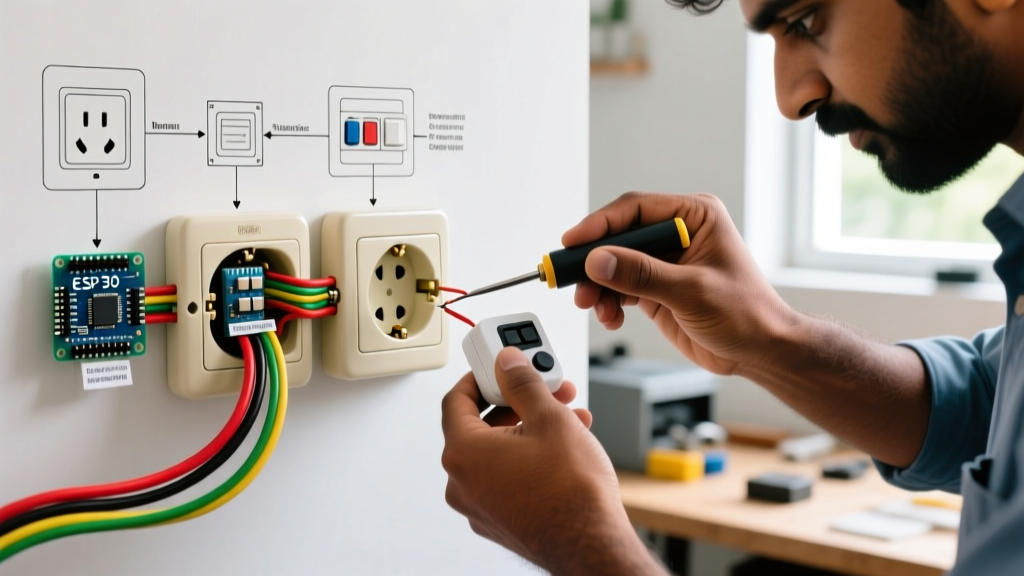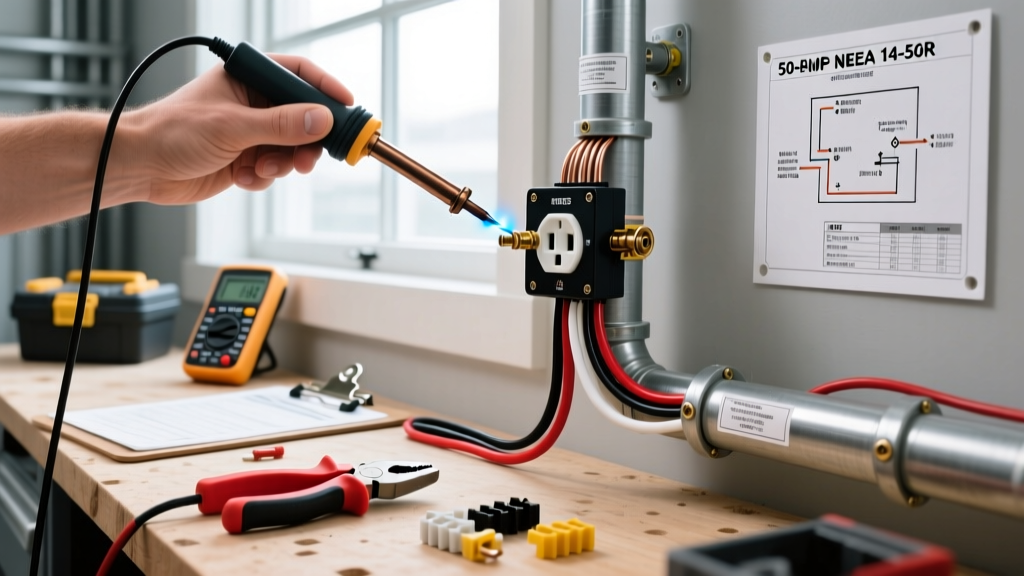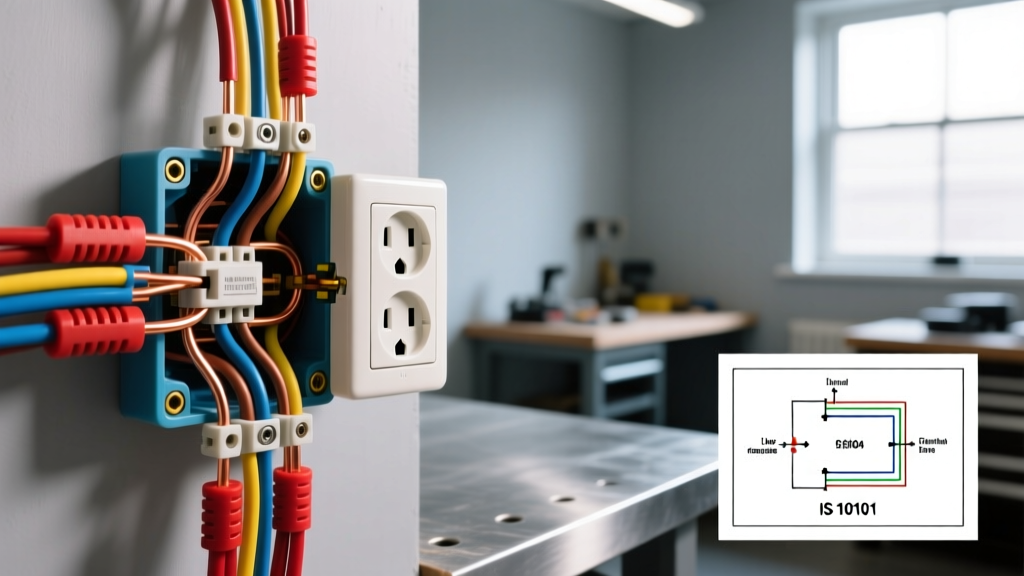

Introduction to Dublin Electrical Standards
Wiring a Dublin electrical outlet requires strict adherence to Ireland's National Wiring Rules, currently governed by IS 10101:2020. Unlike North American NEMA configurations, Dublin and the wider Republic of Ireland utilize the 230V, 50Hz AC system with the BS 1363 Type G socket standard. Whether you are upgrading a consumer board in a Victorian terrace in Ranelagh or wiring a new-build radial circuit in Lucan, understanding the topology of Irish ring final circuits and radial layouts is critical for safety and compliance.
This wiring diagram reference provides deep technical specifications, circuit topologies, and termination procedures for standard 13A socket outlets in Dublin. All procedures align with the regulations enforced by Safe Electric Ireland and the standards published by the National Standards Authority of Ireland (NSAI).
The BS 1363 Socket Specification
The standard Dublin electrical outlet is the BS 1363 13-amp fused plug and socket system. Key physical and electrical characteristics include:
- Voltage/Frequency: 230V AC / 50Hz (Harmonized EU standard).
- Pin Configuration: Three rectangular pins in a triangular pattern (Live, Neutral, Earth).
- Safety Shutters: Integral child-proof shutters on Live and Neutral apertures, mechanically operated by the insertion of the longer Earth pin.
- Internal Terminals: Typically brass screw-clamp terminals designed to accept up to three 2.5mm² solid copper conductors (essential for ring circuit looping).
- Popular Brands in Ireland: MK Logic Plus, Schneider Electric (Clipsal), and Crabtree.
Ring Final Circuit vs. Radial Circuit Topology
The most common wiring method for general-purpose Dublin electrical outlets is the Ring Final Circuit (RFC). However, IS 10101:2020 has seen a shift toward Radial Circuits protected by RCBOs in modern installations. Below is a comparative diagrammatic breakdown of both topologies.
| Feature | Ring Final Circuit (RFC) | Radial Circuit |
|---|---|---|
| Cable Size | 2.5mm² PVC Twin & Earth | 2.5mm² or 4.0mm² PVC Twin & Earth |
| Protection (MCB/RCBO) | 32A Type C | 20A (for 2.5mm²) or 32A (for 4.0mm²) |
| Topology | Continuous loop from Consumer Unit, through all sockets, and back to CU. | Single run from CU to the last socket on the line (daisy-chain). |
| Max Floor Area | 100m² per ring | 50m² (20A) or 75m² (32A) |
| Spur Limitations | Unlimited fused spurs; max one unfused single/double socket spur per ring point. | Unlimited branches, provided voltage drop and Zs limits are met. |
Diagram 1: Ring Final Circuit Routing
Visualizing the RFC loop:
- Origin: 32A RCBO in the Consumer Unit (CU). Live (Brown), Neutral (Blue), and Earth (Green/Yellow) exit the CU.
- First Leg: Cable routes to Socket 1. The incoming wires terminate in the L, N, and E terminals alongside a second set of 2.5mm² wires (the 'outgoing' leg).
- Intermediate Sockets: Sockets 2 through N-1 receive the incoming leg from the previous socket and send an outgoing leg to the next.
- Return Leg: The final socket (Socket N) routes its outgoing cable back to the exact same 32A RCBO in the CU, completing the ring.
Harmonized vs. Legacy Cable Colors in Dublin
When troubleshooting or extending wiring in older Dublin properties (such as those in Drumcondra or Rathmines built before 2008), you will encounter legacy cable colors. IS 10101 strictly mandates the use of harmonized European colors for all new work. If you are connecting new sockets to old wiring, the junction must be clearly labeled, and the earth conductor must be sleeved.
| Function | Legacy Colors (Pre-2006 ETCI Rules) | Harmonized Colors (Current IS 10101) |
|---|---|---|
| Live (Phase) | Red | Brown |
| Neutral | Black | Blue |
| Earth | Green (or bare copper) | Green/Yellow striped (sleeve bare copper) |
Step-by-Step Termination: Wiring a BS 1363 Socket
Proper termination is the leading factor in preventing high-resistance connections and subsequent thermal failures. Follow this exact procedure for terminating 2.5mm² Twin & Earth cable into a standard MK or Schneider socket.
1. Cable Preparation
- Strip the outer grey PVC sheath back to within 5mm of the backbox entry point. Do not nick the inner insulation of the individual cores.
- Slide a 45mm length of green/yellow earth sleeving over the bare copper earth wire.
- Strip exactly 15mm of insulation from the Brown and Blue conductors. Stripping too little leaves exposed copper outside the terminal; stripping too much risks a short circuit inside the backbox.
2. Terminal Insertion and Torque
- Earth First: Always connect the Earth terminal first. This ensures that if the cable is accidentally pulled, the earth connection is the last to break.
- Live and Neutral: Insert the Brown wire into the terminal marked 'L' (or with a red/brown indicator) and the Blue wire into 'N' (blue/black indicator).
- Ring Circuit Looping: If looping to the next socket, insert both the incoming and outgoing wires into the same terminal hole. Ensure no stray copper strands ('whiskers') are protruding, which could bridge the gap to the neutral or earth terminal.
- Tightening: Tighten the brass screws firmly. While specific torque screwdrivers are rarely used by domestic electricians for sockets, the screw must be tight enough that a firm manual tug on the wire yields zero movement.
3. Backbox Dressing
Carefully fold the cables into the 35mm or 47mm deep backbox. Do not force the socket faceplate on, as pinching the PVC insulation between the metal backbox rim and the socket chassis can cause an earth fault. Ensure the earth wires are pushed to the very back of the box.
Diagram 2: Unfused Spurs on a Ring Circuit
IS 10101 permits the addition of an unfused spur to an existing ring final circuit, provided strict limitations are met. This is common when adding a single Dublin electrical outlet for a specific appliance, like a wall-mounted TV or a localized workbench.
- Rule: You may run ONE unfused spur from ANY existing socket on the ring.
- Limitation: The spur can only feed ONE single socket or ONE double socket.
- Cable: Must be 2.5mm² Twin & Earth.
- Diagram Flow: CU -> [Ring Cable] -> Socket A (Spur Origin) -> [Spur Cable] -> Socket B (End of Spur). Socket B cannot feed Socket C.
If you need to feed multiple additional sockets from a single point, you must use a 13A Fused Connection Unit (FCU) to create a fused spur, protecting the downstream 2.5mm² cable with a 13A BS 1362 fuse.
IS 10101:2020 Testing and Compliance Metrics
Wiring the outlet is only half the job. Under Irish regulations, any new circuit or significant alteration must be tested and certified by a Registered Electrical Contractor (REC). Using a multifunction tester (such as the Megger MFT1845), the following parameters must be verified:
- Continuity of Protective Conductors (R1 + R2): Ensures the earth path is unbroken. For a 2.5mm²/1.5mm² T&E ring, the end-to-end resistance (r1, rn, r2) must be consistent, with r2 typically around 1.67 times r1.
- Earth Fault Loop Impedance (Zs): The measured Zs at the furthest socket on the circuit must not exceed the maximum permissible value for the 32A Type C protective device (typically 1.37Ω at 230V, though corrected for temperature, aim for < 1.0Ω).
- RCD/RCBO Trip Times: For a 30mA Type A RCBO protecting socket outlets, the test at 1x IΔn (30mA) must trip in under 300ms. At 5x IΔn (150mA), it must trip in under 40ms.
- Polarity Test: Confirms that the Live and Neutral are not reversed, and that the single-pole protective device (MCB/RCBO) is connected in the Live conductor only.
Costs and Hiring Contractors in Dublin (2026 Estimates)
Electrical work in the Republic of Ireland is heavily regulated. According to ESB Networks and Safe Electric Ireland guidelines, all notifiable work must yield a Completion Certificate (RECI/ECSSA).
- Standard Call-Out Fee: €80 to €120 (Dublin area).
- Cost to Add a Single Socket (Radial/Spur): €120 - €180 (including 2.5mm² cable, backbox, and BS 1363 faceplate).
- Consumer Board Upgrade (RCBOs): Upgrading an older Dublin home's MCB board to a full RCBO board (required for enhanced fire and shock protection under modern IS 10101 interpretations) costs between €850 and €1,400, depending on the number of ways (typically 12 to 16 ways for a 3-bed semi-detached home).
- Hourly Labour Rate: €55 to €75 per hour for a qualified electrician in the Greater Dublin Area.
CRITICAL SAFETY WARNING: Never attempt to wire a Dublin electrical outlet on a live circuit. Always isolate the main switch at the Consumer Unit, lock off the breaker, and verify the absence of voltage using a calibrated two-pole voltage indicator (not a simple neon screwdriver) before touching any terminals. Failure to comply with IS 10101 can result in fatal electric shock, electrical fires, and invalidated home insurance.
Troubleshooting Common Faults in Older Dublin Homes
If you are diagnosing issues in properties wired between 1980 and 2005, watch for these specific failure modes:
- Undersized Earth Conductors: Early PVC T&E cable sometimes featured a 1.0mm² earth wire paired with 2.5mm² Live/Neutral. Under heavy fault conditions, this can cause the earth wire to overheat. IS 10101 now mandates a minimum 1.5mm² earth for 2.5mm² circuits, or the use of 4.0mm² T&E with a 1.5mm² CPC.
- Shared Neutrals: In older 'split-phase' or poorly modified kitchens, you may find two 16A or 20A MCBs sharing a single neutral wire. This is a severe fire hazard and causes immediate tripping if RCBOs are retrofitted. The circuit must be rewired or separated.
- Reverse Polarity on Legacy Extensions: Red/Black wiring was sometimes terminated incorrectly by DIYers. Always test polarity at every socket in an older Dublin home before plugging in sensitive electronics.