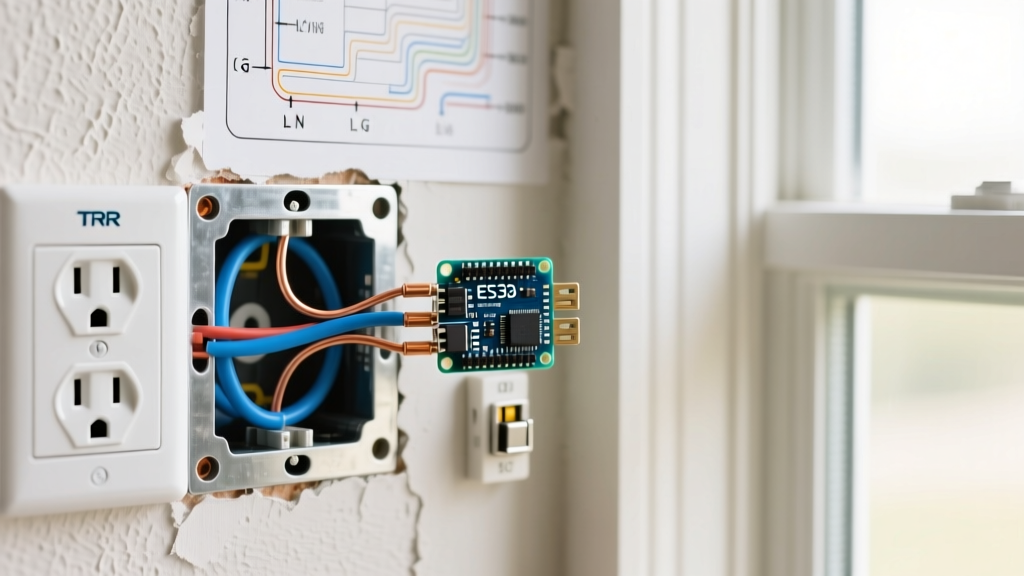

Understanding the Spanish Electrical Grid and Socket Standards
When interfacing North American or British electronics with the Spanish electrical grid, using the correct Spain electrical outlet adapter is only the first step in a broader wiring safety equation. Spain operates on a harmonized European standard of 230V nominal voltage (historically 220V) and a 50Hz frequency. For DIYers, digital nomads, and expats relocating appliances, understanding the physical and electrical characteristics of Spanish receptacles is critical to preventing catastrophic equipment failure or electrical fires.
According to the International Electrotechnical Commission (IEC), Spain primarily utilizes two plug types: Type F and Type C. While a basic travel adapter solves the physical geometry problem, it does not address the underlying wiring scenarios involving voltage differentials, frequency mismatches, and grounding topologies.
Physical Socket Standards: Type F vs. Type C
- Type F (Schuko - CEE 7/3): The standard for grounded appliances. It features two 4.8mm round pins spaced 19mm apart, alongside two grounding clips on the top and bottom edges of the socket. This is the receptacle you will encounter in modern Spanish kitchens, bathrooms, and living areas.
- Type C (Europlug - CEE 7/16): An ungrounded, flat two-pin plug (4.0mm pins) designed for low-wattage, double-insulated devices (Class II). While Type C plugs fit into Type F sockets, Type F plugs will not fit into older, ungrounded Type C wall receptacles still found in some pre-1980s Spanish buildings.
Adapter vs. Converter: The Most Common Wiring Mistake
The most frequent cause of destroyed electronics in Spain is confusing a physical plug adapter with a voltage converter. A standard Spain electrical outlet adapter merely changes the physical pin configuration; it does not alter the 230V current flowing from the wall. If you plug a 110V North American appliance into a 230V Spanish socket using only a physical adapter, the appliance will draw four times its intended power (per Ohm's Law, P = V²/R), resulting in immediate component vaporization.
| Device Type | Function | Internal Wiring | Use Case |
|---|---|---|---|
| Plug Adapter | Changes pin geometry | Pass-through (no voltage alteration) | Dual-voltage (100-240V) laptops, phone chargers |
| Step-Down Converter | Reduces 230V to 110V | Electronic circuitry (lightweight) | Low-wattage resistive loads (travel irons) |
| Step-Down Transformer | Reduces 230V to 110V | Heavy copper windings (inductive) | High-wattage, motorized, or sensitive electronics |
Common Wiring Scenarios and Actionable Solutions
Depending on the device you are bringing to Spain, your wiring strategy must adapt. Below are the three most common scenarios and the exact hardware required to execute them safely.
Scenario A: Low-Wattage Dual-Voltage Electronics
Modern GaN (Gallium Nitride) chargers, laptop power bricks, and electric toothbrushes are universally dual-voltage. Check the device's power label for the string "INPUT: 100-240V ~ 50/60Hz". Because these devices contain internal switching power supplies that automatically rectify and step down the voltage, you only need a physical Spain electrical outlet adapter.
Recommended Hardware: The Ceptics WCP-9 Type F Adapter (approx. $8-$12). It includes a built-in safety fuse and accommodates the 4.8mm pin diameter required for a secure mechanical connection in Schuko sockets, preventing the loose-fit arcing common with cheaper, generic Europlugs.
Scenario B: High-Wattage Single-Voltage Appliances
Bringing a US-spec 110V hair dryer (typically 1875W) or a high-end kitchen appliance like a KitchenAid mixer to Spain requires a heavy-duty step-down transformer. Electronic converters will overheat and fail under high continuous loads or the massive inrush current of motorized appliances.
Expert Sizing Rule: Transformers must be rated for at least 1.5 times the appliance's maximum wattage to handle startup inrush currents without tripping internal thermal breakers. For a 1200W US hair dryer, you must use a minimum 2000W step-down transformer.
Recommended Hardware: The Rockstone Power 2000 Watt Heavy Duty Step Down Voltage Transformer (approx. $55-$70). This unit features a true toroidal copper winding core, providing clean sine-wave step-down conversion from 230V to 110V, alongside integrated surge protection.
Scenario C: Permanent Relocation and Hardwiring Schuko Plugs
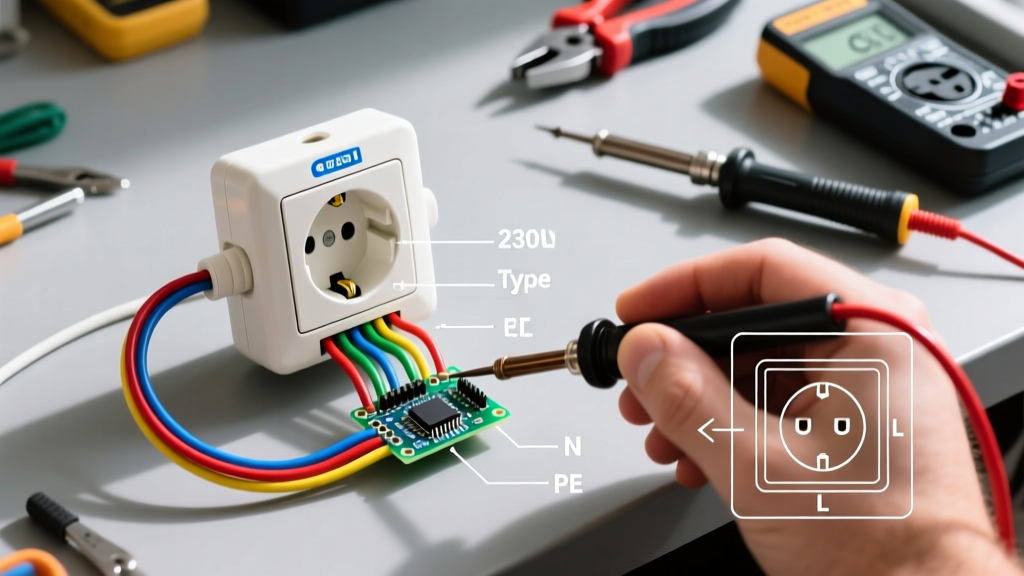
If you are permanently relocating to Spain and bringing high-value 220-240V European-spec appliances that were purchased in the UK (Type G plug) or simply want to replace a damaged US plug on a dual-voltage industrial tool, you can cut the plug and hardwire a replacement CEE 7/7 Schuko plug. These replacement plugs are available at any Spanish ferretería (hardware store) for €3 to €5.
Step-by-Step Rewiring Procedure:
- Strip back 40mm of the outer cable jacket, exposing the three inner conductors.
- Strip 8mm of insulation from the tips of the conductors and crimp ferrule terminals onto the stranded wire to prevent splaying inside the Schuko screw terminals.
- Map the wiring correctly. The color codes differ drastically between North American and European standards, as detailed by World Standards electrical guidelines.
| Function | US / Canada Wire Color | EU / Spain Wire Color | Schuko Terminal |
|---|---|---|---|
| Live / Hot | Black | Brown | Right Pin (L) |
| Neutral | White | Blue | Left Pin (N) |
| Earth / Ground | Green / Bare Copper | Green-Yellow Stripe | Top/Bottom Clips |
Grounding Edge Cases in Older Spanish Buildings
A critical edge case when using a Spain electrical outlet adapter in historic cities like Madrid, Barcelona, or Seville is the presence of ungrounded or "fake grounded" receptacles. Prior to the major updates in the Spanish Reglamento Electrotécnico de Baja Tensión (REBT) in the 1970s and subsequent 2002 overhauls, many older apartments were wired without a true earth ground. Sometimes, renovators install modern Type F Schuko faceplates but fail to run the green-yellow earth wire back to the distribution board, or worse, they jumper the neutral to the ground terminal.
How to Verify Ground Integrity:
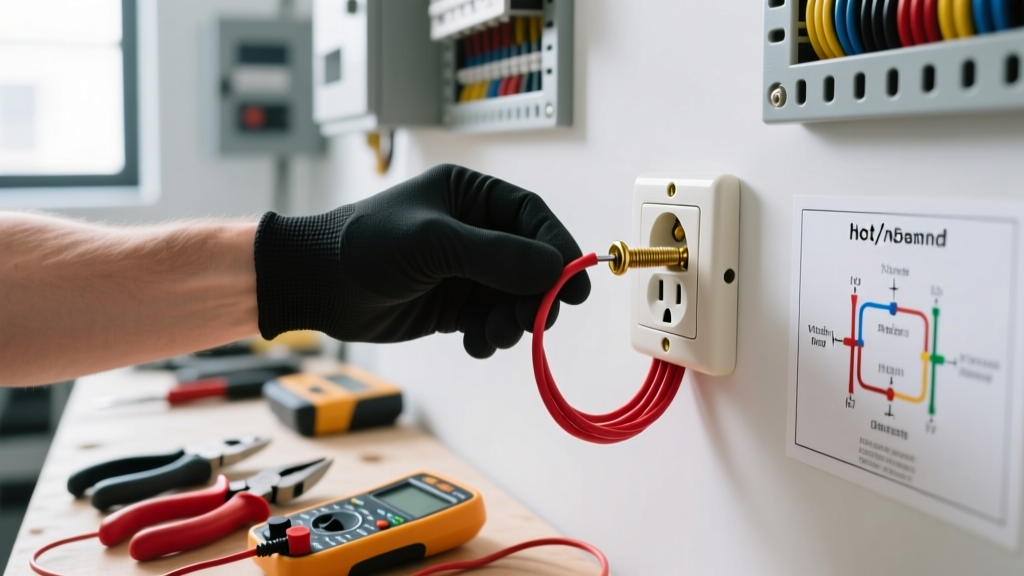
Before plugging in a metal-chassis appliance or a sensitive step-down transformer, use a digital multimeter (DMM). Set the DMM to AC Voltage (V~). Measure Line-to-Neutral (should read ~230V). Then measure Line-to-Ground (should also read ~230V). Finally, measure Neutral-to-Ground. If the Neutral-to-Ground reading is above 2-3V, or if Line-to-Ground reads 0V, the receptacle lacks a functional earth ground. In this scenario, you must rely on the building's RCD (Residual Current Device) at the breaker panel for fault protection, and avoid using surge protectors, as they require a true ground to divert transient voltage spikes safely.
Troubleshooting Matrix: Common Adapter and Wiring Failures
When interfacing foreign electronics with the Spanish grid, specific failure modes will present themselves. Use this matrix to diagnose and resolve issues quickly.
| Symptom | Underlying Cause | Actionable Solution |
|---|---|---|
| Visible arcing / sparking upon insertion | Pin diameter mismatch (using 4.0mm Type C plug in a worn Type F socket) or high inrush current. | Switch to a CEE 7/7 hybrid plug (4.8mm pins) or install an inline inrush current limiter. |
| US Motorized appliance runs hot and loud | Frequency mismatch. US motors are designed for 60Hz; Spain operates at 50Hz, causing motors to run 17% slower and overheat. | Do not use 60Hz AC motors on a 50Hz grid long-term. Replace the appliance with a European 50Hz spec model. |
| Transformer hums loudly and trips RCD | Transformer saturation due to grid voltage spikes (common in Spanish rural areas) or internal winding short. | Verify input voltage with a multimeter. If consistently above 245V, install an Automatic Voltage Regulator (AVR) upstream of the transformer. |
| GFCI/RCD trips immediately upon plugging in | Capacitive leakage in dual-voltage switching power supplies exceeding the 30mA Spanish RCD trip threshold. | Use an adapter with integrated EMI filtering, or distribute high-leakage devices across multiple circuits. |
Final Safety Considerations for Expats and Travelers
Adapting to the Spanish electrical infrastructure requires more than buying a cheap plastic dongle at the airport. Whether you are configuring a temporary digital nomad workspace or hardwiring a permanent kitchen setup, respecting the 230V/50Hz parameters and the Schuko grounding topology is non-negotiable. Always verify the input ratings on your device power supplies, size your step-down transformers with a 1.5x safety margin, and physically test the earth ground in older properties. For further safety guidelines regarding international electrical standards and travel safety, refer to the U.S. Department of State's Spain travel advisory. By treating your Spain electrical outlet adapter as part of a comprehensive wiring strategy, you ensure both the longevity of your electronics and your personal safety.