
Understanding the Scottish Electrical Infrastructure
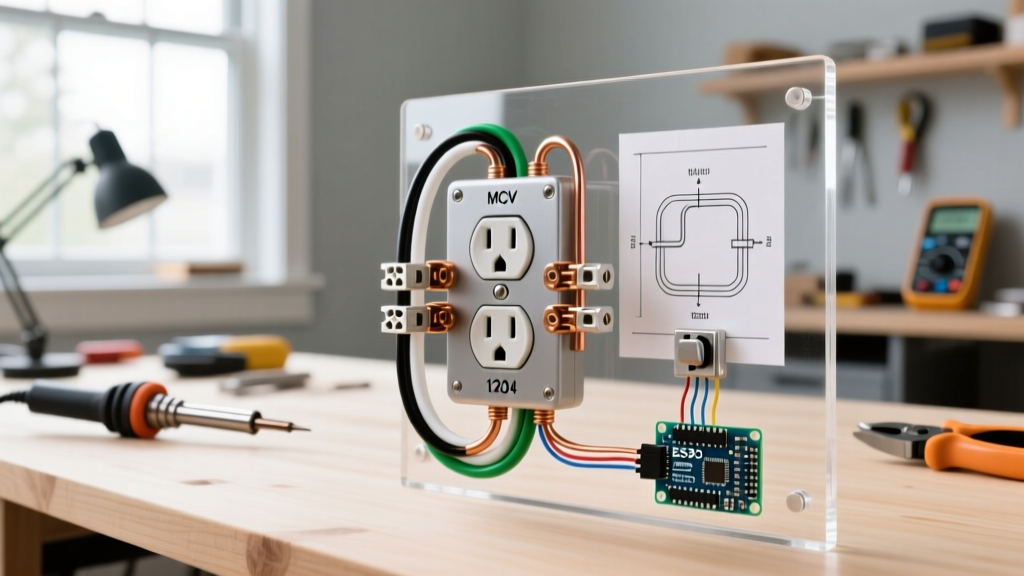
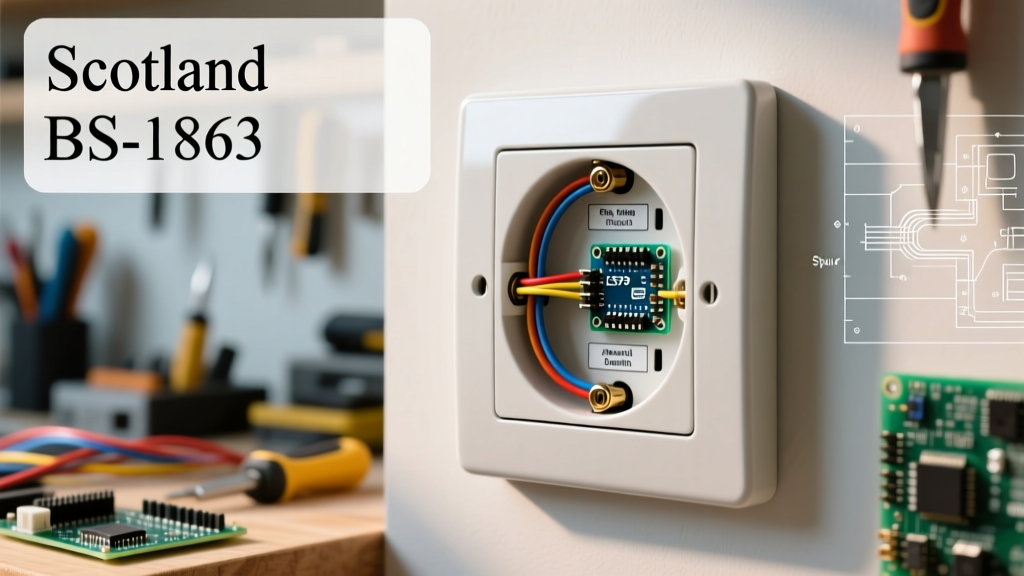
Scotland's electrical grid operates on a 230V (±10%), 50Hz alternating current (AC) supply, governed by the rigorous BS 7671 (IET Wiring Regulations). When dealing with a scotland electrical outlet, you are interacting with the BS 1363 standard—the globally recognized Type G socket featuring integral shutters and a 13A fuse. Unlike North American radial circuits, Scottish homes predominantly utilize Ring Final Circuits (RFCs) for standard socket outlets. This fundamental difference in topology dictates how you approach replacements, additions, and fault-finding.
Whether you are a DIY enthusiast upgrading aesthetic faceplates or an apprentice electrician refreshing your knowledge of the 18th Edition Wiring Regulations (including the latest 2024/2025 amendments applicable in 2026), understanding the topology of UK and Scottish wiring is critical for safety and compliance.
According to the Health and Safety Executive (HSE), electrical installations must be designed, constructed, and maintained to prevent danger. In Scotland, adherence to BS 7671 is not just best practice; it is a legal requirement under the Electricity at Work Regulations 1989.
The Anatomy of a BS 1363 Scotland Electrical Outlet
The standard scotland electrical outlet is a marvel of safety engineering. Before touching any wires, you must understand the mechanical and electrical interlocks built into the BS 1363 design:
- Earth Pin Shutter Mechanism: The longer earth pin physically unlocks the internal shutters covering the Live and Neutral line apertures. This prevents foreign object insertion.
- Integral Fusing: The plug (and sometimes the socket environment via FCUs) contains a BS 1362 ceramic or glass fuse (typically 3A or 13A) to protect the flexible appliance cord, not the fixed wall wiring.
- Resilient Terminals: High-quality brands like MK Logic Plus or Crabtree feature robust brass terminal blocks designed to accept up to three 2.5mm² conductors, essential for ring main daisy-chaining.
Harmonized Wiring Colors: A Critical Reference
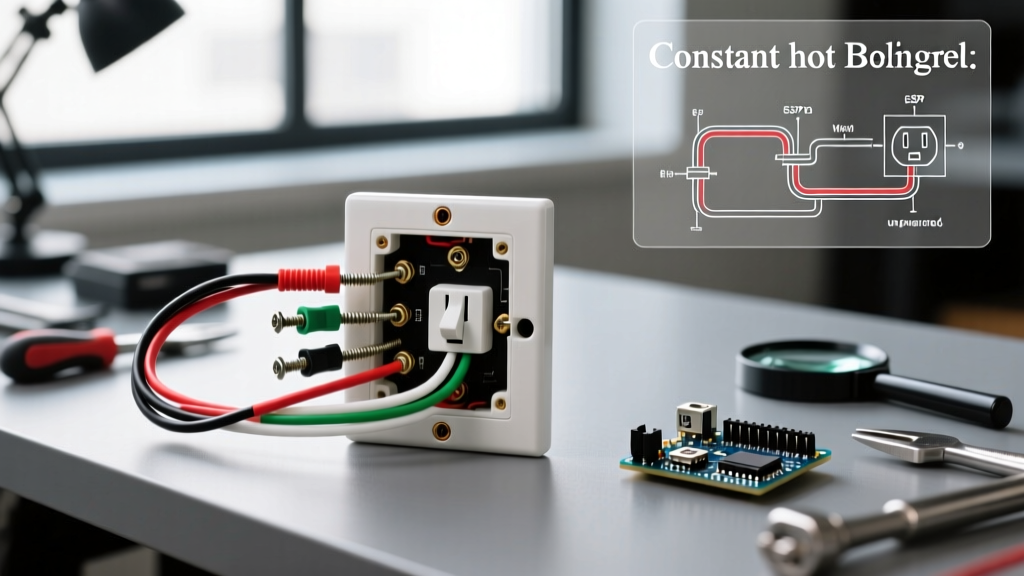
In 2004, the UK (including Scotland) harmonized its fixed wiring colors with European standards. If you open an older Scottish property's backbox, you may encounter the legacy color scheme. Always test with a calibrated voltage indicator before proceeding.
| Function | Current Color (Post-2004) | Legacy Color (Pre-2004) | Terminal Marking |
|---|---|---|---|
| Line (Live) | Brown | Red | L |
| Neutral | Blue | Black | N |
| Earth (CPC) | Green/Yellow | Bare Copper / Green | E or ⏚ |
Note: The Circuit Protective Conductor (CPC) in older 2.5mm² Twin & Earth cable is often bare copper. You must slide green/yellow earth sleeving over this wire before terminating it at the socket to comply with current BS 7671 regulations.
Scenario 1: Replacing a Socket on a Ring Final Circuit
The Ring Final Circuit is the backbone of Scottish domestic power. A single 32A Type B or Type C miniature circuit breaker (MCB) at the consumer unit protects a loop of 2.5mm² Twin & Earth (T&E) cable that starts at the breaker, visits every socket, and returns to the same breaker. This allows the cable to safely carry up to ~40A when clipped direct, as the load is split across two parallel paths.
Step-by-Step Replacement Guide
- Isolate and Prove Dead: Switch off the 32A MCB and the main isolator if necessary. Use a dedicated voltage indicator (VI) and a proving unit to confirm the circuit is dead. Never rely on a standard multimeter for safety-critical dead testing.
- Identify the Ring Cables: Upon removing the old faceplate, you will typically see two 2.5mm² T&E cables entering the 35mm or 47mm deep backbox. These represent the 'in' and 'out' legs of the ring.
- Prepare the Conductors: Strip back the grey PVC sheath to within 15mm of the backbox entry. Ensure exactly 12-15mm of copper is exposed on the Line, Neutral, and Earth wires.
- Terminate Securely: Insert the two Brown wires into the 'L' terminal, the two Blue wires into the 'N' terminal, and the two Earth wires (sleeved) into the 'E' terminal. If a third cable is present, this is a 'spur' (see Scenario 2).
- Torque and Tug Test: Tighten the terminal screws to the manufacturer's specified torque (usually around 1.5Nm to 2.0Nm for standard socket screws). Give each wire a firm 'tug test' to ensure it is fully seated and clamped.
Scenario 2: Adding a Spur for High-Load Appliances
A 'spur' is a branch off the main ring circuit. Under BS 7671, you are permitted to add one single unfused spur (feeding one single or one double socket) from an existing point on the ring. However, if you need to feed multiple sockets or a high-draw fixed appliance (like a storage heater or an EV charging prep point), you must use a 13A Fused Connection Unit (FCU).
Wiring a Fused Spur (FCU)
When adding an FCU to protect a new radial branch:
- Cable Sizing: Use 2.5mm² T&E for the spur feeding the FCU, and 1.5mm² or 2.5mm² T&E for the load side of the FCU, depending on the length and installation method.
- Load Side Protection: The 13A fuse inside the FCU protects the downstream cable. If the downstream cable is 1.5mm², the 13A fuse provides adequate overload and short-circuit protection.
- Termination: The 'Feed In' side connects to the ring main cables. The 'Load Out' side connects to the new appliance or secondary socket. Ensure the Earth terminal block on the FCU bridges both sides.
Advanced Troubleshooting: The Figure-of-8 Ring Test
If a scotland electrical outlet is tripping the consumer unit's RCD (Residual Current Device) or MCB, you must verify the ring topology. Electricians use a low-resistance ohmmeter (like the Megger MFT1845) to perform the Figure-of-8 test.
| Test Step | Procedure | Expected Result |
|---|---|---|
| 1. End-to-End | Measure resistance of Line-Line, Neutral-Neutral, Earth-Earth at the consumer unit with cables disconnected. | Values should be low and consistent. Earth (r2) is typically 1.67x higher than Line (r1) due to the smaller CPC cross-section. |
| 2. The Figure-of-8 | Cross-connect Line to Neutral at the consumer unit. Measure Line-Neutral at every socket on the ring. | Every socket should read the exact same resistance (r1 + r2 / 4). A higher reading indicates a broken ring or a loose connection. |
| 3. Polarity Check | Use a socket tester or multimeter to verify L, N, and E are in the correct physical pins. | Correct BS 1363 pinout. Reversed polarity will trip RCDs upon appliance insertion. |
Scottish Building Standards and 2026 Compliance
Unlike England and Wales, which operate under 'Part P' of the Building Regulations, Scotland enforces electrical safety through Building Standards Scotland (Section 4: Safety). According to the Scottish Government Building Standards, any new electrical installation or significant alteration (such as adding a new circuit for a kitchen island or an outbuilding) requires a building warrant or must be certified by an approved scheme.
To ensure compliance, homeowners should utilize contractors registered with SELECT (The Scottish Electrical Trade Association) or the NICEIC. These bodies can self-certify their work, bypassing the need for local authority building warrant fees, which can cost upwards of £300 for minor works in 2026.
2026 Material and Labor Cost Matrix (Scotland)
Understanding the financial landscape is crucial for project planning. Below is a snapshot of average costs in Scotland as of early 2026:
| Item / Service | Estimated Cost (GBP) | Notes |
|---|---|---|
| Premium 13A Socket (e.g., MK Logic Plus) | £9.50 - £14.00 | White molded; metal clad variants cost £25+ |
| 2.5mm² T&E Cable (100m drum) | £140.00 - £175.00 | Prysmian or Doncaster brands; copper prices fluctuate |
| 13A Fused Connection Unit (FCU) | £11.00 - £18.00 | Switched vs. unswitched variants |
| Electrician Day Rate (Scotland) | £320.00 - £420.00 | Varies between Central Belt and Highlands/Islands |
| Minor Works Certificate (EIC) | £60.00 - £90.00 | Required for legal compliance and home insurance |
Final Safety Directives
Working with a scotland electrical outlet demands absolute respect for the 230V supply. Lethal ventricular fibrillation can occur at currents as low as 30mA. Always ensure your RCDs are tested quarterly using the physical 'T' (Test) button on your consumer unit, and invest in a professional plug-in socket tester (such as the Kewtech KT66DL) to verify earth loop impedance and polarity before energizing any newly wired circuit. For comprehensive domestic guidance, always refer to the Electrical Safety First wiring resources.