
The Bilingual DIYer: Bridging the Language Gap in Electrical Work
In the modern North American construction and DIY landscape, bilingual communication is not just a courtesy; it is a critical safety asset. With over 30% of the US construction and electrical workforce identifying as Hispanic, knowing how to accurately discuss and install an electric outlet in Spanish can prevent dangerous miscommunications on the job site or during collaborative home renovation projects. Whether you are an English-speaking homeowner working alongside Spanish-speaking contractors, or a Spanish-speaking DIYer navigating English-labeled hardware stores, mastering the bilingual terminology of electrical wiring is essential.
This beginner installation tutorial will guide you through the process of wiring a standard 120V, 15-Amp duplex receptacle. We will provide step-by-step instructions utilizing both English and Spanish terminology, ensuring that safety protocols, tool names, and wiring procedures are universally understood.
Regional Spanish Terms for 'Electric Outlet'
Before picking up a screwdriver, it is vital to understand that the Spanish language features significant regional variations for electrical components. If you are searching for an electric outlet in Spanish, you will encounter several different terms depending on the country of origin.
| English Term | Spanish Term (General) | Regional Variations & Slang |
|---|---|---|
| Electric Outlet / Receptacle | Tomacorriente | Enchufe (Spain/South America), Contacto (Mexico), Toma (Colombia) |
| Circuit Breaker | Interruptor termomagnético | Breaker (Universal slang), Pastilla (Mexico), Taco (Spain), Automático (Argentina) |
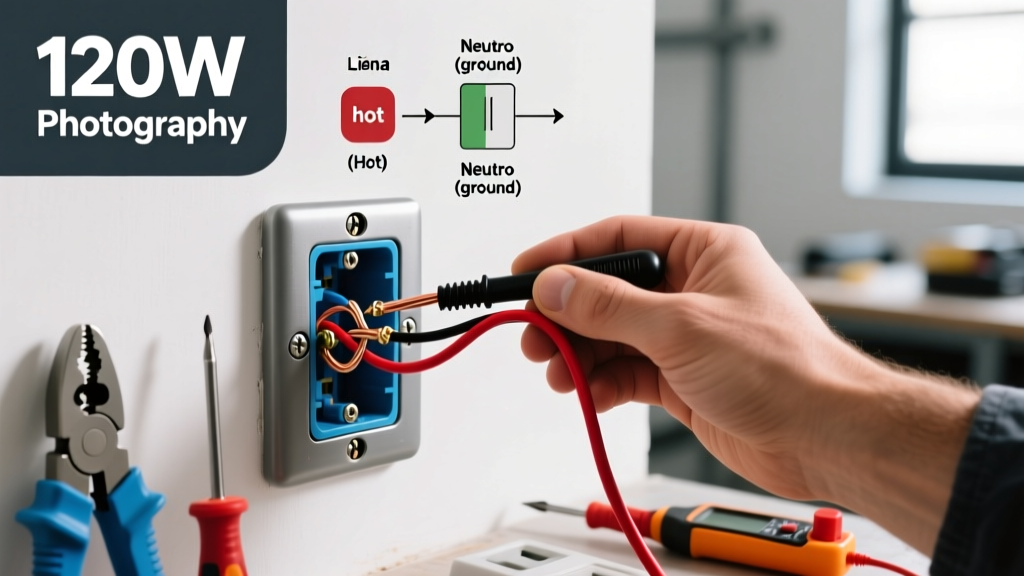
| Hot Wire (Live) | Fase | Vivo, Caliente |
| Neutral Wire | Neutro | Retorno (in specific switch contexts) |
| Ground Wire | Tierra | Descarga a tierra, Pozo a tierra |
| Wire Stripper | Pelacables | Alicate de corte y pelado |
Bilingual Tool and Material Checklist (Lista de Herramientas y Materiales)
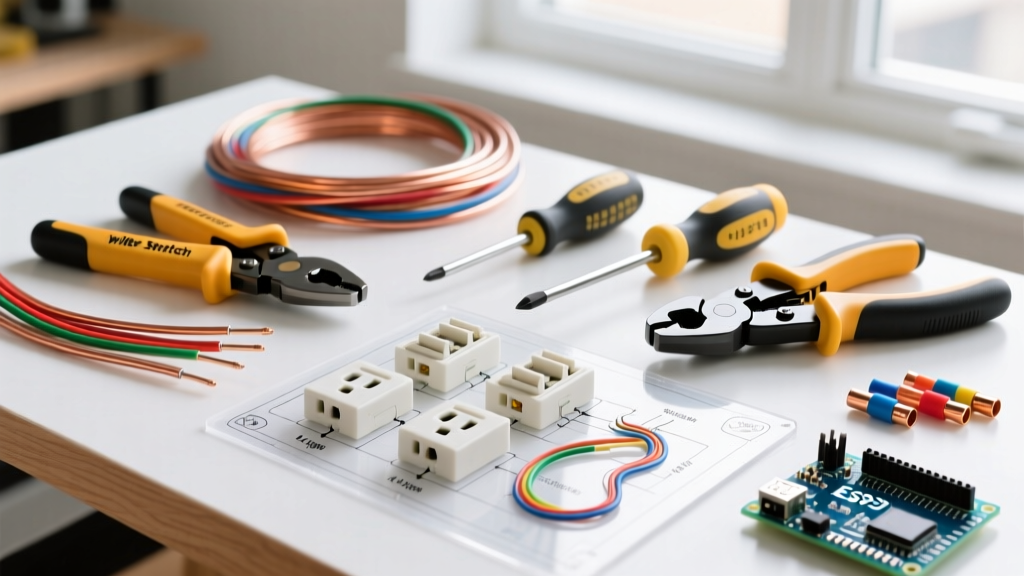
To install a standard 15-Amp residential outlet, you will need specific materials that meet current 2026 National Electrical Code (NEC) standards. Below is your bilingual shopping list, complete with average 2026 retail pricing.
- Receptacle (Tomacorriente): Leviton T5252-W 15A Tamper-Resistant (TR) Duplex Receptacle. Cost: ~$3.25. The TR designation is mandated by the CPSC and NEC for all new residential installations to prevent childhood shock hazards.
- Wire (Cable): 14/2 NM-B (Romex) for 15A circuits, or 12/2 NM-B for 20A circuits. Cost: ~$0.75 per foot.
- Voltage Tester (Probador de Voltaje): Klein Tools NCVT-2 Non-Contact Voltage Tester. Cost: ~$24.00.
- Wire Stripper (Pelacables): Klein Tools 11055 Automatic Wire Stripper. Cost: ~$32.00.
- Torque Screwdriver (Destornillador Dinamométrico): Required for NEC 110.14(D) compliance. Cost: ~$45.00.
Step-by-Step Installation Guide (Guía de Instalación Paso a Paso)
Step 1: Power Verification and Lockout (Verificación de Energía y Bloqueo)
Safety is paramount. Never assume a circuit is dead. Navigate to your main electrical panel (panel eléctrico) and turn off the breaker (bajar el breaker / pastilla) controlling the room you are working in. Implement a Lockout/Tagout (LOTO) procedure (Bloqueo y Etiquetado) by placing a physical lock or a brightly colored tag on the panel to ensure no one accidentally turns the power back on.
Insert your Klein NCVT-2 voltage tester (probador de voltaje) into the slots of the existing outlet. The LED must remain dark, and the audible alarm must stay silent. Test the tester on a known live circuit to verify the tool's battery is functioning correctly.
Step 2: Preparing the Wires (Preparación de los Cables)
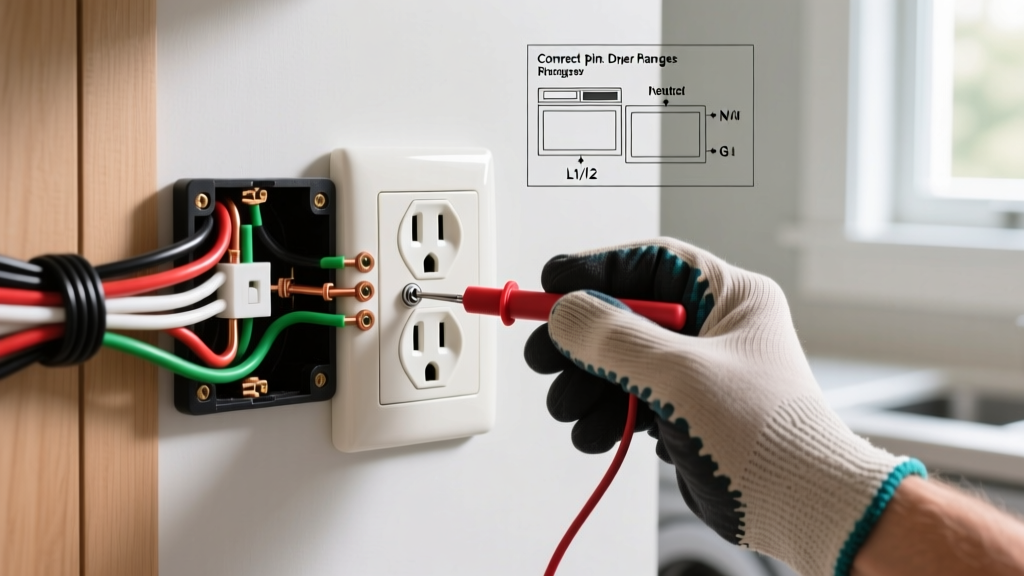
Once power is confirmed off, remove the faceplate (placa) and unscrew the old receptacle. Pull the device out of the gang box (caja de registro). You will see three sets of wires: Black (Hot/Fase), White (Neutral/Neutro), and Bare Copper (Ground/Tierra).
Using your wire strippers (pelacables), strip exactly 3/4 of an inch (19mm) of insulation from the black and white wires. Stripping too little exposes the screw threads to bare wire, creating a short-circuit risk; stripping too much leaves exposed copper outside the terminal, which is a severe shock hazard.
Step 3: Wiring the Receptacle (Cableado del Tomacorriente)
The Leviton T5252-W features push-in back-wire clamps and traditional side-wire terminal screws. For maximum durability and E-E-A-T best practices, we recommend using the side-wire terminal screws with a proper 'J-Hook' (Gancho en forma de J).
- Ground (Tierra): Wrap the bare copper wire clockwise around the green grounding screw (tornillo verde). Tighten firmly.
- Neutral (Neutro): Wrap the white wire clockwise around the silver-colored screw (tornillo plateado). The clockwise motion ensures the wire pulls tighter as the screw is turned.
- Hot (Fase): Wrap the black wire clockwise around the brass-colored screw (tornillo de latón).
Note: In Spanish, electricians often use the mnemonic 'Fase al Latón, Neutro al Plateado' to remember the hot and neutral placements.
Step 4: Torque and Mounting (Apriete y Montaje)
A common beginner mistake is under-tightening or over-tightening terminal screws. Under-tightening causes arcing (arcos eléctricos) and fires, while over-tightening can strip the brass threads or snap the screw head.
NEC 2026 Compliance Warning: According to NEC Section 110.14(D), all electrical connections must be tightened to the manufacturer's specified torque. For the Leviton T5252-W, the required torque is 14 in-lbs. Use a calibrated torque screwdriver to achieve this exact specification.
Carefully fold the wires back into the gang box (doblar los cables en la caja), keeping the ground wire pushed to the back. Mount the receptacle using the provided 6-32 machine screws, ensuring it sits perfectly level. Attach the faceplate and restore power at the breaker.
NEC 2026 Code Updates & Safety Standards
When researching how to wire an electric outlet, it is crucial to stay updated on the latest safety codes. The National Fire Protection Association (NFPA) continuously updates the NEC to mitigate residential fire risks. As of the latest code cycles, Tamper-Resistant (TR) receptacles are mandatory in all 15A and 20A residential areas. Furthermore, the Consumer Product Safety Commission (CPSC) heavily advocates for TR outlets, noting they prevent thousands of childhood injuries annually by utilizing internal shutter mechanisms that only open when equal pressure is applied to both slots simultaneously.
For bilingual workforces, the Occupational Safety and Health Administration (OSHA) provides extensive Hispanic outreach resources, emphasizing that language barriers are a leading cause of job-site electrical accidents. Utilizing bilingual terminology, as outlined in this guide, directly aligns with OSHA's recommendations for hazard communication.
Troubleshooting Matrix (Matriz de Solución de Problemas)
If your newly installed tomacorriente fails to operate, consult this troubleshooting matrix before calling a licensed electrician (electricista matriculado).
| Symptom (Síntoma) | Probable Cause (Causa Probable) | Bilingual Solution (Solución) |
|---|---|---|
| Outlet is completely dead (El tomacorriente no funciona) | Tripped breaker or loose neutral wire. | Check the panel for a tripped breaker. Re-torque the silver neutro screw to 14 in-lbs. |
| Plugs fall out easily (Los enchufes se caen) | Worn internal contacts in old receptacles. | Replace immediately. The TR shutters on the new Leviton T5252-W will grip plugs securely. |
| Voltage tester beeps on ground wire (El probador pita en la tierra) | Induced phantom voltage or open ground. | Verify the bare tierra wire is firmly connected to the green screw and the main panel ground bus. |
| Faceplate doesn't sit flush (La placa no queda al ras) | Wires bunched behind the device. | Use accordion folds to push the cables deep into the back of the caja de registro. |
Frequently Asked Questions (Preguntas Frecuentes)
Can I use 12 AWG wire on a 15-Amp outlet?
Yes. You can always use a larger wire gauge (thicker wire) than the circuit requires. 12 AWG (calibre 12) is rated for 20 Amps, so it is perfectly safe on a 15-Amp breaker. However, 12 AWG is stiffer and can be more difficult to fold into a standard single-gang box.
Why are the screws on my outlet different colors?
The color coding is a universal safety standard. Brass (latón) is for the hot wire, silver (plateado) is for the neutral, and green (verde) is exclusively for the equipment grounding conductor. Never reverse the hot and neutral wires, as this creates a shock hazard even if the appliance appears to function normally.
What is the Spanish term for GFCI?
A Ground Fault Circuit Interrupter (GFCI) is universally referred to in Spanish as an Interruptor de Falla a Tierra, though many bilingual electricians simply use the English acronym 'GFCI' or the Spanish phonetic equivalent 'Yiyefisi' on job sites across the Americas.