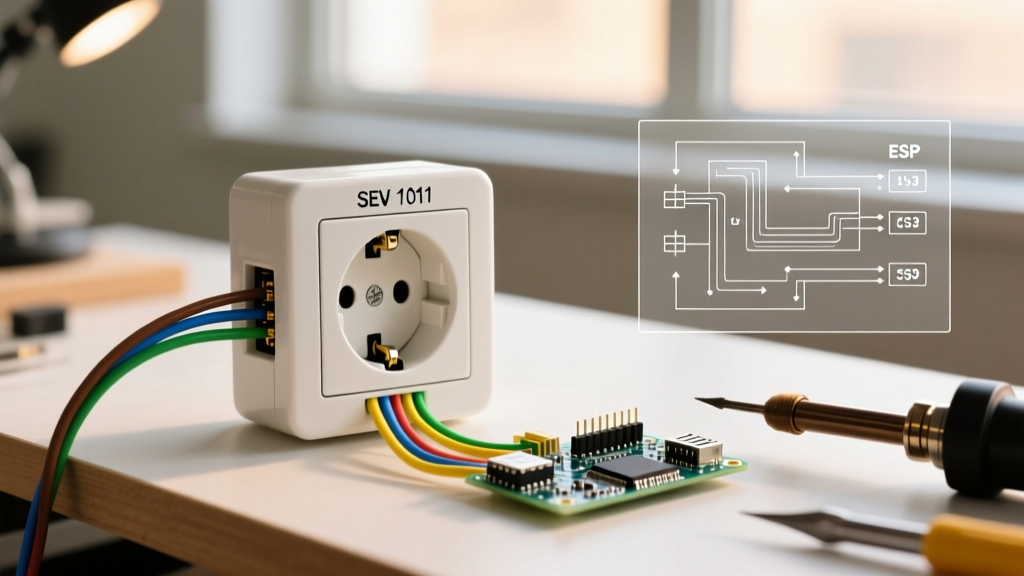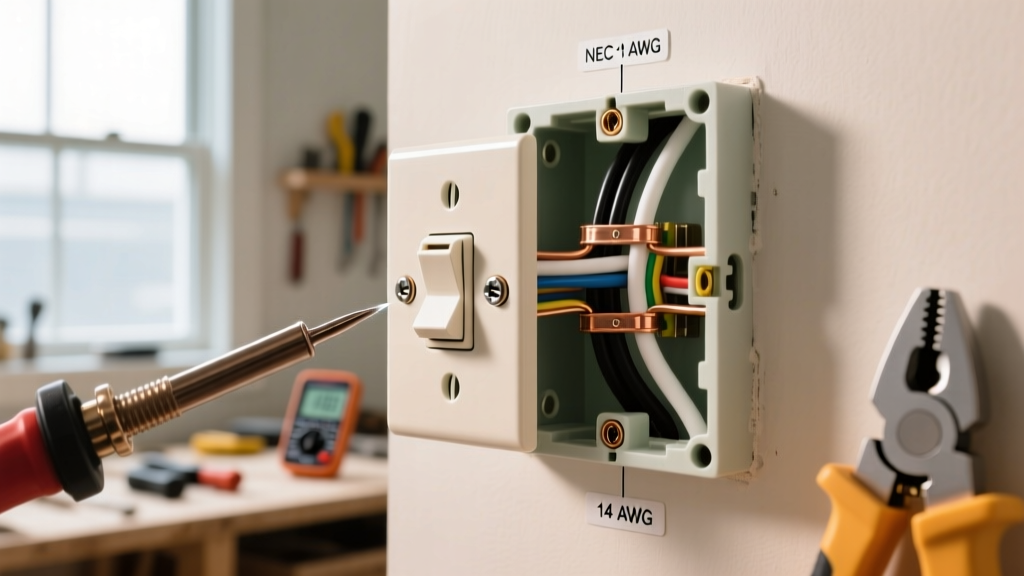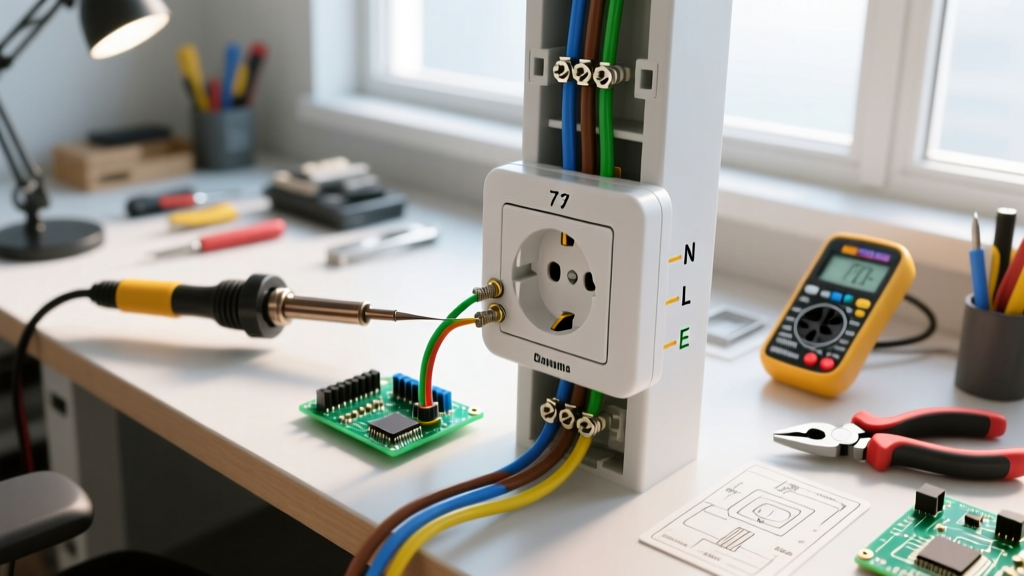

Introduction to the Romania Electrical Outlet Standard
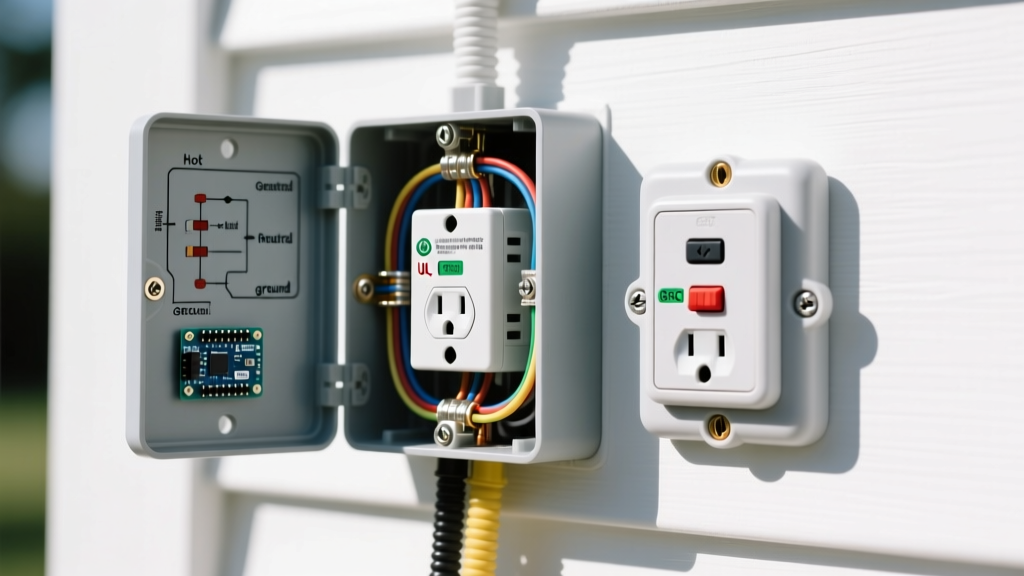
If you are undertaking a DIY home renovation or replacing a damaged receptacle in Romania, understanding the local electrical standards is critical for both safety and compliance. The standard Romania electrical outlet is the Type F (commonly known as the Schuko or CEE 7/3), operating on a 230V/50Hz alternating current (AC) supply. Unlike the UK's Type G or the US Type A/B systems, the Schuko system relies on side-earth clips rather than a dedicated third grounding pin, making proper wire termination and flush-box alignment absolutely vital.
In 2026, the Romanian market is dominated by high-quality European brands like Legrand, Schneider Electric, and Gewiss. While modern receptacles feature user-friendly push-in terminals, the underlying wiring principles governed by the Autoritatea Națională de Reglementare în Domeniul Energiei (ANRE) and European IEC standards remain strict. This beginner tutorial will walk you through the exact process of wiring a standard 16A flush-mounted Schuko outlet, complete with local terminology, precise measurements, and safety protocols.
⚠️ CRITICAL SAFETY WARNING: Romania operates on a 230V mains supply, which is lethal. Always isolate the circuit at the main distribution board (tablou electric) and verify the absence of voltage with a CAT III or CAT IV multimeter before touching any bare conductors. If you are unsure, hire an ANRE-authorized electrician (electrician autorizat ANRE).
Tools and Materials Required
Before beginning, gather the following tools and materials. Prices reflect average Romanian retail costs (in RON/EUR) as of early 2026.
- Type F Schuko Receptacle (Priză Schuko): 16A, 230V with child protection (protecție copii). Recommendation: Legrand Niloe or Schneider Asfora (Approx. 15 - 25 RON / 3 - 5 EUR).
- Cable: CYAb (rigid single-core copper) 2.5 mm². Note: Never use 1.5 mm² wire for standard socket circuits; 2.5 mm² is the legal minimum for 16A circuits in Romania (Approx. 12 RON/meter).
- Flush-Mount Box (Doză de aparat): Standard European Ø68mm, depth 40mm or 60mm.
- Wire Strippers (Dezizolator): Calibrated for 2.5 mm² to avoid nicking the copper core.
- Voltage Tester / Multimeter: CAT III minimum (e.g., Uni-T UT61E+).
- Insulated Screwdrivers: Phillips #1 and flathead, rated for 1000V.
- Torque Screwdriver (Optional but recommended): Set to 0.8 - 1.0 Nm for terminal screws.
Understanding Romanian Wiring Color Codes
Romania strictly follows the IEC 60446 / HD 308 S2 European harmonized color codes. Misidentifying these wires is the most common cause of fatal DIY electrical accidents. According to World Standards electrical guidelines, proper grounding is essential for the Schuko system to function safely.
| Function | IEC Color Code | Romanian Term | Terminal Marking |
|---|---|---|---|
| Phase (Live) | Brown (Maro) | Fază | L |
| Neutral | Blue (Albastru) | Null / Neutru | N |
| Earth (Ground) | Green/Yellow (Galben-Verde) | Împământare / Protecție | PE (⏚ symbol) |
Step-by-Step Installation Tutorial
Step 1: Circuit Preparation and Isolation
Locate your main electrical panel (tablou electric). Identify the 16A MCB (siguranță automată) controlling the room's sockets. Flip the breaker to the OFF (0) position. Because Romanian circuits also require a 30mA RCD (diferențială) for socket protection, ensure the RCD is also disengaged if it shares a common isolation switch. Use your multimeter set to AC Voltage (V~) to test an existing socket on the same circuit to confirm the power is truly dead.
Step 2: Preparing the Flush-Mount Box (Doza)
Remove the old outlet faceplate and unscrew the mounting claws (gheare de prindere). Gently pull the old receptacle out and disconnect the wires. Inspect the Ø68mm flush box. If the box is damaged or the mounting screw holes are stripped, you must use a repair ring (inel de reparație) or replace the box entirely using plaster of Paris (ipsos). Clean out any dust or debris from the box, as plaster dust can interfere with push-in terminal contacts.
Step 3: Stripping and Terminating the Wires
This is where precision matters. Modern Romanian sockets (like the Legrand Valena Life or Schneider Mureva) feature two types of terminals: screw-clamp and push-in (automat).
- Strip the insulation: Use your wire strippers to remove exactly 12mm to 14mm of insulation from the 2.5 mm² CYAb wires. Do not score the copper; a nicked wire will snap under thermal expansion over time.
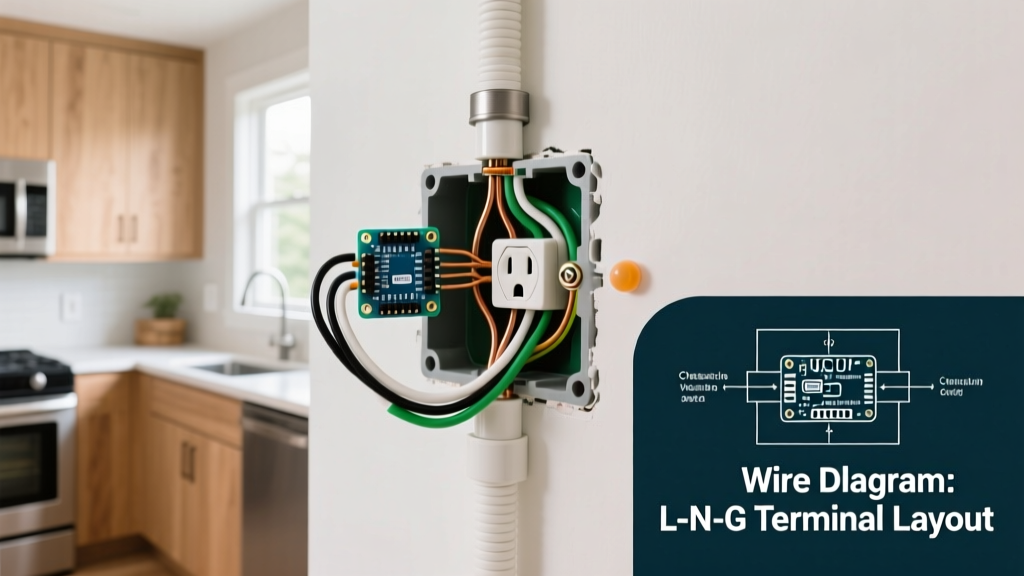
- Connect the Earth (PE): Insert the Green/Yellow wire into the central terminal marked with the ground symbol (⏚). The Schuko system relies on this side-clip grounding, so a loose earth wire defeats the entire safety mechanism.
- Connect the Neutral (N): Insert the Blue wire into the terminal marked 'N' (usually on the left side of the socket face, though Romania does not strictly enforce left/right polarity for standard sockets, maintaining consistency in a room is best practice).
- Connect the Phase (L): Insert the Brown wire into the terminal marked 'L'.
- Verify retention: Give each wire a firm, gentle tug (approx. 3kg of force) to ensure it is locked in the terminal. If using screw terminals, tighten to exactly 0.8 Nm. Over-tightening will crush the 2.5mm² copper, increasing resistance and creating a fire hazard.
Step 4: Securing the Receptacle
Carefully fold the wires into the back of the Ø68mm box. The 2.5 mm² rigid copper is stiff; create a gentle 'S' bend behind the socket mechanism to allow it to sit flush without putting stress on the terminals. Align the outlet horizontally using a small spirit level (boloboc). Secure the mechanism to the box using the two M3.5 mounting screws provided. Only use the metal mounting claws (gheare) as a secondary backup; primary support must come from the screws to prevent the outlet from pulling out when unplugging tight-fitting Schuko plugs.
2026 Perspective: Smart Outlets and Energy Monitoring
As of 2026, upgrading to a smart Romania electrical outlet is a popular DIY project. Devices like the Legrand Netatmo Smart Socket or Schneider Wiser Connected Socket fit into standard Ø68mm boxes but require strict adherence to the 2.5 mm² wire gauge and a stable Neutral connection. Unlike older smart plugs that simply adapted into existing sockets, hardwired smart modules (like the Shelly Plus 1PM installed behind a standard Schuko faceplate) allow for granular energy monitoring and solar-panel integration, which is highly relevant given Romania's expanding prosumer (prosumator) solar market.
Common Beginner Mistakes to Avoid
- Using 1.5 mm² Wire for Sockets: While 1.5 mm² is acceptable for lighting circuits (10A breaker), using it for a 16A socket circuit violates ANRE norms (I7-2011) and poses a severe overheating risk.
- Looping Wires in Push-In Terminals: If you are daisy-chaining (looping) sockets, do not use the socket's internal terminals to splice wires. Use proper Wago 221 lever-nut connectors inside a deep (60mm) flush box to maintain the circuit, then run a single pigtail to the socket.
- Ignoring the Earth Clip Alignment: If the socket is mounted slightly crooked, the earth clips on the side of the Schuko plug may not engage fully before the live pins make contact, creating a shock hazard.
Frequently Asked Questions (FAQ)
Can I install a US Type A/B outlet in Romania?
No. Romania operates on 230V. Plugging a standard US 110V appliance into a hardwired Type A/B outlet installed in Romania will instantly destroy the appliance and cause a fire. If you need to power US devices, use a step-down transformer (230V to 110V) with a standard Schuko plug, rather than hardwiring foreign receptacles into your walls.
Why does my Schuko plug feel loose in the new outlet?
This is usually caused by cheap, non-compliant outlets where the side-earth clips and internal live/neutral contacts lack proper tension. Always buy branded receptacles (Legrand, Schneider, Gewiss, Simon) that carry the CE mark and comply with CEE 7/3 standards. Cheap imports often fail the 5,000 insertion-cycle durability test required by EU law.
Do I need an ANRE authorized electrician to change a single socket?
Legally, any modification to the fixed electrical installation in Romania should be performed or certified by an ANRE-authorized professional to maintain your home insurance validity. However, replacing an existing, damaged faceplate with an identical specification unit (like-for-like) is generally considered basic maintenance by homeowners, provided the circuit is safely isolated and tested beforehand.