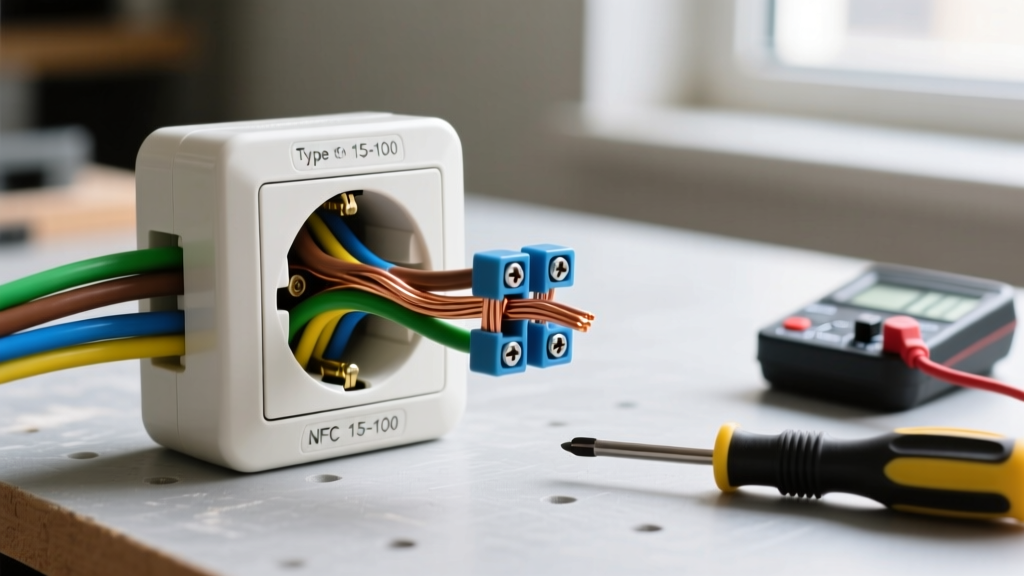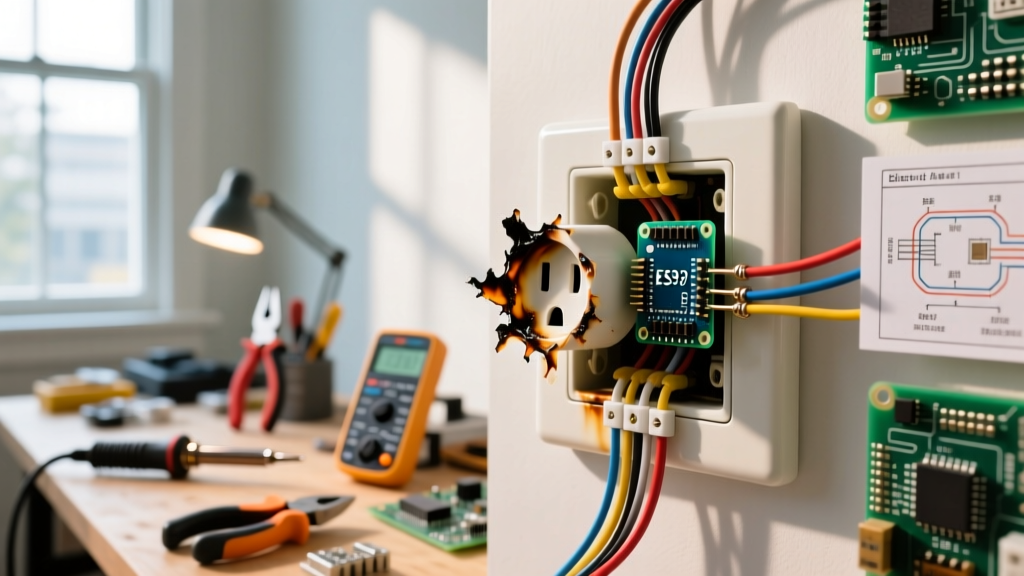

Finding an electrical outlet melted is a severe diagnostic red flag. Unlike a simple tripped breaker, melted plastic indicates sustained, localized thermal runaway. According to the National Fire Protection Association (NFPA), electrical distribution and lighting equipment failures are a leading cause of structural fires, often originating at the receptacle yoke due to high-resistance connections.
This guide provides a master-level troubleshooting protocol to identify the exact failure mode, assess collateral wire damage, and execute a code-compliant repair using 2026 NEC standards.
The Thermodynamics of Receptacle Failure
Standard residential receptacles are molded from thermoplastics like Polycarbonate (PC) or Polyamide (Nylon). While these materials boast high heat deflection temperatures (often exceeding 105°C / 221°F), they will warp, melt, and off-gas toxic fumes when subjected to sustained resistive heating.
The physics behind this is governed by Joule's First Law: P = I²R (Power = Current squared × Resistance). A properly torqued terminal screw has near-zero resistance. However, a loose connection can introduce 0.5 ohms or more of resistance. If a space heater draws 15A through that loose terminal, it generates 112.5 watts of pure heat localized on a surface area smaller than a dime. This rapidly exceeds the melting point of the surrounding plastic housing.
Visual Diagnostic Matrix: Identifying the Root Cause
Before removing the receptacle, conduct a visual inspection. The specific pattern of the melt dictates the underlying failure mode.
| Visual Symptom | Probable Root Cause | Required Action |
|---|---|---|
| Brown/black scorch marks isolated to one blade slot. | Loose terminal screw or failed 'backstab' push-in connection on the hot or neutral. | Replace receptacle; use screw terminals only. Cut back annealed wire. |
| Entire faceplate warped, melted evenly across the center. | Sustained circuit overload (e.g., daisy-chained high-draw appliances exceeding 1800W). | Audit circuit load. Upgrade to commercial-grade 20A receptacle if wiring permits. |
| Melted plastic behind the metal yoke strap, wires intact. | Internal brass contact fatigue or arc fault inside the receptacle body. | Immediate replacement. Inspect for drywall scorching. |
| Green/white powdery corrosion with localized melting. | Aluminum wiring oxidation or galvanic corrosion (copper wire on non-CO/ALR rated device). | Pigtail with Alumiconn connectors or install CO/ALR rated receptacle. |
Step-by-Step Diagnostic and Repair Protocol
The Electrical Safety Foundation International (ESFI) strongly advises against simply swapping the outlet without inspecting the wiring. Follow this exact sequence to ensure a safe, lasting repair.
Step 1: Isolate and Verify
Turn off the breaker. Do not rely on a wall switch. Use a premium non-contact voltage tester (like the Klein NCVT-3) and a multimeter (such as the Fluke 117) to verify 0V across hot-to-neutral, hot-to-ground, and neutral-to-ground.
Step 2: Extract and Inspect Wire Annealing
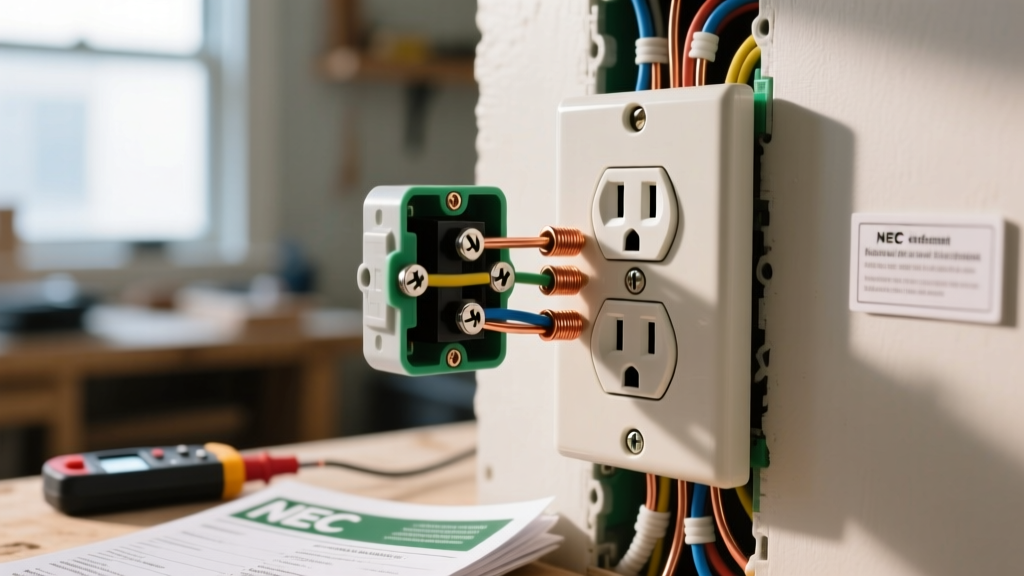
Unscrew the yoke and gently pull the receptacle from the junction box. Inspect the stripped ends of the 14 AWG or 12 AWG copper wires. If the copper has turned black, purple, or feels brittle, it has annealed due to extreme heat. Annealed copper loses its tensile strength and conductivity. You must strip the wire back to bright, shiny copper using precision wire strippers (e.g., Klein 11063). If the wire is too short to reach the new terminal, you must use a wire nut or WAGO 221 lever connector to pigtail an extension.
Step 3: Terminate Using NEC Torque Standards
Since the 2017 NEC update (and strictly enforced through the 2026 NEC cycle), Section 110.14(D) requires the use of a listed torque tool for terminal connections. Hand-tightening is no longer code-compliant and is the primary cause of repeat melting.
- Standard 15A Receptacle (e.g., Leviton 5362): Torque to 14 in-lbs.
- Standard 20A Receptacle (e.g., Hubbell 5262): Torque to 14 in-lbs.
- Heavy Duty / Hospital Grade: Torque up to 18 in-lbs (check manufacturer spec sheet).
Pro Tip: Never use the 'backstab' push-in holes on the rear of a residential receptacle. The internal spring-loaded brass grips weaken over time under thermal cycling, creating the exact high-resistance joint that causes melting. Always loop the wire clockwise around the terminal screw.
Receptacle Selection: Residential vs. Commercial Grade
When replacing a melted unit, do not buy the $1.29 builder-grade receptacles. The internal brass contacts are thin and prone to fatigue. As of 2026, upgrade to Commercial or Hospital Grade devices.
| Device Grade | Example Model | Avg. Cost (2026) | Best Application |
|---|---|---|---|
| Residential | Leviton T5320 | $2.50 | Low-draw areas (bedrooms, hallways). |
| Commercial | Leviton 5362-W | $4.50 | Kitchens, living rooms, home offices. |
| Hospital Grade | Hubbell 8300 | $12.00 | High-draw appliances, space heaters, AC units. |
When to Call a Licensed Electrician
While DIY replacement is viable for standard copper wiring, certain scenarios require professional intervention. According to the Consumer Product Safety Commission (CPSC), improper handling of degraded wiring can lead to hidden wall fires.
Call an electrician if:
- The junction box itself is scorched or melted (requires drywall cutout and box replacement).
- You discover aluminum branch wiring (requires specialized CO/ALR devices or Alumiconn pigtailing).
- The breaker that feeds the melted outlet shows signs of heat damage or fails to trip during a test.
- The outlet is on a multi-wire branch circuit (MWBC) and you are unfamiliar with handling shared neutrals.
Cost Expectation: In 2026, expect to pay $150–$250 for a standard diagnostic service call, and $300–$450 if the electrician needs to cut drywall, replace a damaged junction box, and repair annealed wiring.
Frequently Asked Questions
Can I just clean the scorch marks and keep using the outlet?
No. The internal brass tension springs that grip the plug blades are ruined by the heat. Even if it looks functional, the reduced grip pressure will cause arcing the moment you plug in a high-draw device. The entire receptacle must be discarded.
Will an AFCI breaker prevent an outlet from melting?
An Arc-Fault Circuit Interrupter (AFCI) detects parallel and series arcing (sparking) and will trip the circuit, which can stop a fire before it starts. However, AFCI breakers do not detect high-resistance, non-arcing thermal heating (the primary cause of melting). Only a tight, properly torqued mechanical connection prevents resistive heating.
Is it safe to plug a space heater into a standard 15A outlet?
Only if the receptacle is in good condition and wired with screw terminals. Space heaters draw 12.5A to 15A continuously (1500W). This is the absolute maximum rating for a 15A circuit. For continuous space heater use, a 20A circuit with 12 AWG wire and a 20A receptacle (or a dedicated 15A circuit) is highly recommended to prevent thermal buildup.