
Understanding the '110V' Nominal Standard
When approaching 110 electrical plug wiring, the first concept to master is terminology. While homeowners and DIYers universally refer to standard household outlets as '110V', the actual nominal voltage delivered by North American utility transformers is 120V (with a permissible range of 114V to 126V). Understanding this distinction is critical when selecting materials, as all modern receptacles, breakers, and insulation ratings are engineered and UL-listed for 125V or 250V maximums. This guide provides a professional-grade breakdown of the exact tools, materials, and NEC-compliant components required to execute safe, reliable, and code-compliant standard plug wiring in 2026.
Core Materials: Conductors, Receptacles, and Boxes
The foundation of any safe electrical connection lies in material selection. Skimping on wire gauge or receptacle quality is a primary cause of thermal failure and arc faults.
Conductors: 14 AWG vs. 12 AWG NM-B
For standard residential branch circuits, Non-Metallic Sheathed Cable (NM-B), commonly known by the brand name Romex, is the standard.
- 14/2 NM-B (with ground): Rated for 15-Amp circuits. Features white insulation, black (hot), white (neutral), and bare copper (ground). Average cost: $0.55 to $0.65 per foot.
- 12/2 NM-B (with ground): Rated for 20-Amp circuits. Features yellow insulation. Thicker copper strands reduce voltage drop over long runs. Average cost: $0.75 to $0.90 per foot.
Receptacles: Standard vs. Tamper-Resistant (TR)
Under NEC Article 406.12, all 15A and 20A, 125V and 250V non-locking receptacles installed in dwelling units must be Tamper-Resistant (TR). TR receptacles feature internal shutters that only open when equal pressure is applied to both slots simultaneously, preventing children from inserting foreign objects.
- 15A TR Receptacle (e.g., Leviton Decora 5320-WMP): Ideal for general living areas and lighting circuits. Features a thermoplastic construction rated for 125V. Price: $1.85 - $2.50.
- 20A TR Receptacle (e.g., Leviton 5362-WMP): Required in kitchens, bathrooms, garages, and outdoor areas. Features a T-slot neutral to accept specialized 20A plugs. Price: $3.25 - $4.50.
The Professional Tool Arsenal
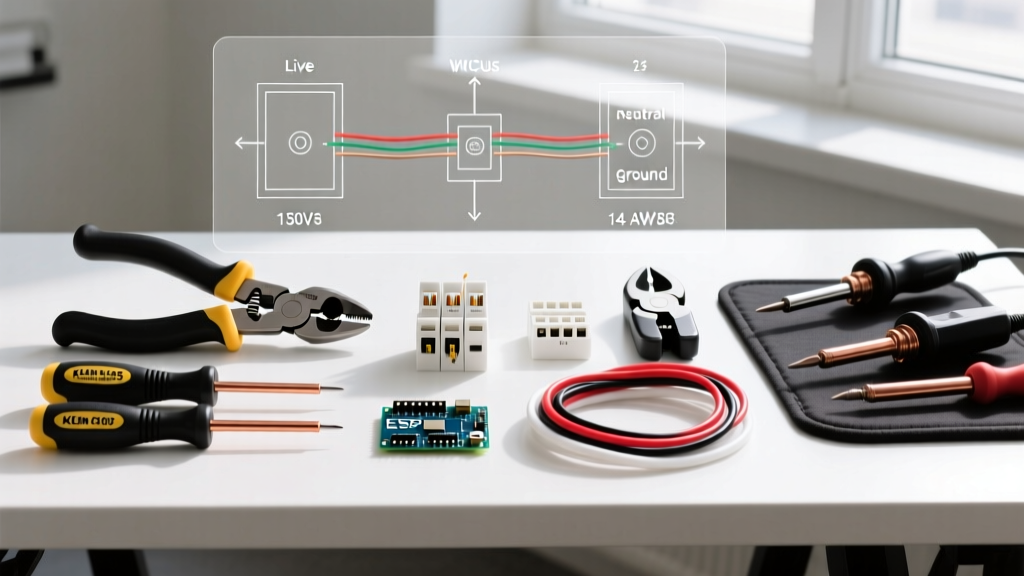
Executing clean 110 electrical plug wiring requires precision. Dull tools or improper testers lead to nicked conductors, loose terminations, and catastrophic failures.
Wire Strippers and Cutters
Nicking the copper conductor during stripping creates a weak point that will snap under torque or overheat under load.
- Klein Tools 11055 (10-18 AWG): The industry standard for residential wiring. Features precision-machined stripping holes that score the insulation without touching the copper. Price: ~$28.
- Knipex 12 62 180 Automatic Stripper: For high-volume work, this automatic stripper adjusts to the wire gauge instantly, saving immense time on multi-gang box rough-ins. Price: ~$45.
Non-Contact Voltage Testers (NCVT)
Never assume a circuit is dead based on the breaker panel label.
- Fluke 1AC-II VoltAlert: Features a continuous self-test function and a bright LED indicator. Detects voltage from 90V to 1000V AC. Price: ~$35.
- Klein Tools NCVT-2: A dual-range tester that also detects low-voltage (12V-48V) for thermostat and doorbell wiring. Price: ~$25.
Insulated Screwdrivers and Torque Control
According to the National Fire Protection Association (NFPA) and NEC 110.14(D), terminations must be tightened to the manufacturer's specified torque. While standard residential receptacles often rely on 'securely tightened' judgment, professional electricians use calibrated tools to prevent loose connections that cause arcing.
- Wiha 32004 Insulated SlimLine: 1000V rated, with a slim blade profile that easily reaches deep-set terminal screws in recessed boxes. Price: ~$18.
- CDI Torque 401SM (10-50 in-lbs): Essential for verifying exact torque on commercial-grade receptacles or AFCI/GFCI devices where manufacturer specs are strict. Price: ~$110.
Material Selection Matrix: 15A vs. 20A Circuits
Matching your materials to the circuit breaker is a strict NEC requirement. A 20A breaker on 14 AWG wire is a severe fire hazard, as the wire will melt before the breaker trips.
| Component | 15-Amp Circuit (General Use) | 20-Amp Circuit (High Draw) |
|---|---|---|
| Breaker | 15A Single-Pole | 20A Single-Pole |
| Wire Gauge | 14 AWG Copper (Minimum) | 12 AWG Copper (Minimum) |
| Receptacle Rating | 15A (Standard 2-slot) | 20A (T-slot) OR 15A (Multiple on circuit) |
| Max Continuous Load | 12 Amps (1440 Watts) | 16 Amps (1920 Watts) |
| Common Applications | Bedrooms, Living Rooms, Hallways | Kitchens, Bathrooms, Garages, Workshops |
Critical Wiring Techniques and Failure Modes
Even with premium materials, improper technique will compromise the system. The U.S. Consumer Product Safety Commission (CPSC) notes that loose electrical connections are a leading cause of residential electrical fires.
The 'Backstab' vs. 'Side-Wire' Debate
Expert Directive: Never use the push-in 'backstab' holes on the rear of a receptacle. While UL-listed, they rely on a small internal spring clip that can loosen over time due to thermal expansion and contraction, leading to high-resistance connections and melting. Always use the side-terminal screws or the internal 'back-wire' clamps (found on spec-grade receptacles) which physically clamp the wire under a metal plate via screw pressure.
Proper Sheath Removal and Box Fill
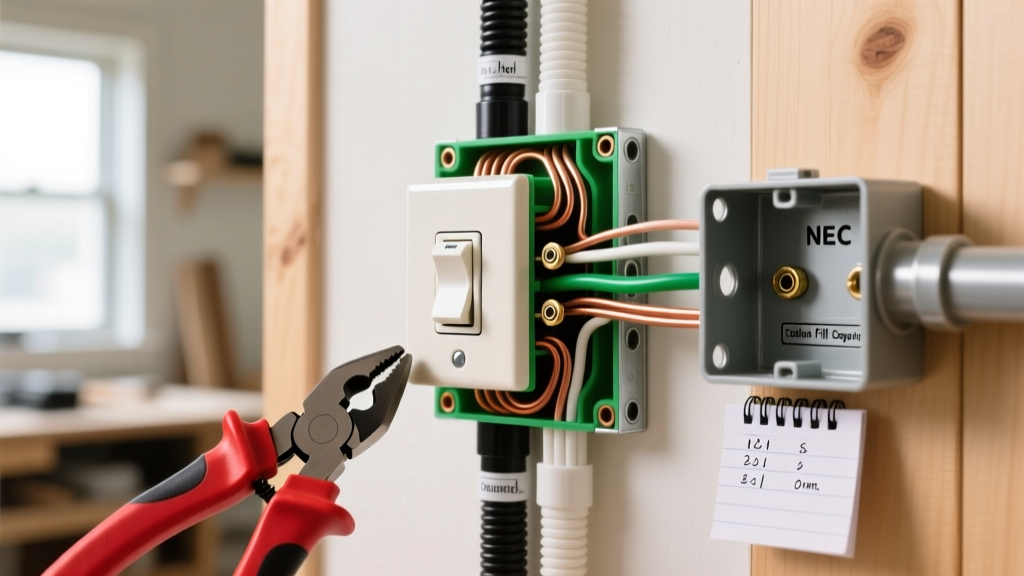
When preparing NM-B cable, strip the outer yellow or white sheath back exactly to the point where it enters the electrical box. Leaving sheath inside the box violates NEC box-fill calculations, while stripping it too far back exposes the bare ground wire and individual conductors to potential abrasion against the metal or plastic box edges. Use a specialized cable ripper (like the Klein 53725) rather than a utility knife to avoid scoring the inner wire insulation.
Wire Loop Direction
When terminating on side screws, bend the stripped copper wire into a hook using the outer curve of your wire strippers. Hook the wire around the terminal screw in a clockwise direction. As you tighten the screw (which turns clockwise), the screw head will pull the wire loop tighter around the shaft. If looped counter-clockwise, tightening the screw will push the wire out from under the head.
Project Cost Breakdown (2026 Estimates)
For a standard DIY project involving the installation or replacement of four 15A receptacles on an existing circuit, expect the following material and tool costs:
- Leviton 5320-WMP 15A TR Receptacles (x4): $8.00
- Wire Nuts (Ideal Industries WingNut 341 Blue, 50-pack): $6.50
- Klein Tools 11055 Wire Strippers: $28.00
- Klein NCVT-2 Voltage Tester: $25.00
- Wiha Insulated Screwdriver Set: $18.00
- Total Estimated Investment: ~$85.50
Safety and Compliance Sign-Off
Working with live electricity carries inherent risks. Always shut off the main breaker or the specific branch circuit breaker, and verify the absence of voltage with a calibrated tester before touching any conductor. As emphasized by the Occupational Safety and Health Administration (OSHA), proper lockout/tagout (LOTO) procedures, even in residential settings, prevent accidental re-energization by other household members. If your home features older aluminum branch wiring (common in the late 1960s and 1970s), standard copper-rated receptacles are illegal and dangerous; you must use CO/ALR rated devices and apply Noalox anti-oxidant paste. For standard copper 110 electrical plug wiring, adhering to the tools, materials, and techniques outlined above will ensure a safe, durable, and code-compliant installation that will last for decades.