
The Complete Guide to Wiring a Washer Dryer Electrical Outlet Box
Modern laundry rooms demand high-performance appliances and space-efficient layouts. When pushing heavy washers and dryers flush against the wall, standard electrical receptacles and protruding water supply hoses create a major clearance issue. This is where a specialized washer dryer electrical outlet box—specifically a recessed or integrated supply box—becomes critical. These boxes recess the receptacles and plumbing valves into the stud bay, saving up to 3 inches of vital clearance and preventing dangerous hose kinking or cord damage.
As a senior electrician, I frequently see DIYers and even licensed contractors make critical errors when wiring these recessed laundry centers. From ignoring updated National Electrical Code (NEC) arc-fault requirements to undersizing wire gauges for continuous dryer loads, the mistakes can lead to nuisance tripping or severe fire hazards. This wiring diagram reference will walk you through the exact specifications, hardware selection, and step-by-step termination procedures for installing a code-compliant laundry outlet setup in 2026.
NEC Code Requirements for Laundry Circuits
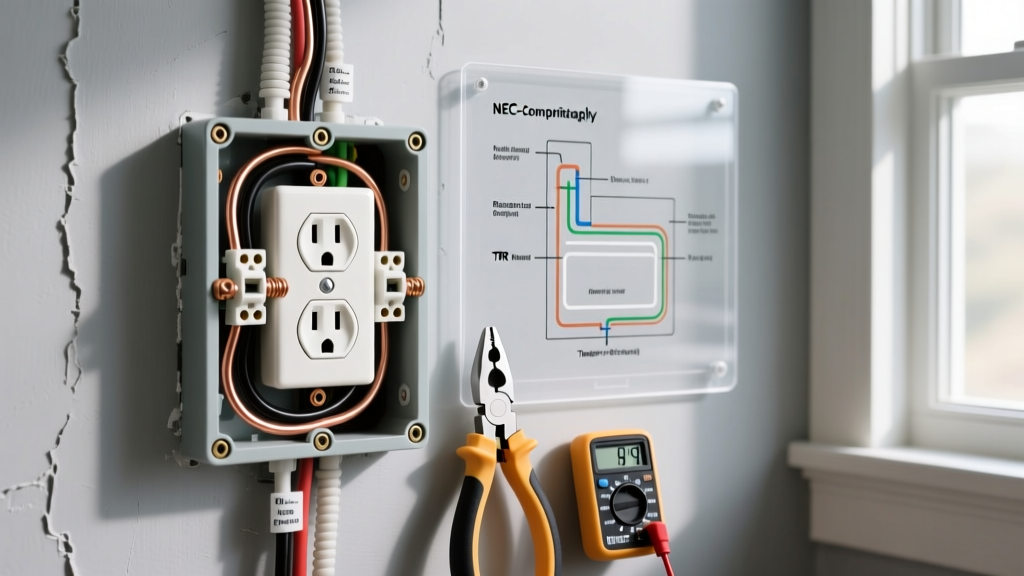
Before pulling any wire, you must understand the current NEC mandates for laundry areas. The National Fire Protection Association (NFPA) updates these codes regularly to address modern appliance loads and fault protection.
- Washer Circuit (NEC 210.11(C)(2)): Requires at least one dedicated 20-amp, 120-volt branch circuit for the laundry area. No other outlets (lights, hallway receptacles) can be on this circuit.
- Dryer Circuit (NEC 210.23 & 210.19): Electric dryers require a dedicated 30-amp, 240-volt circuit (or 50-amp for heavy-duty combo units). Gas dryers only require the standard 120V 20A circuit shared with the washer, though a dedicated 15A/20A circuit is best practice.
- GFCI Protection (NEC 210.8(A)(10)): All 125-volt through 250-volt receptacles supplied by single-phase branch circuits rated 150 volts or less in laundry areas must have Ground-Fault Circuit Interrupter (GFCI) protection.
- AFCI Protection (NEC 210.12(A)): Laundry rooms in dwelling units require Arc-Fault Circuit Interrupter (AFCI) protection for the branch circuit wiring.
Pro-Tip for 2026: To satisfy both GFCI and AFCI requirements without causing nuisance trips from the washer's motor startup, use a Dual Function (DF) Circuit Breaker (e.g., Square D HOM220DF or Eaton BR120DF) at the main panel, paired with a standard 20A duplex receptacle in the recessed box.
Selecting the Right Recessed Hardware
Not all outlet boxes are created equal. When planning your washer dryer electrical outlet box setup, you have two primary hardware routes: integrated plumbing/electric supply boxes or dedicated recessed electrical boxes.
| Hardware Type | Top Model Example | Depth Clearance | Best Use Case | Avg. Cost (2026) |
|---|---|---|---|---|
| Integrated Supply Box | Oatey 38812 (2-Piece) | 3.5 inches | New construction; combines water valves and 1-gang electric. | $55 - $75 |
| Recessed Electric Box | Arlington BE101 (Non-Metallic) | 4.5 - 5.5 inches | Retrofits; pushes deep into stud bay for max plug clearance. | $12 - $18 |
| Multi-Gang Recessed | Siemens 2-Gang Recessed | 3.75 inches | Housing both 120V washer and 240V dryer in one flush plate. | $35 - $50 |
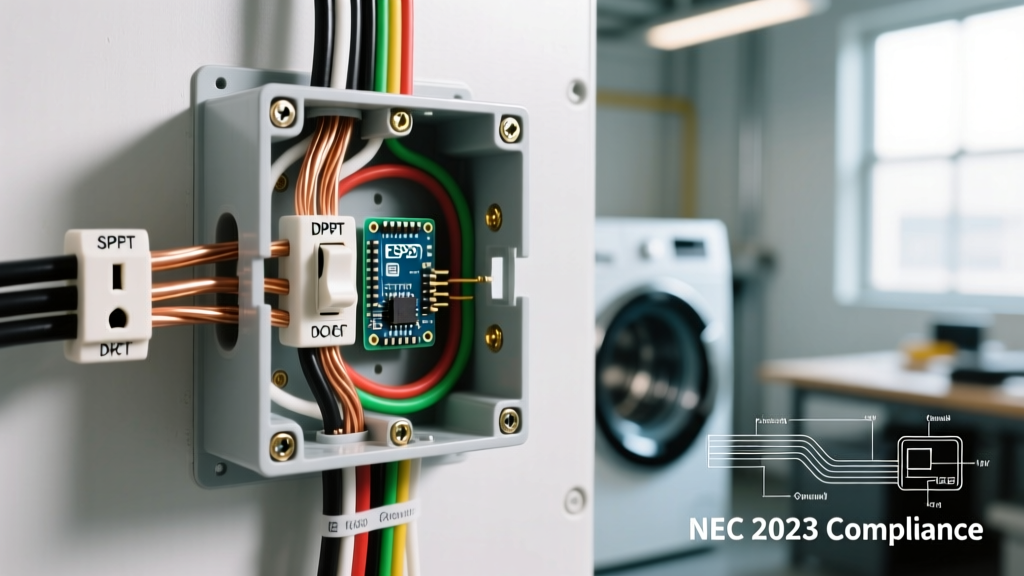
For maximum space savings, the Arlington Industries BE101 or similar deep-recess non-metallic boxes are the gold standard. They allow the bulky 3-prong or 4-prong plug heads to sit entirely behind the drywall plane.
Wiring Diagram 1: 120V 20A Washer Receptacle
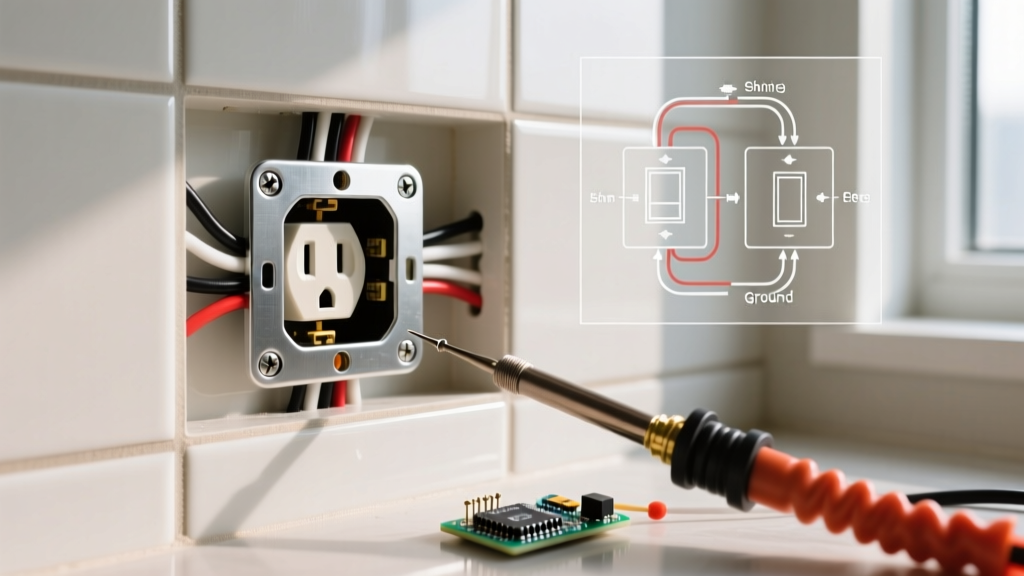
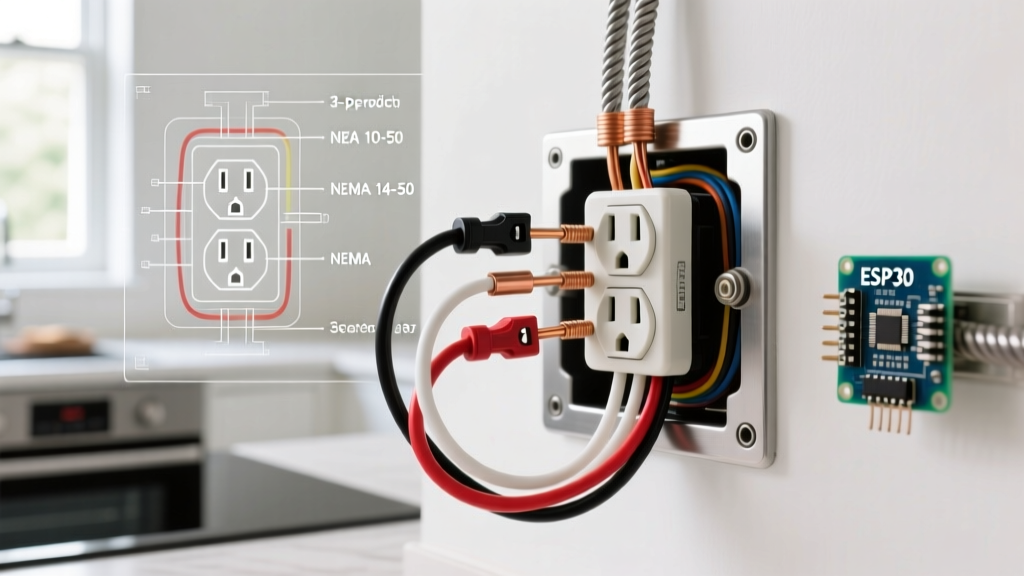
This circuit powers the washing machine. You will be running 12/2 NM-B (Romex) copper cable from a 20A Dual Function (AFCI/GFCI) breaker to a standard 20A NEMA 5-20R duplex receptacle housed in the recessed box.
Step-by-Step Termination
- Strip the Sheath: Remove exactly 8 inches of the outer yellow NM-B jacket. Do not nick the inner THHN insulation.
- Strip the Conductors: Strip 5/8-inch of insulation from the black (hot), white (neutral), and bare (ground) wires.
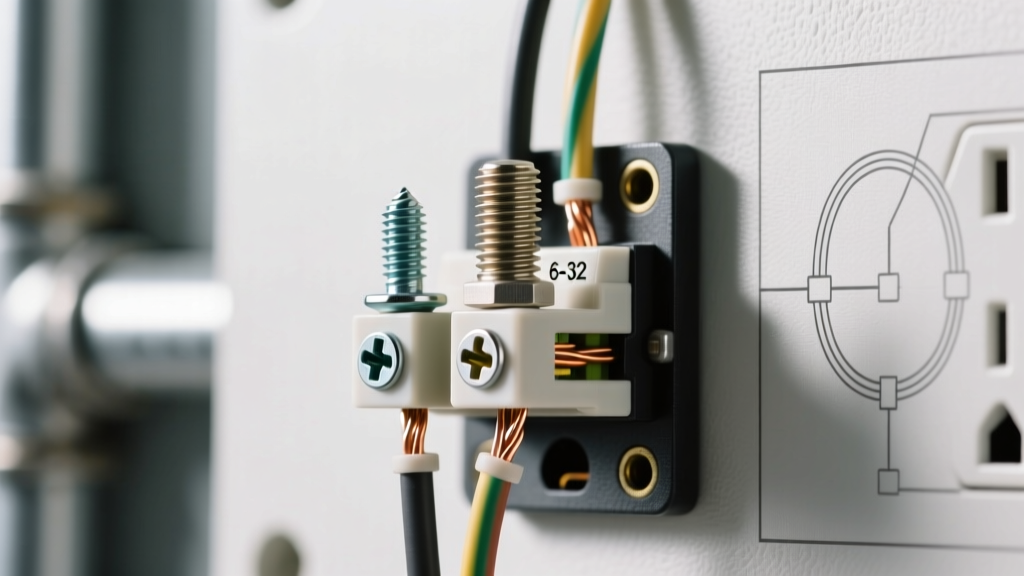
- Ground First: Form a clockwise hook in the bare copper wire and attach it to the green grounding screw on the receptacle. Torque to 12 inch-pounds.
- Neutral Connection: Insert the white wire into the silver terminal side. If using back-wiring (side-wiring) holes, ensure the wire is fully seated before tightening the screw. Torque to 14 inch-pounds.
- Hot Connection: Insert the black wire into the brass terminal side. Torque to 14 inch-pounds.
- Box Make-Up: Carefully fold the wires in an accordion pattern. Because recessed boxes have deeper cavities, you have more room, but avoid sharp bends that could stress the terminal screws over time.
Wiring Diagram 2: 240V 30A Dryer Receptacle
Electric dryers require a NEMA 14-30R receptacle. This is a 4-wire setup: two hot legs (120V each, 240V total), one neutral (for the 120V timer/motor controls), and one equipment ground. You will use 10/3 NM-B copper cable fed by a 30A double-pole breaker.
Step-by-Step Termination
- Prepare the Cable: Strip 10 inches of the outer black NM-B jacket. Strip 3/4-inch of insulation from the black, red, white, and bare ground wires.
- Grounding: Attach the bare ground wire to the receptacle's green grounding terminal or the metal box grounding pigtail (if using a metal box). Torque to 20 inch-pounds.
- Neutral (White): Connect the white wire to the silver terminal marked 'W' or 'Neutral'. This carries the unbalanced 120V return current. Torque to 20 inch-pounds.
- Hot Legs (Black & Red): Connect the black and red wires to the two brass terminals marked 'X' and 'Y'. Polarity between X and Y does not matter for 240V loads. Torque to 20 inch-pounds.
- Secure the Cable: Use a proper NM cable clamp at the top knockout of the recessed box to prevent the heavy 10/3 cable from pulling on the terminals when the dryer is moved.
Expert Warning: Never use a 3-prong NEMA 10-30R for new installations. The NEC eliminated the use of the neutral as a grounding path for dryers in the 1996 code cycle. Always install a 4-prong NEMA 14-30R and ensure the dryer's internal bonding jumper is removed, separating the neutral and ground at the appliance.
Installation Edge Cases and Troubleshooting
Working inside a washer dryer electrical outlet box presents unique physical and electrical challenges. Here is how to handle the most common field issues.
Stud Placement Conflicts
Standard recessed boxes require a full 14.5-inch stud bay. If your laundry wall has plumbing stacks, HVAC returns, or fire blocks in the way, you cannot use a deep-recess box like the Arlington BE101. Solution: Switch to a shallow-recess box (like the Carlon B618R) which only requires 2.5 inches of depth, or frame out a dedicated 2x6 chase wall specifically for the laundry connections.
Nuisance AFCI Tripping on Washer Startup
Universal motors in older or budget washing machines can create electrical 'noise' (arcing signatures) during startup that mimic a dangerous arc fault, causing the AFCI breaker to trip. Solution: Ensure you are using a modern DF breaker with advanced digital signal processing (DSP). Breakers manufactured from 2023 onward have vastly improved algorithms to distinguish between normal motor commutator arcing and actual wire faults. If trips persist, check for loose neutral connections at the panel, as a floating neutral can cause voltage imbalances that trigger AFCI sensors.
Voltage Drop on Long Dryer Runs
If your electrical panel is on the opposite side of a large home, the run to the laundry room might exceed 100 feet. While 10 AWG wire is code-compliant for a 30A breaker, a 100-foot run will experience a voltage drop of roughly 4.5% at full load (approx. 5,760 watts). Safe Electricity recommends keeping voltage drop under 3% for optimal appliance lifespan. Solution: Upsize the feeder wire to 8/3 NM-B (or 8 AWG THHN in conduit) for runs over 80 feet to maintain optimal voltage at the dryer receptacle.
Final Inspection Checklist
Before closing up the drywall or pushing the appliances into place, verify the following:
- Receptacles are mounted perfectly level; crooked plates will prevent the dryer from sitting flush.
- All terminal screws are torqued to manufacturer specifications using a calibrated inch-pound screwdriver.
- The grounding path is continuous from the receptacle to the panel ground bar.
- Water supply valves (if integrated) are tested for leaks before energizing the electrical circuits.
By following these precise wiring diagrams and adhering to the latest NEC standards, your washer dryer electrical outlet box will provide a safe, reliable, and space-saving connection for your laundry appliances for decades to come.