
Understanding the Recessed Electrical Outlet: Code vs. Aesthetics
When designing modern living spaces, homeowners and contractors frequently seek a recessed electrical outlet to hide bulky plugs behind wall-mounted televisions, flush-mount cabinetry, or thick stone veneers. While the aesthetic benefits are obvious, the electrical implications are heavily regulated. A poorly executed recessed installation is not just an eyesore; it is a severe fire and shock hazard that violates the National Electrical Code (NEC).
As of the current 2026 adoption cycles, local inspectors are cracking down on improper box depths, unapproved gap tolerances, and box fill violations. This guide breaks down the exact NEC requirements for recessing receptacles, the approved hardware you must use, and how to avoid the most common code violations during your next rough-in or remodel.
The Core NEC Rule: Flush Mounting vs. Recessed Boxes
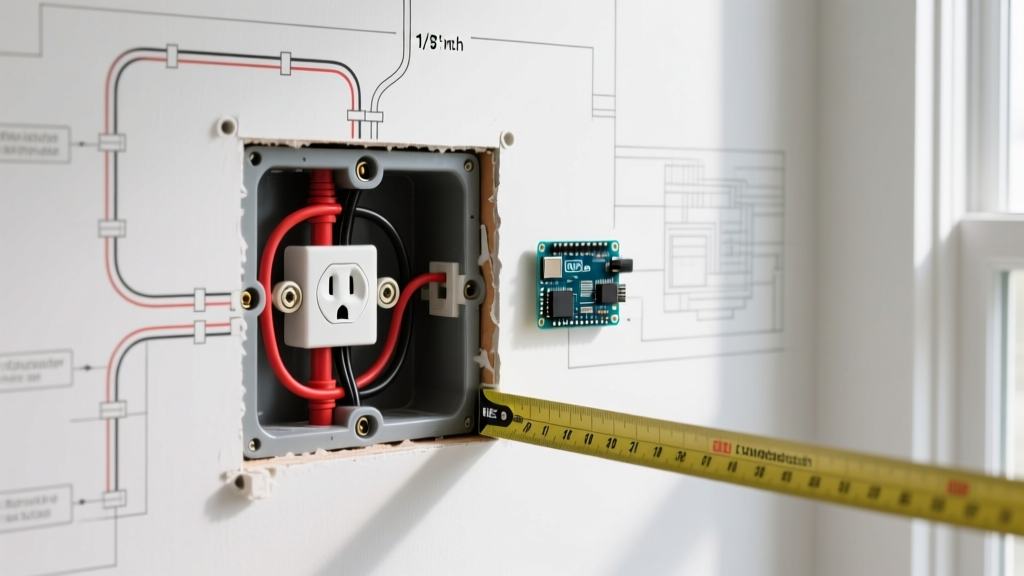
The primary code governing how an electrical box sits relative to the wall surface is NEC Article 314.20 (Flush Mounting). The code makes a critical distinction between combustible and non-combustible wall surfaces.
NEC 314.20 In Walls or Ceilings. In walls or ceilings with a surface of concrete, tile, gypsum, plaster, or other noncombustible material, boxes employing a flush ear or plate shall be installed so that the front edge of the box, plaster ring, extension ring, parge ring, or extension to the box will not be set back of the finished surface more than 6 mm (1/4 in.). In walls and ceilings constructed of combustible material, boxes and fittings shall be flush with the surface or project therefrom.
What This Means for Your Installation
- Non-Combustible Surfaces (Drywall, Plaster, Tile, Concrete): The front edge of your electrical box can be recessed up to exactly 1/4 inch (6 mm) behind the finished wall surface. Any deeper, and you must use an approved box extender.
- Combustible Surfaces (Wood Paneling, Shiplap, MDF, Beadboard): The box must be completely flush with the surface or project slightly outward. A zero-tolerance gap is enforced to prevent sparks from igniting the surrounding wood or composite materials.
For a comprehensive overview of electrical safety standards and fire prevention, refer to the National Fire Protection Association (NFPA) NEC guidelines.
Common Scenarios for Recessed Outlets
Standard single-gang or duplex boxes are rarely intentionally recessed. Usually, a recessed scenario occurs when specialized enclosures are used or when wall finishes change. Here are the most common scenarios and the specific hardware required to keep them legal.
1. Recessed TV Mount Cable Organizers
Wall-mounted TVs require power and low-voltage cables to be hidden inside the wall. Standard electrical boxes do not accommodate the bulk of a TV power plug and HDMI cables. Manufacturers have solved this with deep, recessed multimedia boxes.
- Arlington Industries TV101: Priced around $24, this non-metallic recessed box features a deep cavity that allows the TV plug to sit entirely behind the drywall surface. It includes a built-in cable management brush plate and is UL-listed for use with standard 15A or 20A receptacles.
- Carlon SC200RR: Retailing for approximately $18, this recessed multimedia box offers a similar deep-set profile but includes adjustable mounting brackets for varying drywall thicknesses (1/2" to 5/8").
2. Thick Stone or Brick Veneer
When installing outlets on a fireplace surround or an accent wall featuring 1-inch thick stone veneer, a standard box roughed-in at the stud depth will end up recessed by over an inch. To bring this up to code, electricians must use masonry boxes with adjustable plaster rings or stackable box extenders to bridge the gap to the finished stone surface.
Box Fill Capacity: The Hidden Recessed Trap
While recessed boxes offer excellent volume for bulky plugs, they do not exempt you from NEC Article 314.16 (Box Volume and Fill). Deep recessed boxes often tempt DIYers to cram in extra Romex cables, smart switch pigtails, or large wire nuts, leading to dangerous overcrowding.
Every conductor, clamp, and device yoke requires a specific volume allowance. If you exceed the cubic inch capacity of the recessed box, the installation fails inspection and risks thermal buildup.
| Wire Gauge (AWG) | Volume Required Per Conductor | Typical Device Yoke Allowance |
|---|---|---|
| 14 AWG | 2.0 Cubic Inches | 4.0 Cubic Inches (2x Wire Vol) |
| 12 AWG | 2.25 Cubic Inches | 4.5 Cubic Inches (2x Wire Vol) |
| 10 AWG | 2.5 Cubic Inches | 5.0 Cubic Inches (2x Wire Vol) |
Pro Tip: Grounding conductors (all of them combined) count as a single conductor volume allowance. However, if you are installing a smart receptacle or a GFCI with a large pigtail, that extra wire counts toward your fill capacity.
Troubleshooting Common Code Violations
During a 2026 electrical inspection, recessed outlets are scrutinized for specific failure modes. Below is a matrix of common violations and their required remedies.
| Violation Scenario | NEC Code Reference | The Hazard | Required Remedy |
|---|---|---|---|
| Box recessed 1/2" behind standard drywall | 314.20 | Arcing inside wall cavity; drywall dust tracking | Install a Caddy ER1 or equivalent plastic box extender ring |
| Gap left behind wood shiplap accent wall | 314.20 | Sparks igniting combustible wood fibers | Use an adjustable plaster ring to project the box flush with wood |
| Overfilled deep TV recessed box (TV101) | 314.16 | Thermal buildup, melted insulation, short circuits | Remove unnecessary splices; use Wago 221 lever nuts to save space |
| Recessed GFCI in a wet location (outdoor kitchen) | 406.9 / 314.20 | Water pooling inside the recessed gap | Use an in-use weatherproof cover with a deep gasket seal |
Step-by-Step: Bringing a Recessed Outlet Up to Code
If you have removed drywall or paneling and discovered that the existing electrical box is recessed too far (greater than 1/4 inch), you do not need to tear out the studs to replace the box. You can legally bridge the gap using a box extender.
- Turn Off Power: Shut off the circuit breaker and verify zero voltage using a non-contact voltage tester (NCVT) and a multimeter.
- Remove the Device: Unscrew the receptacle and gently pull it out of the box. Do not disconnect the wires.
- Select the Extender: Choose a telescoping or stackable box extender (e.g., Arlington Industries BE1 or Caddy Ring). These cost between $2.00 and $4.00 at most electrical supply houses.
- Install the Extender: Slide the extender over the existing wires and push it into the existing electrical box. The extender's flanges should rest flush against the finished drywall surface.
- Secure the Receptacle: Pass the device screws through the receptacle yoke, through the extender, and thread them directly into the original metal or plastic box ears. The extender is now clamped securely between the device and the box.
- Install the Cover Plate: Mount your standard duplex cover plate. The extender will remain hidden, and the installation will now pass NEC 314.20 inspection.
For more on preventing electrical fires related to improper wiring and box installations, consult the Consumer Product Safety Commission (CPSC) Electrical Safety Guide.
Frequently Asked Questions (FAQ)
Can I use a standard outlet in a recessed TV box?
Yes, but with caveats. Boxes like the Arlington TV101 are designed to accept standard 15A or 20A duplex receptacles. However, because the plug will sit deep inside the cavity, you must ensure the receptacle is securely mounted to the box's internal yoke brackets so it does not pull away from the wires when the TV plug is inserted or removed.
Does a recessed outlet behind a TV need to be a GFCI?
Generally, no. Unless the TV is mounted in a location that requires GFCI protection by NEC Article 210.8 (such as within 6 feet of a wet bar sink, in a bathroom, or in an unfinished basement), a standard tamper-resistant (TR) receptacle is perfectly legal and preferred, as GFCI nuisance tripping behind a mounted TV is highly inconvenient.
Are metal boxes required for recessed stone wall installations?
Not strictly required by the NEC for standard residential branch circuits, but metal masonry boxes (like those from Hubbell or Raco) are highly recommended when chiseling into stone or concrete. They provide superior structural integrity and grounding pathways compared to PVC boxes in high-stress masonry applications. You can find specialized masonry and low-voltage solutions at manufacturers like Arlington Industries.
Final Thoughts on Recessed Installations
Achieving a clean, flush look with a recessed electrical outlet requires more than just pushing a box deep into a stud bay. It demands a strict adherence to NEC gap tolerances, an understanding of combustible versus non-combustible surfaces, and careful box fill calculations. By utilizing purpose-built multimedia boxes and telescoping extenders, you can achieve the modern, hidden aesthetic you desire without compromising the safety of your home's electrical system or failing your municipal inspection.