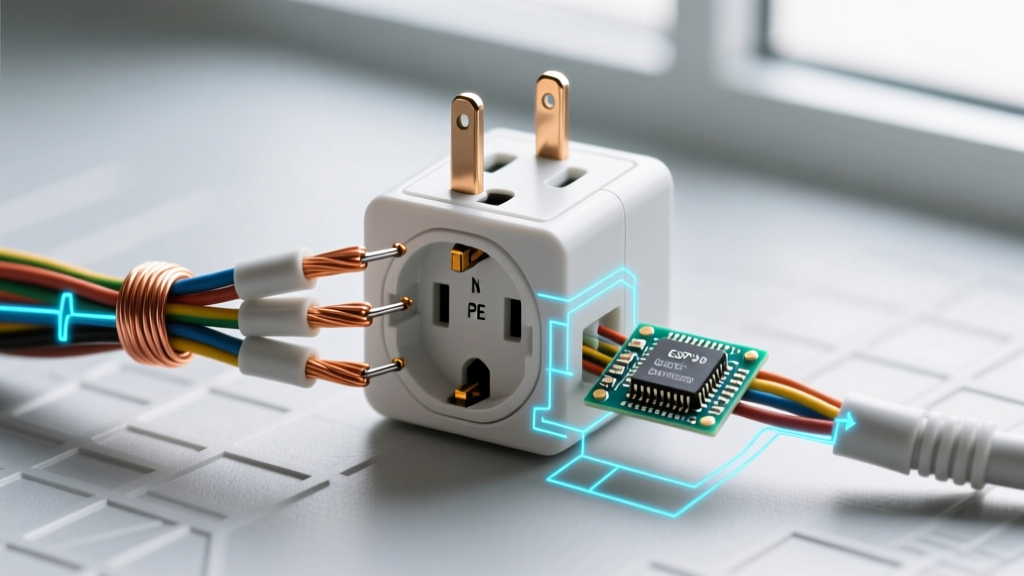

The Anatomy of a Hardwired Electrical Outlet Converter for Europe
Importing high-end European appliances—such as Miele W1 washing machines, Bosch 800-series induction cooktops, or Smeg refrigeration—into a North American home presents a unique electrical challenge. While a cheap travel plug adapter might work for a phone charger, running a 2500W European appliance on a standard US 120V circuit via a plug-in adapter is a severe fire hazard. To safely power these devices, you must install a dedicated, hardwired electrical outlet converter for europe. This involves stepping down the US 240V split-phase supply to a stable 230V single-phase output and terminating it into a native European receptacle, typically a Type F (Schuko) or Type G (BS1363).
According to the IEC World Plugs guide, Europe primarily utilizes 230V at 50Hz. North America utilizes 120/240V at 60Hz. This guide provides the exact wiring diagrams, terminal mapping, and National Electrical Code (NEC) grounding requirements to execute this conversion safely and legally.
Autotransformers vs. Isolating Transformers: A Critical Distinction
Many DIYers mistakenly purchase a "buck-boost" autotransformer to drop 240V to 230V. While this works for simple resistive loads, it is fundamentally flawed for creating a European-style receptacle. An autotransformer shares a common winding between the primary and secondary, meaning it does not provide galvanic isolation. If a ground fault occurs on the European appliance, the fault current path back to the US panel can become compromised, leading to floating voltages on the appliance chassis.
For a permanent electrical outlet converter for europe, you must use a 2-winding isolating step-down transformer. This creates a Separately Derived System (SDS) as defined by the National Fire Protection Association (NFPA) under NEC Article 250. An SDS allows you to establish a fresh, code-compliant neutral-to-ground bond on the secondary side, perfectly mimicking a native European TN-S or TT earthing system.
240V to 230V Wiring Diagram & Terminal Mapping
Below is the definitive terminal mapping for wiring a US 30A, 240V dedicated circuit through a 2000VA isolating transformer to a surface-mounted Schuko (Type F) receptacle.
| US Panel Circuit (10/2 NM-B) | Isolating Transformer Primary (240V) | Transformer Secondary (230V) | Schuko (Type F) Receptacle |
|---|---|---|---|
| L1 (Black, 120V) | H1 (Primary Line 1) | X1 (Secondary Line) | Pin 1 (Line / Phase) |
| L2 (White/Red, 120V) | H2 (Primary Line 2) | X2 (Secondary Neutral) | Pin 2 (Neutral) |
| Ground (Bare/Green) | Core Ground Lug | Bonded to X2 & Earth Lug | Side Earth Clips |
Understanding the Schuko Grounding Mechanism
Unlike US NEMA 5-15 or 14-30 receptacles where the ground is a dedicated third or fourth pin, the Type F Schuko receptacle utilizes two spring-loaded metal clips on the top and bottom edges of the circular recess. When wiring the receptacle, the secondary ground wire must be terminated to the central earth bus bar on the back of the receptacle, which mechanically bridges to both side clips. Ensure the mounting screws for the earth bridge are torqued to exactly 14 in-lbs to maintain low-impedance fault clearing.
Step-by-Step Installation Procedure
- Circuit Rough-In: Run 10/2 NM-B (Romex) or 10/2 MC cable from your main panel to the transformer location. Terminate on a 30A, 2-pole breaker (e.g., Square D HOM230). Re-identify the white neutral wire with black electrical tape at both ends to designate it as a hot leg (L2).
- Transformer Mounting: Mount a 2000VA or 3000VA isolating transformer (e.g., Acme Electric T-2-83632) in a well-ventilated, dry location. These units weigh upwards of 45 lbs; use lag screws into wall studs, not drywall anchors.
- Primary Wiring: Connect the US L1 (Black) to H1 and US L2 (White/Red) to H2. Connect the bare copper ground to the transformer's metal chassis ground lug.
- Establishing the SDS Bond: On the secondary side, install a grounding busbar if not pre-installed. Run a 10 AWG bare copper wire from the X2 (Neutral) terminal to this busbar. This is your neutral-to-ground bond for the separately derived system. Connect a secondary grounding electrode (or bond to the building's existing grounding electrode system per NEC 250.30).
- Secondary Run to Receptacle: Run 12/3 SOOW flexible cord or 12 AWG THHN in conduit from the transformer secondary to the European receptacle. Connect X1 to Line, X2 to Neutral, and the Earth busbar to the Schuko ground clips.
- Receptacle Termination: Mount the Schuko receptacle into a deep European-style surface box (e.g., Legrand Mosaic 077312). Verify polarity using a European-standard receptacle tester before energizing.
Edge Cases, Failure Modes, and 50Hz vs 60Hz Realities
Expert Warning: The most common failure mode in DIY European outlet conversions is ignoring the frequency mismatch. A transformer changes voltage, but it does not change frequency. Your US supply will always be 60Hz, while the appliance expects 50Hz.
Will My Appliance Survive 60Hz?
Before hardwiring your electrical outlet converter for europe, you must audit the appliance's internal components:
- Inverter-Driven Appliances (Safe): Modern Miele washing machines, Bosch heat pump dryers, and induction cooktops rectify the incoming AC to DC immediately, then use an internal inverter to drive the motors/coils. These are entirely immune to the 50Hz/60Hz difference. They will operate flawlessly on 230V/60Hz.
- Universal Motors (Safe): Appliances like vacuum cleaners, blenders, and power tools use brushed universal motors. These run slightly faster and hotter on 60Hz but are generally safe for intermittent use.
- Synchronous/Induction Motors & Clocks (Unsafe): Older European range hoods, heavy-duty 50Hz compressor refrigerators, and any appliance with an analog timer clock tied to the AC mains frequency will fail. A 50Hz clock motor will run 20% fast on a US 60Hz grid, and a 50Hz induction motor may overheat and trip its internal thermal overload within hours.
Ground Fault Circuit Interrupter (GFCI) Integration
NEC 2023 and 2026 updates mandate GFCI protection for most 125V through 250V receptacles in residential settings. Because standard US GFCI breakers look for an imbalance between L1 and L2 (or L and N), they will function correctly on the primary side of the transformer. However, for ultimate safety, install a European-standard 30mA Residual Current Device (RCD) on the secondary side between the transformer and the Schuko receptacle. Brands like ABB or Schneider Electric offer DIN-rail mountable 230V RCDs (e.g., Schneider A9R11225) that fit perfectly in a small secondary sub-panel.
2026 Component Sourcing & Cost Breakdown
Building a permanent, code-compliant electrical outlet converter for europe requires commercial-grade components. Below is a realistic bill of materials based on 2026 electrical supply pricing:
- Isolating Transformer (2000VA - 3000VA): Acme Electric (Hubbell) or Hammond Manufacturing. Expect to pay between $280 and $450 depending on VA rating and enclosure type.
- Schuko Type F Receptacle: Legrand Mosaic or Busch-Jaeger surface mount. Cost: $25 - $45. Avoid unbranded online marketplaces; ensure the receptacle carries a VDE or CE mark and features ceramic internals for high-heat resistance.
- Secondary RCD (30mA): Schneider Electric Acti9 iID. Cost: ~$85.
- Wiring & Breakers: 10/2 NM-B ($1.20/ft), Square D 30A 2-pole breaker ($18), and deep steel junction boxes ($25).
Total project cost typically ranges from $450 to $650, excluding professional electrician labor if you choose not to self-permit and self-install. By utilizing a separately derived isolating transformer and strict adherence to NEC Article 250 grounding rules, you ensure your imported European appliances operate safely, efficiently, and without voiding their manufacturer warranties.


