
Defining the Portable Electric Outlet in Modern Electrical Work
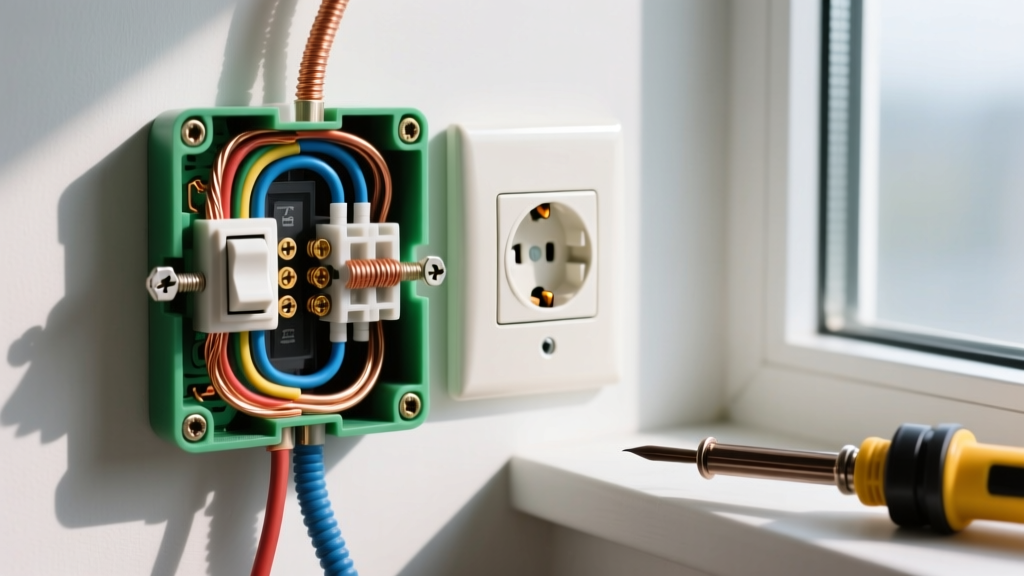
When electrical professionals, event riggers, or construction crews need temporary power, the portable electric outlet becomes the critical link between the main distribution panel and the end-use tool. Unlike fixed wall receptacles governed by NEC Article 210, portable outlets—commonly configured as inline GFCI adapters, spider boxes, or temporary stringer sets—fall under a complex web of temporary wiring codes. Misusing these devices is a leading cause of jobsite electrocution and equipment failure.
A true portable electric outlet is not merely an extension cord; it is a mobile point-of-use power distribution device that must provide ground-fault protection, maintain equipment grounding continuity, and withstand harsh physical environments. As of the 2026 NEC adoption cycle, the tolerances for temporary power violations have narrowed, making it imperative to understand the exact code requirements, voltage drop limitations, and hardware specifications for portable receptacles.
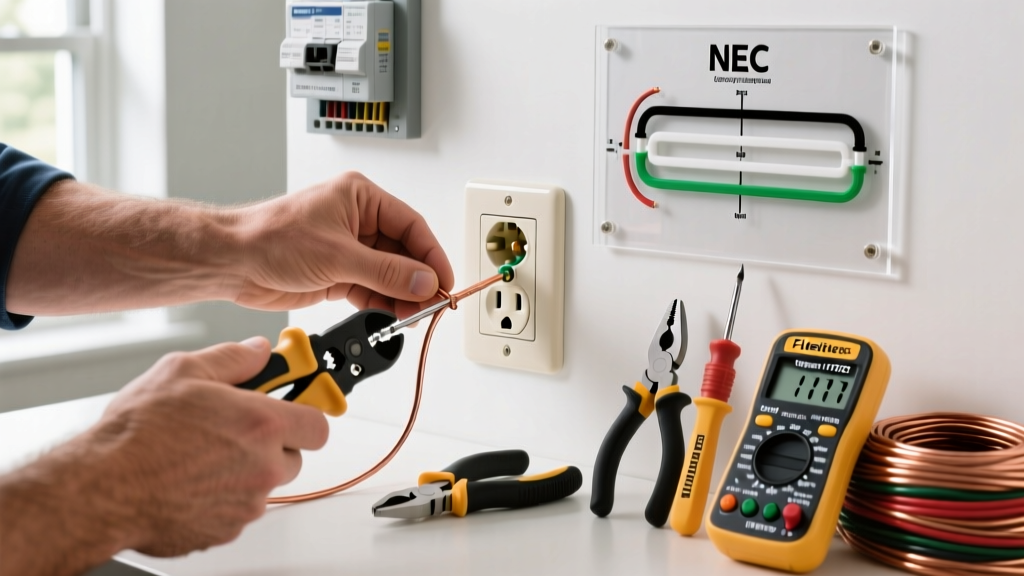
Code Callout: The National Electrical Code (NEC) defines "temporary installations" as wiring installed for a period not to exceed 90 days. However, OSHA regulations often supersede NEC timelines on active construction sites, mandating strict GFCI or Assured Equipment Grounding Conductor Program (AEGCP) compliance regardless of the installation duration.
Navigating NEC Article 527 and OSHA 1926.405
The deployment of a portable electric outlet is heavily regulated by both the NFPA and OSHA. Understanding the intersection of these rules is vital for passing site inspections and preventing fatal shocks.
NEC Article 527: Temporary Installations
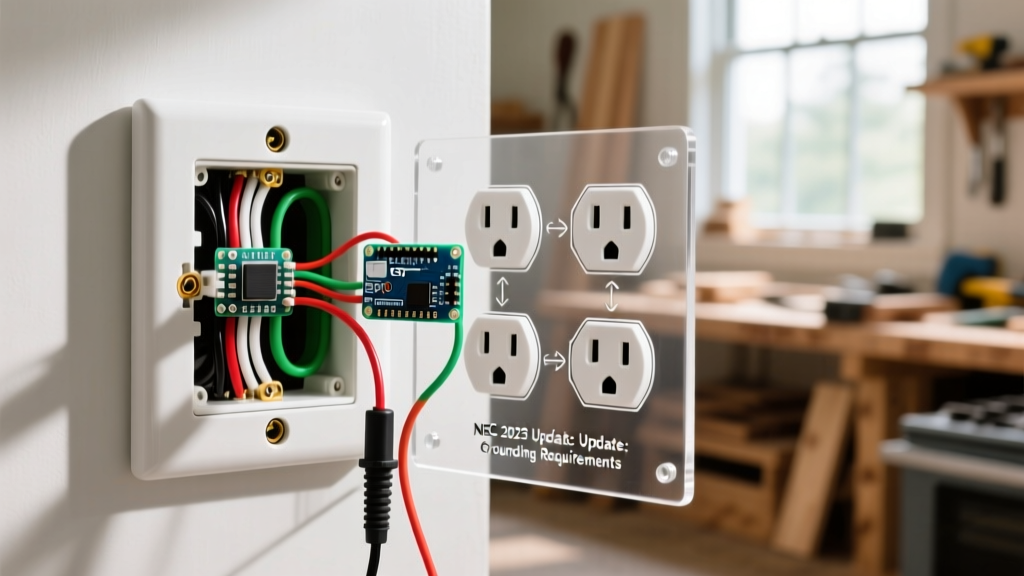
Under NEC Article 527, temporary wiring methods must utilize listed cord sets and portable GFCI devices. Specifically, NEC 527.6 mandates that all 125-volt, single-phase, 15-, 20-, and 30-ampere receptacles installed in temporary locations must have GFCI protection. If you are plugging a standard non-GFCI spider box into a temporary feeder, the feeder breaker must be a GFCI type, or the spider box itself must feature integrated GFCI portable outlets.
OSHA 1926.405: The Construction Standard
OSHA takes a harder line on construction sites. According to OSHA 1926.405(a)(2)(ii), all 120V, single-phase, 15A and 20A receptacles on construction sites that are not part of the permanent wiring of the building must use one of two methods:
- GFCI Protection: Utilizing a listed portable electric outlet with an integrated GFCI module (tripping at 4-6mA).
- AEGCP: An Assured Equipment Grounding Conductor Program, which requires daily visual inspections and quarterly continuity testing of all cords and portable outlets.
Most modern contractors opt for GFCI-equipped portable outlets because maintaining the daily documentation for an AEGCP is labor-intensive and prone to compliance failures during surprise OSHA audits.
Voltage Drop and Wire Sizing for Portable Stringers
A frequent failure mode when deploying portable electric outlets on large jobsites is severe voltage drop. When you daisy-chain portable outlets over long distances, the resistance of the copper wire causes the voltage at the farthest receptacle to sag. If the voltage drops below 110V on a 120V circuit, power tools will overheat, draw excess amperage, and trip breakers prematurely.
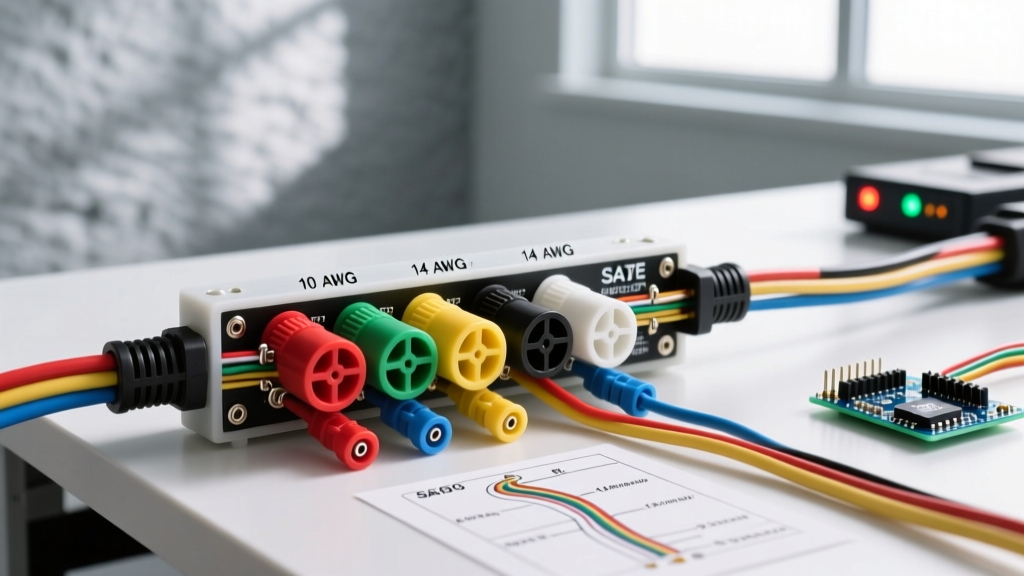
Below is the maximum allowable run length for temporary portable outlet stringers to maintain a 3% voltage drop or less at maximum rated amperage (based on standard copper wire at 75°C).
| Wire Gauge (AWG) | Max Amperage | Max Length for 3% Drop | Common Portable Outlet Application |
|---|---|---|---|
| 14 AWG | 15 Amps | 50 Feet | Light-duty indoor event stringers |
| 12 AWG | 15 Amps | 100 Feet | Standard construction site spider boxes |
| 10 AWG | 20 Amps | 150 Feet | Heavy-duty outdoor portable distribution |
| 8 AWG | 30 Amps | 180 Feet | RV pedestals and large equipment feeds |
Note: Never rely on the breaker rating of the portable outlet alone. A 20A breaker on a portable box wired with 14 AWG internal pigtails is a severe fire hazard and an immediate NEC violation.
2026 Hardware Snapshot: Top Portable GFCI Models
Not all portable electric outlets are built to withstand the mechanical abuse of a jobsite. Standard indoor GFCI adapters will shatter when dropped on concrete or fail when exposed to morning dew. When procuring portable outlets, you must look for NEMA 3R or NEMA 4 ratings, heavy-duty strain relief, and illuminated reset indicators.
1. Tower Manufacturing 304300 Portable GFCI Duplex
- Specs: 15A/125V, 2-pole, 3-wire, NEMA 5-15R.
- Build: Features a rugged thermoplastic elastomer housing and an integrated 12 AWG SJTW pigtail.
- Price Range: $48.00 - $55.00.
- Expert Take: This is the gold standard for commercial electricians. The 304300 includes a bright green LED power indicator and a red GFCI fault light. Its internal toroidal transformer is highly resistant to the capacitive leakage nuisance tripping common in long temporary runs.
2. Yellow Jacket YJ-630 Inline GFCI Outlet
- Specs: 15A, 125V, Inline configuration.
- Build: Yellow high-visibility housing, water-resistant boots over the receptacle face.
- Price Range: $65.00 - $75.00.
- Expert Take: Ideal for film crews and outdoor events. The inline design allows you to drop the portable outlet exactly where the tool is being used, rather than relying on the panel-side GFCI. According to OSHA's GFCI guidelines, placing the GFCI as close to the user as possible minimizes the length of unprotected cord, drastically reducing shock risk from damaged downstream cables.
3. Leviton 16693-W Portable GFCI Adapter
- Specs: 15A, 125V, Duplex, straight-blade plug.
- Build: Compact polycarbonate body, minimal strain relief.
- Price Range: $32.00 - $38.00.
- Expert Take: Strictly for light-duty, dry-location use. Do not deploy this model on active construction sites or outdoor event rigging, as the lack of a weather-resistant cover and heavy-duty strain relief will lead to rapid mechanical failure.
Edge Case: Capacitive Leakage and Nuisance Tripping
One of the most frustrating issues when using a portable electric outlet on a long stringer is "nuisance tripping." A GFCI works by comparing the current on the hot and neutral wires; if the imbalance exceeds 4 to 6 milliamps, it trips. However, long lengths of 12 AWG or 10 AWG cable inherently possess capacitance between the conductors. In damp environments, this capacitance can generate a cumulative leakage current of 3-5mA, even with perfectly healthy tools plugged in. When a user starts a power saw, the inrush current pushes the leakage over the 6mA threshold, tripping the portable outlet instantly.
The Solution: Do not defeat the GFCI by using a cheater plug or an ungrounded adapter. Instead, segment your temporary power runs. Use multiple shorter stringers fed from separate panel breakers, or upgrade to a 30mA Equipment-Protective GFCI (EPD) if the specific portable outlet model and local AHJ (Authority Having Jurisdiction) permit it for tool protection rather than strict personnel protection.
Frequently Asked Questions
Can I plug a portable electric outlet into a generator?
Yes, but you must verify the generator's grounding scheme. Many portable inverter generators feature a floating neutral. If you plug a portable GFCI outlet into a floating-neutral generator, the GFCI will still protect against ground faults, but it may not pass a standard AEGCP continuity test because there is no bond between the neutral and the equipment grounding conductor at the source. Always consult the generator manual and NEC Article 250.34 for portable generator grounding rules.
How often should I test the GFCI on my portable outlets?
OSHA and best-practice safety protocols dictate that the integrated "Test" button on a portable electric outlet should be pressed at the beginning of every shift. Furthermore, after any severe physical impact, drop, or exposure to heavy rain, the outlet must be manually tested before plugging in equipment. The internal silicon-controlled rectifiers (SCRs) inside the GFCI can fail silently if subjected to voltage spikes from large inductive loads like air compressors.
Are portable outlets with built-in breakers better than standard GFCIs?
For heavy-duty temporary distribution boxes (spider boxes), a combination GFCI/Circuit Breaker portable outlet is vastly superior. Standard GFCIs only protect against ground faults, not overcurrent. If a worker plugs in a 18A heater and a 5A drill into a 20A portable stringer, a GFCI-only device will not trip, but the internal wiring may overheat. A combo unit provides both 4-6mA ground fault protection and thermal-magnetic overcurrent protection, ensuring total compliance with NEC Article 240 and 527.