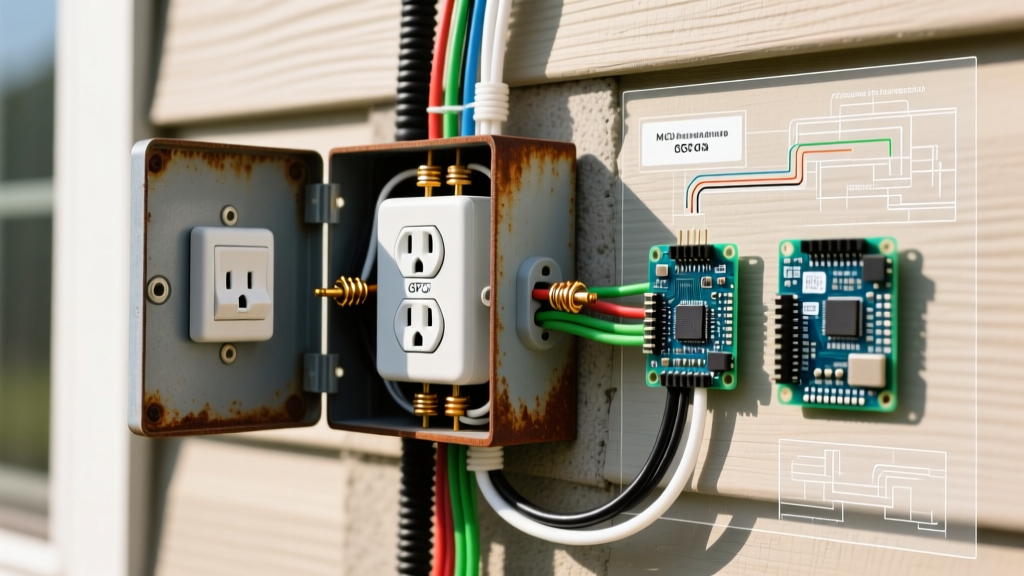

Navigating Outdoor Outlet Electrical Safety and NEC Compliance
Installing exterior receptacles involves far more than simply running a wire through a wall and attaching a faceplate. Understanding outdoor outlet electrical requirements is critical for preventing electrocution, avoiding catastrophic short circuits, and ensuring your home passes municipal inspections. The combination of moisture, UV radiation, and extreme temperature fluctuations creates a hostile environment for electrical components. According to the Electrical Safety Foundation International (ESFI), water and electricity are a lethal combination, making strict adherence to the National Electrical Code (NEC) non-negotiable for any exterior wiring project.
This comprehensive guide breaks down the exact NEC articles, product specifications, and installation methodologies required for safe, code-compliant exterior receptacles in 2026. Whether you are powering a landscape lighting transformer, a holiday display, or an electric vehicle charger, the foundational safety rules remain rigorous.
Core NEC Mandates for Exterior Receptacles
The National Fire Protection Association (NFPA) outlines specific mandates in the NEC regarding where and how exterior outlets must be installed. Ignoring these can result in failed inspections and severe safety hazards.
1. Mandatory Placement (NEC Article 210.52)
The NEC requires that every single-family dwelling have at least one outdoor receptacle accessible at grade level at both the front and rear of the house. These outlets must be easily accessible and cannot be located more than 6.5 feet above the finished grade level. If you are adding a new patio or deck, an additional receptacle is required on the deck surface if it is accessible from inside the dwelling.
2. Universal GFCI Protection (NEC Article 210.8)
Ground Fault Circuit Interrupter (GFCI) protection is mandatory for all 15-amp and 20-amp, 125-volt outdoor receptacles. The U.S. Consumer Product Safety Commission (CPSC) notes that GFCIs detect ground faults as small as 4 to 6 milliamps and cut power in a fraction of a second, preventing fatal shocks. There are no exceptions for outlets hidden under eaves or covered porches; if it is outside the thermal envelope of the home, it requires GFCI protection.
GFCI Implementation: Receptacle vs. Breaker
When planning your outdoor outlet electrical layout, you must choose between a GFCI receptacle or a GFCI circuit breaker. Each has distinct cost and maintenance profiles.
| Feature | GFCI Receptacle (e.g., Leviton 16252-WP) | GFCI Breaker (e.g., Eaton BR120GFI) |
|---|---|---|
| Average Cost | $22 - $35 | $45 - $65 |
| Reset Location | At the exterior outlet | Inside the main breaker panel |
| Best Use Case | Single dedicated outdoor circuit | Protecting multiple downstream outlets |
| Weather Vulnerability | High (requires premium in-use cover) | None (housed indoors) |
Expert Insight: For locations exposed to driving rain or heavy snow, installing a standard breaker and placing a standard (non-GFCI) receptacle outside is often preferred. Resetting a tripped GFCI receptacle in freezing rain is frustrating and dangerous. By using a GFCI breaker in the main panel, the sensitive electronics remain in a climate-controlled environment.
Weatherproof Enclosures and NEMA Ratings
NEC Article 406.9(B)(1) explicitly requires that outdoor receptacles be enclosed in a weatherproof enclosure. Furthermore, if the outlet is located in a damp or wet location, the enclosure must be weatherproof even when a cord is plugged in. This is commonly known as an "in-use" or "extra-duty" cover.
Decoding NEMA Enclosure Ratings
Not all plastic boxes are created equal. When purchasing enclosures, look for specific NEMA (National Electrical Manufacturers Association) ratings:
- NEMA 3R: Protects against falling dirt, rain, sleet, and snow. This is the minimum acceptable rating for standard residential outdoor outlets.
- NEMA 4: Provides protection against splashing water and hose-directed water. Required if the outlet is near an outdoor kitchen sink or a frequently used hose bib.
- NEMA 6P: Submersible. Rarely needed for residential walls, but used for landscape lighting hubs and pool equipment pads.
Pro-Tip on Sealing: Never rely solely on the foam gasket provided with a standard weatherproof box. Apply a continuous bead of 100% silicone sealant (such as GE Silicone II) along the top and side edges where the box meets the siding or stucco. Leave the bottom edge unsealed to allow any internal condensation to weep out. Trapping moisture inside the box is a leading cause of premature GFCI failure.
Underground Wiring and Trenching Depths
Extending power to a detached shed, gazebo, or driveway pillar requires running underground feeder lines. NEC Article 300.5(A) dictates strict minimum burial depths based on the wiring method used. Failing to dig deep enough risks severing the line with a simple gardening spade.
| Wiring Method | Minimum Burial Depth | Material Cost (per 100 ft) | Application Notes |
|---|---|---|---|
| Rigid Metal Conduit (RMC) | 6 inches | $180 - $250 | Overkill for most homes; used under driveways. |
| PVC Schedule 80 | 18 inches | $85 - $120 | Excellent for physical protection; requires glue. |
| UF-B Cable (Direct Burial) | 24 inches | $90 - $140 | Easiest DIY option; no conduit needed in dirt. |
| Low Voltage Lighting | 6 inches | $40 - $70 | Only for 12V/24V landscape systems. |
When pulling THWN-2 wires through PVC conduit, ensure you use sweeping 90-degree elbows rather than sharp bends to prevent wire insulation damage. Furthermore, NEC requires a warning ribbon (typically bright yellow or red) to be buried 12 inches above the conduit to warn future excavators.
Common Code Violations and Inspector Red Flags
Even experienced DIYers make mistakes when dealing with outdoor outlet electrical configurations. Avoid these frequent inspection failures:
- Using Indoor Wire Outdoors: Standard Romex (NM-B) cable is strictly prohibited in wet or damp locations, even if it is run inside a conduit. Moisture condenses inside the conduit and will wick into the paper wrapping of NM-B cable, causing a short. You must use THWN-2 individual wires or UF-B cable.
- Missing Conduit Hubs: When connecting PVC conduit to the bottom of a metal or PVC weatherproof box, you cannot simply push it into the knockout. You must use a threaded conduit hub with a rubber sealing ring to maintain the NEMA 3R weatherproof rating.
- Caulking the Bottom of the Cover: As mentioned earlier, sealing all four sides of an in-use cover traps condensation. Inspectors will fail an installation if they see caulk on the bottom weep edge.
- Improper Grounding: Exterior outlets must have an equipment grounding conductor. Relying on the metal conduit as the sole ground path is often rejected for PVC runs, and even metal conduits require a dedicated copper ground wire in most modern jurisdictions.
Frequently Asked Questions
Can I install a standard indoor outlet under a covered patio?
No. A covered patio is still classified as a "damp location" under NEC definitions. While it may not be subjected to direct rainfall, high humidity, blowing snow, and condensation still pose severe risks. You must use a weather-resistant (WR) stamped receptacle and an in-use cover.
Do 240V outlets for EV chargers require GFCI protection outdoors?
Yes. The 2020 NEC update (which remains the baseline for most 2026 local adoptions) expanded GFCI requirements to include 240V receptacles rated up to 50 amps. If you are installing a NEMA 14-50 outlet outdoors for an electric vehicle, it must be protected by a 50-amp GFCI breaker, which can cost upwards of $120.
How often should I test my outdoor GFCI outlets?
You should press the "TEST" button on your exterior GFCI receptacles at least once a month, and immediately after any severe thunderstorm or heavy snowmelt. The internal sensing coils can degrade over time due to temperature cycling, and manual testing is the only way to verify the mechanical trip mechanism is still functional.