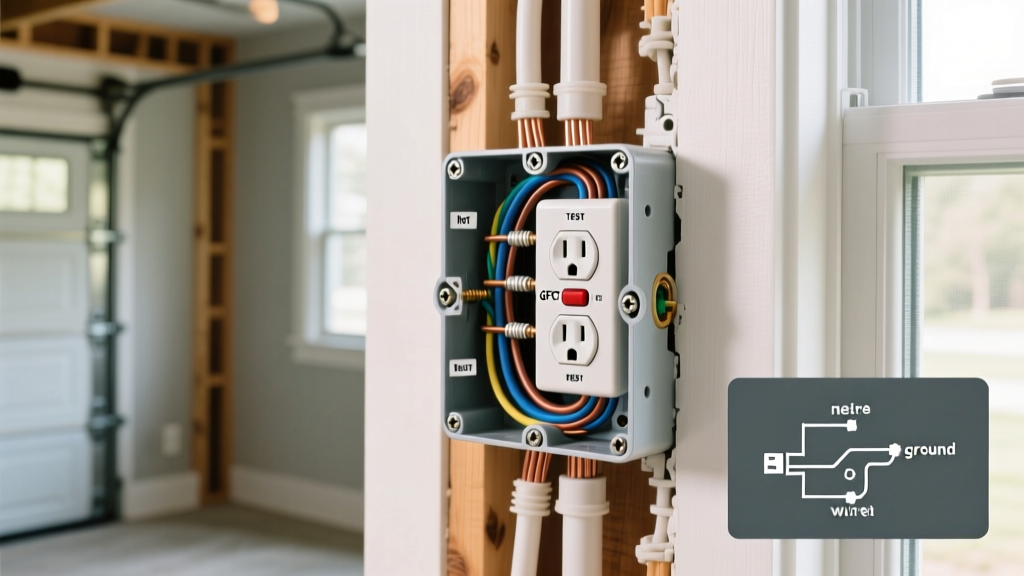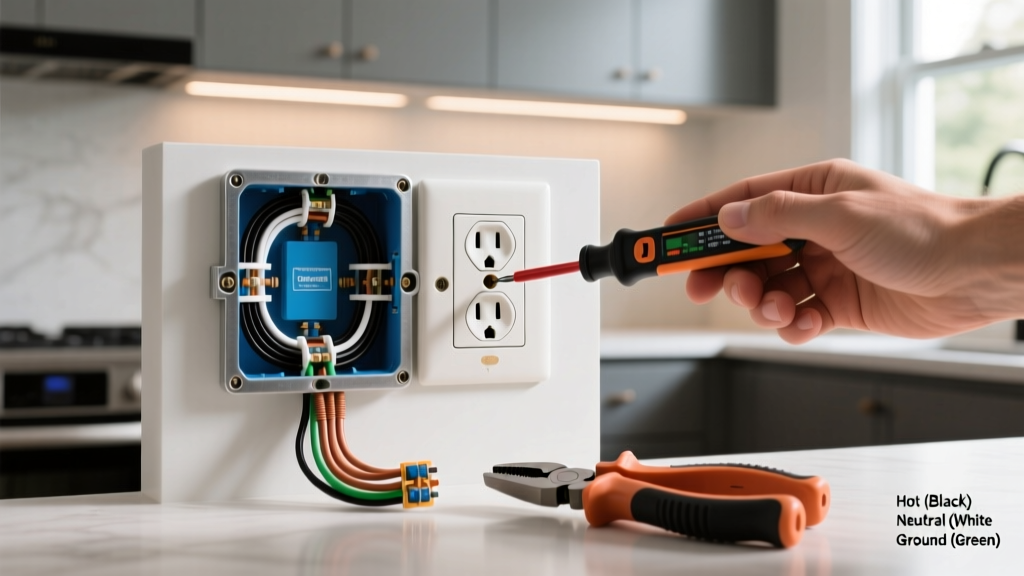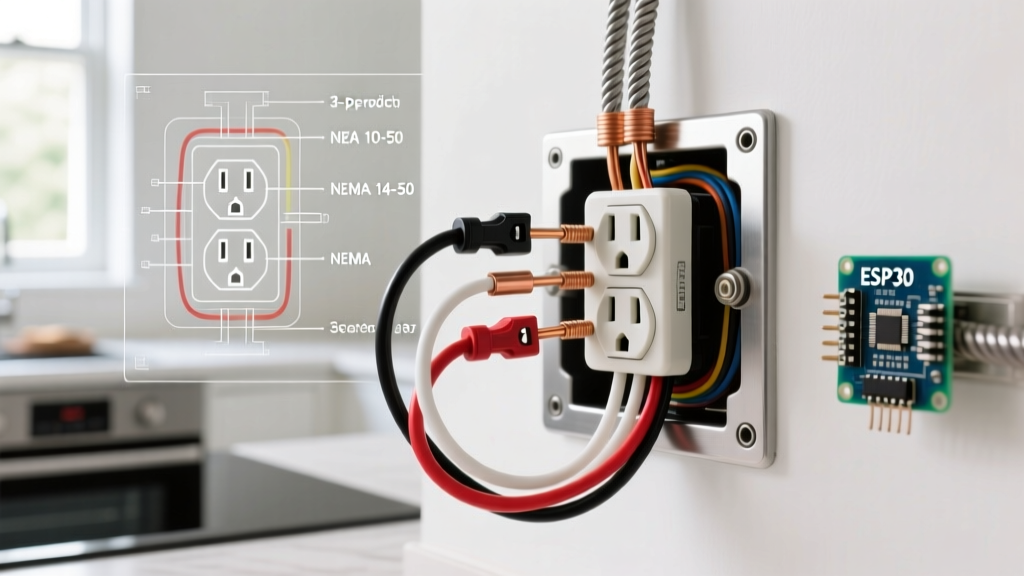

Why Upgrade Your Oven Electrical Outlet?
Upgrading an older oven electrical outlet from a 3-prong NEMA 10-50R to a modern 4-prong NEMA 14-50R is one of the most critical safety improvements you can make in an aging kitchen. Prior to the 1996 National Electrical Code (NEC) revision, ranges and ovens were permitted to use the neutral conductor as a grounding path. This configuration is inherently dangerous: if the neutral wire disconnects or develops high resistance, the metal chassis of your oven can become energized at 240 volts, presenting a lethal shock hazard.
According to the National Fire Protection Association (NFPA), outdated wiring and loose receptacle connections are leading contributors to kitchen electrical fires. Modern 4-wire setups separate the neutral (current-carrying) and ground (safety) paths, ensuring that a fault current safely trips the breaker rather than electrifying your appliance.
NEMA 10-50R vs. NEMA 14-50R: The Core Differences
| Feature | NEMA 10-50R (3-Prong) | NEMA 14-50R (4-Prong) |
|---|---|---|
| Configuration | 2 Hots, 1 Neutral/Ground | 2 Hots, 1 Neutral, 1 Ground |
| Wire Count | 3-Wire (Cable) | 4-Wire (Cable) |
| NEC Compliance | Obsolete for new installs | Required for all new installs |
| Safety Risk | High (Chassis energization risk) | Low (Dedicated ground path) |
| Typical Breaker | 50A (Often oversized for 8 AWG) | 50A (Requires 6 AWG Cu / 4 AWG Al) |
Assessing Your Existing Wiring: Can You Just Swap the Receptacle?
The most common mistake DIYers make when replacing an oven electrical outlet is simply swapping the 3-prong faceplate for a 4-prong faceplate without verifying the cable inside the wall. You cannot install a NEMA 14-50R without a dedicated equipment grounding conductor.
Identifying Your Cable Type
- Modern NM-B (Romex) 6/3 with Ground: Contains Black (Hot), Red (Hot), White (Neutral), and Bare (Ground). You are cleared for a direct 4-prong upgrade.
- Older SE (Service Entrance) Cable: Often contains Black, Red, and a bare, uninsulated stranded neutral. In older installations, this bare wire was used as both neutral and ground. The Electrical Safety Foundation International (ESFI) strongly advises against repurposing this uninsulated wire as a ground for new 4-prong receptacles due to the risk of neutral currents traveling on the grounding system.
The Aluminum Wire Edge Case
Many homes from the 1960s and 1970s used aluminum SE cable. Aluminum expands and contracts at a different rate than copper or brass terminal screws. Over time, this thermal cycling causes the terminal lugs to loosen, creating high-resistance arcing that melts the receptacle faceplate. If you have aluminum wiring:
- Verify the gauge. You need 4 AWG aluminum for a 50A circuit. If you have 6 AWG aluminum, it is only rated for 40A.
- Use a CO/ALR rated receptacle or pigtail the aluminum wires to copper using AlumiConn lug connectors before terminating at a standard copper-rated NEMA 14-50R.
- Apply antioxidant paste (Noalox) to prevent oxidation at the connection points.
Warning: Never create a 'bootleg ground' by installing a jumper wire between the neutral terminal and the ground screw on a 4-prong receptacle. If the neutral wire fails, your oven chassis becomes a 240V shock hazard. The Consumer Product Safety Commission (CPSC) regularly flags improper grounding as a primary cause of appliance-related electrocutions.
Step-by-Step 4-Prong Oven Electrical Outlet Replacement
Once you have confirmed your wall cavity contains a 4-wire cable (or have hired an electrician to pull new 6/3 NM-B wire), follow these precise steps for a safe installation.
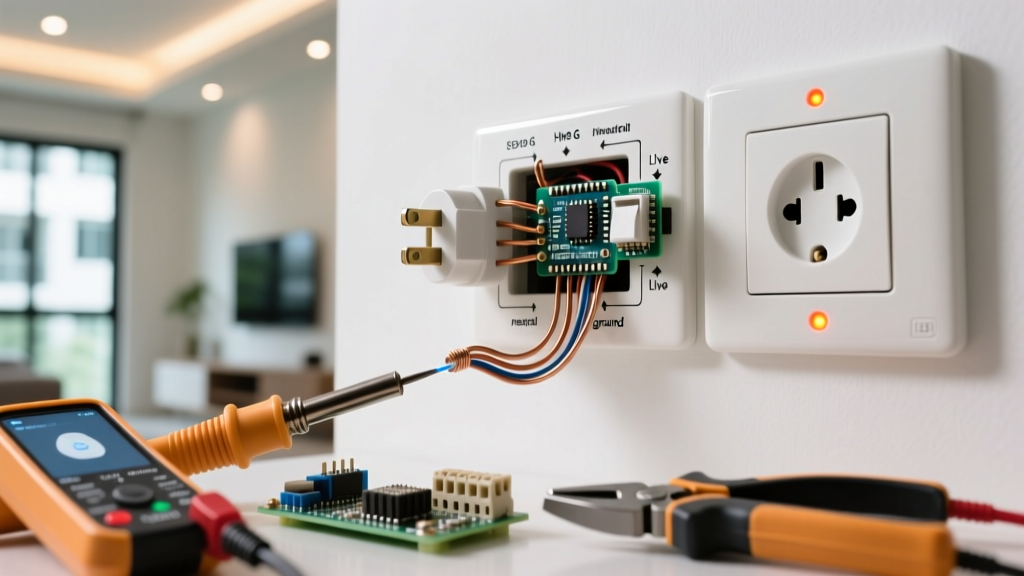
1. Kill the Power and Verify
Turn off the 50-amp double-pole breaker at the main panel. Use a non-contact voltage tester and a multimeter to verify 0V between both hot legs and the ground.
2. Prepare the Wires
Strip the outer cable jacket back at least 8 inches into the junction box. Strip exactly 5/8 inch of insulation from the black, red, and white conductors. Leaving too much bare wire exposed creates a short-circuit risk; stripping too little results in the screw clamping onto the insulation, causing a high-resistance connection.
3. Terminate with Precision Torque
This is where most installations fail. The NEC 110.14(D) requires terminations to be torqued to the manufacturer's specifications. For heavy-duty 50-amp receptacles like the Hubbell 9450A, the torque spec is typically 75 inch-pounds. Use a calibrated torque screwdriver. Hand-tightening is insufficient and will lead to thermal failure within 12 to 18 months of heavy oven use.
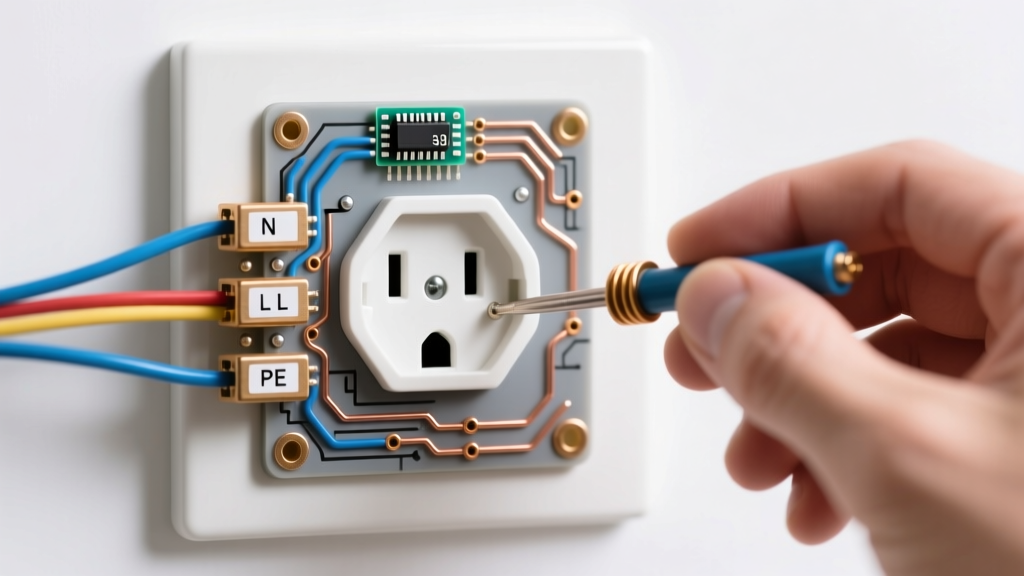
4. Wire Mapping
- X (Brass): Red (Hot 1)
- Y (Brass): Black (Hot 2)
- W (Silver): White (Neutral)
- G (Green): Bare/Green (Ground)
Recommended 50-Amp Receptacles for 2026
Do not buy the cheapest builder-grade receptacle at the big-box store. High-draw appliances require industrial-grade contacts to prevent arcing.
| Brand & Model | Grade | Price Range | Best For |
|---|---|---|---|
| Hubbell 9450A | Industrial | $45 - $65 | Heavy daily use, maximum durability |
| Leviton 279-S00 | Commercial | $15 - $25 | Standard residential upgrades |
| Bryant 9450FR | Industrial | $40 - $55 | Direct Hubbell alternative, high grip |
Cost Breakdown: DIY vs. Professional Installation
Upgrading an oven electrical outlet varies wildly in cost depending on whether your existing wiring supports a 4-prong setup or requires a full circuit pull.
| Scenario | Materials Cost | Labor Cost | Total Estimated Cost |
|---|---|---|---|
| Direct Swap (4-wire exists) | $20 - $65 | $100 - $150 | $120 - $215 |
| Panel to Outlet Rewire (up to 30ft) | $150 - $250 | $300 - $500 | $450 - $750 |
| Aluminum Pigtail & Remediation | $50 - $90 | $150 - $250 | $200 - $340 |
Frequently Asked Questions
Can I use a 4-prong cord on a 3-prong outlet?
No. You must either change the receptacle to a 4-prong NEMA 14-50R (and ensure a ground wire exists) or change the appliance cord to a 3-prong NEMA 10-50P and bond the neutral to the chassis inside the oven's terminal block. The former is the only code-compliant choice for new installations.
Why is my new 4-prong outlet getting hot to the touch?
Warmth is normal during a 2-hour self-cleaning cycle drawing 40+ amps. However, if the faceplate is hot enough to be uncomfortable, or if you smell ozone or melting plastic, you have a high-resistance connection. This is almost always caused by under-torqued terminal screws or stripped wire insulation clamped under the lug. Turn off the breaker immediately and re-terminate using a torque screwdriver.
Does a hardwired oven need an outlet upgrade?
If your oven is hardwired directly into a junction box, you do not have an oven electrical outlet to upgrade. However, the same NEC grounding rules apply: the junction box must be grounded, and a 4-wire connection (separate neutral and ground) must be maintained at the wire nuts.