
Understanding the Italy Electric Outlet Standard
When diagnosing electrical faults in Italian properties, understanding the unique evolution of the Italy electric outlet is critical. Unlike the standardized Schuko (Type F) dominant in most of Europe, Italy historically utilized the CEI 23-16 standard, featuring three pins in a single row. As of 2026, while the CEI 64-8 wiring standard heavily mandates multistandard (Schuko-Italian hybrid) sockets in new builds, millions of legacy 10A and 16A Type L receptacles remain in active service across residential and commercial spaces.
Troubleshooting these outlets requires recognizing the mechanical and electrical differences between the legacy formats and modern bipasso (dual-path) sockets. Misdiagnosing a 10A socket as a 16A circuit is one of the leading causes of thermal runaway and adapter melting in older Italian villas and apartments.
Legacy vs. Modern Italian Receptacle Specifications
| Socket Type | Pin Diameter | Pin Spacing (Center-to-Center) | Max Continuous Load | Common Era |
|---|---|---|---|---|
| Type L (10A) | 4.0 mm | 19 mm | 2300W (10A @ 230V) | Pre-1990s |
| Type L (16A) | 4.8 mm | 26 mm | 3680W (16A @ 230V) | 1980s - 2010s |
| Bipasso (10A/16A) | Accepts both | 19mm & 26mm hybrid | 3680W (16A @ 230V) | 2000s - Present |
| Multistandard (Schuko/L) | Accepts Type F & L | N/A (Schuko + L hybrid) | 3680W (16A @ 230V) | 2015 - 2026 |
Top 4 Italy Electric Outlet Faults and How to Diagnose Them
1. The 'Melting Adapter' Syndrome (Overloading 10A Sockets)
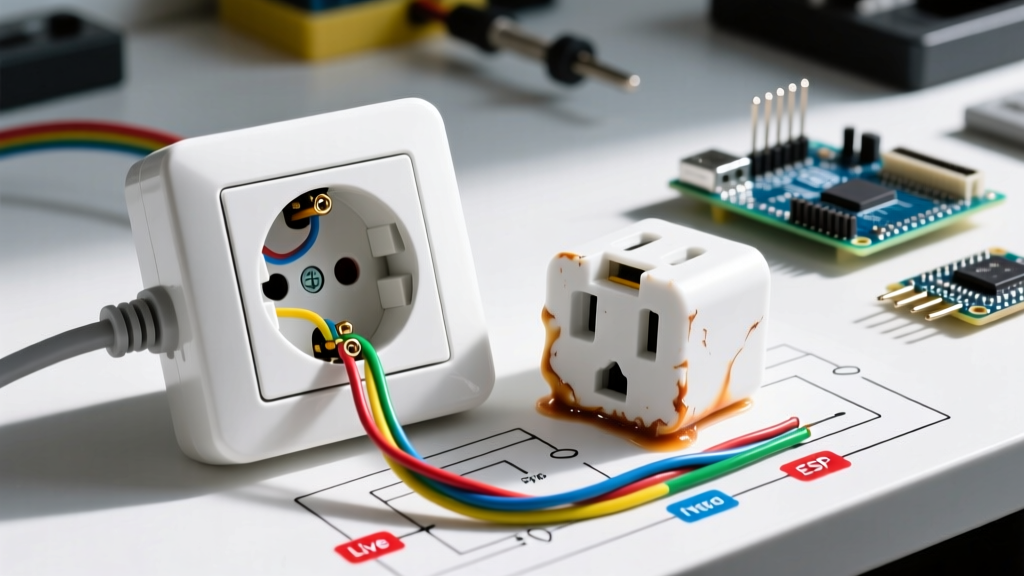
Travelers and expats frequently use cheap, non-fused plug adapters to convert US (Type A/B) or UK (Type G) plugs to the Italy electric outlet format. When a high-draw appliance like a 1500W hair dryer or a 2000W portable heater is used on a legacy 10A (4.0mm) socket, the internal brass contacts overheat. Because the adapter pins are often slightly undersized or lack proper tension, the contact resistance spikes.
Diagnostic Steps:
- Visual Inspection: Look for brown scorch marks on the faceplate or a warped PVC texture. PVC begins to deform around 85°C to 105°C.
- Thermal Imaging: Use a FLIR thermal camera under load. A healthy socket should remain below 40°C. If the adapter prongs read above 65°C, the internal receptacle tensioning tabs have fatigued and the entire socket must be replaced.
- Load Calculation: Verify the circuit breaker. If the breaker is rated for 16A but the wall socket is a legacy 10A, the breaker will not trip before the socket melts. This is a severe NEC/CEI code violation.
2. Grounding Failures (The Floating Middle Pin)
In the Type L configuration, the middle pin is Earth (PE). In buildings constructed before the 1990s, it was common for electricians to either leave the earth pin unconnected (floating) or, dangerously, bond it to the neutral wire at the socket. According to the IEC Type L Plug Standard, the earth pin must be tied to a dedicated grounding electrode system.
Multimeter Diagnosis:
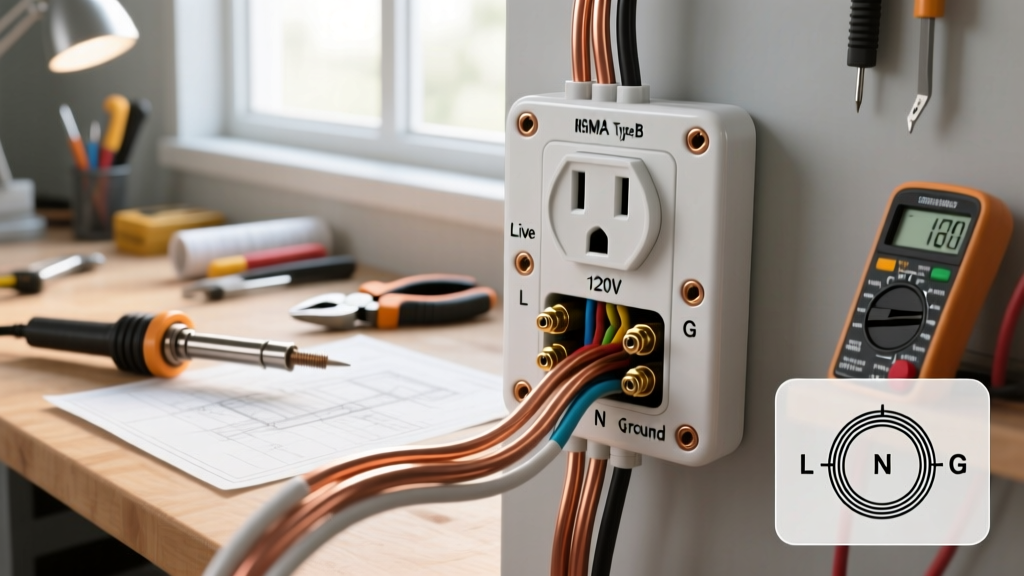
Set your digital multimeter (DMM) to AC Voltage. In a properly wired 230V Italian system, you should record the following:
- Phase (L) to Neutral (N): ~230V (±10%)
- Phase (L) to Earth (PE): ~230V
- Neutral (N) to Earth (PE): < 2V
Expert Insight: If your N-PE reading is above 5V, you likely have a shared neutral fault, a loose neutral connection at the distribution board, or a missing earth bond. Never assume the middle pin is grounded without testing. Consult the Fluke Ground Fault Testing Methodologies for advanced earth impedance testing.
3. Loose Internal Connections in 'Bipasso' Sockets
Bipasso sockets are designed to accept both 10A and 16A plugs. However, the internal shutters and brass leaf springs undergo immense mechanical stress. After roughly 5,000 insertion cycles, the springs lose their temper, resulting in a loose physical connection. This causes micro-arcing, which emits a faint high-frequency crackle and generates ozone.
Diagnostic Steps:
- The Wiggle Test: Insert a standard 10A plug. If it requires less than 15 Newtons of force to extract, or if it wiggles laterally by more than 2mm, the internal contacts are compromised.
- Voltage Drop Test: With a heavy load (e.g., a 2000W espresso machine) running, measure the voltage directly at the socket. If the voltage drops below 215V while the main panel reads 230V, the high-resistance socket is wasting energy as heat. See the Fluke Guide on Troubleshooting Voltage Drops for precise measurement techniques.
4. Phase and Neutral Reversal
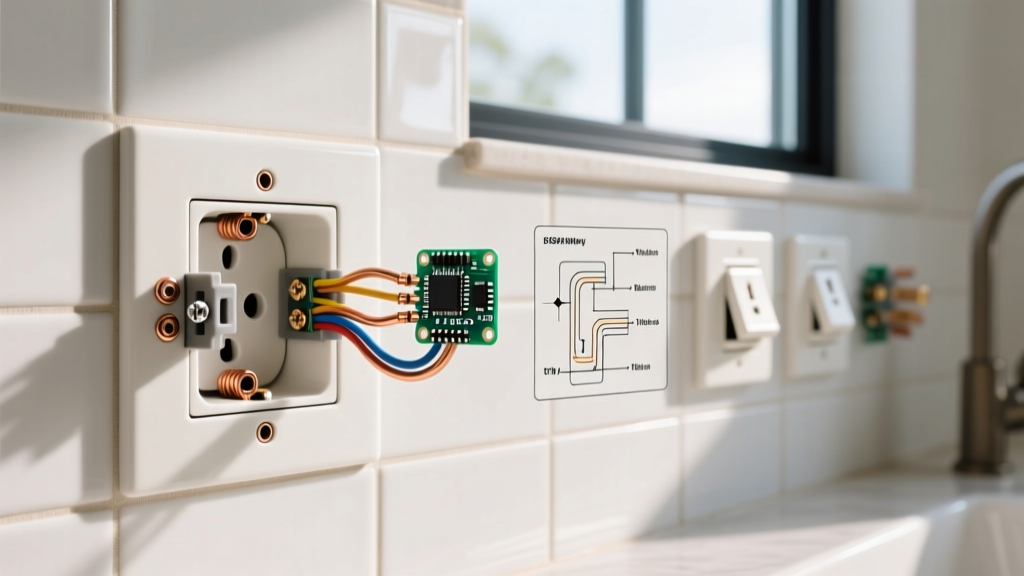
Unlike polarized US outlets, the Italy electric outlet is symmetrical, meaning plugs can be inserted upside down. However, for hardwired appliances or smart home modules (like Wi-Fi enabled relays) installed behind the socket, correct Phase (L) and Neutral (N) orientation is vital for safety. In older Italian wiring, color codes were inconsistent (Phase could be black, brown, or even grey; Neutral might be light blue or white).
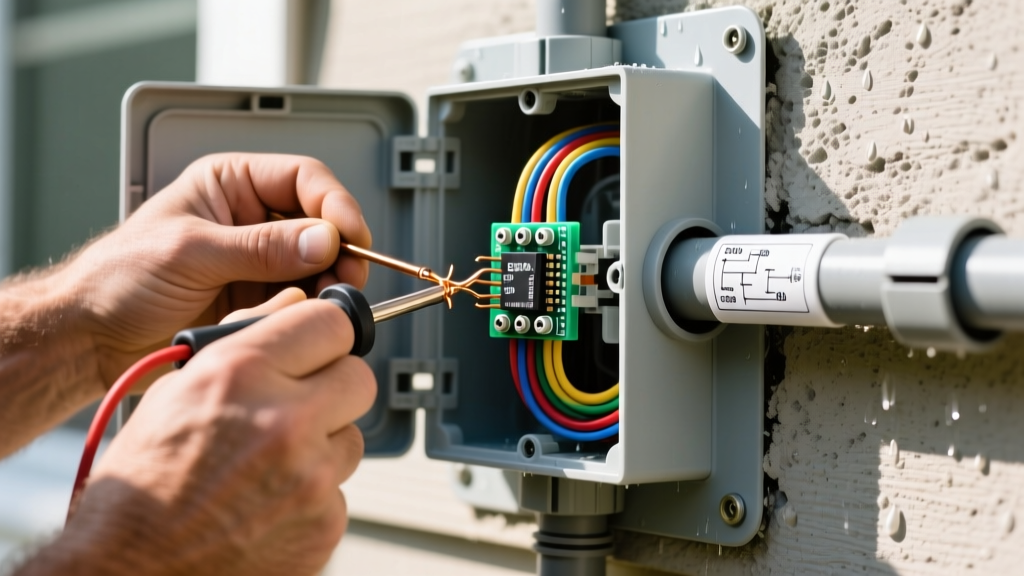
Fix: Always use a non-contact voltage tester (NCVT) or a two-pole voltage tester to identify the live phase before disconnecting any wires. Ensure the Phase wire is connected to the correct terminal on modern smart sockets to prevent the device's internal relay from switching the neutral, which leaves the appliance energized even when turned off.
Upgrading and Replacing: Moving to Multistandard Sockets
If your diagnostics reveal fatigued legacy sockets, upgrading to a modern multistandard receptacle is mandatory for safety and convenience. In Italy, standard wall boxes (scatola da incasso) are typically the 3-module '503' size. When replacing old outlets, consider the following 2026 market leaders:
- Vimar Idea (Multistandard): Features robust Schuko/Type L hybrid contacts and integrated child-safety shutters. Priced around €18-€24 per unit.
- BTicino Livinglight Air: Offers a sleek, flush-mount aesthetic with high-tension brass contacts designed to withstand over 10,000 cycles. Priced around €22-€28.
- Gewiss Playbus: Excellent for industrial or heavy-duty residential applications, featuring ceramic internal barriers to prevent arc tracking.
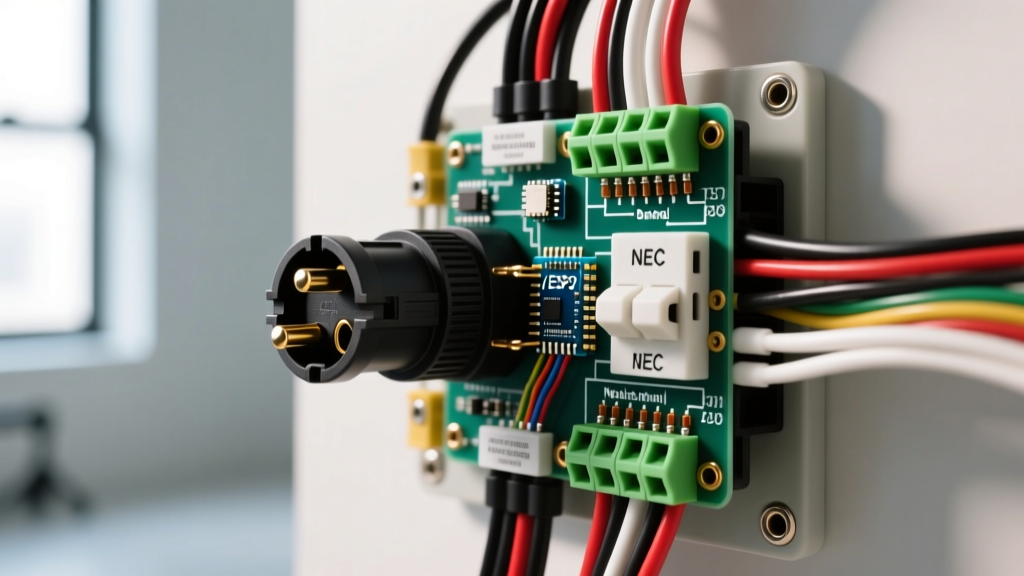
Smart Upgrade Tip: If you are dealing with frequent breaker trips and suspect phantom loads, upgrade to a Vimar or BTicino smart Wi-Fi outlet. These fit into standard 503 boxes (provided you have a neutral wire in the backbox) and allow you to monitor real-time wattage and set automated overload shutoffs via your smartphone.
Frequently Asked Questions
Can I use a German Schuko plug in a standard Italy electric outlet?
No. A pure legacy Italian 10A or 16A socket will not accept a German Schuko (Type F) plug because the Schuko plug is round and features side-grounding clips, while the Italian socket is recessed with three holes in a row. You must use a 'Bipasso' or 'Multistandard' socket, or a high-quality, fused travel adapter rated for at least 10A.
Why does my Italian circuit breaker trip when I use a US voltage converter?
US appliances operate at 120V. If you use a step-down transformer (230V to 120V) without checking the wattage, the transformer will draw roughly double the amperage on the 230V Italian side compared to the 120V output side. A 1500W US appliance will pull about 6.5A at 230V, which is safe for a 10A socket, but the initial inrush current of the transformer's magnetic core can easily trip a sensitive 10A Type-C or Type-F circuit breaker.
Is it safe to replace a 10A socket with a 16A socket myself?
Physically, a 16A socket may not fit into an older, smaller wall box without modification. Electrically, upgrading the socket to 16A does NOT upgrade the wiring. If the hidden wall wires are 1.5mm² (rated for ~10A-16A depending on installation method), installing a 16A socket and plugging in a 3000W heater could overheat the wires inside the wall before the 16A breaker trips. Always verify wire gauge before upgrading socket amperage.