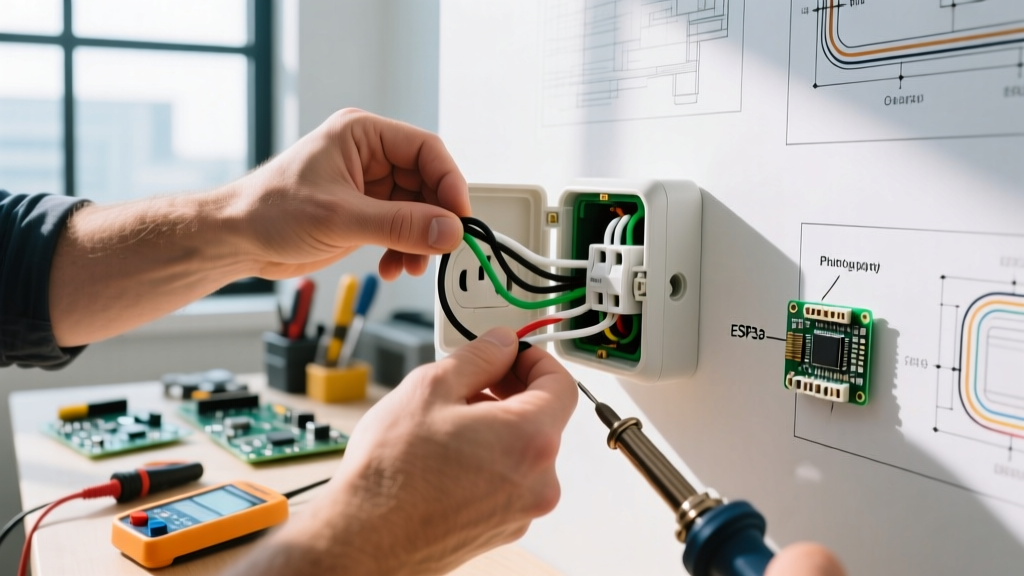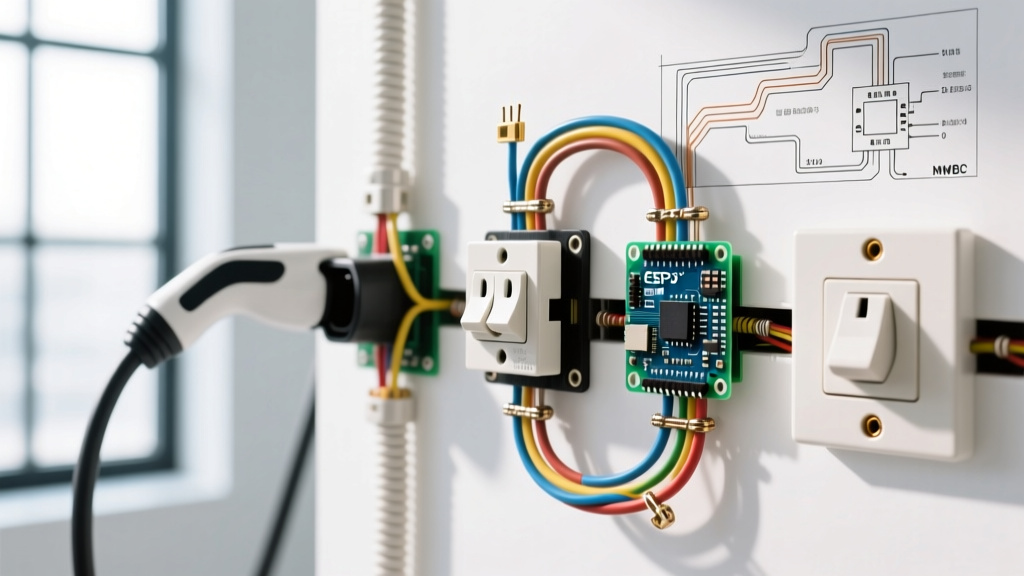

Swapping a standard 15-amp duplex receptacle is a rite of passage for most DIYers. However, modern homes and evolving electrical codes have transformed the humble wall outlet into a complex node of safety devices, high-amperage demands, and strict compliance requirements. When standard wiring scenarios evolve into multi-wire branch circuits, ungrounded retrofits, or high-voltage electric vehicle (EV) installations, the margin for error vanishes. This is precisely when you must transition from a weekend warrior to hiring a licensed electrical outlet contractor.
In this guide, we dissect the most common complex wiring scenarios found in residential properties, detailing exactly why they require professional intervention, the specific materials a contractor will use, and what you should expect to pay in 2026.
The DIY Limit: Recognizing Complex Wiring Scenarios
Before opening a junction box, it is critical to understand the limitations of basic DIY electrical work. While replacing a like-for-like outlet on a simple 120V, 15A circuit is generally safe, the following scenarios introduce lethal hazards and strict code violations if handled improperly.
Scenario 1: Multi-Wire Branch Circuits (MWBC) in Kitchens
Many homes built between the 1970s and early 2000s utilize Multi-Wire Branch Circuits (MWBCs) to power kitchen small appliance circuits. An MWBC shares a single neutral wire between two hot wires (typically one black, one red) on opposite phases. This setup effectively provides two 20A circuits using only one 3-wire cable (12/2 NM-B).
- The Hazard: If a DIYer attempts to replace a split-receptacle on an MWBC and only turns off one breaker, the shared neutral remains energized. Disconnecting the neutral while the other circuit is live can result in a lethal shock or cause the neutral wire to carry the sum of both circuits' current, leading to a catastrophic electrical fire.
- The Contractor Solution: A professional electrical outlet contractor will identify the MWBC at the panel, install an approved handle tie (or a 2-pole breaker) per NEC 210.4(B), and ensure the split-receptacle's hot tabs are correctly severed to maintain independent circuit operation.
Scenario 2: Upgrading Ungrounded 2-Prong Outlets Safely
Older homes often feature ungrounded 2-prong receptacles. A common, highly dangerous DIY mistake is installing a standard 3-prong outlet without an actual ground wire—a practice known as a 'bootleg ground.' This fools outlet testers but leaves sensitive electronics and users completely unprotected from surges and faults.
According to the National Fire Protection Association (NFPA), the National Electrical Code (NEC) allows a specific retrofit method for these scenarios. A licensed contractor will install a GFCI (Ground Fault Circuit Interrupter) receptacle, such as the Leviton GFNT2-W, at the first outlet in the circuit. They will then wire standard 3-prong downstream outlets, labeling them with the mandated 'GFCI Protected' and 'No Equipment Ground' stickers per NEC 406.4(D)(2)(c). This provides life-saving shock protection without the massive expense of tearing open walls to run new ground wires.
Scenario 3: Installing 240V NEMA 14-50 EV Receptacles
With the surge in electric vehicle adoption, installing a Level 2 home charging station is one of the most requested services in 2026. The U.S. Department of Energy heavily recommends professional installation for 240V circuits due to the continuous, high-amperage load they place on residential panels.
- Wire Sizing & Routing: A 50-amp NEMA 14-50 receptacle (like the heavy-duty Hubbell 9450A) requires 6 AWG copper wire (or 4 AWG aluminum) routed through appropriate conduit or as 6/3 NM-B Romex.
- Thermal Management: EV charging is considered a 'continuous load' under NEC Article 625. The circuit must be rated for 125% of the load, meaning a 40A charger requires a 50A breaker, and terminations must be torqued to exact manufacturer specifications to prevent thermal runaway at the terminal block.
Expert Insight: Under NEC 110.14(D), any termination on a circuit rated 100A or less must be tightened using a calibrated torque screwdriver. Professional contractors use tools like the Klein Tools 32500TORQ to ensure the Hubbell 9450A terminals are tightened to exactly 45 inch-pounds, preventing the arcing and melting commonly seen in poorly executed DIY EV installations.
2026 Cost Breakdown: What an Electrical Outlet Contractor Charges
Pricing for electrical work varies by region, panel accessibility, and the complexity of the wiring scenario. Below is a realistic look at what homeowners can expect to pay a licensed electrical outlet contractor in 2026.
| Wiring Scenario | Typical Material Cost | Average Labor (2026) | Total Estimated Cost |
|---|---|---|---|
| Standard 15A/20A GFCI Retrofit | $25 - $45 | $100 - $150 | $125 - $195 |
| MWBC Split-Receptacle Repair | $15 - $30 | $150 - $250 | $165 - $280 |
| New 20A Dedicated Appliance Circuit | $60 - $120 | $250 - $450 | $310 - $570 |
| 50A NEMA 14-50 EV Receptacle (Panel adjacent) | $120 - $200 | $400 - $600 | $520 - $800 |
| 50A NEMA 14-50 EV Receptacle (Trenching/Long run) | $250 - $500 | $800 - $1,500 | $1,050 - $2,000 |
Note: Prices assume a standard 200-amp residential panel with adequate spare capacity. If a panel upgrade or sub-panel installation is required to handle the new loads, expect costs to increase by $1,500 to $3,500.
Navigating NEC Code Requirements and Permits
A hallmark of a legitimate electrical outlet contractor is their adherence to local permitting and inspection processes. While DIYers often fly under the radar, unpermitted electrical work can void home insurance policies and derail real estate transactions.
AFCI and GFCI Dual-Function Requirements
Modern NEC updates have drastically expanded the rooms requiring Arc Fault Circuit Interrupter (AFCI) and GFCI protection. For example, kitchen and laundry outlets now frequently require both. Instead of using bulky pigtail combination receptacles that barely fit into standard junction boxes, a contractor will often install a dual-function breaker at the panel, such as the Eaton BRCAF115 or Siemens Q215AFCI/GFI. This cleans up the wiring inside the wall box while providing superior whole-circuit protection.
The Consumer Product Safety Commission (CPSC) strongly advises against bypassing these safety devices. A professional contractor will pull a permit for any new circuit run or panel modification, ensuring a local inspector verifies the wire gauge, breaker sizing, and torque specifications before the walls are closed up.Vetting Your Professional: A Quick Checklist
Not all handymen are qualified electrical outlet contractors. When soliciting bids for complex wiring scenarios, ensure your candidate meets the following criteria:
- State & Local Licensing: Verify their journeyman or master electrician license through your state's contractor board database.
- Insurance Coverage: Request a Certificate of Insurance (COI) proving they carry both general liability and workers' compensation.
- Permit Pulling: If the contractor suggests skipping the permit to 'save you money,' walk away. This is a massive red flag indicating they intend to cut corners on code compliance.
- Load Calculation: For EV chargers or heavy appliance outlets, the contractor should perform an NEC Article 220 residential load calculation to prove your current electrical service can handle the new demand.
Frequently Asked Questions
Can I just use a higher amp breaker to stop my outlet from tripping?
Absolutely not. Breakers are sized to protect the wire inside your walls, not the appliance. Upgrading a 15A breaker to 20A on a circuit wired with 14 AWG wire will allow the wire to overheat and catch fire inside the wall before the breaker ever trips. A contractor will run a new 12 AWG circuit if a 20A capacity is required.
Why does my contractor insist on replacing the entire panel for one new outlet?
They likely aren't trying to upsell you; your panel may be physically full, or worse, it may be a recalled or obsolete panel (such as certain Federal Pacific or Zinsco models from the mid-century). Furthermore, if your home's main service is only 100 amps, adding a 50A EV charger will exceed the safe continuous load capacity of the home, necessitating a service upgrade to 200 amps.
Is it cheaper to install a hardwired EV charger or a NEMA 14-50 outlet?
The material and labor costs for running the 6 AWG wire and installing a 50A breaker are virtually identical. However, a NEMA 14-50 outlet offers the advantage of portability if you move or need to swap charger brands, whereas a hardwired unit eliminates the receptacle as a potential point of thermal failure. Discuss your long-term plans with your contractor to make the right choice.