
The Unique Norwegian Grid: IT-nett vs. TN-S Systems
When installing or troubleshooting a norwegian electrical outlet, the first critical step is identifying the local grid topology. Unlike most of Europe and North America, Norway has a deeply entrenched history of the IT-nett (Isolated Terra) system, though modern builds are increasingly adopting the TN-S (Terra-Neutral Separated) standard. Understanding the difference is a matter of life safety and strict code compliance.
IT-nett (230V Phase-to-Phase)
In an IT-nett system, the transformer secondary is either isolated from earth or connected via a high-impedance coil. Power is delivered as 230V between two phases (L1 and L2). There is no distributed neutral wire to standard wall receptacles. If you measure phase-to-earth, you will read 230V. This architecture requires specialized 2-pole RCDs (Residual Current Devices) and strict adherence to insulation monitoring.
TN-S (230/400V Phase-to-Neutral)
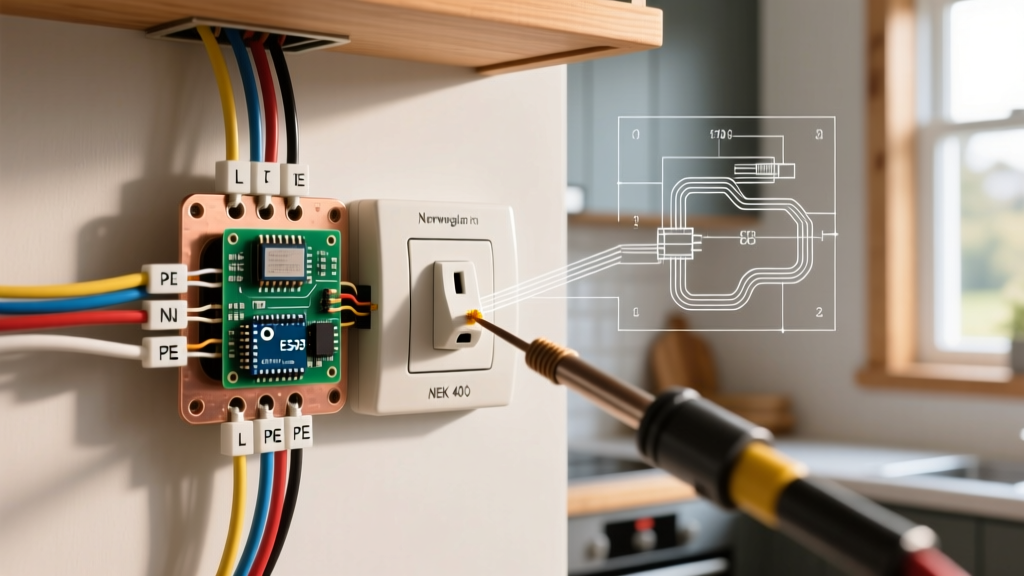
Newer residential and commercial installations (post-2010s) predominantly use the TN-S system, providing 230V phase-to-neutral and 400V phase-to-phase. Standard European Schuko wiring (L, N, PE) applies here. The Norwegian Electrotechnical Committee (NEK) heavily outlines the transition and coexistence of these grids in the NEK 400 standard.
NEK 400 Code Compliance for Receptacles
The NEK 400 is the definitive electrical installation standard in Norway. As of the latest 2022/2026 amendments, compliance dictates rigorous protection mechanisms for all socket outlets.
- Overcurrent Protection: Standard 16A Schuko outlets must be protected by a 16A Type B or C circuit breaker (automatsikring). Using a 20A breaker on a standard 16A receptacle is a direct violation of FEL (Forskrift om elektriske lavspenningsanlegg) regulations.
- Cable Sizing: Minimum 1.5mm² copper for 16A circuits (typically 3x1.5mm² PVC or Halogen-Free LSZH like Nexans Alsecure). For 20A circuits (e.g., kitchen appliance banks), 2.5mm² is mandatory.
- Terminal Torque: A frequent failure mode in Norwegian outlets is thermal degradation due to loose connections. Terminal screws on brands like Elko Plus and Schneider Exxact must be torqued to exactly 1.2 Nm to 1.5 Nm using a calibrated VDE-insulated torque screwdriver.
Earth Leakage Protection (Jordfeilbryter)
According to NEK 400, all socket outlets intended for general use by laypersons, rated up to 32A, must be protected by an RCD (Jordfeilbryter) with a maximum tripping current of 30mA.
DSB Safety Directive: The Norwegian Directorate for Civil Protection (DSB) mandates that Type A RCDs are the minimum requirement for general household outlets to detect pulsating DC fault currents. However, for dedicated EV charging outlets (Mode 3 or 4), a Type B RCD or a Type A-EV (which detects smooth DC faults up to 6mA) is legally required to prevent blinding standard RCDs.
Hardware Specifications: Schuko vs. Europlug
The physical norwegian electrical outlet adheres to the CEE 7/3 (Schuko) and CEE 7/16 (Europlug) standards. Below is a technical comparison matrix of approved receptacle types in the Norwegian market.
| Receptacle Type | Standard | Max Continuous Load | Grounding Mechanism | Common Brands/Models (Norway) |
|---|---|---|---|---|
| Schuko (Type F) | CEE 7/3 | 16A (3.6 kW) | Side Earth Clips | Elko Plus 1408, Schneider Exxact |
| French/Belgian (Type E) | CEE 7/5 | 16A (3.6 kW) | Protruding Earth Pin | Rare in Norway; requires adapter |
| Europlug Socket | CEE 7/16 | 2.5A (575 W) | None (Ungrounded) | Integrated into multi-gang plates |
| Industrial (Type 13) | IEC 60309 | 16A - 32A | Pin & Sleeve | Garrett, Marechal (Garage/Outdoor) |
When sourcing hardware, Elko remains the dominant manufacturer in Norway. Their "Plus" and "RS" series feature integrated child protection shutters (barnevern), which is a strict requirement for all new residential installations to prevent foreign object insertion.
Legal Boundaries: What DIYers Can and Cannot Do
Norway has some of the strictest electrical DIY laws in the world, governed by the FEL regulations. Unlike the US or UK, where homeowners can pull permits and wire their own rooms, Norwegian law severely restricts unlicensed electrical work.
Permitted DIY Tasks (Layperson)
- Replacing the outer cover plate (deksel) of an existing outlet, provided no live parts are exposed during the process.
- Changing a surface-mounted plug top (støpsel) on an appliance cord.
- Replacing a lightbulb or standard LED fixture that connects via a pre-wired Schuko plug or standard DCL (Device Connection for Lighting) plug.
Strictly Prohibited DIY Tasks (Requires Licensed Electrician)
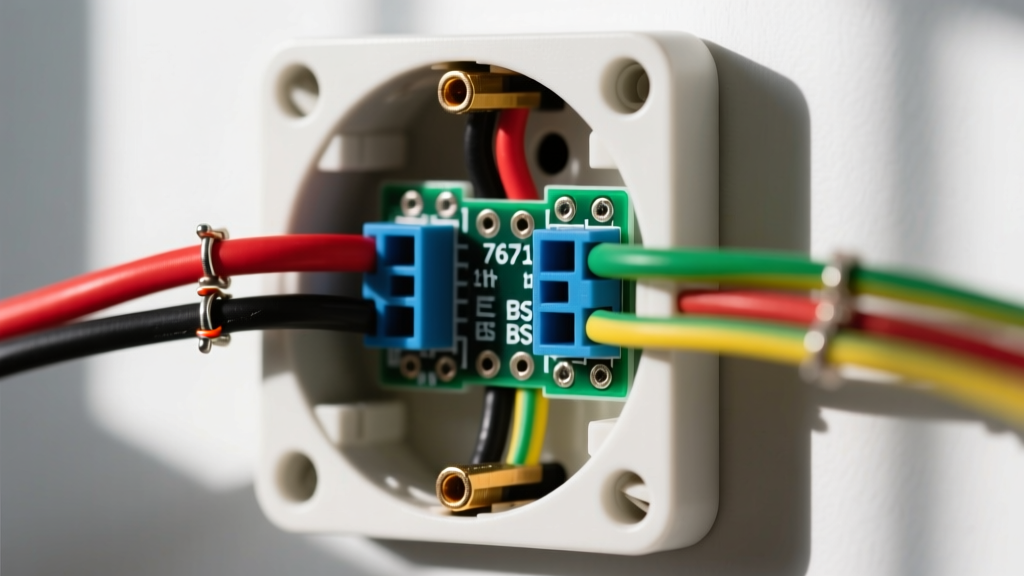
- Stripping and terminating fixed installation cables (e.g., PFSP, Alsecure) into the back of a norwegian electrical outlet.
- Installing or replacing the RCD (Jordfeilbryter) or MCB in the distribution board (skap).
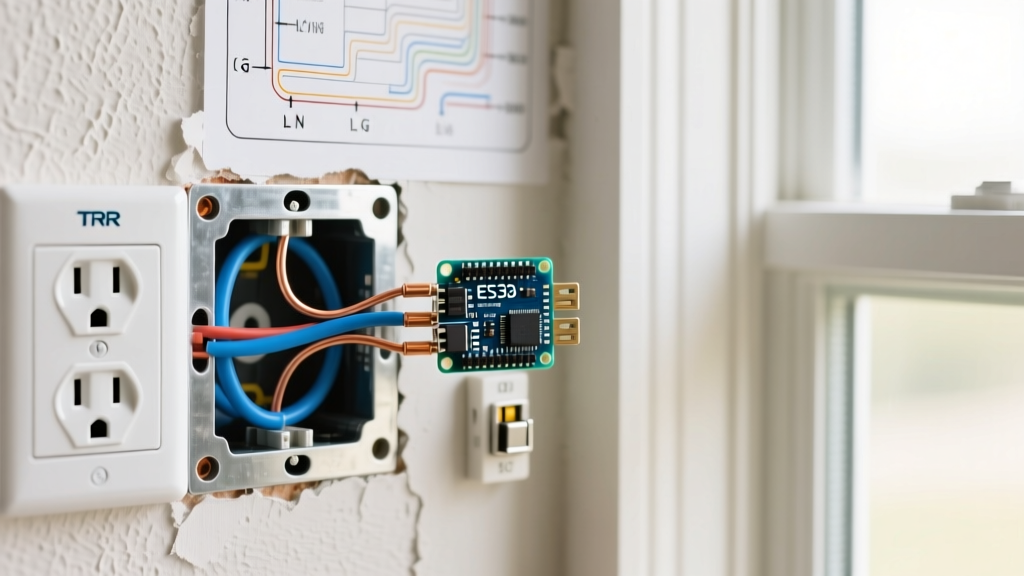
- Extending a circuit or adding a new junction box (stikkontaktboks).
Penalty Warning: Insurance companies in Norway (e.g., Gjensidige, If) routinely deny fire claims if an unlicensed individual performed fixed wiring, and the DSB can issue severe fines for non-compliance.
Troubleshooting Common IT-nett Faults
If you are maintaining a property on an older IT-nett grid, troubleshooting a tripping RCD requires a different methodology than a standard TN-S system.
1. The "First Fault" Phenomenon
In an IT-nett system, a single earth fault (e.g., a degraded insulation on L1 touching the metal backbox) does not cause a short circuit or trip the overcurrent breaker. It simply shifts the system reference. However, it will trigger the insulation monitoring device or cause a 2-pole RCD to become highly sensitive. If a second fault occurs on L2, a phase-to-phase short circuit through earth occurs, resulting in an immediate, violent breaker trip.
2. Thermal Imaging Inspections
Licensed Norwegian electricians utilize FLIR thermal cameras during periodic inspections (Periodisk kontroll). A temperature delta (ΔT) of >15°C above ambient on a Schuko terminal indicates a loose connection or oxidation. In humid coastal regions (e.g., Bergen, Stavanger), galvanic corrosion on brass terminal screws is a prevalent failure mode, necessitating the use of antioxidant paste during installation.
Frequently Asked Questions (FAQ)
Can I use a US 120V appliance in a Norwegian outlet?
No. A norwegian electrical outlet supplies 230V. Plugging a 120V US appliance directly into a Schuko socket via a physical travel adapter will destroy the appliance and pose a severe fire hazard. You must use a step-down transformer rated for the appliance's wattage plus a 20% safety margin.
Why does my Norwegian outlet have no neutral wire?
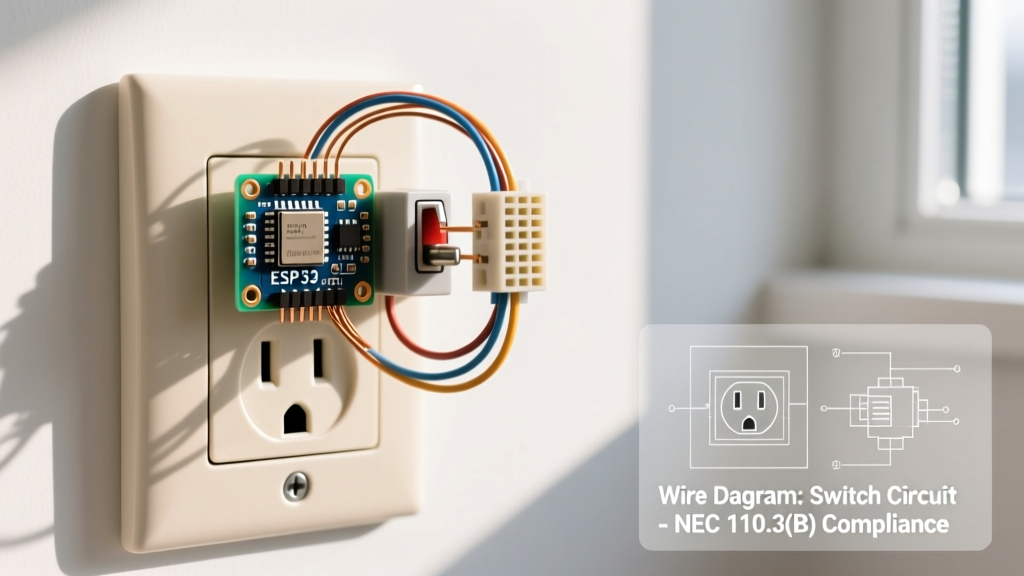
If your property is on an IT-nett grid, the 230V is derived from two phases (L1 and L2). There is no neutral wire at the receptacle. Smart switches and Wi-Fi enabled outlets that require a neutral wire will not function here unless a local neutral is generated via a specialized isolation transformer, which must be installed by a certified electrician.
What is the cost to upgrade an outlet panel in Norway?
Upgrading a standard single gang outlet to a smart home integrated Schuko (e.g., Elko SmartThings or Schneider Wiser) typically costs between 800 NOK and 1,500 NOK ($75 - $140 USD) for the hardware, plus 1,200 NOK to 1,800 NOK ($110 - $170 USD) per hour for a licensed electrician's labor and mandatory compliance documentation (samsvarserklæring).