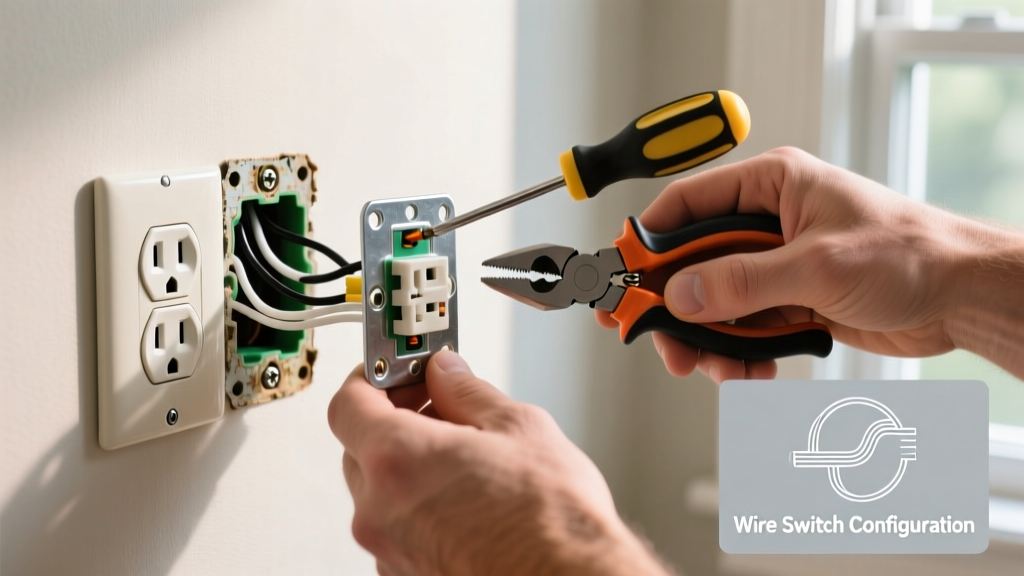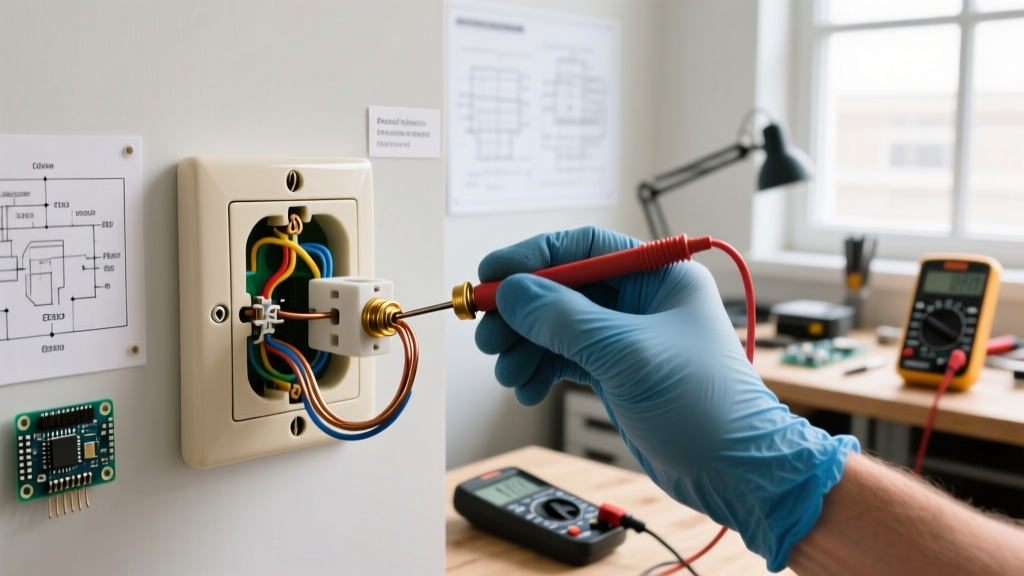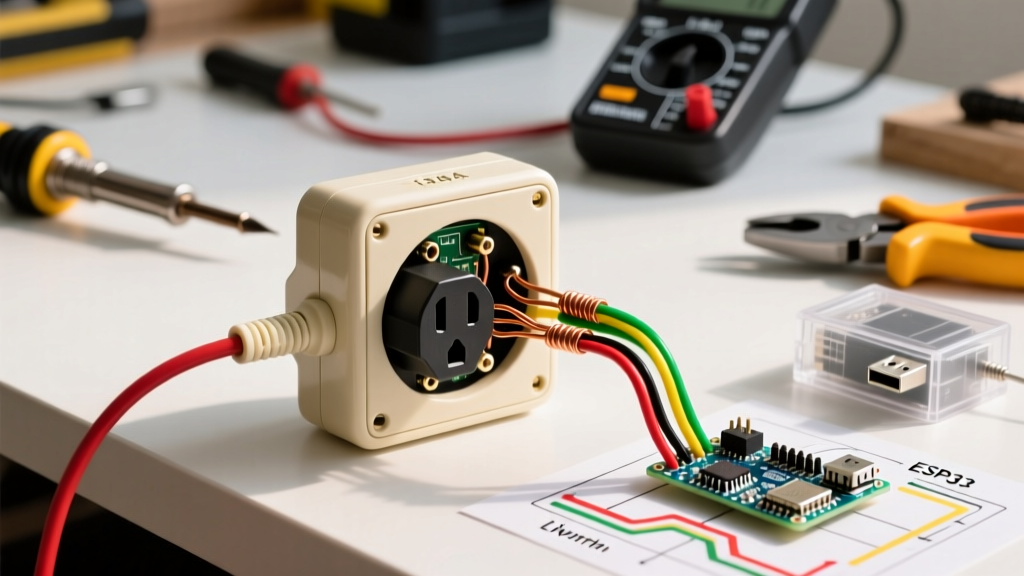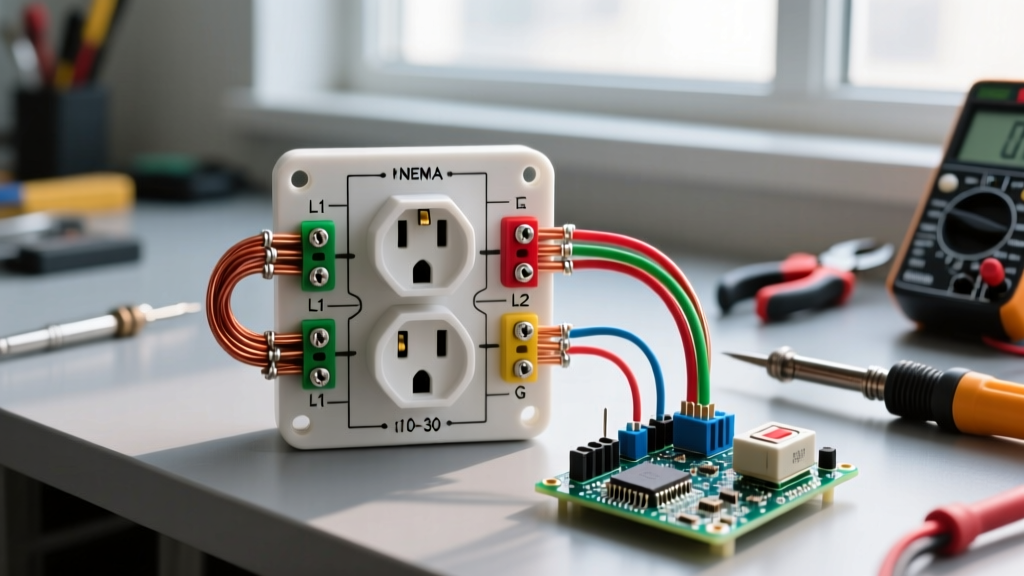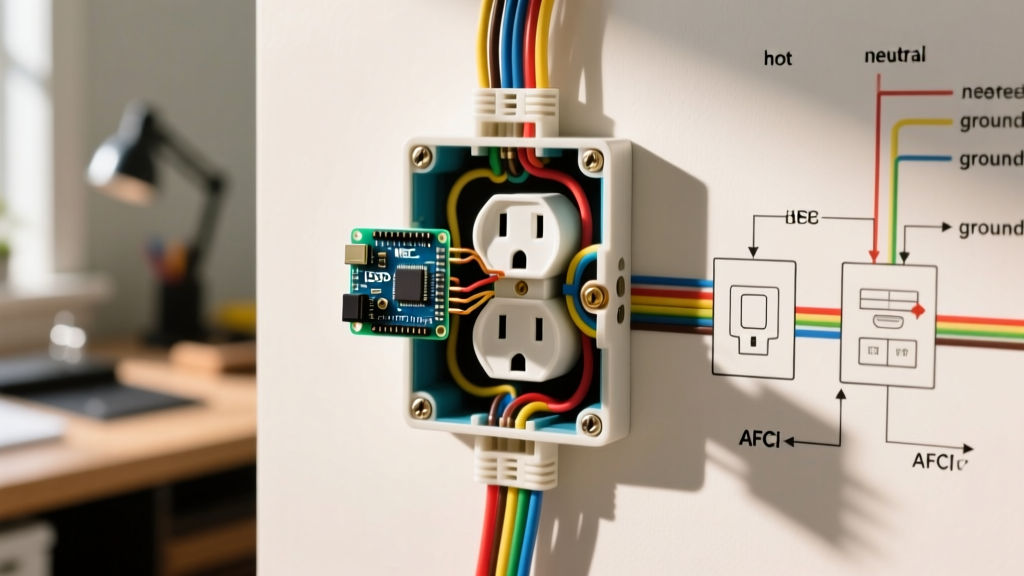

Why NEC Compliance Dictates Your Electrical Wiring Outlet Strategy
When planning an electrical wiring outlet installation or upgrade in 2026, treating the National Electrical Code (NEC) as a mere suggestion is a fast track to failed inspections, fire hazards, and voided insurance policies. The NEC, updated every three years by the National Fire Protection Association (NFPA), provides the definitive baseline for safe electrical design. This guide breaks down the exact code requirements you must follow for residential receptacle wiring, moving beyond basic 'hot-to-brass' advice into the precise metrics inspectors actually measure.
The 6-Foot / 12-Foot Spacing Mandate (NEC 210.52)
One of the most frequently misunderstood rules in residential wiring is the receptacle spacing requirement. According to NEC Article 210.52(A), you must place outlets so that no point along the floor line in any wall space is more than 6 feet from a receptacle. Furthermore, any wall space that is 2 feet or more in width requires its own dedicated outlet.
How Inspectors Measure 'Wall Space'
- The Tape Measure Test: Inspectors measure along the unbroken floor line. If a doorway, fireplace, or fixed cabinet breaks the wall, the measurement resets on the other side.
- The 2-Foot Rule: A narrow 24-inch wall strip between two doorways legally requires an outlet. Failing to install one here is an automatic red-tag.
- Exceptions: Wall space occupied by doorways, fireplaces, and fixed cabinets (like kitchen base cabinets) does not count toward the unbroken wall measurement.
Pro Tip: When wiring outlets in rooms with large sliding glass doors, remember that the door itself is considered a wall space if it prevents the placement of furniture. Always map your outlet locations against your planned furniture layout before pulling wire.
Box Fill Calculations: The Math Behind the Wall (NEC 314.16)
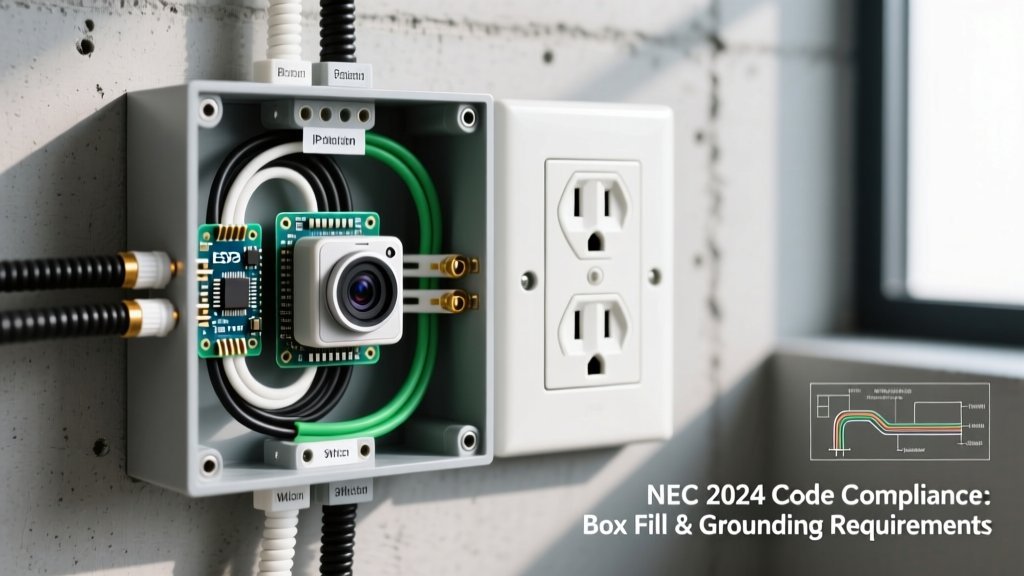
Cramming too many wires into a standard electrical box causes heat buildup and insulation damage. NEC 314.16 dictates strict 'box fill' volume calculations based on the gauge of the wire and the devices inside the box. According to the International Association of Electrical Inspectors (IAEI), box fill violations are among the top three reasons for residential inspection failures.
Step-by-Step Box Fill Example (12 AWG Wire)
Imagine you are wiring a standard duplex receptacle on a 20-amp circuit using 12/2 NM-B cable. One cable enters the box to feed the receptacle, and a second cable exits to feed the next outlet downstream.
- Current-Carrying Wires: 4 wires (2 black, 2 white) x 2.25 cubic inches = 9.0 cu in.
- Equipment Grounding Wires: All grounds combined count as 1 allowance x 2.25 cu in = 2.25 cu in.
- Internal Clamps: Count as 1 allowance x 2.25 cu in = 2.25 cu in.
- The Receptacle Device: Counts as 2 allowances x 2.25 cu in = 4.5 cu in.
Total Required Volume: 18.0 cubic inches.
The Trap: A standard 'single-gang' nail-on plastic box (like the common Carlon B114R) only offers 14 cubic inches of volume. If you use 12 AWG wire for a pass-through outlet, a standard box is illegal. You must upgrade to a deep box, such as the Carlon B618R-UPC (20 cubic inches) or a 4-inch square metal box with a single-gang mud ring.
GFCI vs. AFCI Protection: Mapping the 2026 Requirements
Ground Fault Circuit Interrupter (GFCI) and Arc Fault Circuit Interrupter (AFCI) protections serve entirely different purposes, yet DIYers frequently confuse them. GFCIs protect humans from lethal shock (ground faults), while AFCIs protect the building from fires caused by arcing (loose connections or damaged wire insulation).
| Room / Location | GFCI Required? (NEC 210.8) | AFCI Required? (NEC 210.12) | Notes & Exceptions |
|---|---|---|---|
| Kitchens | Yes (All countertop outlets) | No (Generally exempt) | Must be 20A small-appliance branch circuits. |
| Bathrooms | Yes (All outlets) | No | Requires dedicated 20A circuit; no other rooms allowed on it. |
| Bedrooms | No (Unless near a sink) | Yes (All 120V outlets) | Combination-type AFCI breakers are mandatory. |
| Living Rooms / Hallways | No | Yes | AFCI protects the entire branch circuit from the panel. |
| Garages & Outdoors | Yes (All outlets) | No | Outdoors must also be WR (Weather-Resistant) rated. |
| Laundry Areas | Yes (Within 6 ft of sink) | Yes | Dual protection often requires an AFCI breaker + GFCI receptacle. |
For dual-protection areas like laundry rooms, the most cost-effective and code-compliant method in 2026 is installing an AFCI circuit breaker (e.g., Square D HOM120CAFIC, approx. $55) at the panel, paired with a standard GFCI receptacle (e.g., Leviton GFSW1-W, approx. $22) at the first outlet location.
Torque Requirements: The Hidden Code (NEC 110.14)
Since the 2017 NEC cycle, and strictly enforced through 2026, Article 110.14(D) requires that all electrical terminations be torqued to the manufacturer's specified values using a calibrated torque tool. 'Hand tight' is no longer a legally acceptable standard for any electrical wiring outlet connection.
Real-World Torque Specs
- Standard 15A/20A Receptacles: Typically require 12 to 14 in-lbs (inch-pounds, NOT foot-pounds).
- Wire Nuts / Push-In Connectors: While not torqued, WAGO 221 series lever-nuts require specific strip lengths (11mm) to ensure the internal clamp bites the bare copper without pinching the insulation.
Investing in an insulated torque screwdriver, such as the Wiha 60011 TorqueVario-S or the Klein Tools 32500TORQ (which includes the exact in-lb settings for standard receptacles), is mandatory for passing modern inspections. Inspectors in jurisdictions like California, Texas, and Florida routinely ask to see your torque tool on-site.
Tamper-Resistant (TR) and Weather-Resistant (WR) Mandates
NEC 406.12 mandates that all 15-amp and 20-amp, 125-volt and 250-volt receptacles in dwelling units must be Tamper-Resistant (TR). These feature internal shutter mechanisms that only open when equal pressure is applied to both slots simultaneously, preventing children from inserting foreign objects.
Furthermore, NEC 409.9 requires that all outdoor receptacles in damp or wet locations be listed as Weather-Resistant (WR). WR receptacles (look for the 'WR' stamp on the face) utilize UV-stabilized thermoplastics and nickel-plated brass contacts to resist corrosion. Pairing a WR receptacle with an 'In-Use' extra-duty weather cover (like the TayMac MX1010B) is required for any outlet exposed to rain.
Common Inspection Failures to Avoid
According to code analysis published in Electrical Contractor Magazine (ECM), the most common edge-case failures during rough-in and final inspections include:
- Over-Stripping Insulation: Leaving more than 1/4 inch of bare copper exposed outside the terminal screw. This violates clearance rules and risks short circuits.
- Reversed Polarity: Connecting the white neutral wire to the brass (hot) terminal and the black wire to the silver (neutral) terminal. This leaves the internal shock hazard active even when the plugged-in device is switched off.
- Missing Pigtails: Using the receptacle's internal metal yoke to pass the ground wire to the next device. NEC 250.148 requires a dedicated equipment grounding conductor (pigtail) so that removing the receptacle does not break the ground path for downstream devices.
Final Thoughts on Code Compliance
Executing a flawless electrical wiring outlet project requires more than just connecting wires to screws. It demands a rigorous adherence to spacing metrics, precise box fill mathematics, and modern torque standards. By aligning your DIY workflow with the latest NEC articles, you ensure your home remains safe, insurable, and fully compliant for decades to come.