
The Core Distinction: Outlet vs. Receptacle in the NEC
In the electrical trade and DIY community, the terms "outlet" and "receptacle" are frequently used interchangeably. However, from a safety and code compliance perspective, this semantic blurring can lead to severe installation errors, failed inspections, and hazardous wiring conditions. To ensure your electrical projects meet modern safety standards, you must first master the precise outlet definition: electrical codes draw a hard line between where current is drawn and the physical device that facilitates the connection.
According to Article 100 of the National Electrical Code (NEC), published by the National Fire Protection Association (NFPA), the definitions are strictly separated:
Outlet: A point on the wiring system at which current is taken to supply utilization equipment.
Receptacle: A contact device installed at the outlet for the connection of an attachment plug.
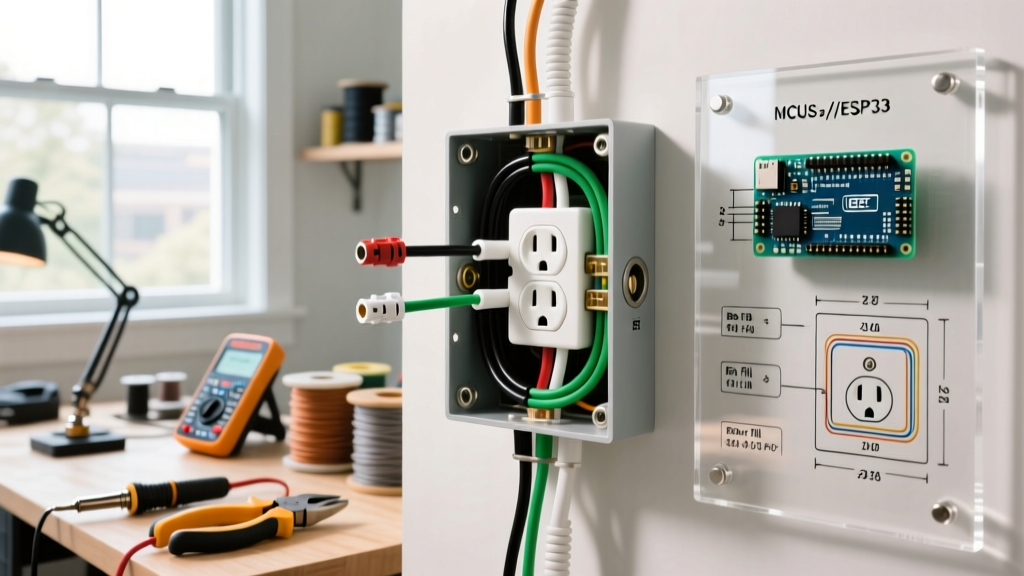
What does this mean in practice? Every receptacle is installed at an outlet, but not every outlet contains a receptacle. A ceiling junction box wired for a hardwired smoke detector is a lighting outlet. A wall box containing a standard 15A duplex plug is a receptacle outlet. Understanding this distinction is the foundation of proper box fill calculations, AFCI/GFCI protection mapping, and branch circuit spacing rules.
Why the Outlet Definition Matters for Box Fill Calculations
One of the most common causes of electrical fires is overcrowded junction boxes, which trap heat and damage wire insulation. NEC Section 314.16 dictates strict box fill calculations, and the volume allowances change depending on whether you are terminating at a lighting outlet or a receptacle outlet.
Calculating Conductor Volumes
When calculating box fill, you must assign a cubic inch (cu in) value to every conductor, clamp, and device yoke based on the wire gauge:
- 14 AWG Wire: 2.0 cu in per conductor
- 12 AWG Wire: 2.25 cu in per conductor
- 10 AWG Wire: 2.5 cu in per conductor
The Device Yoke Multiplier
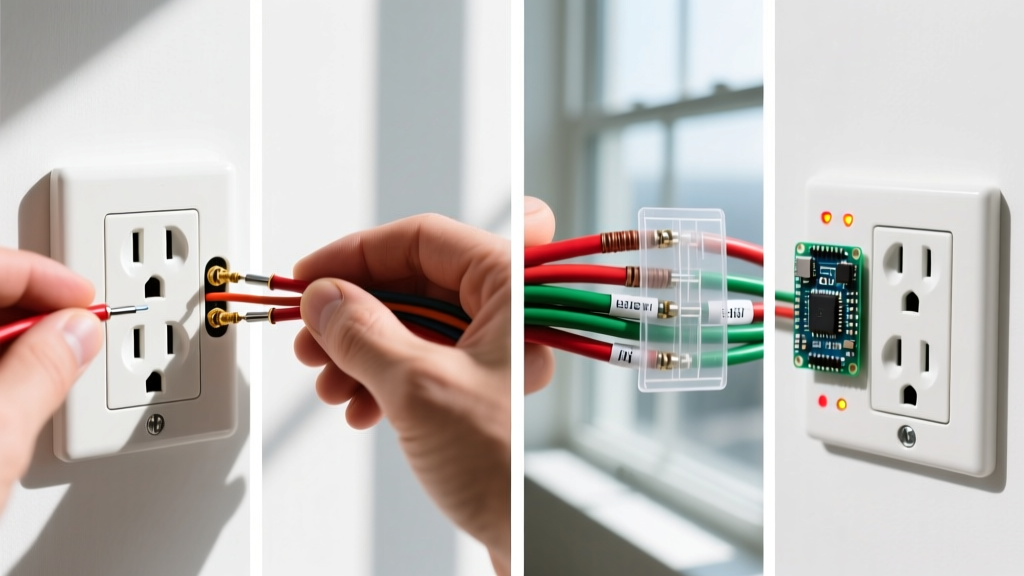
If your outlet contains a device (like a receptacle or a switch), the device yoke counts as two conductor volumes based on the largest wire connected to it. For example, if you are installing a Leviton T5252-W 15A Tamper-Resistant receptacle using 12 AWG THHN wire, the receptacle itself consumes 4.5 cu in of box space (2 x 2.25 cu in). If you mistakenly treat a multi-gang lighting outlet box the same as a single receptacle box without accounting for the fixture canopy and internal clamps, you risk violating NEC 314.16 and creating a thermal hazard.
GFCI and AFCI Protection Matrix: Outlets vs. Receptacles
Code requirements for Ground Fault Circuit Interrupter (GFCI) and Arc Fault Circuit Interrupter (AFCI) protection depend heavily on the type of outlet being installed. While the U.S. Consumer Product Safety Commission (CPSC) heavily advocates for GFCI protection in all wet areas to prevent lethal shocks, the NEC applies these rules specifically to receptacle outlets in many scenarios, while lighting outlets have different criteria.
| Location | Receptacle Outlets (125V, 15A/20A) | Lighting Outlets (Hardwired Fixtures) |
|---|---|---|
| Kitchens | GFCI & AFCI Required | AFCI Required (GFCI generally not required unless within sink zone) |
| Bathrooms | GFCI & AFCI Required | AFCI Required |
| Garages & Grade-Level Access | GFCI Required (AFCI required in living spaces above) | No GFCI/AFCI required for standard ceiling lighting outlets |
| Outdoor Eaves | GFCI Required | No GFCI required for dedicated holiday lighting outlets |
Note: Always verify local amendments. Some municipalities adopt stricter interpretations requiring GFCI protection on garage lighting outlets if they are easily accessible from the ground.
The Switch Loop Evolution: Neutrals at Lighting Outlets
Historically, electricians wired switched lighting outlets using a 2-wire cable (black and white) from the switch to the ceiling fixture. The white wire was re-identified as a hot "switch leg," meaning no neutral wire was present in the switch box.
This legacy method is now a major code violation under NEC 404.2(C). Modern smart switches—such as the Lutron Caseta line or Leviton Decora Smart Wi-Fi switches—require a continuous neutral connection to power their internal radios, LEDs, and microprocessors. If you are upgrading an older home, the NEC now requires that a grounded neutral conductor be pulled to nearly all switch boxes controlling lighting outlets. Failing to include this neutral not only violates code but renders the installation incompatible with 2026 smart home energy management standards.
Receptacle Outlet Spacing: The 6-Foot / 12-Foot Rule
When planning receptacle outlets in living rooms, bedrooms, and hallways, NEC 210.52 enforces strict spacing parameters to prevent the use of dangerous extension cords. The rule is simple but frequently miscalculated by DIYers:
- The 6-Foot Rule: No point along the floor line of any wall space can be more than 6 feet from a receptacle outlet.
- The 12-Foot Rule: Any wall space wider than 2 feet requires a receptacle, and the maximum distance between two receptacles on the same wall is 12 feet.
What Qualifies as "Wall Space"?
A common edge case involves fixed room dividers, fireplaces, and doorways. The NEC defines wall space as any unbroken horizontal distance of 2 feet or more. If a fireplace interrupts a wall, the spaces on the left and right of the fireplace are measured independently. Furthermore, receptacles installed behind furniture (like a heavy entertainment center) still count toward the spacing requirement, but they must be accessible without moving the furniture if they are the sole source of power for that zone.
2026 Standards: Tamper-Resistant and USB-C Receptacles
As we navigate the 2026 electrical landscape, the physical design of the receptacle outlet has evolved to meet new safety and technological demands.
Tamper-Resistant (TR) Mandates
Under NEC 406.12, all 15A and 20A, 125V and 250V non-locking receptacle outlets in residential dwellings must be Tamper-Resistant (TR). These devices feature internal spring-loaded shutters that only open when equal pressure is applied to both slots simultaneously, preventing children from inserting foreign objects. Standard non-TR receptacles are strictly prohibited in new residential construction and major renovations.
USB-C Receptacles and Heat Dissipation
The rise of USB-C integrated receptacles (like the Leviton T5635, offering up to 30W Power Delivery) introduces new thermal dynamics. Because these devices contain internal switching power supplies, they generate ambient heat inside the junction box. When installing high-wattage USB-C receptacles, electricians must upgrade to deeper boxes—such as the Carlon B122R (22.5 cu in) or extra-deep 25 cu in smart boxes—to ensure adequate heat dissipation and accommodate the bulkier rear chassis of the device.
Frequently Asked Questions (FAQ)
Is a hardwired smoke detector considered an outlet?
Yes. Under the NEC definition, a hardwired smoke detector is a "fire alarm outlet" or "lighting outlet" depending on the exact equipment listing. It is a point where current is taken to supply utilization equipment, but it is not a receptacle.
Do I need a GFCI on a dedicated refrigerator receptacle outlet?
NEC 210.8(A) requires GFCI protection for all 125V, 15A, and 20A receptacles installed in kitchens. This includes the dedicated receptacle outlet for a refrigerator. While older code cycles allowed exceptions for dedicated appliance circuits, modern codes prioritize shock protection, and the Electrical Safety Foundation International (ESFI) strongly recommends GFCI protection for all kitchen appliances near water sources.
Can I use a lighting outlet box to mount a ceiling fan?
Only if the box is specifically listed and rated for ceiling fan support (NEC 314.27(D)). A standard lighting outlet box rated for 50 lbs of static fixture weight will fail under the dynamic vibration and torque of a ceiling fan, leading to catastrophic structural failure.