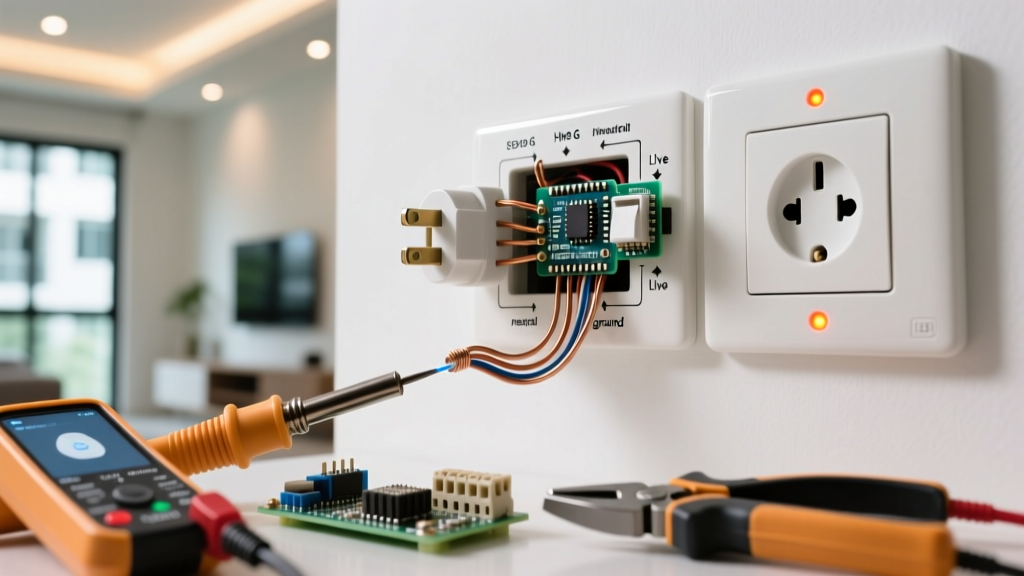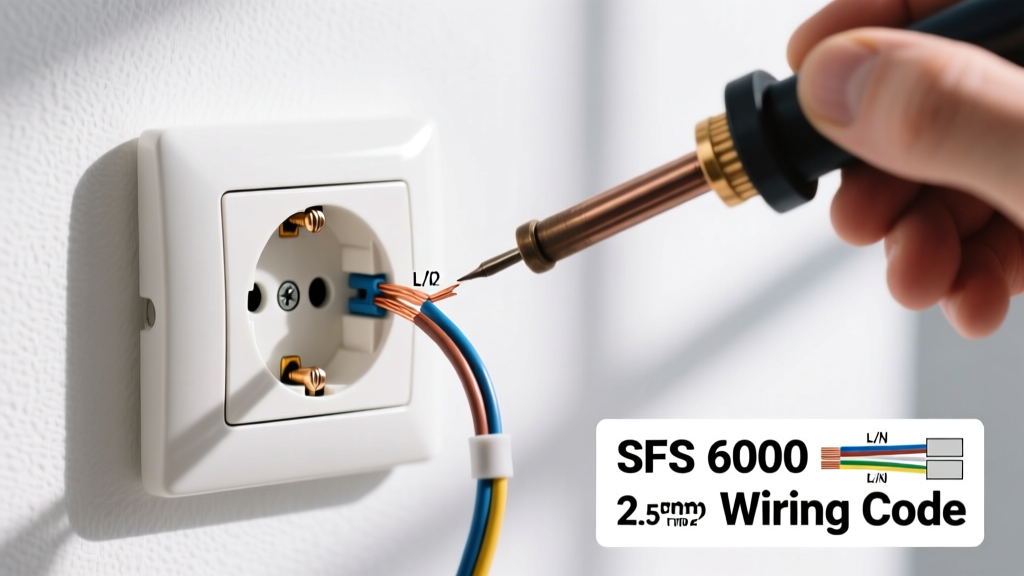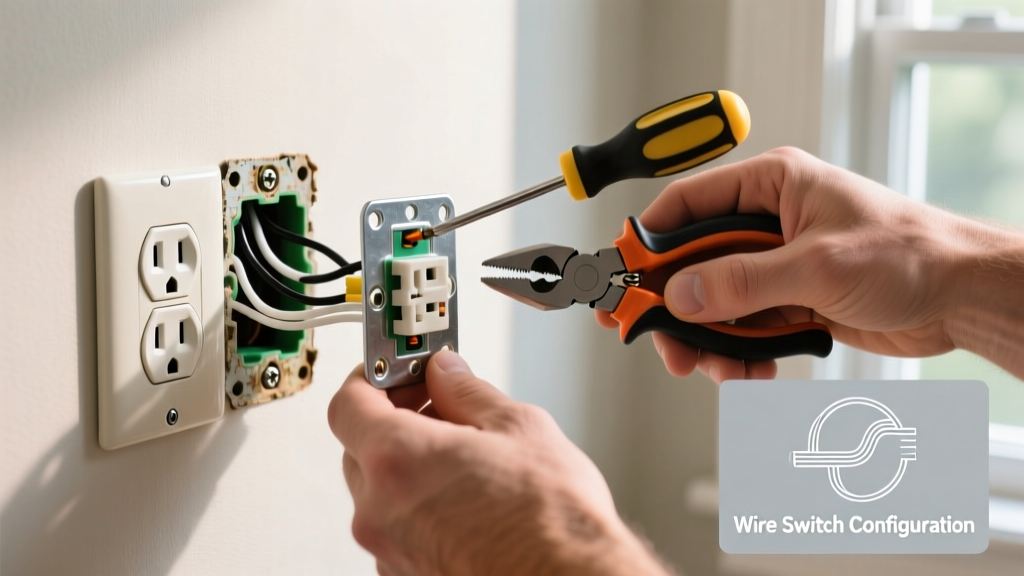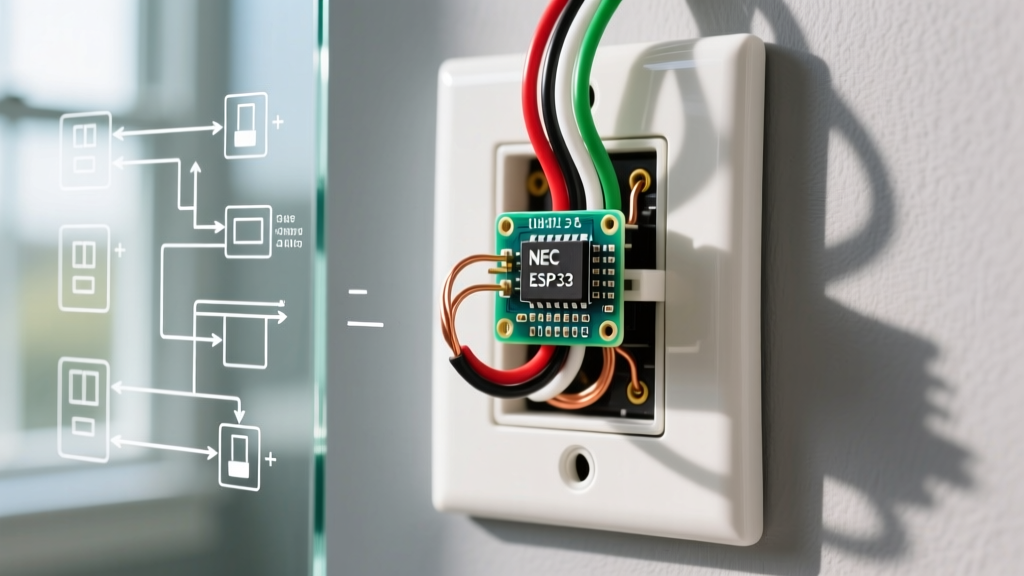

Every DIYer and apprentice learns the physical act of wiring a receptacle, but mastering the electrical outlet connection from a code compliance perspective separates professionals from severe liability risks. The National Electrical Code (NEC) dictates not just where outlets go, but exactly how the physical termination must be made, secured, and protected. As we navigate the 2026 enforcement landscape, Authority Having Jurisdiction (AHJ) inspectors are increasingly strict about termination torque, neutral continuity, and tamper resistance.
This guide breaks down the critical NEC articles governing the electrical outlet connection, providing actionable specifications to ensure your installation is safe, durable, and fully compliant.
Core NEC Spacing Requirements for Outlet Connections
Before making a single termination, the layout must comply with NEC Article 210.52. The foundational principle is the '6/12 Rule' for dwelling units. In any living room, bedroom, or similar habitable space, no point along the floor line of any wall can be more than 6 feet from an electrical outlet connection. Furthermore, any wall space wider than 24 inches requires its own dedicated receptacle.
When planning your junction box placements, remember that the 6-foot measurement is taken along the unbroken floor line. Doorways, fireplaces, and fixed cabinetry break this line. Failing to map this out before rough-in results in expensive drywall patches and failed inspections.
Wire Stripping, Torque, and Terminal Connections
The physical electrical outlet connection is governed by NEC 110.14, which requires terminals to be tightened to the manufacturer's specified torque. In 2026, many municipal inspectors carry digital torque screwdrivers to verify terminations during rough-in inspections. Under-torquing leads to thermal expansion and contraction loosening the screw over time, causing high-resistance arcing. Over-torquing strips the soft brass threads, rendering the receptacle useless.
For standard 15A and 20A commercial-grade receptacles (such as the Leviton 5362 or Hubbell 5362), the manufacturer-specified torque is typically 14 in-lbs. Always verify with the spec sheet included in the device box.
Connection Method Matrix: Backstab vs. Side-Wire vs. Back-Wire
Not all termination methods are created equal. The table below outlines the professional consensus and code restrictions for each connection style.
| Connection Type | Code Restriction | Reliability Rating | Professional Verdict |
|---|---|---|---|
| Push-In (Backstab) | 14 AWG solid copper ONLY (NEC 110.5) | Poor | Banned by most pros. Spring-metal grips fatigue, leading to high-resistance failures and voltage drops. |
| Side-Wire (Screw Loop) | Must loop clockwise; 12 or 14 AWG | Excellent | The traditional standard. Requires precise 3/4-inch stripping and careful loop formation to avoid insulation under the screw head. |
| Back-Wire (Pressure Plate) | 12 or 14 AWG, solid or stranded | Superior | The modern professional choice. Wire inserts straight into a rear clamp, tightened by the side screw. Maximizes contact area and speed. |
Pro Tip: Over-stripping wire exposes bare copper outside the receptacle yoke, creating a shock hazard if it grazes a metal junction box. Under-stripping traps insulation under the terminal plate, causing an open circuit. Use a precision stripper like the Klein 11055 to consistently achieve a 3/4-inch strip length.
Grounding and Pigtailing: The Continuity Mandate
One of the most frequently misunderstood code requirements involves neutral continuity. NEC 300.13(B) explicitly states that the continuity of a grounded (neutral) conductor shall not depend on device connections, such as receptacles.
If you 'daisy-chain' a circuit by feeding power into one set of receptacle terminals and feeding the next outlet from the opposite terminals, you are violating this code if the neutral breaks. If the receptacle is removed for replacement, the downstream circuit loses its neutral. On a Multi-Wire Branch Circuit (MWBC), breaking the neutral at the yoke can cause the two 120V legs to series across the 240V supply, instantly destroying downstream electronics.
The Pigtailing Solution
To ensure compliance, you must pigtail the neutral (and preferably the hot and ground) conductors.
- Wire Nuts: Traditional and cheap, but require tight twisting and a pull-test to ensure a solid grip.
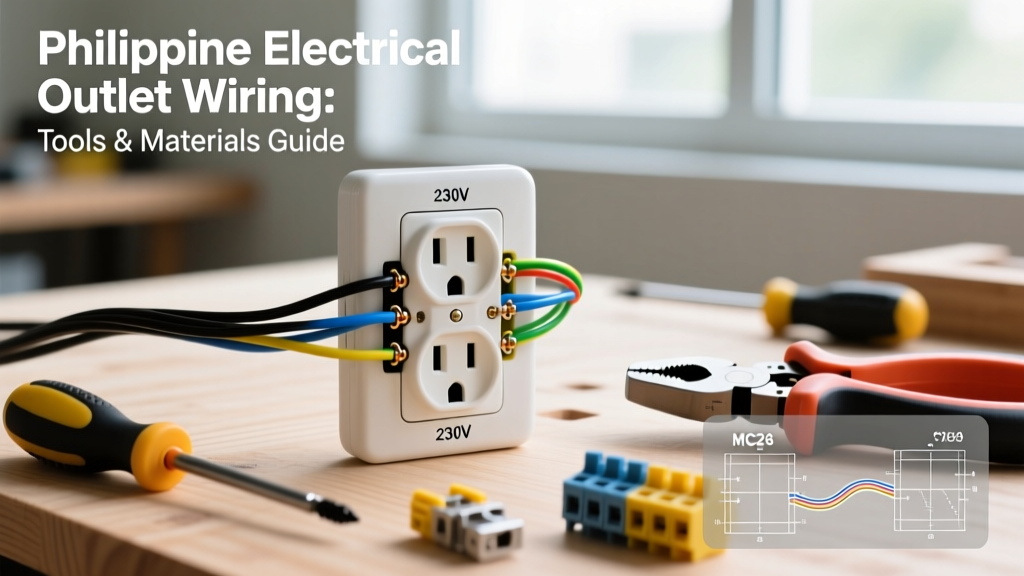
- Lever-Nuts (e.g., Wago 221 Series): The 2026 industry standard. A 3-port Wago 221 lever-nut allows you to connect the incoming line, the outgoing load, and a 6-inch pigtail to the receptacle in seconds, with a verified, maintenance-free electrical outlet connection.
Tamper-Resistant (TR) and Weather-Resistant (WR) Mandates
The physical construction of the receptacle itself is heavily regulated to prevent environmental and physical hazards. According to the NFPA National Electrical Code, specific environments demand specialized internal mechanisms and external seals.
NEC 406.12 requires all 15A and 20A, 125V and 250V non-locking receptacles in dwelling units to be Tamper-Resistant (TR). These feature internal shutter mechanisms that only open when equal, simultaneous pressure is applied to both slots, preventing children from inserting foreign objects. According to the U.S. Consumer Product Safety Commission (CPSC), TR receptacles have drastically reduced childhood electrical shock incidents.
NEC 406.9 mandates that receptacles installed in damp or wet locations (outdoors, unfinished basements, bathrooms) must be listed as Weather-Resistant (WR). WR receptacles utilize UV-stabilized nylon faces and nickel-plated brass terminal screws to resist corrosion.
GFCI and AFCI Protection Overlaps
An electrically sound termination is useless if the circuit lacks the required fault protection. NEC 210.8 and 210.12 outline where Ground Fault (GFCI) and Arc Fault (AFCI) protection must be integrated into the electrical outlet connection.
- GFCI Required: Kitchens, bathrooms, garages, outdoors, crawlspaces, unfinished basements, and within 6 feet of a sink or wet bar. This protects against lethal ground faults (current leaking through a person to the ground).
- AFCI Required: Almost all 120V, single-phase, 15A and 20A branch circuits supplying dwelling unit bedrooms, living rooms, hallways, and closets. This protects against parallel and series arcing that causes electrical fires.
Edge Case Exception: A dedicated 15A or 20A receptacle supplying only a refrigerator in a kitchen is generally exempt from GFCI protection in many local amendments to prevent nuisance tripping and food spoilage, though it still requires AFCI protection at the breaker panel.
Common Inspection Failure Points Checklist
Before calling for your final inspection, verify your electrical outlet connections against this common failure matrix. Failing any of these will result in a red tag from the AHJ.
- Reversed Polarity: The hot (black) wire is on the silver screw, and the neutral (white) is on the brass screw. The receptacle shell becomes energized.
- Bootleg Grounds: A jumper wire connecting the neutral terminal to the ground screw to trick a plug-in tester. This is a severe shock hazard and an immediate code violation.
- Box Fill Violations: Cramming too many wires, pigtails, and Wago connectors into a shallow 14-cubic-inch junction box. NEC Article 314.16 dictates strict volume calculations based on wire gauge and device count.
- Missing Wall Plates: Exposed yokes and terminals. NEC 406.5 requires a faceplate that completely covers the opening, sitting flush against the finished wall.
By adhering strictly to these NEC articles and utilizing professional-grade termination techniques, you ensure that every electrical outlet connection you install will provide decades of safe, reliable service while easily passing municipal inspections. For further reading on workplace electrical safety standards, consult the OSHA Electrical Safety guidelines, which heavily mirror NEC termination requirements for commercial environments.