
The Reality of Pre-1960s Wiring and Modern Code
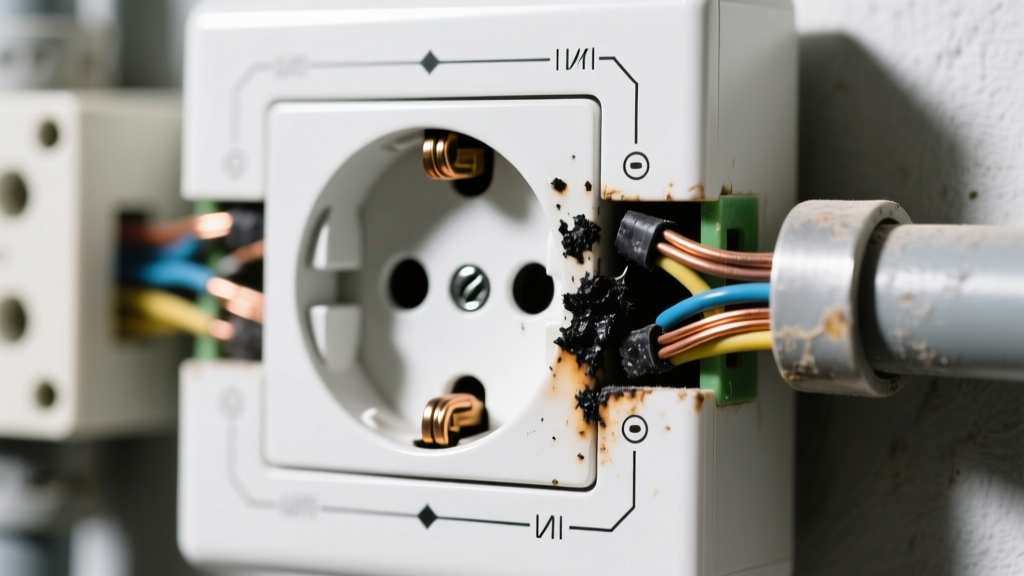
Walking into a home built before 1965, you are almost guaranteed to encounter ungrounded, two-prong electrical receptacles. For homeowners and DIYers, the immediate instinct when replacing electrical outlet in old house environments is to simply swap the vintage two-prong device for a modern three-prong receptacle. However, doing so without understanding the National Electrical Code (NEC) is not just a violation—it creates a severe shock hazard. According to the U.S. Consumer Product Safety Commission (CPSC), improper grounding and outdated wiring are leading contributors to residential electrical fires and electrocutions.
In 2026, local Authorities Having Jurisdiction (AHJs) are strictly enforcing NEC guidelines regarding receptacle replacements. This guide breaks down the exact code requirements, testing protocols, and compliant upgrade paths for older homes lacking an equipment grounding conductor (EGC).
The Core Mandate: NEC Article 406.4(D)
When dealing with older homes, NEC Article 406.4(D) is your legal and technical roadmap. This section specifically dictates what you are allowed to do when replacing a receptacle on a circuit that lacks a ground wire. The National Fire Protection Association (NFPA) outlines three compliant options for replacement:
Option 1: Like-for-Like Replacement
You may replace the existing two-prong receptacle with a new two-prong receptacle. While this maintains code compliance, it does not solve the modern need for grounded three-prong plugs, forcing homeowners to use unsafe "cheater plugs" (3-to-2 prong adapters).
Option 2: The GFCI Upgrade (Most Common)
You may install a Ground Fault Circuit Interrupter (GFCI) receptacle. A GFCI does not require a ground wire to function; it protects users by monitoring the current balance between the hot and neutral wires. If a leakage of 4 to 6 milliamps is detected, the GFCI trips in milliseconds, preventing lethal shock. Code Requirement: The faceplate must be labeled with the included sticker reading "No Equipment Ground" and "GFCI Protected".
Option 3: Installing a Grounded 3-Prong Receptacle
You may only install a standard three-prong receptacle if you simultaneously run a new equipment grounding conductor (EGC) back to the panel, or if you can definitively prove the metal junction box is grounded via continuous metal conduit (EMT) back to a grounded panel. This requires an ohmmeter test showing less than 25 ohms of resistance between the box and the panel ground bus.
The "Bootleg Ground" Hazard
One of the most dangerous scenarios encountered when replacing electrical outlets in old houses is the "bootleg ground." This occurs when a previous owner or handyman installed a three-prong receptacle and wired a jumper wire between the neutral terminal and the ground terminal to trick cheap plug-in testers into reading "Correct."
Expert Warning: A bootleg ground is lethal. If the neutral wire ever becomes disconnected or develops high resistance upstream, the metal chassis of any plugged-in appliance (like a refrigerator or washing machine) will become fully energized at 120 volts. Standard plug-in testers will not catch this if the neutral is intact at the time of testing.
How to test for it: Do not rely on a $10 plug-in tester. Use a non-contact voltage tester and a digital multimeter. Measure the voltage between the hot slot and the ground slot. Then, turn off the breaker, remove the receptacle, and visually inspect for a jumper wire between the silver (neutral) and green (ground) screws. Alternatively, use an advanced tester like the Klein Tools RT250, which can detect bootleg grounds by analyzing the circuit's impedance.
GFCI vs. AFCI Requirements in Older Homes
Homeowners often confuse Ground Fault (GFCI) and Arc Fault (AFCI) protection. When replacing outlets, it is crucial to know which technology the NEC demands for your specific rooms.
| Protection Type | NEC Article | Primary Function | Required Locations (2023/2026 NEC) | Trigger for Old Homes |
|---|---|---|---|---|
| GFCI | 210.8(A) | Prevents lethal electric shock (water/moisture protection) | Kitchens, bathrooms, garages, outdoors, crawlspaces, laundry areas, within 6ft of sinks | Required upon ANY receptacle replacement in these zones, even if ungrounded. |
| AFCI | 210.12 | Prevents electrical fires caused by arcing (sparking) in damaged wires | Bedrooms, living rooms, hallways, closets, kitchens, laundry rooms | Usually only required if the branch circuit is extended or modified, not for simple like-for-like receptacle swaps (subject to local AHJ). |
According to the Electrical Safety Foundation International (ESFI), GFCIs have saved thousands of lives since their introduction. When replacing an outlet in an old house kitchen or bathroom, a GFCI is non-negotiable, regardless of the lack of a ground wire.
Step-by-Step: Compliant 2-Prong to GFCI Upgrade
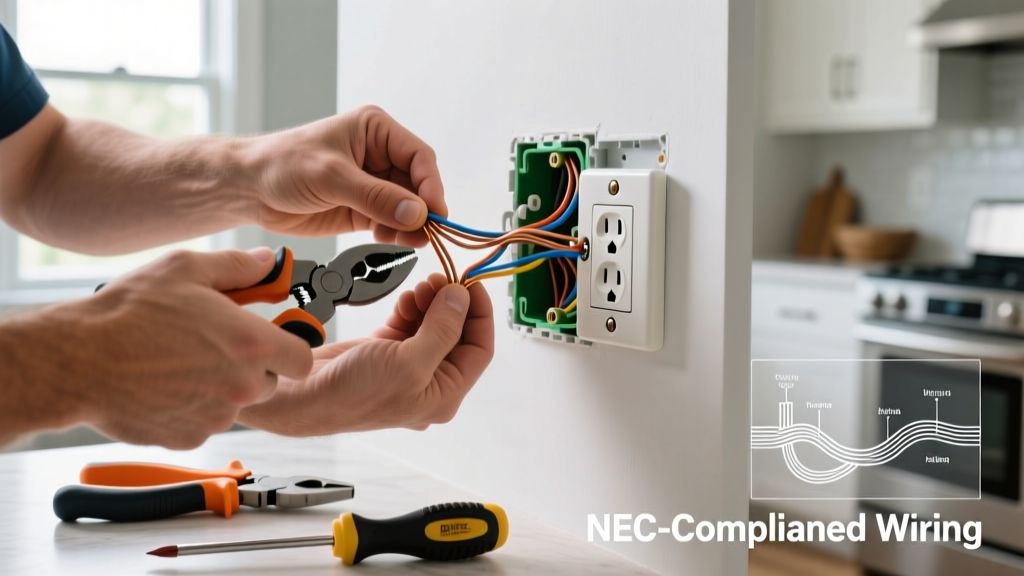
If you are upgrading an ungrounded two-prong outlet in a living space or wet area, follow this compliant procedure:
- Kill the Power: Turn off the branch circuit breaker. Verify the power is off using a reliable non-contact voltage tester like the Fluke 1AC-II VoltAlert. Test the tester on a known live circuit first to ensure the battery is good.
- Remove and Inspect: Unscrew the old receptacle. Check the back of the box for cloth-covered wiring, crumbling rubber insulation, or knob-and-tube splices. If the wire insulation flakes off when touched, stop and call a licensed electrician; the circuit requires rewiring.
- Identify LINE vs. LOAD: A GFCI has two sets of terminals: LINE (power from the panel) and LOAD (power passing to downstream outlets). In an old house with ungrounded wiring, you should only connect the wires to the LINE terminals. Do not use the LOAD terminals unless you specifically intend to protect downstream ungrounded outlets, which requires labeling those downstream outlets as "GFCI Protected / No Equipment Ground".
- Make the Connections: Connect the black (hot) wire to the brass LINE screw and the white (neutral) wire to the silver LINE screw. Use a torque screwdriver set to the manufacturer's specification (usually around 14 in-lbs) to prevent loose connections that cause arcing.
- Apply the Labels: Affix the "No Equipment Ground" and "GFCI Protected" stickers to the faceplate. This is a strict NEC requirement and will cause you to fail an electrical inspection if omitted.
Edge Cases: Knob-and-Tube and Aluminum Wiring
Knob-and-Tube (K&T) Wiring
Homes built before 1940 may still have active K&T wiring. The NEC strictly prohibits concealing K&T wiring within thermal insulation. If you open a wall to replace an outlet and find K&T wires buried in blown-in cellulose or fiberglass, the code requires you to remove the insulation from a 3-inch clearance zone around the conductors. Furthermore, K&T systems lack a neutral bus in the modern sense; splices must be soldered and taped, not just wire-nutted.
1960s and 1970s Aluminum Branch Wiring
If your old house was built or expanded between 1965 and 1973, you might encounter aluminum branch circuit wiring. Aluminum oxidizes rapidly and expands/contracts differently than copper, leading to loose, fire-hazard connections at standard brass/silver receptacle screws. The Code Fix: You cannot simply wire aluminum to a standard receptacle. You must either use a receptacle specifically rated "CO/ALR" (Copper/Aluminum Revised) or, preferably, pigtail the aluminum wire to a short copper jumper using an AlumiConn connector or a COPALUM crimp, and then connect the copper jumper to a standard modern receptacle.
Permit Triggers and AHJ Discretion
A common question when replacing electrical outlets in old houses is whether a permit is required. Under most municipal codes adapted from the NEC, a "like-for-like" replacement of a receptacle (swapping a broken 2-prong for a new 2-prong, or swapping a standard 3-prong for a new standard 3-prong on an existing grounded circuit) does not require a permit.
However, upgrading a 2-prong to a 3-prong GFCI, adding new junction boxes, or extending a circuit does require a permit. Furthermore, some aggressive local AHJs enforce a "25% Rule": if you are renovating a room and replacing more than 25% of the receptacles, they may force you to bring the entire room's branch circuit up to modern AFCI standards by replacing the standard breaker in the panel with an AFCI breaker (costing $40 to $60 per breaker). Always check with your local building department before starting a whole-house receptacle swap.
Material Costs & Tool Requirements (2026 Estimates)
Budgeting for a compliant upgrade requires investing in the right diagnostic tools and code-compliant materials. Here is a breakdown of typical costs:
| Item / Tool | Specific Model Recommendation | Estimated Cost | Purpose |
|---|---|---|---|
| GFCI Receptacle | Leviton GFNT2-W (Slim design, 15A) | $22 - $28 | Provides shock protection without an EGC. |
| Standard Receptacle | Leviton T5325-W (Tamper Resistant) | $3 - $5 | Only for verified grounded circuits. TR is code-mandated. |
| Advanced Tester | Klein Tools RT250 | $45 - $55 | Detects bootleg grounds and verifies GFCI trip times. |
| Voltage Tester | Fluke 1AC-II VoltAlert | $30 - $35 | Verifies power is off before touching terminals. |
| Wire Connectors | Ideal 33-090 Wire-Nuts (Purple) | $5 - $8 / pack | Required for pigtailing if box is crowded. |
Final Thoughts on Safety and Compliance
Replacing electrical outlets in old houses is rarely as simple as disconnecting two wires and attaching them to a new device. The absence of an equipment grounding conductor demands a thorough understanding of NEC Article 406.4(D) and a commitment to avoiding dangerous shortcuts like bootleg grounds. By utilizing GFCI technology, properly identifying LINE/LOAD configurations, and respecting the limitations of aging wire insulation, you can modernize an older home's electrical infrastructure safely, legally, and effectively. When in doubt regarding the integrity of cloth-covered or knob-and-tube wiring, always consult a licensed electrical contractor.