
Understanding the Remodel Electrical Outlet Box
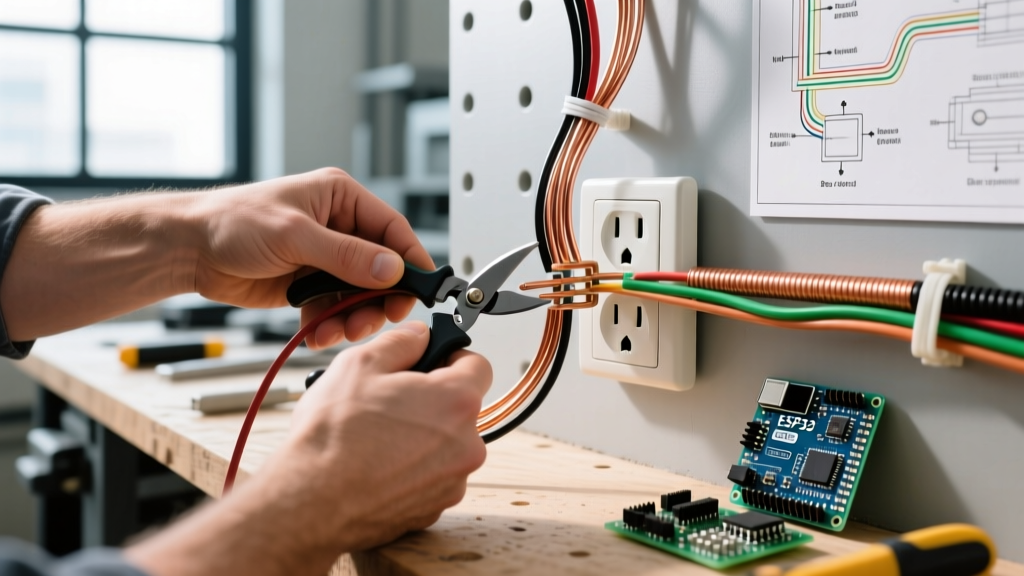
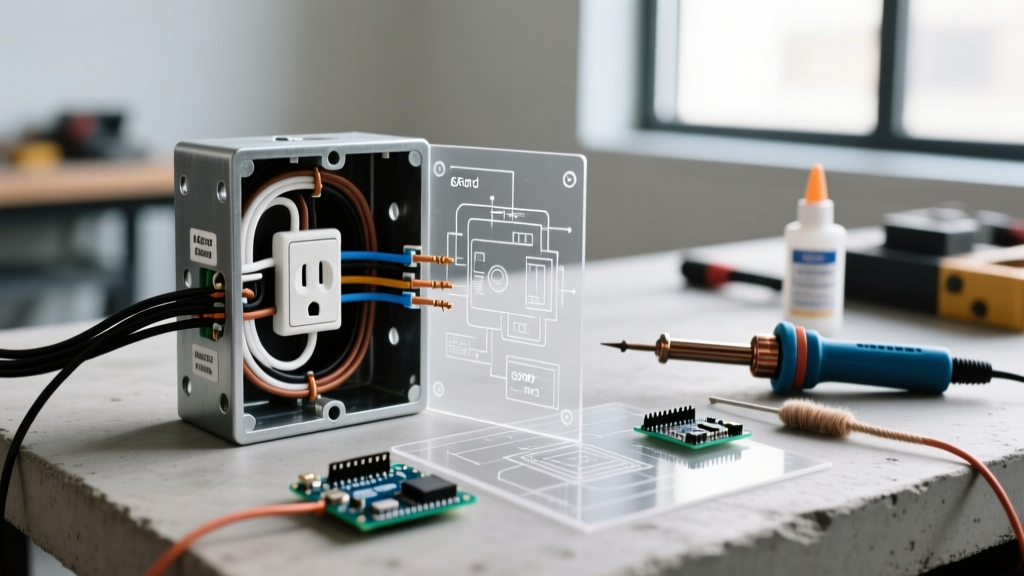
When upgrading or adding circuits in finished walls, selecting and installing a remodel electrical outlet box requires strict adherence to the National Electrical Code (NEC). Often referred to as 'old work' boxes, these enclosures are engineered with specialized mounting wings or brackets that clamp directly to drywall or plaster, eliminating the need to tear open walls to access wooden studs. However, the convenience of a remodel box does not exempt it from rigorous safety standards.
Improperly sized or unsupported boxes are a leading cause of electrical fires, as overcrowded wires generate excessive heat and loose connections cause dangerous arcing. According to the National Fire Protection Association (NFPA), electrical failures or malfunctions account for tens of thousands of home fires annually. To ensure your DIY or professional installation passes inspection and operates safely, you must navigate NEC Article 314 (Outlet, Device, Pull, and Junction Boxes) and related grounding and protection mandates.
NEC Article 314: Box Fill Calculations Explained
The most critical code requirement for any remodel electrical outlet box is the box fill calculation outlined in NEC 314.16. Every box has a maximum cubic inch (cu in) capacity stamped on its interior. You must calculate the total volume of all conductors, devices, and clamps inside the box to ensure you do not exceed this limit.
Volume Allowances per Conductor
The NEC assigns a specific volume allowance based on the largest wire gauge entering the box. Below is the standard volume allowance table derived from NEC Table 314.16(B):
| Wire Gauge (AWG) | Volume Allowance per Conductor |
|---|---|
| 14 AWG | 2.0 cubic inches |
| 12 AWG | 2.25 cubic inches |
| 10 AWG | 2.5 cubic inches |
| 8 AWG | 3.0 cubic inches |
Step-by-Step Box Fill Calculation
Let us walk through a real-world scenario: You are installing a standard 15-amp duplex receptacle using 14/2 NM-B (Romex) cable in a remodel box. Here is how you calculate the required volume:
- Current-Carrying Conductors: The hot (black) and neutral (white) wires each count as one volume. (2 wires × 2.0 cu in = 4.0 cu in).
- Equipment Grounding Conductor (EGC): All ground wires in the box count as a single volume allowance based on the largest ground present. (1 × 2.0 cu in = 2.0 cu in).
- Device Yoke: The receptacle itself counts as two volume allowances based on the largest wire connected to it. (2 × 2.0 cu in = 4.0 cu in).
- Internal Clamps: Expert Nuance: NEC 314.16(B)(2) states that clamps integral to the box (common in plastic remodel boxes like the Carlon B114R) do not count toward box fill. If using a metal box with an external Romex connector, the connector does not count either. Only internal, non-integral clamps count.
Total Required Volume: 4.0 + 2.0 + 4.0 = 10.0 cubic inches. Therefore, a standard 14 cu in or 18 cu in plastic old work box is perfectly legal for this installation.
Master Electrician Pro-Tip: Never use a standard 14 cu in remodel box when installing a GFCI or AFCI receptacle. These devices have massive internal circuit boards and require deep wire bends. Always upgrade to a 20 cu in or 22 cu in deep remodel box (such as the Carlon B120R or Arlington Industries BE1) to prevent crushing the wires against the drywall backing, which can compromise insulation and cause short circuits.
Mounting and Support Requirements (NEC 314.23)
A remodel electrical outlet box must be rigidly secured. NEC 314.23 mandates that boxes be supported so that they will not be pulled out of the wall when a cord is yanked or a plug is removed.
- Drywall Clamps: Most non-metallic remodel boxes use 'flip-clips' or 'wing' brackets that tighten against the back of the drywall. These are code-compliant provided the drywall is intact and structurally sound.
- Crumbling Plaster or Damaged Drywall: If the drywall around the cutout is crumbling, the flip-clips will not hold tension. In this edge case, code requires you to install a structural backing (like a wooden brace) or use a specialized stud-bracket remodel box that spans between adjacent joists.
- Flush Mounting (NEC 314.20): In walls constructed of combustible materials (like standard drywall and wood), the front edge of the box must not be set back more than 1/4 inch (6 mm) from the finished surface. If your drywall is 5/8-inch thick and you are using a box designed for 1/2-inch drywall, you must use an extender ring to remain code-compliant and prevent heat from escaping into the wall cavity.
Grounding and Bonding Rules for Remodel Boxes
Grounding requirements shift depending on the material of your remodel box. While 90% of residential remodels use non-metallic (PVC/fiberglass) boxes, metal boxes are sometimes required in specific fire-rated assemblies or exposed masonry walls.
Metal Remodel Boxes (NEC 250.148)
If you are using a metal old work box (such as the Raco 500 series), the NEC requires the equipment grounding conductor (EGC) to be bonded to the box itself, not just the receptacle. You must use a green grounding screw to attach a copper pigtail to the threaded hole in the back of the metal box, and then wire-nut that pigtail to the incoming bare ground and the receptacle's ground screw. Relying solely on the mounting screws to ground the receptacle to the box is a severe code violation unless you are using specifically listed 'self-grounding' receptacles with integral grounding clips.
Non-Metallic Boxes
For plastic or fiberglass remodel boxes, the box itself does not need to be grounded. However, the receptacle must still be grounded by connecting the circuit's EGC directly to the receptacle's green grounding terminal.
AFCI and GFCI Upgrade Triggers During a Remodel
One of the most misunderstood aspects of the National Electrical Code involves when a simple remodel triggers mandatory Arc-Fault (AFCI) or Ground-Fault (GFCI) protection.
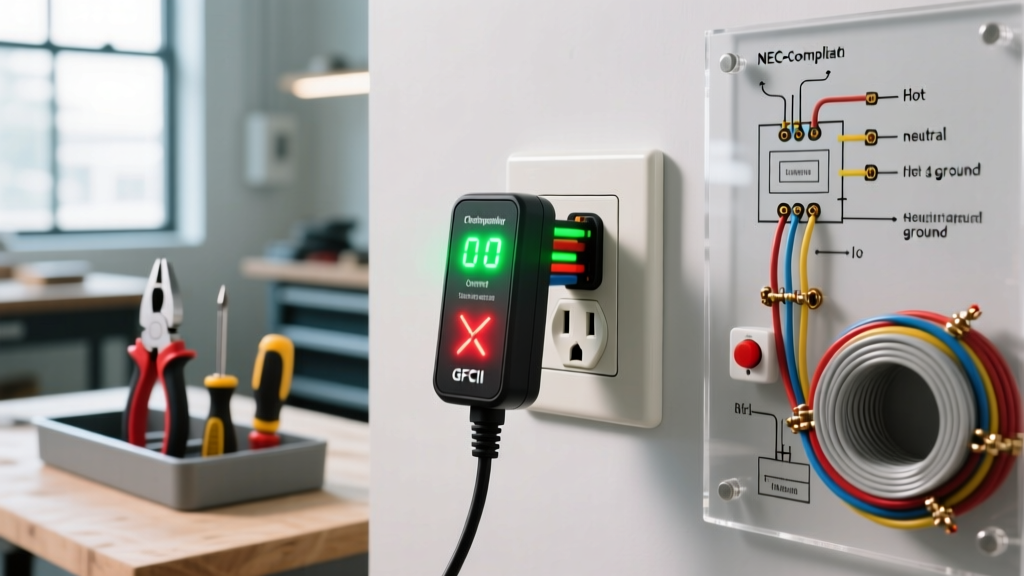
If you are simply swapping an old receptacle for a new one in an existing remodel box, you are generally only required to upgrade to a GFCI receptacle if the location mandates it (kitchens, bathrooms, garages, outdoors per NEC 210.8). However, if you are cutting a new hole in the drywall and installing a brand new remodel electrical outlet box to extend a circuit, the Authority Having Jurisdiction (AHJ) will likely classify this as a 'circuit extension.' Under NEC 210.12, extending a branch circuit into a living room, bedroom, or hallway typically requires the entire circuit to be protected by an AFCI breaker at the panel, or an AFCI receptacle at the first outlet in the run.
Common Code Violations to Avoid
Inspectors frequently fail remodel electrical outlet box installations for the following preventable infractions:
- Overfilling the Box: Shoving three 12/2 cables into a standard 18 cu in box alongside a standard duplex receptacle. (This requires a minimum of 20.25 cu in).
- Exposed Paper or Combustibles: Leaving the brown paper backing of the drywall exposed inside the box cavity. All combustible material must be trimmed back flush with the box interior.
- Missing Cable Connectors: In metal remodel boxes, failing to use an approved NM cable connector where the Romex enters the knockout, leaving the sharp metal edge to eventually slice the wire insulation.
- Improper Wire Bend Radius: Stripping and folding wires so tightly that the insulation is stressed or kinked. NEC 300.34 and general workmanship standards require adequate space for wires to lay naturally without severe deformation.
Final Thoughts on Code Compliance
Installing a remodel electrical outlet box is a highly practical solution for finished spaces, but it demands a rigorous understanding of box fill mathematics, support mechanics, and modern protection requirements. By selecting the correct cubic-inch capacity, ensuring rigid drywall engagement, and respecting the nuanced grounding rules of metal versus non-metallic enclosures, you guarantee a safe, long-lasting, and code-compliant electrical system. Always consult your local municipal building department, as local amendments to the NEC can introduce stricter requirements for old-work installations in your specific jurisdiction.