
Navigating the Spain Electrical Outlet Type: Standards and Scenarios
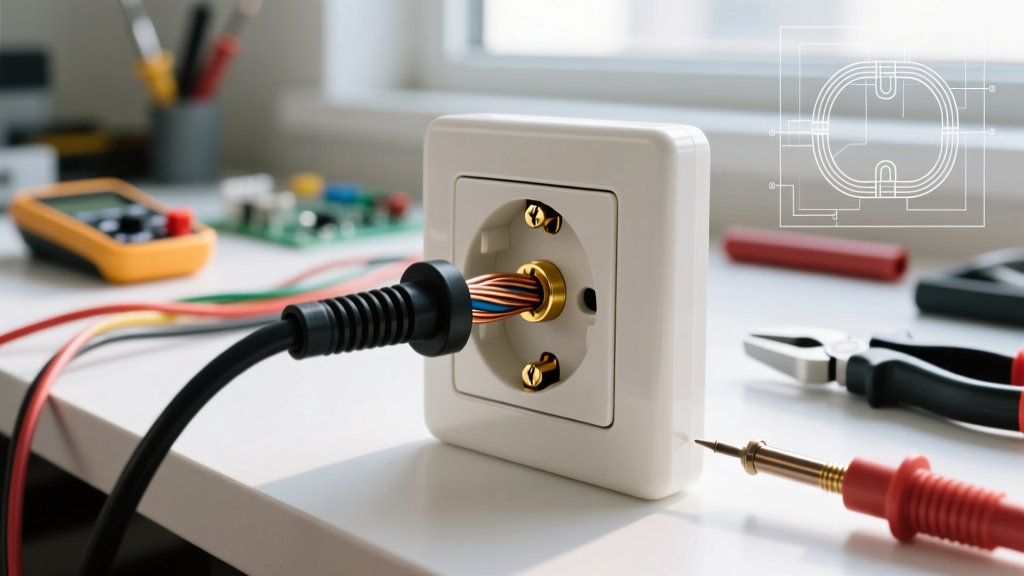
When tackling international electrical projects or renovating a property on the Iberian Peninsula, understanding the exact spain electrical outlet type is non-negotiable. Spain operates on a 230V, 50Hz alternating current (AC) supply, governed by the strict REBT (Reglamento Electrotécnico para Baja Tensión) electrical code. Whether you are an expat wiring a new workshop, a DIYer upgrading an older Spanish villa, or an installer integrating smart home tech, adapting to local wiring scenarios requires precise knowledge of plug geometries, cable sizing, and grounding mandates.
Spain Electrical Grid Quick Specs (2026)
- Nominal Voltage: 230V AC (±10%)
- Frequency: 50Hz
- Primary Socket Type: Type F (Schuko - CEE 7/3)
- Secondary Socket Type: Type C (Europlug - CEE 7/16, ungrounded)
- Governing Code: REBT (Real Decreto 842/2002, updated via ITC amendments)
The Two Spain Electrical Outlet Types: Type C vs. Type F
While travelers often confuse the two, electricians must distinctly separate the ungrounded Type C from the grounded Type F. According to the International Electrotechnical Commission (IEC), Type C is strictly for low-draw, double-insulated appliances (Class II), whereas Type F handles high-draw, grounded appliances (Class I).
| Feature | Type C (Europlug Socket) | Type F (Schuko Socket) |
|---|---|---|
| Grounding | None (Ungrounded) | Yes (Dual side earth clips) |
| Max Current Rating | 2.5A (Plug limit) | 16A (Standard) / 25A (Heavy Duty) |
| Pin Diameter | 4.0 mm | 4.8 mm |
| REBT Compliance | Prohibited for new fixed wall wiring | Mandatory for all new 16A/25A circuits |
| Common Use Case | Old pre-1980s lighting adapters | Modern appliances, EV chargers, HVAC |
Wiring Scenario 1: Upgrading Pre-1980s Ungrounded Circuits
A massive percentage of Spanish properties built before the 1973 REBT update feature outdated, ungrounded wiring. Homeowners often attempt to swap old Type C faceplates for modern Type F Schuko outlets without pulling a new earth wire. This creates a lethal 'false ground' failure mode.
The 'False Ground' Failure Mode
If a Schuko faceplate is installed on a 2-wire (Line and Neutral only) circuit, the side grounding clips remain energized at 0V relative to the system, but they offer zero fault current path. If a connected Class I appliance (like a washing machine) develops an internal short to its metal chassis, the chassis becomes live at 230V. Because there is no earth wire to trip the breaker, the RCD (Interruptor Diferencial) will not trip until a human touches the chassis and provides the path to ground.
Step-by-Step REBT-Compliant Rewiring
To properly upgrade these circuits to modern Spanish standards, you must pull new cable. Under current 2026 material pricing, halogen-free copper cable (CPR classification Cca-s1b,d1,a1) costs approximately €1.90 to €2.50 per meter.
- Isolate and Verify: Turn off the main Interruptor General Automático (IGA). Verify 0V across L-N, L-PE, and N-PE using a CAT III multimeter.
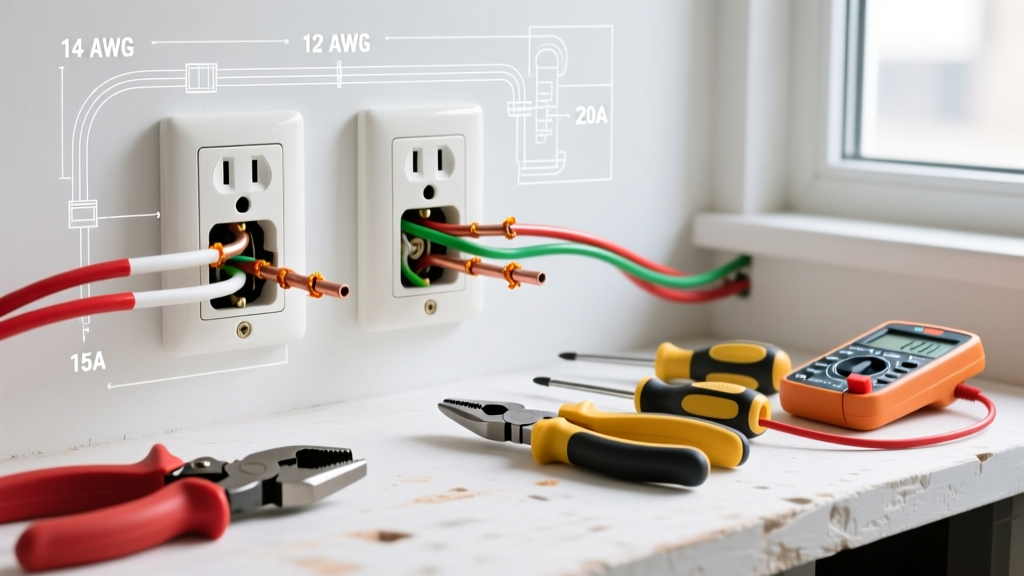
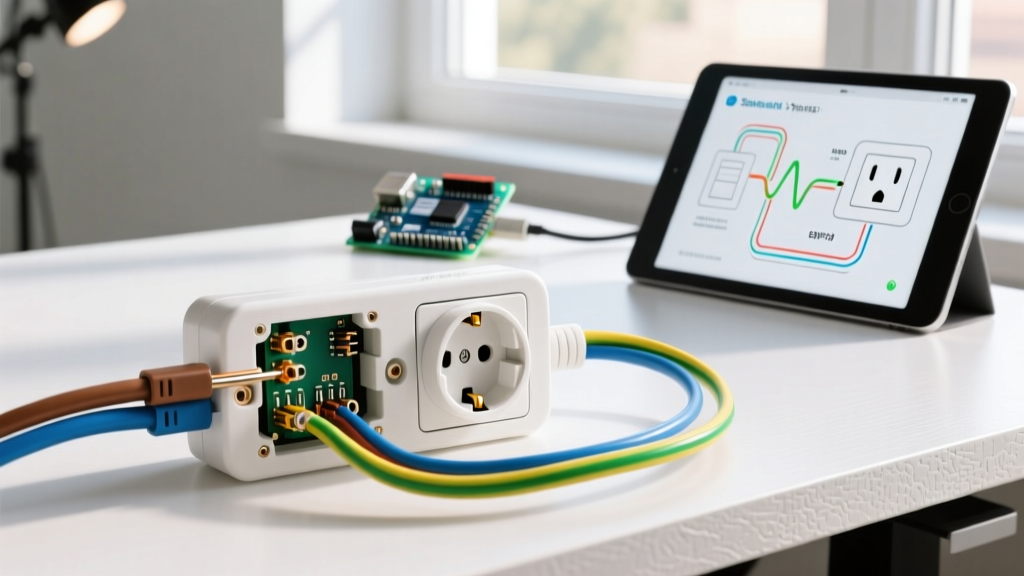
- Pull New Cable: For standard 16A socket circuits, pull 3-core 2.5mm² cable. The color code mandated by IEC 60446 (and enforced by REBT ITC-21) is strictly: Brown (Line/Phase), Blue (Neutral), and Green/Yellow (Protective Earth).
- Upgrade the Backbox: Older Spanish masonry boxes are often shallow (30mm). Chisel out the masonry to install modern 40mm or 50mm deep flush-mounted boxes (cajas de mecanismo) to accommodate modern Schuko terminal depths.
- Terminate: Connect Brown to L, Blue to N, and Green/Yellow to the central earth screw of the Type F Schuko mechanism. Torque terminal screws to 0.8 Nm to prevent thermal loosening.
Wiring Scenario 2: High-Draw 25A Schuko Installations
While the 16A Schuko is the standard, Spain utilizes a specific 25A variant of the Type F socket for high-draw appliances like standalone induction hobs, heavy-duty air compressors, and certain Level 2 EV charging setups. The physical dimensions of the 25A Schuko are slightly wider, and the pin apertures are reinforced to handle the thermal load of 5,750W continuous draw.
Expert Warning: Never wire a 25A Schuko outlet to a 16A circuit breaker, and never wire a 16A Schuko outlet to a 25A breaker. The internal brass contacts of a 16A mechanism will melt and cause an arc flash if subjected to 25A continuous current before the breaker trips.
25A Circuit Sizing Requirements (REBT ITC-25):
- Conductor Size: Minimum 6mm² copper (halogen-free).
- Breaker Rating: 25A C-curve MCB (Pequeño Interruptor Automático).
- RCD Protection: Must be protected by a 30mA Type A or Type F RCD to handle high-frequency DC leakage from modern inverter-driven appliances.
- Conduit Diameter: Minimum 23mm corrugated PVC conduit to allow for heat dissipation and future cable pulling.
Smart Home Integration: Fitting Relays in Spanish Backboxes
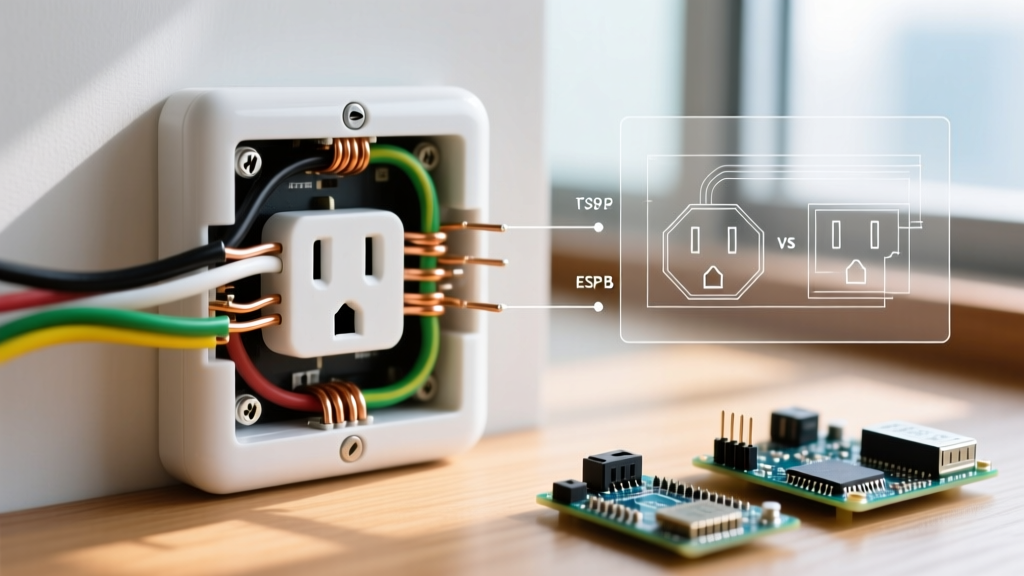
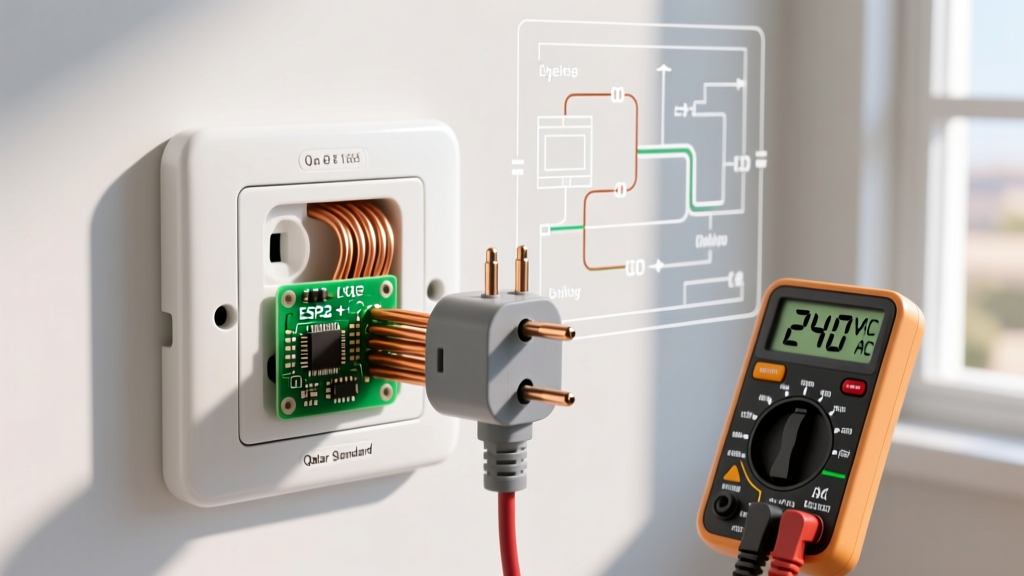
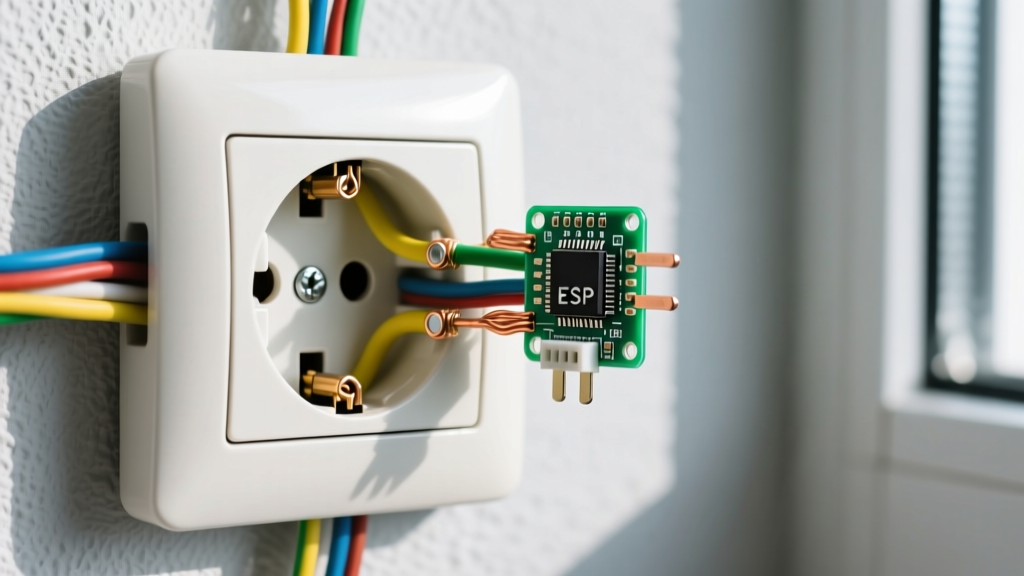
Integrating smart home technology into Spanish wiring presents a unique spatial challenge. Popular 2026 smart relays like the Shelly Plus 1PM or the Sonoff Mini R4 require physical space behind the outlet faceplate. Standard Spanish surface-mounted or shallow flush boxes (often exactly 40mm deep) leave virtually zero room for the relay, the 2.5mm² stiff copper wires, and the Wago connectors.
The 50mm Depth Solution
When planning a smart retrofit in Spain, specify 50mm deep backboxes (such as the Legrand Batibox or Schneider Electric Odace deep ranges). This extra 10mm of depth provides the critical volume needed to fold the 2.5mm² earth wire and the smart relay into the rear of the cavity without crushing the antenna or stressing the terminal blocks. If chiseling deeper into load-bearing masonry is impossible, use a smart faceplate (like the Simon 82 Smart series) which houses the Wi-Fi/Zigbee radio directly in the faceplate rather than requiring a hidden relay module.
REBT Compliance and Material Selection in 2026
Sourcing the correct hardware is vital for passing an inspección eléctrica in Spain. The Spanish market is dominated by three primary manufacturers that guarantee REBT compliance and high-quality brass contact tension:
- Simon: The 'Simon 27' and 'Simon 82' series are ubiquitous in Spain. A standard 16A Schuko mechanism retails for about €5.50 to €8.00.
- Legrand: The 'Valena Life' and 'Dooxie' lines offer excellent terminal accessibility and robust earth clips. Expect to pay €7.00 to €10.00 per mechanism.
- Schneider Electric: The 'Odace' and 'New Unica' ranges are favored in premium builds, featuring integrated child protection shutters that meet the strictest IEC 60884 testing standards.
Always ensure the faceplates bear the CE mark and the AENOR certification mark, which guarantees the plastic is V0 flame retardant and the internal contacts will not overheat under a sustained 16A load.
Frequently Asked Questions
Can I use a UK Type G to Spain Type F adapter permanently?
No. While travel adapters work for temporary low-draw use, the Spanish REBT code prohibits the permanent use of adapters for fixed appliances. Furthermore, UK plugs contain their own internal BS1362 fuses. If a fault occurs, the coordination between the UK plug fuse and the Spanish 16A MCB can lead to nuisance tripping or, worse, failure to clear a high-impedance fault. Always swap the plug head or hardwire the appliance.
Do I need a voltage converter for US 110V appliances in Spain?
Yes. Spain's 230V supply will instantly destroy a 110V/60Hz appliance. You must use a high-quality step-down transformer rated for at least 150% of the appliance's wattage to handle inrush current. However, for high-draw appliances like US power tools or kitchen mixers, the 50Hz frequency in Spain will cause 60Hz AC motors to run 20% slower and run significantly hotter, potentially burning out the windings. It is highly recommended to purchase native 230V/50Hz European models instead.
Why does my Spanish Schuko outlet have two earth clips?
Type F (Schuko) outlets feature dual grounding clips on the top and bottom edges of the recessed circular cavity. This symmetrical design allows the plug to be inserted in either orientation (180-degree rotation), ensuring that Line and Neutral are not polarized. This is a deliberate safety and design feature of the CEE 7 standard, meaning appliances must be designed with double-pole switching or accept non-polarized power delivery.