
Understanding the Code: Why Gazebo Wiring is Unique
Installing a gazebo electrical outlet is not as simple as adding a standard interior receptacle. Gazebos are classified as damp or wet locations depending on their enclosure, and they are highly susceptible to physical damage, moisture ingress, and temperature fluctuations. According to the NFPA 70 National Electrical Code (NEC), outdoor branch circuits and receptacles must adhere to strict safety protocols to prevent ground faults, electrocution, and arc faults.
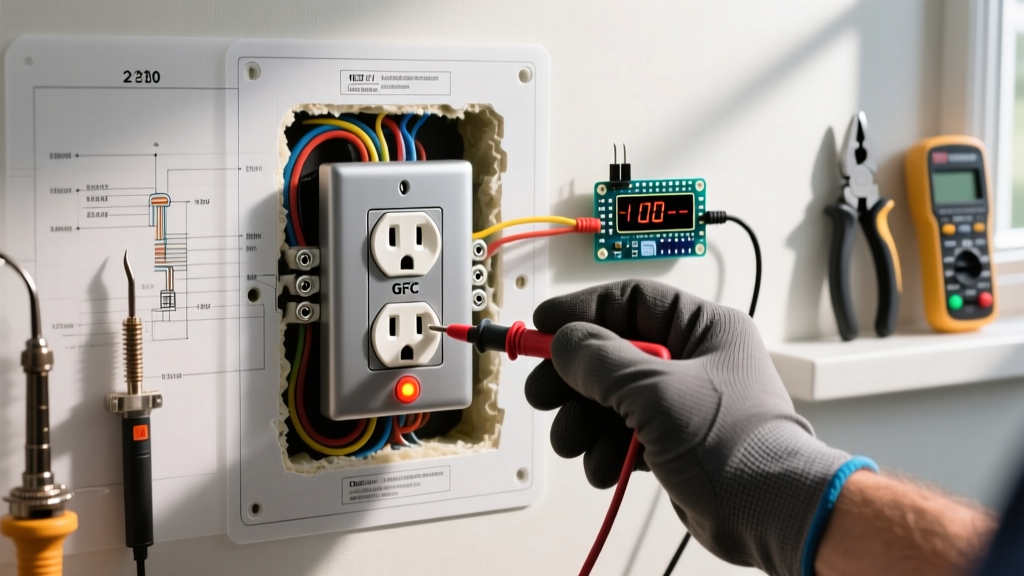
In 2026, local jurisdictions have widely adopted the latest NEC cycles, which mandate rigorous GFCI (Ground Fault Circuit Interrupter) protection and specific burial depths for underground feeders. Failing to comply not only risks a failed inspection but creates a severe shock hazard in an environment where users are often standing on damp grass or wet wood.
⚠️ Safety Warning: Never wire an outdoor gazebo receptacle on a standard indoor branch circuit without GFCI protection. Moisture tracking along the cable sheath can cause lethal ground faults.
2026 NEC Code Requirements for Outdoor Gazebo Receptacles
Before purchasing materials, you must understand the specific NEC articles governing your project:
- NEC Article 210.8(A)(3): Mandates GFCI protection for all 125-volt through 250-volt, 15-ampere and 20-ampere receptacles installed outdoors. There are no exceptions for gazebos.
- NEC Article 225 (Outside Branch Circuits and Feeders): Dictates how power is routed from the main dwelling to a detached structure like a gazebo. If the gazebo is a permanent detached structure with multiple circuits, it may require a subpanel and a dedicated disconnecting means.
- NEC Table 300.5: Specifies minimum cover requirements for underground services. Direct-burial UF-B cable requires 24 inches of cover, while PVC conduit requires 18 inches.
For comprehensive safety standards regarding outdoor wiring methods and components, always cross-reference OSHA 1910.305 Wiring Methods, which aligns closely with NEC mandates for general use and workplace safety.
Bill of Materials: What You Actually Need
Cheap, indoor-rated materials will fail within a single season of UV exposure and rain. Below is a professional-grade Bill of Materials (BOM) with 2026 average pricing for a standard 50-foot trench run.
| Component | Recommended 2026 Model | Purpose | Est. Cost |
|---|---|---|---|
| Underground Cable | Southwire 12/2 UF-B (250ft coil) | Moisture-resistant direct burial feeder | $1.15 / ft |
| Weatherproof Box | Hubbell Bell T410100 (1-Gang) | Extra-duty die-cast aluminum enclosure | $24.50 |
| In-Use Cover | TayMac MX8500 Weatherproof Cover | Allows cords to be plugged in while closed | $29.00 |
| GFCI Receptacle | Leviton GFNT2-W SmartLockPro Slim | 15A/20A feed-through GFCI with auto-monitoring | $26.00 |
| Conduit & Fittings | Schedule 80 PVC (1/2 inch) | Physical damage protection at transitions | $3.50 / ft |
Phase 1: Trenching and Cable Routing
The most common failure point in gazebo wiring is improper burial, leading to accidental severing by landscaping equipment.
Step-by-Step Burial Protocol
- Dig the Trench: Excavate a trench exactly 24 inches deep from the main panel's exterior wall to the gazebo base. If you are using Schedule 40 PVC conduit instead of direct-burial UF-B, an 18-inch depth is code-compliant.
- Lay the Warning Tape: Place bright red or yellow "Caution: Buried Electric Line Below" tape exactly 12 inches above the cable or conduit. This provides a visual warning to anyone digging in the future.
- Transition to Schedule 80 PVC: Where the cable exits the ground and travels up the gazebo post, it is subject to physical damage (lawnmowers, foot traffic). NEC 300.5(D) requires you to sleeve the cable in Schedule 80 PVC conduit from 18 inches below grade up to the receptacle box height (typically 18-48 inches above the deck).
Phase 2: Wiring the Gazebo Electrical Outlet
Once the box is securely mounted to the gazebo post using stainless steel lag screws, proceed with the termination.
Stripping and Terminating
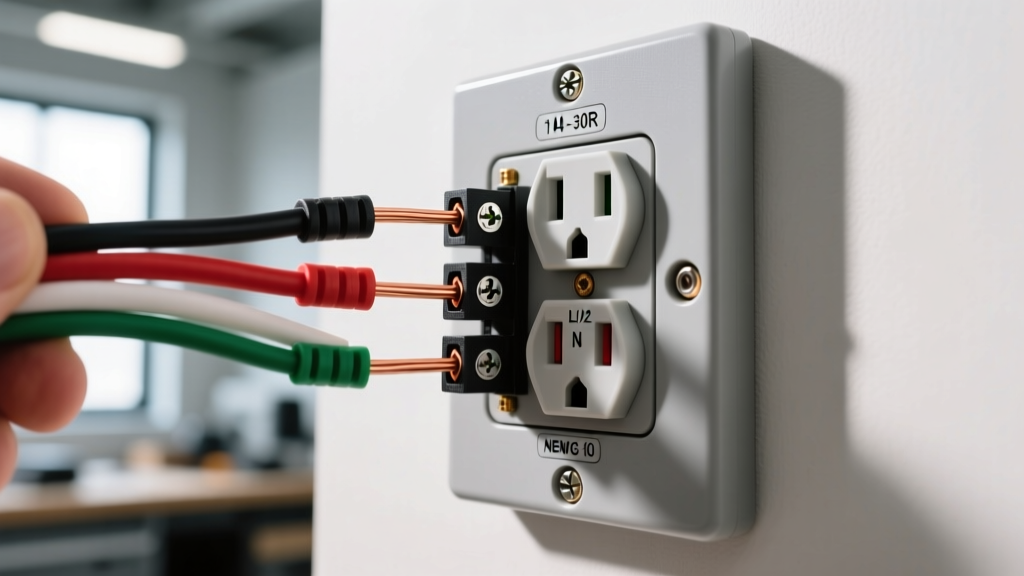
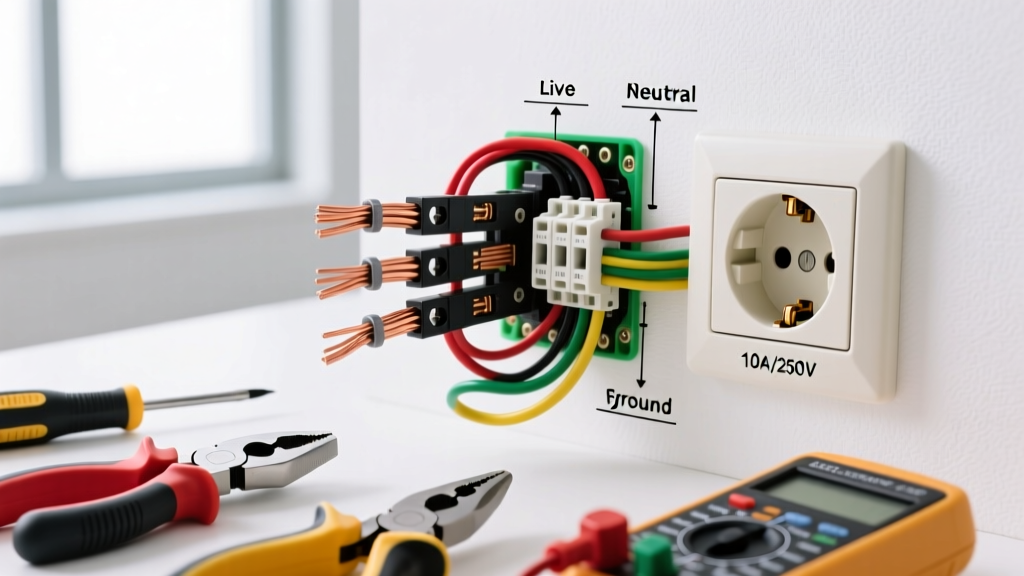
UF-B cable features a tough, gray outer sheath and a bare copper ground wire sandwiched between the conductors. Strip back 3/4 inch of insulation from the black (hot) and white (neutral) wires. Never strip the insulation deeper than the terminal barrier.
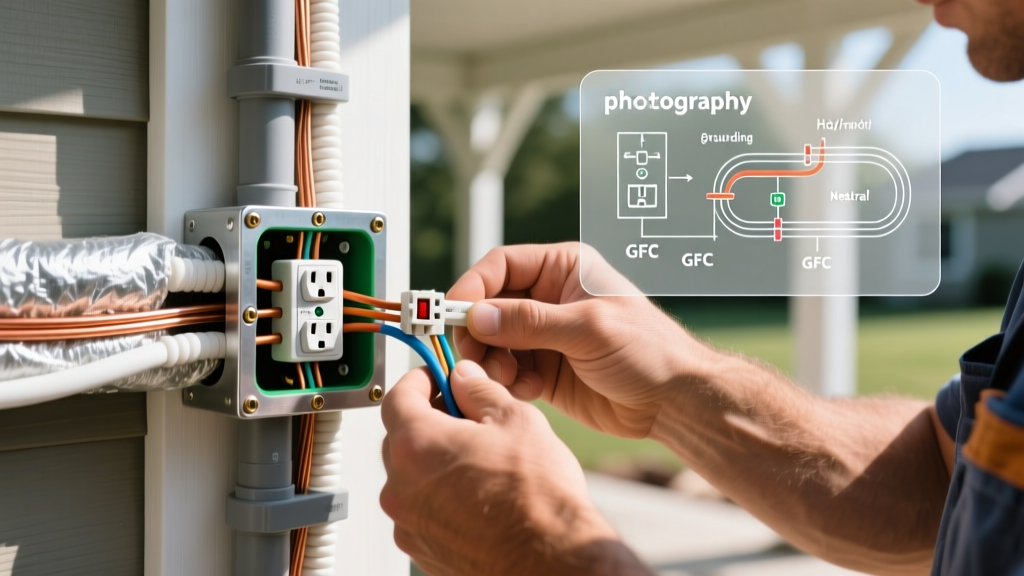
For the Leviton GFNT2-W SmartLockPro, route the wires to the LINE terminals if this is the only receptacle on the circuit. If you are daisy-chaining to a second receptacle (e.g., for gazebo lighting), use the LOAD terminals for the downstream cable.
Torque Specifications
Hand-tightening terminal screws is a leading cause of arc faults due to thermal expansion and contraction. Use an insulated torque screwdriver set to 14 in-lbs (check the specific manufacturer's sticker on the GFCI device) to ensure a gas-tight connection.
Edge Cases and Advanced Troubleshooting
1. Voltage Drop on Long Runs
If your gazebo is located more than 100 feet from the main panel, a standard 12 AWG UF-B cable will experience significant voltage drop. Running a 15-amp space heater or a high-draw power tool will result in voltage sag, tripping the GFCI prematurely or damaging equipment. Solution: Upsize your underground feeder to 10 AWG or 8 AWG UF-B for runs exceeding 100 feet, terminating it in a larger junction box before stepping down to the 15A/20A GFCI receptacle.
2. Metal Gazebo Bonding Requirements
If you are installing a gazebo electrical outlet on a metal-framed structure, the metal frame must be properly bonded to the equipment grounding conductor (EGC). A ground fault inside the weatherproof box could energize the entire metal gazebo. Run a 12 AWG bare copper bonding jumper from the GFCI's green ground screw directly to the gazebo's structural steel using an Irwin Listed grounding clamp.
3. Water Ingress and Condensation
Even with an "extra-duty" in-use cover, temperature swings cause condensation inside the weatherproof box. Apply a bead of 100% silicone sealant (such as GE Silicone II) around the top and sides of the box where it meets the gazebo post. Leave the bottom unsealed to allow any internal condensation to weep out via gravity.
Frequently Asked Questions (FAQ)
Can I use standard NM-B (Romex) inside a conduit for my gazebo?
No. NM-B cable is strictly rated for dry, indoor locations. Even if pulled through a sealed PVC conduit, underground temperature fluctuations cause condensation inside the pipe, which will degrade the paper wrapping and copper over time. You must use UF-B, THWN-2, or XHHW-2 individual conductors.
Does a gazebo receptacle require AFCI protection as well as GFCI?
Under the latest NEC cycles, outdoor receptacles require GFCI protection. AFCI (Arc Fault Circuit Interrupter) protection is generally mandated for indoor living spaces (bedrooms, living rooms). However, if the circuit originates from a panelboard that requires AFCI for the specific room it feeds through, you may need a Dual-Function (AFCI/GFCI) breaker at the panel.
How high should the gazebo electrical outlet be mounted?
While the NEC does not specify a strict minimum height for outdoor receptacles, standard practice and ADA accessibility guidelines recommend mounting the center of the receptacle box between 18 and 48 inches above the finished deck or grade. Mounting it at 24 inches keeps it above typical snow accumulation levels and splashing rain.