
The Critical Intersection of Safety and Code Compliance
When adding an electrical outlet outside, the margin for error is virtually zero. Outdoor environments subject electrical components to UV radiation, extreme temperature fluctuations, and relentless moisture ingress. According to the Electrical Safety Foundation International (ESFI), hundreds of electrocutions occur annually, with a significant percentage linked to improper outdoor wiring and missing ground-fault protection. As of the 2026 building season, local municipalities are strictly enforcing the latest National Electrical Code (NEC) standards, making DIY shortcuts not just dangerous, but illegal and uninsurable.
This guide bypasses generic advice and dives directly into the specific NEC articles, exact component requirements, and trenching depths required to pass inspection and ensure lifelong safety.
CRITICAL SAFETY WARNING: Before breaking ground or drilling through exterior siding, you must contact your local utility notification center. Visit Call811.com or dial 811 at least 72 hours before digging to have underground utility lines marked. Striking a buried gas or primary electrical line can be fatal.
Decoding the NEC: Mandatory Requirements for Outdoor Receptacles
The National Fire Protection Association (NFPA) outlines strict parameters for outdoor receptacles. Inspectors will immediately fail an installation if it violates the following core articles:
| NEC Article | Code Requirement | Practical Application & Compliance |
|---|---|---|
| 210.52(E)(1) | At least one receptacle must be installed at the front and back of the dwelling at grade level. | The receptacle cannot be mounted higher than 6.5 feet above grade. It must be readily accessible without moving obstacles. |
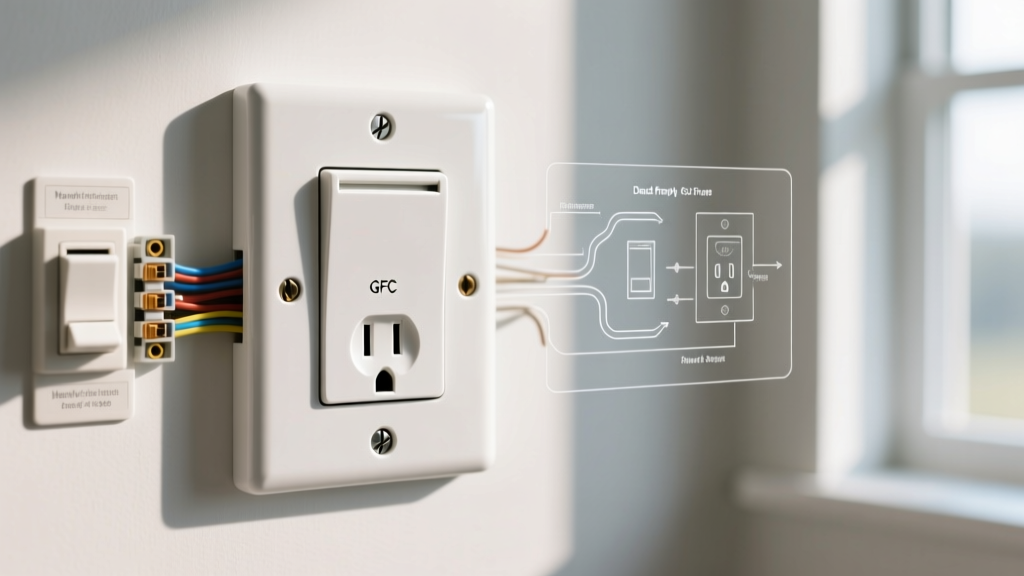
| 210.8(A)(3) | All 125V through 250V, 15A and 20A outdoor receptacles must have GFCI protection. | Standard breakers are illegal outdoors. You must use a GFCI breaker or a GFCI receptacle as the first device in the circuit. |
| 406.9(B)(1) | Receptacles in damp or wet locations must be listed as Weather-Resistant (WR). | Standard indoor outlets will corrode. You must buy devices stamped with 'WR' on the mounting yoke, featuring nickel-plated contacts. |
| 406.9(B)(1) | Wet locations require an extra-duty weatherproof cover. | The cover must remain closed and weatherproof even when a cord is plugged in (commonly known as an 'in-use' cover). |
Selecting Code-Compliant Components
Do not use leftover indoor materials from your garage. The 2026 market offers specialized components engineered specifically for exterior survival.
1. The Receptacle: Hubbell GFR83W
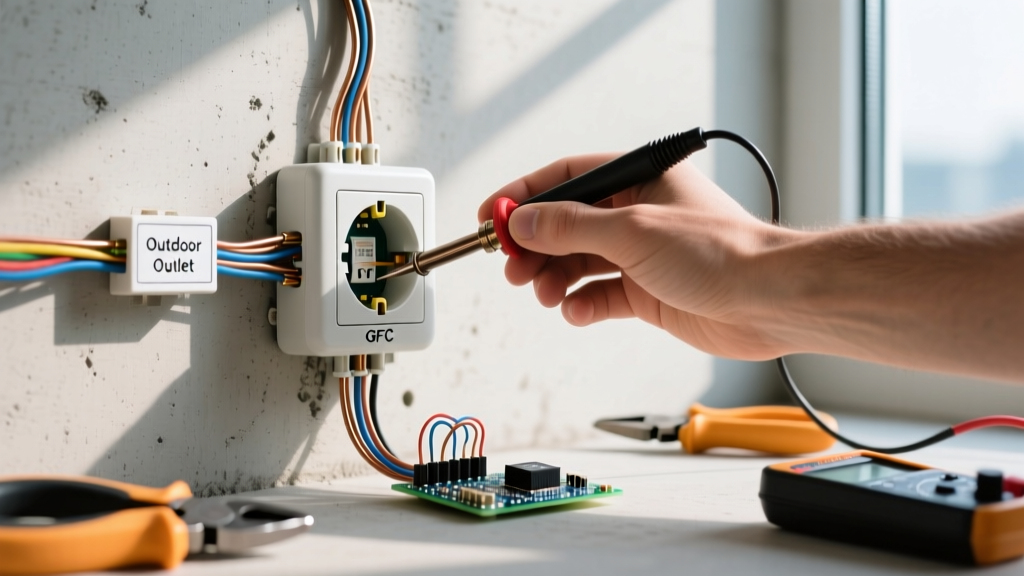
While standard GFCIs cost around $15, outdoor environments demand the Hubbell GFR83W (approx. $38 - $45). This is a 20-Amp, Tamper-Resistant, Weather-Resistant GFCI. It features a proprietary elastomeric thermoplastic face and nickel-plated brass contacts that resist galvanic corrosion caused by humidity and salt air. If an inspector sees a standard brass-contact GFCI outside, they will red-tag the job.
2. The Enclosure: Taymac WR410 Extra-Duty Cover
NEC 406.9 dictates that covers in wet locations must be 'extra-duty.' The Taymac WR410 (approx. $28) is a polycarbonate, UV-stabilized in-use cover. It provides 2.75 inches of internal depth, allowing you to plug in a heavy-duty outdoor extension cord or a landscape lighting transformer while keeping the lid fully closed and latched.
3. The Junction Box: Carlon E989L
Metal boxes will rust and short out within three years in exterior applications. Use a non-metallic, PVC weatherproof box like the Carlon E989L (approx. $12). It includes threaded hubs for conduit integration and integrated weep holes to drain condensation.
Trenching and Burial Depths: NEC Table 300.5
If you are running a new circuit from your main panel or a detached garage, burial depth is one of the most frequently failed inspection points. NEC Table 300.5 outlines minimum cover requirements based on your wiring method.
- Direct Burial UF-B Cable (Standard): Minimum 24 inches deep. (Not recommended for new installs due to vulnerability to shovel strikes).
- PVC Conduit (Schedule 40/80): Minimum 18 inches deep. This is the industry standard for physical protection.
- The 12-Inch Exception: If your circuit is strictly 120V, protected by a GFCI, and limited to 20 Amps, NEC Table 300.5 allows you to reduce the PVC conduit burial depth to 12 inches. This saves massive amounts of labor on residential landscaping runs.
Step-by-Step Conduit Installation
- Trenching: Dig a 12-to-18-inch trench using a manual trenching shovel. Ensure the bottom is free of sharp rocks that could stress the PVC.
- Bedding: Lay a 1-inch bed of sand or fine dirt at the bottom of the trench.
- Gluing: Use PVC primer and cement specifically rated for electrical conduit (not plumbing PVC). Plumbing PVC uses a different resin that can degrade under UV exposure if any conduit is left above ground.
- Expansion Joints:** If you have more than 25 feet of continuous above-ground PVC attached to a wall, you must install an expansion coupling to prevent the pipe from buckling during summer heat waves.
- Warning Tape: Lay bright red or yellow 'Caution: Buried Electric Line' tape 12 inches above the conduit before backfilling. This warns future landscapers before their shovel hits the pipe.
Common Failure Modes and Inspector Red Flags
Even experienced DIYers make critical errors when adding an electrical outlet outside. Avoid these specific failure modes:
The Silicone Caulk Trap
Many homeowners caulk the top and sides of the exterior junction box to prevent rain entry, but they also caulk the bottom. This is a massive code violation. PVC boxes and conduit systems will naturally accumulate condensation due to temperature differentials. The bottom of the Carlon box has factory-drilled weep holes. If you seal the bottom with silicone, water becomes trapped inside the box, eventually submerging the GFCI terminals and causing a dead short or ground fault.
Backstabbing vs. Pigtailing
Never use the push-in 'backstab' connectors on the back of an outdoor GFCI. The thermal expansion and contraction of outdoor environments will loosen these friction connections over time, leading to arcing and fire. You must use the side-screw terminals, wrapping the wire clockwise around the screw. Furthermore, GFCIs should be 'pigtailed' in the box rather than feeding downstream loads through the device's LOAD terminals unless absolutely necessary, reducing the points of failure.
Missing Drip Loops
When routing outdoor cable or conduit into a wall-mounted box, you must create a 'drip loop'—a U-shaped dip in the cable just before it enters the fitting. This ensures that rainwater running down the cable drips off the bottom of the loop onto the ground, rather than wicking directly into the conduit fitting and the electrical box.
Cost Breakdown: DIY vs. Professional Installation
Understanding the financial scope of adding an electrical outlet outside helps set realistic expectations for 2026 material and labor rates.
- DIY Material Cost (Extension from nearby indoor box): $85 - $140. Includes WR GFCI, in-use cover, PVC box, conduit, and THWN-2 wire.
- DIY Material Cost (New dedicated 20A circuit from panel): $220 - $350. Adds the cost of a 20A GFCI breaker, 12/2 THWN wire, and extensive PVC conduit runs.
- Licensed Electrician (Standard Extension): $350 - $600. Includes permit pulling, labor, and passing municipal inspection.
- Licensed Electrician (New Circuit + Trenching): $800 - $1,500+. Heavily dependent on the distance from the main panel, hardscape demolition (cutting concrete), and local permit fees.
Frequently Asked Questions (FAQ)
Can I use a standard indoor GFCI if it is inside a weatherproof cover?
No. The NEC explicitly requires the receptacle itself to be listed as Weather-Resistant (WR). The cover protects against direct rain, but it cannot stop ambient humidity, condensation, and temperature swings. Indoor GFCIs lack the UV-resistant plastics and corrosion-resistant internal contacts required to survive these conditions safely.
Do I need a permit to add an outdoor outlet?
Yes, in almost all jurisdictions. Any new circuit extension or modification to the exterior electrical system requires a permit and a final inspection. Failing to pull a permit can result in fines and will likely cause your homeowner's insurance to deny a claim if an electrical fire originates from unpermitted work.
Can I mount the outlet directly into the wood siding?
No. You must mount the weatherproof junction box securely to a structural surface. If mounting to wood siding, you should ideally use a mounting block to ensure a flush, sealed fit, and the box must be fastened with exterior-grade stainless steel or hot-dipped galvanized screws to prevent rust streaks and structural failure.