
Understanding the Mexican Electrical Standard and Legacy Wiring
If you own a home in Mexico, manage a rental property in areas like Tulum or San Miguel de Allende, or are an expat renovating a legacy build, you have likely encountered the ubiquitous ungrounded 2-prong receptacle. Historically, Mexican electrical infrastructure was heavily influenced by North American standards, utilizing NEMA 1-15R (Type A) ungrounded outlets. However, as modern appliances and sensitive electronics demand proper grounding, leaving these legacy outlets in place poses a significant shock and fire hazard.
Before touching a single wire, it is critical to understand the local electrical parameters. Mexico operates on a nominal voltage of 127V at 60Hz. While many US-based DIYers assume the voltage is exactly 120V, the official harmonization to 127V means your multimeter will frequently read between 122V and 129V at the receptacle. Furthermore, electrical installations in Mexico are governed by the NOM-001-SEDE (Norma Oficial Mexicana - Instalaciones Eléctricas - Utilización), which is heavily aligned with the US National Electrical Code (NEC) through collaborative efforts detailed by the NFPA Codes and Standards organization.
The 2-Prong vs. 3-Prong Dilemma
Older Mexican homes (built prior to the early 2000s) often lack an Equipment Grounding Conductor (EGC) in their branch circuits. The wiring typically consists of only a hot (phase) and a neutral wire, sometimes routed through flexible metal conduit or PVC without a dedicated ground wire. Upgrading a Mexican electrical outlet from a 2-prong NEMA 1-15R to a 3-prong NEMA 5-15R requires either pulling a new ground wire back to the main panel—which can be prohibitively expensive in masonry-built Mexican homes—or utilizing a Ground Fault Circuit Interrupter (GFCI) to provide life-saving shock protection without a physical ground.
Diagnostic Phase: Identifying Hidden Wiring Hazards
Before purchasing replacement receptacles, you must audit the existing electrical box. Mexican construction frequently utilizes solid brick or concrete block walls with shallow, round or square metal/plastic junction boxes embedded directly into the masonry. These shallow boxes present unique challenges for modern, deeper GFCI receptacles.
The 'Bootleg Ground' Danger: A dangerously common practice in older, unpermitted Mexican renovations is the 'bootleg ground.' This occurs when an installer places a jumper wire between the neutral terminal and the ground terminal on a 3-prong outlet to trick receptacle testers into showing a 'correct' reading. This is a lethal hazard. If the neutral wire disconnects upstream, the metal casing of any plugged-in appliance will become energized at 127V. Always dismantle the outlet to visually inspect for jumper wires before proceeding.
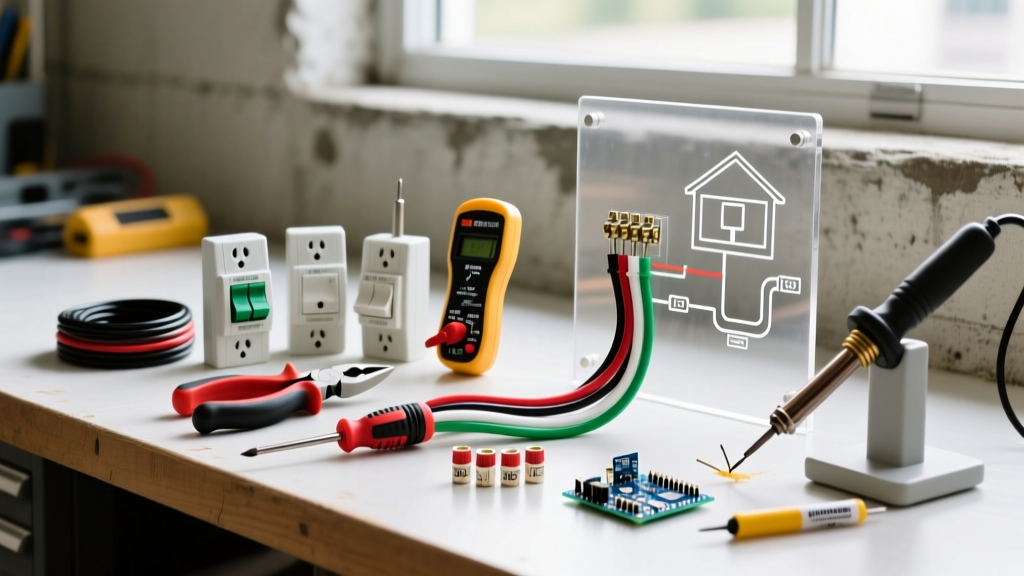
Use a non-contact voltage tester (like the Klein Tools NCVT-2) and a digital multimeter to verify the following:
- Phase to Neutral: Should read ~127V.
- Phase to Ground (if present): Should read ~127V.
- Neutral to Ground: Should read 0V to 2V. If it reads 127V, you have reversed polarity (hot and neutral swapped), a frequent issue in regions with historically lax inspection enforcement.
The GFCI Solution: Code-Compliant Upgrades Without a Ground Wire
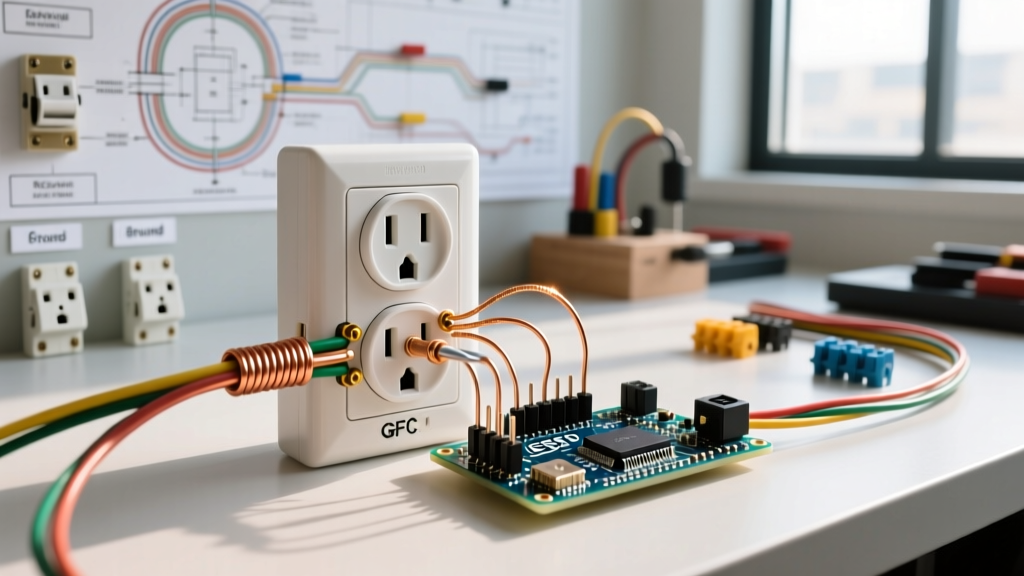
According to both the NEC and NOM-001-SEDE, you are permitted to replace an ungrounded 2-prong receptacle with a GFCI receptacle. A GFCI does not require a ground wire to function; it monitors the current balance between the hot and neutral conductors. If it detects a leakage of 4 to 6 milliamps (indicating current is passing through a person or water), it trips the circuit in milliseconds. For comprehensive safety protocols regarding ground faults, refer to the OSHA Electrical Safety guidelines.
Required Materials and Cost Breakdown
Sourcing high-quality electrical components in Mexico requires knowing where to look. Big-box stores like Home Depot Mexico or specialized suppliers like Casa Saba carry UL-listed and NOM-certified brands like Leviton, Pass & Seymour, and Hubbell. Avoid unbranded, ultra-cheap receptacles found in local street markets, as they often fail CPSC Electrical Safety standards for internal contact tension and heat resistance.
| Component | Specification | Est. Cost (USD) | Est. Cost (MXN) |
|---|---|---|---|
| GFCI Receptacle (15A/20A TR) | Leviton 16252-W or P&S 2095-TR | $22.00 - $30.00 | $450 - $620 |
| Standard TR Duplex (Downstream) | Leviton T5320-W (Tamper Resistant) | $3.00 - $5.00 | $60 - $100 |
| Deep Masonary Box Retrofit | 4x4 Adjustable Mud Ring | $6.00 - $10.00 | $120 - $200 |
| Wire Connectors (Wire Nuts) | Ideal 341 Yellow / 342 Tan | $5.00 (box) | $100 (box) |
Step-by-Step Upgrade: Installing the GFCI Receptacle
Upgrading the outlet requires careful attention to the shallow masonry boxes common in Mexico. Follow these steps meticulously:
- De-energize the Circuit: Turn off the corresponding breaker (pastilla termomagnética) in your main load center. Verify the power is off using your multimeter.
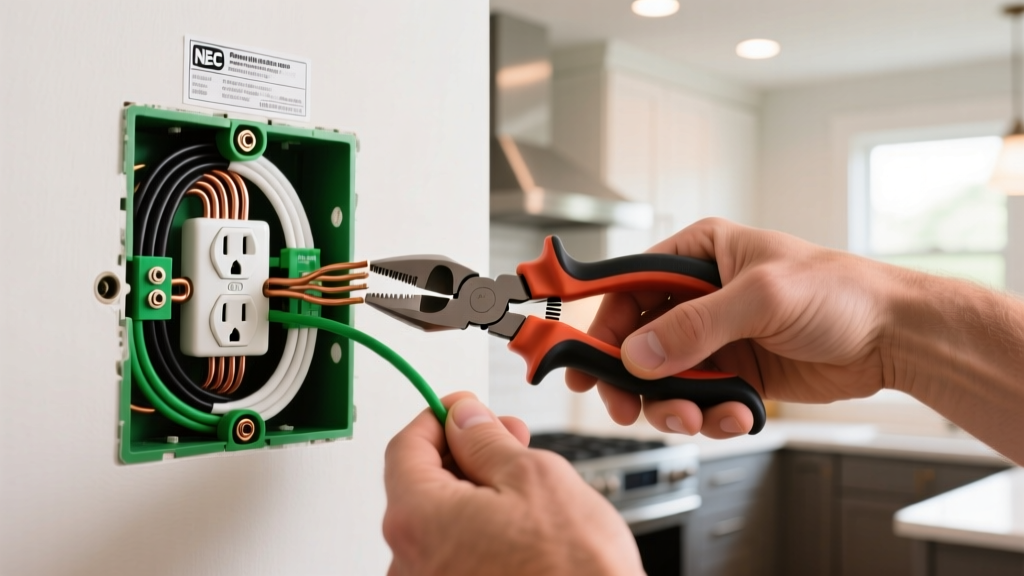
- Extract the Legacy Outlet: Remove the faceplate and unscrew the receptacle. Gently pull it out, being highly cautious of brittle, aged insulation on the existing wires. If the insulation cracks or flakes off, you must strip it back to clean copper or use heat-shrink tubing to repair the sheath.
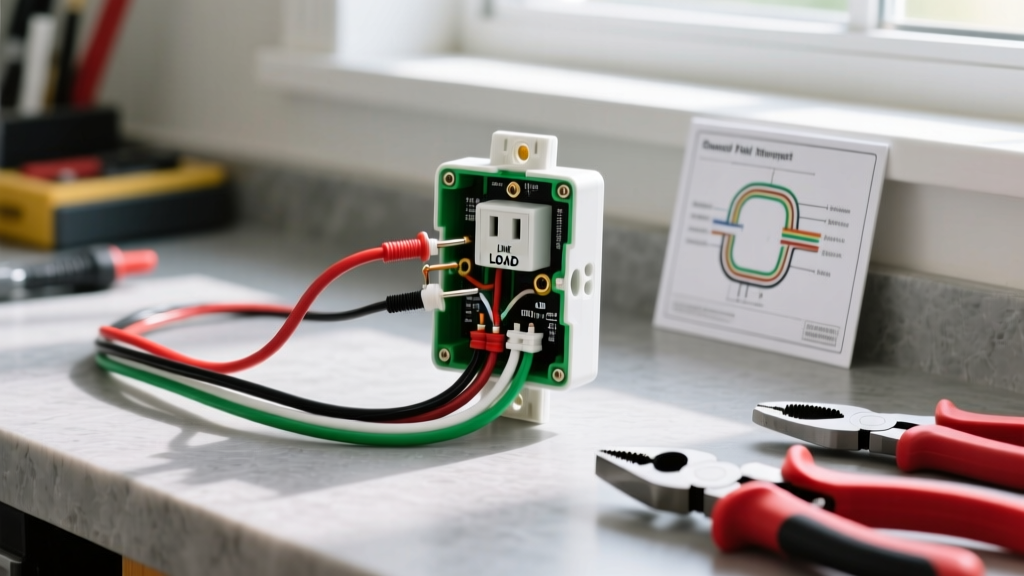
- Identify Line vs. Load: If the outlet is the first in a daisy-chain, you will have two sets of cables (two hots, two neutrals). The wires bringing power from the panel are the 'LINE'. The wires continuing to the next outlet are the 'LOAD'. Use a voltage sniffer before turning the breaker off to identify the line side, or trace the conduit.
- Prepare the Wires: Strip 5/8 inch of insulation from the 12 AWG or 14 AWG solid copper wires. Never use the push-in 'backstab' holes on the back of the receptacle. These are notorious for causing high-resistance connections and fires. Always use the side-screw terminals or the side-clamp plates.
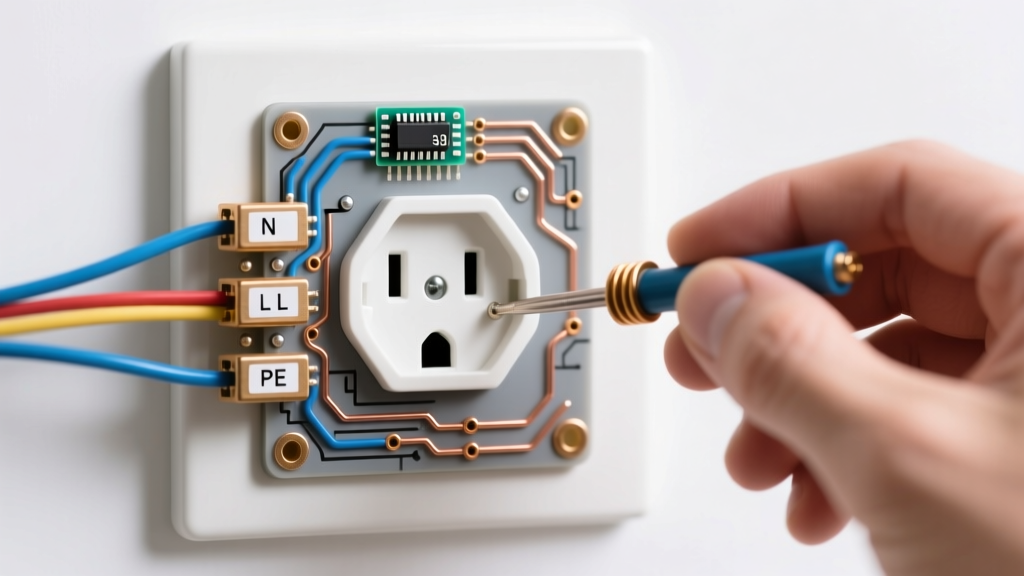
- Wire the GFCI: Connect the incoming Hot (black/red) to the brass LINE terminal. Connect the incoming Neutral (white) to the silver LINE terminal. If you are only protecting this single outlet, do not connect anything to the LOAD terminals.
- Address the Missing Ground: Cap the bare ground wire if one exists but is disconnected. If no ground wire exists, leave the green ground terminal on the GFCI empty. Apply the included 'No Equipment Ground' sticker to the faceplate. This is a strict code requirement.
- Box Fitment: GFCI bodies are significantly deeper than standard duplex outlets. If the masonry box is too shallow, the device will not sit flush, and forcing it will crack the drywall or plaster. Install a box extender or chisel out the masonry to accommodate the depth.
Common Installation Failures in Mexican Homes
When auditing or upgrading circuits in Mexico, be on the lookout for these specific regional failure modes:
1. Metric vs. AWG Wire Confusion
While AWG (American Wire Gauge) is standard, many local Mexican hardware stores (ferreterías) sell wire by metric cross-section. You must know the conversions to ensure you are not overloading a circuit. A 15A breaker requires a minimum of 14 AWG, which equates to 2.08 mm². A 20A breaker requires 12 AWG, which equates to 3.31 mm². Installing 1.5 mm² wire on a 20A breaker is a severe fire hazard.
2. Shared Neutrals in Multi-Wire Branch Circuits
In larger Mexican estates, electricians sometimes run two hot phases (from a 220V split-phase or 3-phase system) sharing a single neutral wire to save copper. If you install a GFCI on a circuit with a shared neutral, the GFCI will trip immediately because the returning current on the neutral will not match the outgoing current on the single hot wire. You must separate the neutrals or use a 2-pole GFCI breaker in the main panel instead.
3. Lack of Tamper-Resistant (TR) Shutters
Modern NOM-001-SEDE mandates Tamper-Resistant receptacles in all residential dwellings to prevent children from inserting objects into the slots. When purchasing your replacement outlets, ensure the letters 'TR' are stamped on the face of the device. Standard non-TR outlets are no longer code-compliant for new replacements in living areas.
Frequently Asked Questions
Can I use a US-bought GFCI outlet in Mexico?
Yes. Because Mexico utilizes the exact same NEMA 1-15 and NEMA 5-15 plug configurations and operates on a compatible 60Hz frequency, UL-listed US receptacles (rated for 125V) are perfectly safe and physically compatible with the 127V Mexican grid. The slight voltage variance (125V rating vs 127V actual) is well within the operational tolerance of modern electrical contacts.
Will a GFCI protect my expensive electronics from power surges?
No. A GFCI protects humans from lethal ground-fault shocks; it does not protect equipment from voltage spikes or lightning strikes, which are common during Mexico's rainy season. For equipment protection, you must install a whole-home surge protective device (SPD) at the main service panel, or use point-of-use surge suppressors.
My GFCI trips immediately upon pressing 'Reset'. Why?
If the GFCI will not reset, you either have a ground fault downstream on the circuit (if wired to the LOAD terminals), a miswired Line/Load configuration, or a faulty neutral connection somewhere in the masonry conduit. Disconnect the LOAD wires entirely; if the GFCI resets, the fault lies further down the daisy-chain.