
The Visual Identification Challenge in Modern Wiring
Homeowners and DIY enthusiasts frequently search for an electrical outlet image when they realize their current wall receptacles are outdated, damaged, or insufficient for modern electrical loads. Whether you are upgrading to USB-integrated models, swapping out ungrounded legacy wiring, or installing smart receptacles, correctly identifying the visual markers of your existing setup is the critical first step. Relying on guesswork can lead to tripped breakers, melted yokes, or severe fire hazards.
When you pull up an electrical outlet image on a manufacturer's website or a home improvement forum, you are looking at standardized NEMA (National Electrical Manufacturers Association) configurations. However, the visual differences between a 15-amp and a 20-amp receptacle, or between a standard duplex and a GFCI, dictate entirely different wiring protocols, box depth requirements, and breaker compatibilities. This guide will teach you how to decode those visual cues and plan a safe, code-compliant upgrade for your home.
Decoding the Slots: What the Image Tells You
Every electrical outlet image you see online will feature specific slot configurations that correspond to voltage, amperage, and grounding status. Before purchasing a replacement, you must match the physical slots on your wall to the standard NEMA designations.
NEMA 1-15R (The Legacy 2-Prong)
If the electrical outlet image you are comparing yours to shows only two parallel vertical slots and no round hole, you are looking at a NEMA 1-15R. These are ungrounded, 15-amp, 125-volt receptacles. Found primarily in homes built before 1965, these lack an equipment grounding conductor. Upgrading these requires specific National Electrical Code (NEC) workarounds, as you cannot simply swap them for a standard 3-prong outlet without pulling new ground wire.
NEMA 5-15R (The Standard 3-Prong)
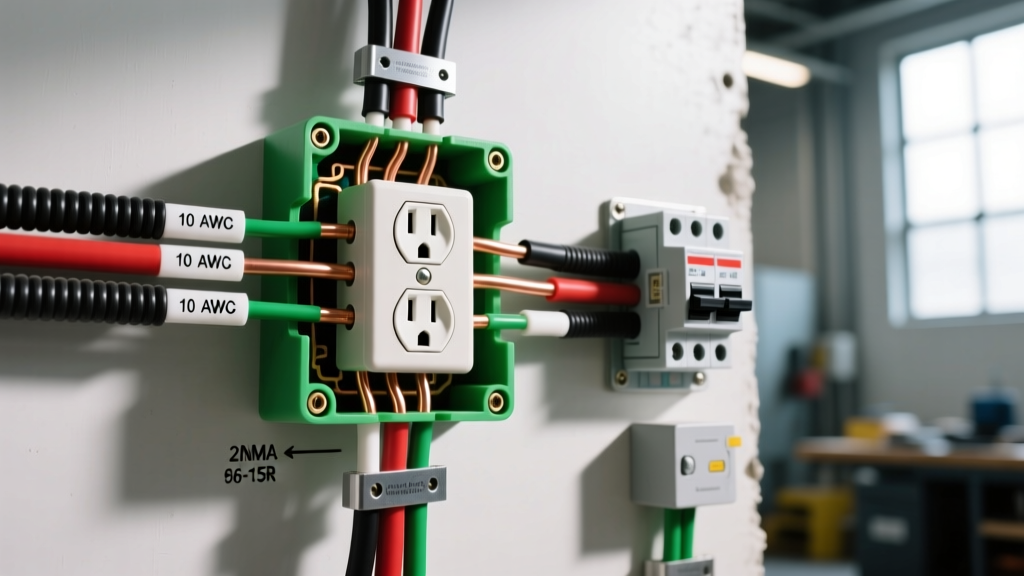
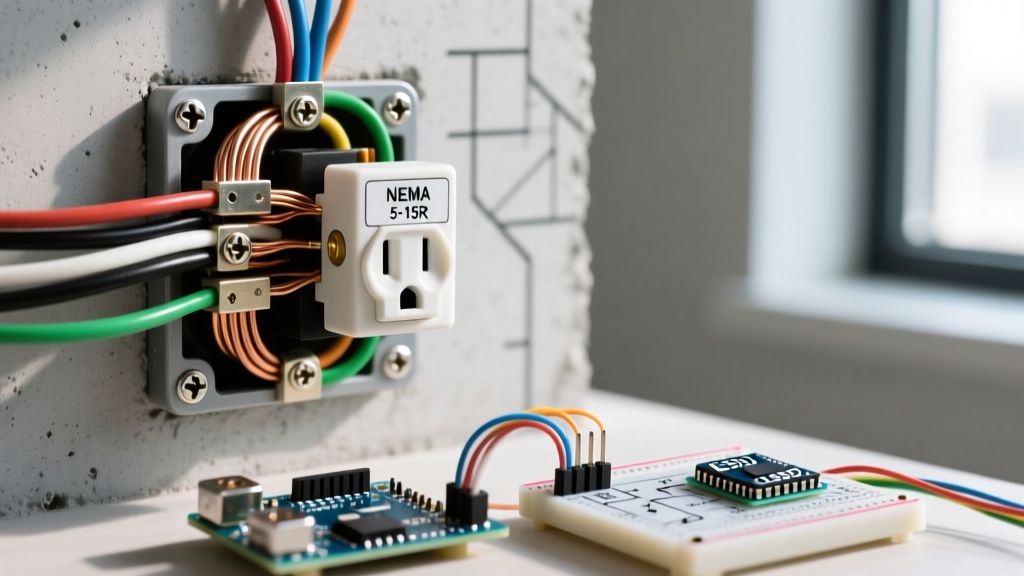
This is the most common receptacle in North America. The image will display two vertical parallel slots (one slightly longer than the other to denote the neutral wire) and a round D-shaped grounding hole below them. Rated for 15 amps and 125 volts, these are typically wired with 14 AWG copper wire on a 15-amp breaker.
NEMA 5-20R (The 20-Amp T-Slot)
The defining visual marker of a 5-20R is the "T-shaped" neutral slot. The hot slot remains vertical, but the neutral slot is horizontal, allowing it to accept both standard 15-amp plugs and specialized 20-amp plugs. These are required in kitchens, bathrooms, and garages to handle high-draw appliances and are wired with thicker 12 AWG copper on a 20-amp breaker.
NEMA Visual Matrix & Upgrade Pathways
Use the table below to cross-reference the electrical outlet image you are viewing with your home's actual wiring capabilities.
| Visual Profile (From Image) | NEMA Designation | Amperage / Voltage | Wire Gauge Required | 2026 Upgrade Recommendation |
|---|---|---|---|---|
| Two parallel vertical slots, no ground | 1-15R | 15A / 125V | 14 AWG (Minimum) | Replace with GFCI (Marked 'No Equipment Ground') |
| Two parallel vertical slots, round ground | 5-15R | 15A / 125V | 14 AWG | Upgrade to Tamper-Resistant (TR) or USB-A/C Combo |
| One vertical, one horizontal (T-slot), round ground | 5-20R | 20A / 125V | 12 AWG | Upgrade to 20A Smart Receptacle or AFCI/GFCI Dual-Function |
Upgrade Scenarios Based on Your Visual Match
Scenario A: Upgrading the Ungrounded NEMA 1-15R
If your wall matches the 2-prong electrical outlet image, you face a common code compliance issue. As of the latest NEC updates enforced in most municipalities in 2026, you are prohibited from installing a standard grounded 3-prong receptacle on an ungrounded circuit. According to NFPA's National Electrical Code Article 406.4(D)(2), your legal and safe upgrade path is to install a GFCI (Ground Fault Circuit Interrupter) receptacle. The GFCI will protect against shock hazards even without a ground wire. You must apply the included "No Equipment Ground" and "GFCI Protected" stickers to the faceplate after installation.
Scenario B: Modernizing the Standard NEMA 5-15R
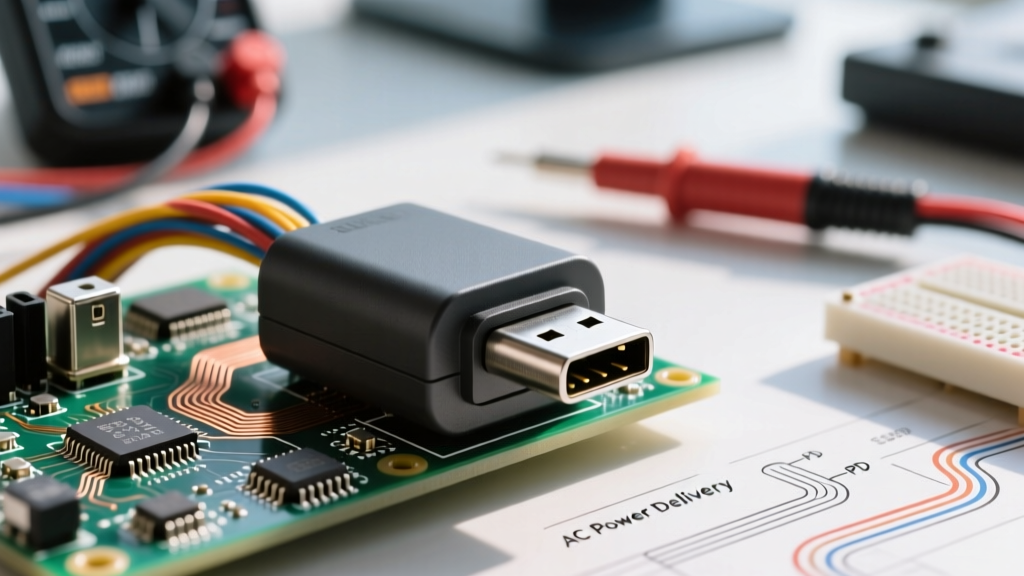
If you are replacing a standard 15-amp outlet, the most popular 2026 upgrade is the USB-integrated receptacle. Models like the Leviton T5632 (featuring both USB-A and USB-C Power Delivery ports) eliminate the need for bulky charging bricks.
Critical Edge Case: USB and smart outlets have massive internal heatsinks and circuit boards. If you are upgrading to these, you must verify your electrical box depth. Standard shallow boxes (14 cubic inches) will not physically accommodate a USB outlet alongside 14/2 Romex wire. You will need a deep box with a minimum volume of 22 cubic inches to prevent wire crushing and overheating.
Scenario C: The Kitchen NEMA 5-20R Upgrade
Matching a T-slot electrical outlet image means you are working on a 20-amp small-appliance branch circuit. Modern code requires these to be protected by both AFCI (Arc Fault) and GFCI (Ground Fault) technology. Instead of relying solely on the breaker panel, upgrading to a Leviton DFGF1-W** (Dual Function Receptacle) provides localized protection. When wiring a 20-amp receptacle, always use the screw terminals rather than the back-stab push-in connections, which are notorious for loosening under high continuous loads and causing thermal melting.
Hidden Visual Markings: Reading the Yoke
Sometimes the most important visual cues aren't the slots, but the tiny letters stamped into the metal mounting yoke (the strap) of the receptacle. When examining an electrical outlet image online or looking at your old unit, check for these stamps:
- TR (Tamper Resistant): Features internal shutters that block foreign objects. Mandated by code in all new residential installations.
- WR (Weather Resistant): Features UV-resistant plastics and nickel-plated brass internals. Required for outdoor and damp locations.
- AL/CU: Indicates the terminal screws are rated for both Aluminum and Copper wire. If your home was built in the late 1960s or 1970s and has aluminum branch wiring, you must use CO/ALR rated receptacles or use Alumiconn pigtails to prevent catastrophic fires.
- Hospital Grade (Green Dot): Features reinforced internal contacts and heavier yokes for high-durability environments.
Essential Tools for the Upgrade
Do not attempt a receptacle upgrade with generic tools. Electrical work demands insulated, rated equipment.
- Non-Contact Voltage Tester: The Klein Tools NCVT-3 is the industry standard. It detects voltage from 12V to 1000V AC and includes a built-in flashlight for dark wall boxes.
- Insulated Screwdrivers: Use 1000V-rated insulated drivers (like the Wiha 32093 set) to protect against accidental contact with live terminals.
- Wire Strippers: The Klein 11063W ensures you strip exactly 3/4 inch of insulation without nicking the copper conductor, which creates a weak point prone to snapping under the terminal screw.
Safety Standards & Final Verification
According to the Electrical Safety Foundation International (ESFI), GFCI receptacles reduce the risk of fatal electrical shocks by over 80% in wet areas. However, a GFCI will not function correctly if the line and load wires are reversed—a common DIY mistake. The "LINE" terminals connect to the power coming from the breaker panel, while the "LOAD" terminals connect to downstream outlets. If you wire them backward, the receptacle will power your devices, but the internal shock-protection sensors will remain completely inactive.
Expert Troubleshooting Tip: If your newly installed GFCI or smart outlet refuses to reset, do not assume the unit is defective. In 90% of cases, the bare copper ground wire is touching the silver neutral screw or the side of the metal electrical box, creating a micro-fault that the GFCI's highly sensitive internal toroidal coil is detecting. Wrap the sides of the receptacle body with high-quality 3M Super 33+ electrical tape before pushing it back into the box to isolate the terminals from the metal box.
By carefully analyzing the electrical outlet image of your target replacement and comparing it to the physical realities of your wall box, wire gauge, and breaker capacity, you ensure a seamless, safe, and code-compliant upgrade that will serve your home reliably for decades.