
Understanding the Malaysia Electrical Outlet Standard
Installing a Malaysia electrical outlet requires a clear understanding of the country's specific wiring regulations and hardware standards. Malaysia utilizes the Type G socket outlet, which is governed by the BS 1363 standard (originally from the UK) and locally certified by SIRIM QAS International. The national grid operates at 230V AC with a frequency of 50Hz. Unlike some regions that use 15A or 20A standard receptacles, the standard domestic wall socket in Malaysia is rated for a maximum of 13 Amps and must feature integrated safety shutters on the Live and Neutral pins.
As of 2026, the Suruhanjaya Tenaga (Energy Commission of Malaysia) strictly enforces the use of SIRIM-approved electrical accessories in all residential and commercial installations. Using non-compliant, uncertified outlets purchased from unverified online marketplaces is not only illegal but poses a severe fire hazard due to inadequate contact pressure and substandard flame-retardant plastics.
Essential Tools and Materials for 2026
Before beginning your installation, gather the correct tools and materials. Do not compromise on insulation ratings; all hand tools must be VDE-certified for 1000V.
- Socket Outlet: Panasonic WEG5301 (13A Switched Socket, approx. RM 14) or Schneider Electric AvatarOn 13A (approx. RM 32). Both are SIRIM-certified and feature robust brass terminals.
- Cable: 2.5mm² PVC/PVC copper cable (Brands like Fajar or Megacable cost around RM 180 to RM 220 per 100-meter roll in 2026).
- Wire Strippers: Knipex 1106160 or a high-quality automatic stripper to avoid nicking the copper strands.
- Screwdrivers: VDE-insulated PZ2 (Pozidriv) and flathead screwdrivers.
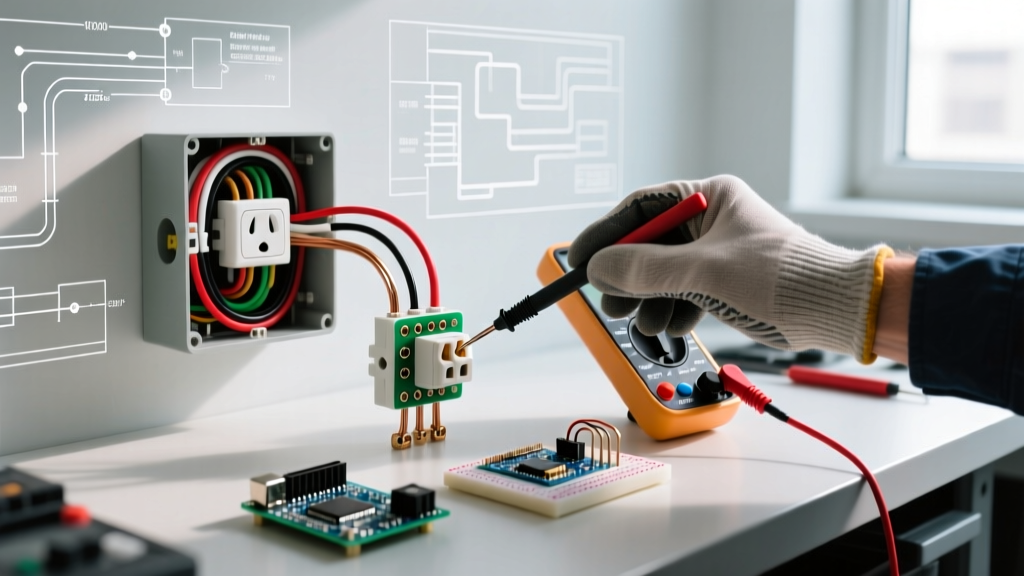
- Testing Equipment: Digital Multimeter (e.g., UNI-T UT61E) or a dedicated socket tester with RCD trip functionality.
- Earth Sleeving: Green/Yellow PVC sleeving for bare earth wires.
Malaysian Wire Color Codes: Old vs. New
One of the most common pitfalls for beginners working in older Malaysian homes is encountering legacy wiring colors. Malaysia officially adopted the IEC 60446 harmonized colors in 2009 to align with European and UK standards. Always verify the wiring with a multimeter before touching any terminals.
| Function | Post-2009 Harmonized (Current) | Pre-2009 Legacy (Older Homes) |
|---|---|---|
| Live (Line) | Brown | Red |
| Neutral | Blue | Black |
| Earth (Ground) | Green/Yellow | Green (or Bare Copper) |
Step-by-Step Installation Guide
Follow this procedure to safely terminate a 13A switched socket outlet on a standard 2.5mm² radial circuit.
Step 1: Isolate the Distribution Board (DB)
Locate your home's main Distribution Board. Identify the Miniature Circuit Breaker (MCB) controlling the socket circuit. In modern Malaysian radial circuits, this is typically a 20A Type C MCB. Switch it to the OFF position and apply a physical lockout tag if possible. Use your multimeter to confirm zero voltage at the existing socket or cable ends.
Step 2: Prepare the Backbox and Cable
Ensure the wall backbox is clean and free of plaster debris. Standard Malaysian flush-mounted backboxes are 35mm deep. If you are using surface trunking, ensure the 25x16mm PVC conduit is securely saddled. Strip the outer PVC sheath of the 2.5mm² cable back to about 100mm from the entry point to give yourself ample working room.
Step 3: Strip and Sleeve the Conductors
Strip exactly 15mm of insulation from the Brown (Live), Blue (Neutral), and Earth wires. Crucial: If the Earth wire is bare copper, you must slide a Green/Yellow PVC sleeve over it so that it covers the entire exposed length up to the terminal. Bare earth wires inside a backbox are a violation of SIRIM QAS safety audits and can cause short circuits against the metal backbox or live terminals.
Step 4: Terminate the Socket
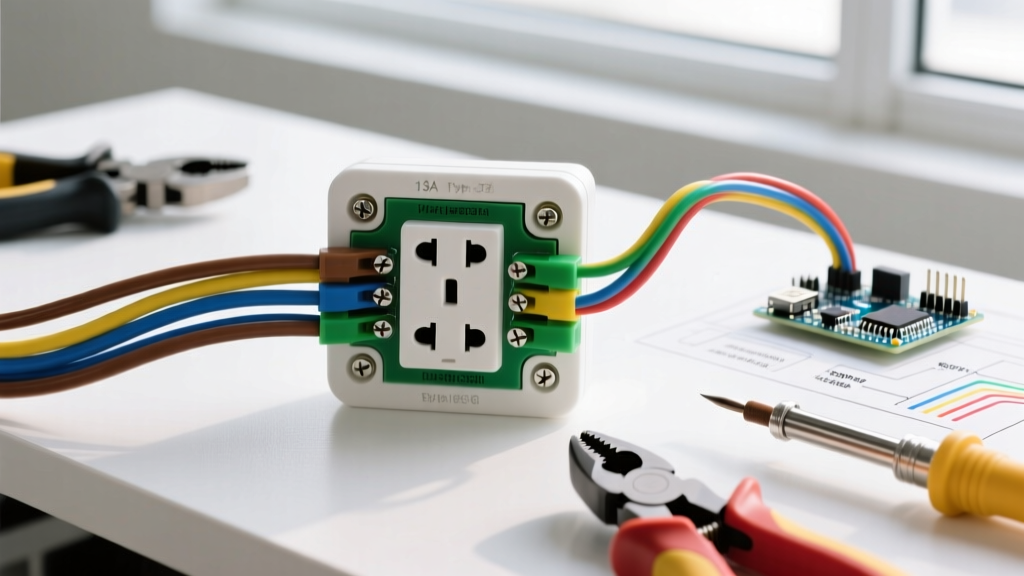
Look at the rear of your Type G socket. The terminals are clearly marked:
- E (Earth): Insert the Green/Yellow wire into the top or center terminal (depending on the brand orientation) and tighten firmly with a PZ2 screwdriver.
- N (Neutral): Insert the Blue wire into the left-side terminal.
- L (Live): Insert the Brown wire into the right-side terminal, which routes through the integrated 13A neon switch.
Give each wire a gentle tug to ensure it is mechanically secure. No bare copper should be visible outside the terminal block.
Step 5: Mount and Test
Carefully fold the wires into the backbox in a U-shape to avoid pinching them against the plaster. Secure the socket faceplate using the provided M3.5 machine screws. Do not overtighten, as this can warp the polycarbonate faceplate. Turn the MCB back on and test with a dedicated socket tester to verify correct polarity and earth continuity.
Expert Insight: Radial vs. Ring Circuits in MalaysiaUnlike the UK, which heavily relies on 32A Ring Final Circuits for sockets, modern Malaysian residential wiring predominantly uses 20A Radial Circuits wired in 2.5mm² cable. This means the cable runs from the DB to the first socket, and then daisy-chains (spurs) to subsequent sockets. If you are replacing a socket in the middle of a radial run, you will see two sets of cables (Line and Load) entering the backbox. You must terminate both Live wires into the L terminal, both Neutrals into the N terminal, and both Earths into the E terminal. The Panasonic WEG5301 features deep terminal tunnels specifically designed to accommodate two 2.5mm² wires safely.
Common Beginner Mistakes and Troubleshooting
Even with careful preparation, beginners often encounter specific issues when wiring a Malaysia electrical outlet. Use this diagnostic matrix to resolve them.
| Symptom | Probable Cause | Corrective Action |
|---|---|---|
| MCB trips instantly upon switching on the socket. | Live and Earth wires reversed, or a loose strand of Live copper touching the Earth terminal. | Isolate power, remove faceplate, and inspect terminations for copper whiskers. Verify L and E positions. |
| Socket tester shows 'Reverse Polarity'. | Brown (Live) and Blue (Neutral) wires swapped at the socket or at the DB. | Swap the wires to match the L and N markings on the rear of the socket. |
| Socket feels warm after plugging in a 2kW appliance. | Wires stripped too short, causing only partial contact inside the brass terminal, increasing resistance. | Re-strip wires to exactly 15mm and ensure the terminal screw is clamping the copper, not the PVC insulation. |
| Neon indicator on the switch flickers dimly when OFF. | Induced voltage from parallel cable runs or a faulty neon resistor in cheap, non-SIRIM sockets. | Replace with a premium brand (Schneider/Legrand). Ensure cables are not tightly bundled with high-load lines. |
High-Load Appliances: When NOT to Use a 13A Socket
A frequent mistake among DIYers in Malaysia is attempting to wire heavy appliances to a standard 13A Type G outlet. According to guidelines referenced by the Institution of Engineering and Technology (IET) and local Malaysian practices, certain appliances require dedicated circuits and specialized isolators:
- Water Heaters (Instantaneous): These draw between 15A and 25A. They must be wired using 4.0mm² or 6.0mm² cable directly to a 20A or 32A Double-Pole (DP) isolator switch. Never use a 13A plug and socket.
- Air Conditioners: Split-unit ACs require a dedicated 15A or 20A radial circuit. While some older installations use a 15A round-pin socket, modern 2026 installations utilize a 20A DP isolator switch or a specialized 15A/20A industrial socket.
Final Safety Verification
After completing your Malaysia electrical outlet installation, perform a final visual and mechanical check. Ensure the faceplate sits flush against the wall without gaps. If tiling or plastering is uneven, use the adjustable mounting lugs found on premium sockets to level the face. Always prioritize SIRIM-certified components; the marginal savings of RM 5 on a counterfeit outlet is never worth the risk of an electrical fire. When in doubt, consult a licensed wireman registered with the Energy Commission of Malaysia to certify your work.