
Is Your Electrical Outlet AC or DC? Understanding the Grid vs. The Device
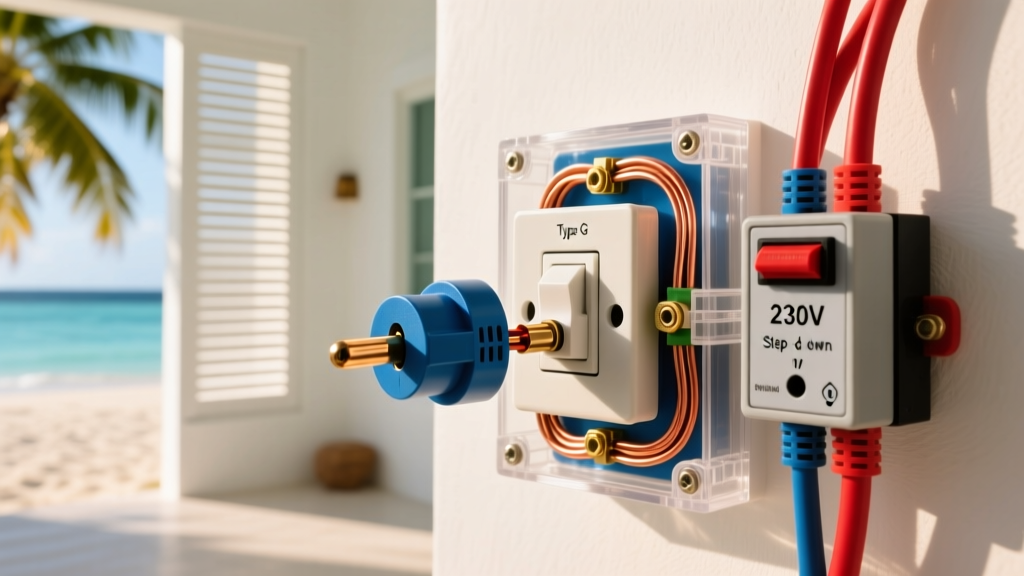
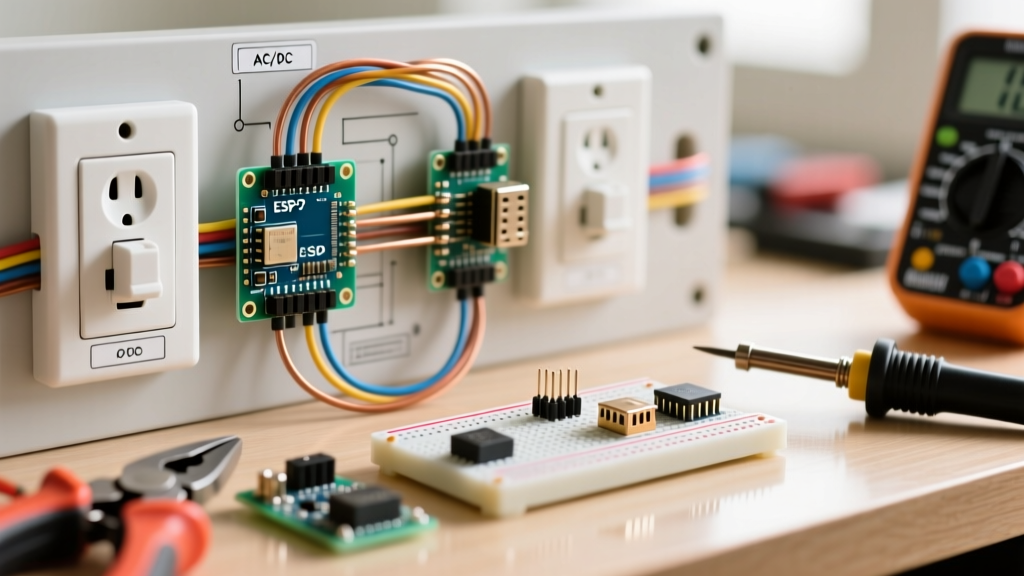
When homeowners and DIYers ask, 'Is a standard electrical outlet AC or DC?' the fundamental answer is straightforward: standard North American wall receptacles (NEMA 1-15R and 5-15R) deliver 120-volt Alternating Current (AC). However, the modern electrical landscape has blurred this line. With the explosive adoption of USB-C Power Delivery (PD) charging, hybrid AC/DC receptacles are now common. These devices accept 120V AC from your panel, step it down internally via a switching power supply, and output 5V to 28V Direct Current (DC) directly at the faceplate.
As we navigate the 2026 electrical code updates and the widespread integration of USB-C PD 3.1 in consumer electronics, understanding the material requirements, thermal limitations, and specialized tools needed for both AC and DC wiring is critical. This guide breaks down the exact tools, materials, and safety protocols required to install and troubleshoot both pure AC and hybrid AC/DC receptacles.
The Physics and Standards: AC vs. DC at the Wall
According to the U.S. Department of Energy, the electrical grid relies on Alternating Current because AC voltage can be easily stepped up or down via transformers, minimizing transmission losses over long distances. Conversely, Direct Current flows in a single direction and is required by modern semiconductor-based electronics (smartphones, laptops, IoT hubs).
Historically, the AC-to-DC conversion happened inside bulky external 'wall warts' or power bricks. Today, that conversion is embedded directly into the wall box via hybrid receptacles. This introduces new thermal and spatial challenges for electricians and DIYers.
Material Comparison Matrix: Standard AC vs. Hybrid AC/DC Receptacles
| Feature | Standard AC Duplex (e.g., Leviton T5252) | Hybrid AC/DC USB-C (e.g., Leviton T5636) |
|---|---|---|
| Primary Current Type | 120V AC Only | 120V AC + 5V-28V DC (USB-C PD) |
| Average Cost (2026) | $3.50 - $5.00 | $24.00 - $32.00 |
| Internal Components | Brass/Nickel contacts, steel yoke | AC contacts + internal switching transformer |
| Heat Generation | Negligible (unless loose connection) | Moderate to High (during active DC fast-charging) |
| Minimum Box Depth | Standard (18 cu. in.) | Deep (22.5 to 25 cu. in. required) |
Essential Tools for AC and DC/USB Outlet Installation
Working with hybrid AC/DC receptacles requires verifying both high-voltage AC line integrity and low-voltage DC output stability. Here are the specific, professional-grade tools required for the job.
1. True-RMS Digital Multimeter: Fluke 117 Electricians True RMS
When testing an electrical outlet AC or DC hybrid, a standard multimeter is insufficient. You need a True-RMS meter like the Fluke 117 (approx. $215). You will use the V~ (AC Voltage) setting to verify 120V at the line and load terminals, and the V⎓ (DC Voltage) setting with micro-probes to test the USB-C and USB-A output pins to ensure the internal transformer is delivering a stable 5V/9V/15V/20V handshake.
2. Non-Contact Voltage Tester: Klein Tools NCVT-3
Priced around $28, the NCVT-3 detects both standard 12-1000V AC and low-voltage 70-1000V AC. While it cannot detect the low-voltage DC output of a USB port, it is mandatory for verifying that the 120V AC branch circuit is de-energized before removing the faceplate.
3. Torque Screwdriver: Wiha 10106 Insulated TorqueVario-S
Recent NEC updates strictly mandate torque-rated terminations for branch circuit receptacles. The Wiha 10106 (approx. $140) allows you to set the exact inch-pound rating required by the receptacle manufacturer (typically 14 in-lbs for 14 AWG wire and 16 in-lbs for 12 AWG). Under-torqued AC connections cause arcing; over-torqued connections can strip the terminal block on delicate hybrid DC units.
4. Wire Strippers: Klein Tools 11063W Katapult
Clean stripping of 14 AWG and 12 AWG solid copper is vital. The Katapult ($32) prevents nicking the copper conductor, which creates a weak point that can snap when folding the heavy hybrid receptacle into the wall box.
Material Guide: Selecting Wire, Boxes, and Receptacles
The physical materials you choose dictate the safety and longevity of your AC/DC installation. The most common failure mode for USB wall outlets is thermal throttling—where the internal DC transformer overheats, shutting down the USB ports while the AC outlets continue to function.
Wire Gauge and Conductor Type
- 15-Amp Circuits: Use 14 AWG solid copper (e.g., Southwire Romex SIMpull 14/2 NM-B). Maximum continuous load is 12A.
- 20-Amp Circuits: Use 12 AWG solid copper (12/2 NM-B). If installing a 20A hybrid receptacle, ensure the internal USB-C PD module is also rated for 20A pass-through, though most residential USB-C receptacles are 15A rated devices that can be installed on 20A circuits per NEC Article 210.21(B)(3).
Wall Box Sizing: The Critical DC Heat Factor
Standard AC receptacles fit easily into a basic 18 cubic-inch 'shallow' wall box. Hybrid AC/DC receptacles, however, have a massive rear chassis housing the AC-to-DC step-down transformer. Furthermore, the National Electrical Code (NFPA 70) mandates strict box fill calculations.
Expert Tip: Never install a 30W or 60W USB-C PD receptacle in an 18 cu. in. shallow box. The heat generated by the DC conversion will be trapped, degrading the internal capacitors over time. Always upgrade to a 22.5 cu. in. or 25 cu. in. extra-deep box (such as the Carlon E989R-UPR) to allow for heat dissipation and proper wire bending space.
Step-by-Step: Wiring a Hybrid AC/DC USB-C Receptacle
Installing a hybrid unit requires the same fundamental AC wiring as a standard duplex, but demands greater care regarding wire dressing to protect the sensitive DC electronics on the rear of the yoke.
- Kill the Power & Verify: Turn off the breaker. Test with the NCVT-3 and verify 0V AC with the Fluke 117.
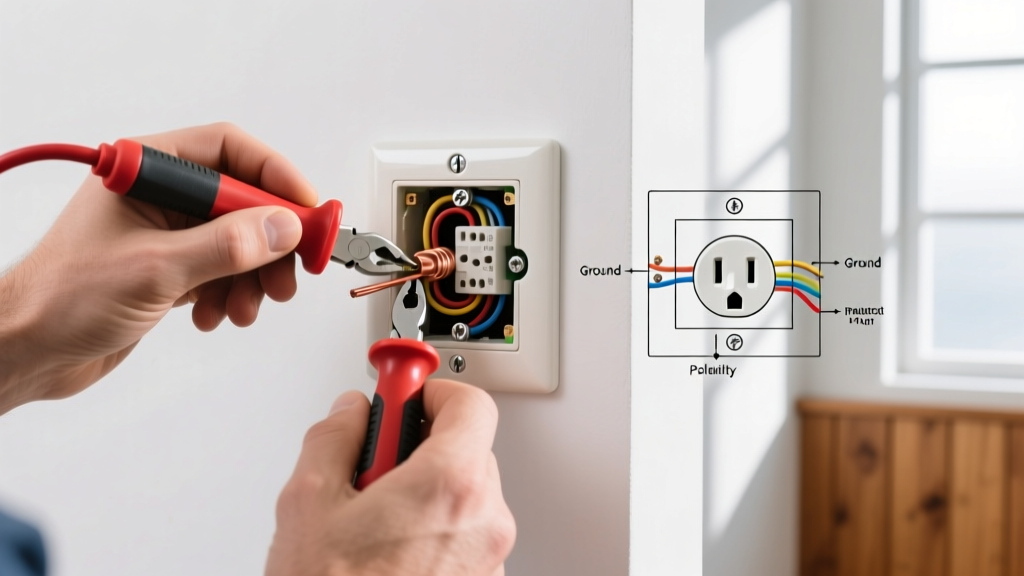
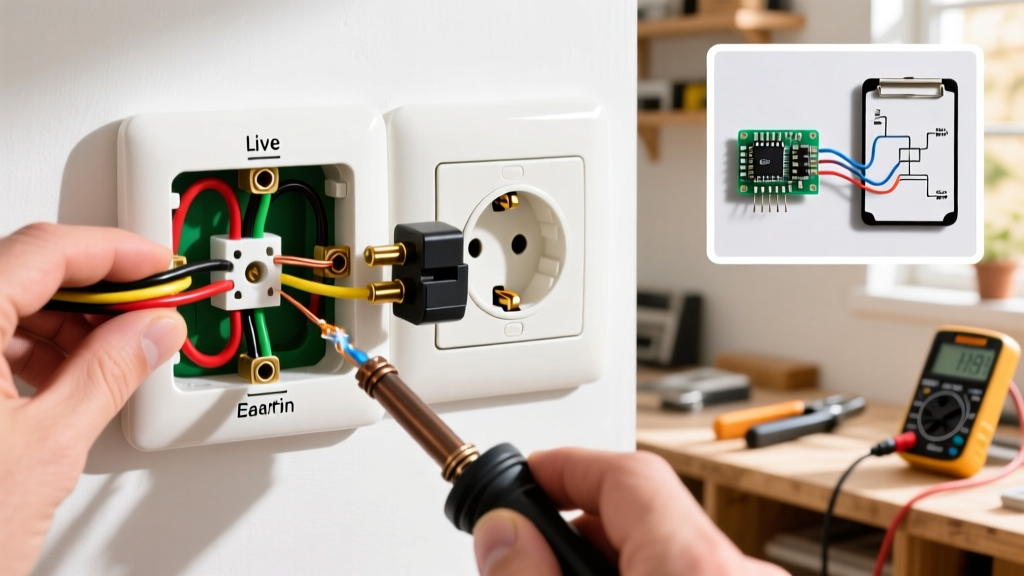
- Prepare the Conductors: Strip exactly 3/4 inch of insulation from the black (hot), white (neutral), and bare (ground) wires. Use the torque screwdriver to loop the wires clockwise around the terminal screws.
- Terminate AC Connections: Connect the black wire to the brass 'LINE' screw, the white wire to the silver 'NEUTRAL' screw, and the bare copper to the green 'GROUND' screw. Torque to manufacturer specs (usually 14 in-lbs).
- Dress the Wires Carefully: Unlike standard AC outlets, you must not jam the bare ground wire against the rear circuit board of the USB module. Fold the ground wire into the back-left corner of the deep box first, followed by the neutral, and finally the hot wire.
- Mount and Test: Secure the yoke to the box. Restore power. Use a USB-C PD tester (like the MakerHawk PD009) plugged into the top port to verify the DC voltage negotiation (e.g., 5V/3A, 9V/3A, 15V/2A) while simultaneously testing the bottom AC port with your multimeter.
NEC Compliance and Safety Standards
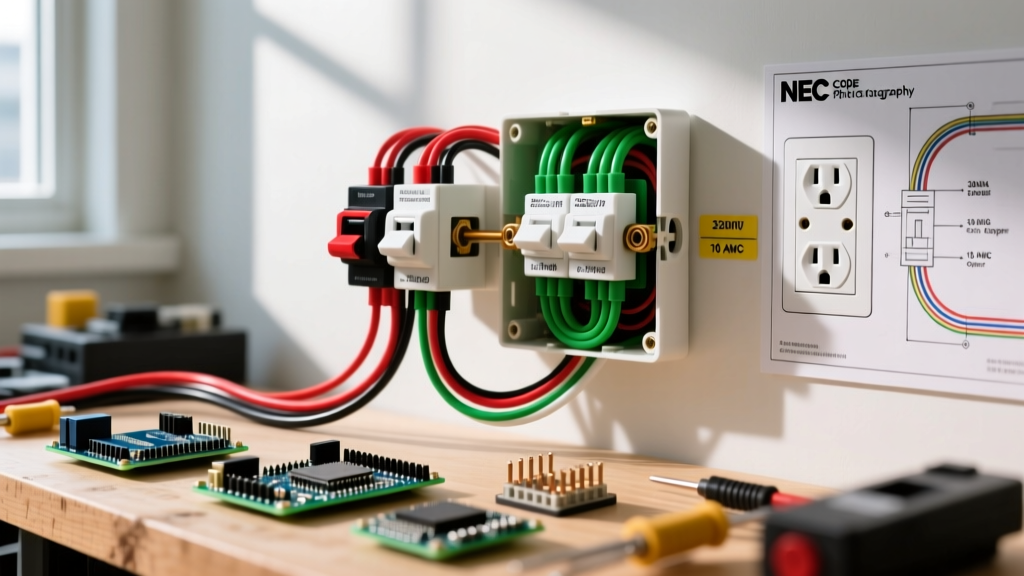
When dealing with an electrical outlet AC or DC hybrid, dual safety standards apply. The AC side must comply with NEMA WD-6 standards for wiring devices and NEC Article 406 regarding receptacle tamper resistance. The internal DC power supply must be UL Listed under UL 62368-1 (Audio/video, information and communication technology equipment safety) or UL 1310 (Class 2 Power Units). Always look for the UL or ETL holographic mark on the front faceplate; counterfeit imported USB outlets often lack proper internal fusing and can cause electrical fires.
Troubleshooting Edge Cases: When AC Works but DC Fails
Because hybrid receptacles contain two distinct circuits (the physical AC pass-through and the electronic DC transformer), you may encounter split-failures.
Scenario 1: AC Outlets Work, USB-C Port Delivers 0V
Diagnosis: The internal switching power supply has failed, or the internal thermal fuse has blown due to sustained overheating. Solution: There are no user-serviceable parts inside a UL-listed hybrid receptacle. The entire unit must be replaced. Verify your wall box is deep enough to prevent a repeat thermal failure.
Scenario 2: USB-C Port Charges Slowly (Drops from 30W to 5W)
Diagnosis: Thermal throttling or voltage drop. If the wall box is insulated with spray foam directly against the rear of the receptacle, the heat cannot escape. The internal IC detects unsafe temperatures and intentionally drops the DC amperage to prevent a fire. Solution: Remove the drywall around the box, carve back the spray foam to create a 1-inch air gap around the rear chassis, and install a deep-volume wall box.
Scenario 3: USB Devices Disconnect and Reconnect Randomly
Diagnosis: 'Dirty' AC power or a loose neutral. The internal DC transformer requires a stable 120V AC sine wave to output clean DC voltage. If the neutral wire on the branch circuit is loose or shared improperly (a multi-wire branch circuit error), the AC voltage fluctuates, causing the DC handshake to fail and reset. Solution: Check all neutral connections at the receptacle and the main panel using the torque screwdriver. Ensure the circuit is not overloaded with high-draw appliances like vacuums or space heaters.
Frequently Asked Questions
Can I wire a pure DC receptacle directly to my solar battery bank?
Standard NEMA wall receptacles are not rated for DC voltage. DC arcs are significantly harder to extinguish than AC arcs. If you are wiring a 12V or 24V DC system (like an off-grid solar setup or an RV), you must use specialized DC-rated breakers, DC-rated switches, and Anderson Powerpole connectors or specific DC-rated marine receptacles, never standard residential AC wall outlets.
Do USB wall outlets draw phantom power when nothing is plugged in?
Yes. The internal AC-to-DC transformer draws a tiny amount of 'no-load' phantom power, typically between 0.1W and 0.3W. Over a year, this costs less than $0.50 in electricity, which is negligible compared to the convenience of integrated fast charging.