
Decoding Aviation In-Seat Power: The American Airlines Standard
When electrical engineers, RV builders, and marine DIYers look for the ultimate benchmark in high-reliability mobile power, commercial aviation sets the gold standard. Understanding the American Airlines electrical outlet wiring architecture provides a masterclass in compact, fault-tolerant power delivery. As of 2026, American Airlines has aggressively retrofitted its narrowbody and widebody fleets—ranging from the Boeing 737 MAX to the Airbus A321neo—transitioning from legacy proprietary DC systems to universal 110V AC and high-wattage USB-C Power Delivery (PD) topologies.
For the DIY electrical enthusiast, reverse-engineering these in-seat power systems offers invaluable insights into isolated power conversion, EMI shielding, and thermal management in confined spaces. This wiring diagram reference breaks down the exact specifications, pinouts, and circuit protection methodologies used in modern aviation seating, and how you can adapt these schematics for custom mobile applications.
American Airlines Electrical Outlet Types & Specifications
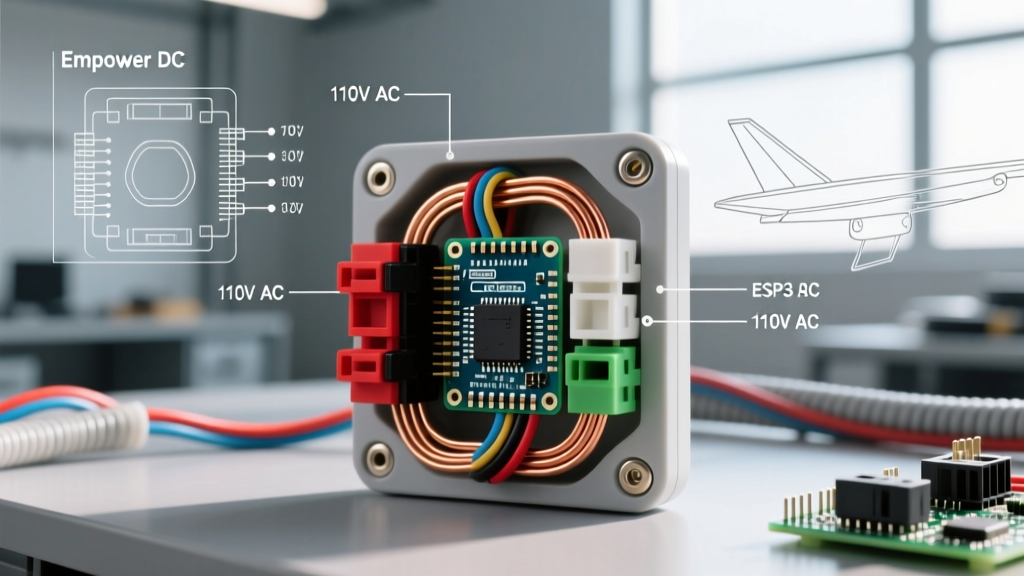
The modern American Airlines fleet utilizes a hybrid approach to passenger power, managed by under-seat Seat Power Supply Units (SPSU). Below is the technical matrix of the three primary outlet configurations currently deployed.
| Outlet Type | Voltage / Current | Max Wattage | Wire Gauge (AWG) | Connector / Bezel Type |
|---|---|---|---|---|
| EmPower 15V DC (Legacy) | 15V DC / 5A | 75W | 16 AWG (MIL-W-22759) | 3-Pin Circular (Cigarette-style adapted) |
| Standard 110V AC | 110V AC / 60Hz | 150W (per port) | 18 AWG (Shielded) | NEMA 1-15R (Ungrounded Isolated) |
| USB-C PD 3.1 (2026 Fleet) | 5V-28V DC / 5A | 100W - 140W | 20 AWG (Data+Power) | USB Type-C (Reinforced Bezel) |
Wiring Diagram Reference: The EmPower 15V DC System
Before the mass adoption of USB-C PD, the EmPower system was the backbone of American Airlines' in-seat DC power. Designed by Astronics and KID-Systeme, the EmPower outlet delivers a regulated 15V DC output, stepping down from the aircraft's 28V DC or 115V AC main bus via the SPSU.
Pinout Configuration and Wire Gauge Requirements
The physical outlet in the seat bezel connects to the SPSU via a MIL-SPEC circular connector. If you are salvaging or replicating this topology for a custom marine helm or simulator cockpit, you must adhere to the following pinout logic:
- Pin 1 (VCC): +15V DC Regulated. Requires 16 AWG MIL-W-22759/34 Tefzel-coated wire to handle 5A continuous draw while resisting vibration-induced chafing.
- Pin 2 (GND): Chassis and Signal Ground. Tied to the aircraft's common ground plane via the seat frame.
- Pin 3 (Enable/Data): A low-voltage logic pin used by the SPSU to detect plug insertion and negotiate load limits. If left floating, the SPSU will not engage the main power relay.
Engineering Callout: Aviation Wire Standards
Never use standard automotive PVC wire (like SAE J1128) when replicating aviation power topologies. Aviation environments demand Tefzel-insulated wire (MIL-W-22759) which operates safely up to 150°C and emits zero toxic halogens during a thermal event. You can source equivalent aerospace-grade wire from suppliers like Astronics or specialized avionics distributors.
Modern AC and USB-C PD Topologies (Boeing 737 MAX & A321neo)
As American Airlines modernized its fleet through 2025 and 2026, the wiring architecture shifted heavily toward isolated 110V AC and 100W+ USB-C PD. This transition required a complete redesign of the SPSU to handle complex power factor correction (PFC) and high-frequency switching noise.
Circuit Protection and Isolation Transformers
In a residential home, an outlet is protected by a standard circuit breaker and a GFCI. In an American Airlines aircraft, the 110V AC outlet is fed by an isolation transformer housed within the SPSU. This provides galvanic isolation between the passenger's device and the aircraft's critical 115V AC avionics bus.
- Input Stage: 115V AC 400Hz (or 28V DC) enters the SPSU through a solid-state power controller (SSPC).
- Isolation Stage: A high-frequency toroidal transformer steps the voltage to 110V AC 60Hz, providing a floating ground reference.
- GFPE Integration: Instead of a standard GFCI, aviation uses Ground Fault Protection Equipment (GFPE) tuned to ignore the capacitive leakage common in laptop power bricks, tripping only at hazardous fault thresholds (typically >20mA).
For DIYers building off-grid cabins or expedition vehicles, replicating this means using a pure sine wave inverter with a dedicated 1:1 isolation transformer for your workspace or laptop charging stations, ensuring that a ground fault in your device doesn't trip your main house battery bank inverter.
Adapting Aviation Wiring Standards for DIY Marine & RV Builds
Why would a DIYer care about the American Airlines electrical outlet schematic? Because space-constrained, high-vibration environments (like a boat console or an RV dinette) suffer from the exact same failure modes as commercial aircraft. Here is how to apply aviation wiring principles to your next mobile build:
1. Centralized SPSU Architecture
Instead of running 12V lines to every individual USB wall plate in your RV (which causes massive voltage drop and requires thick, expensive wire), mount a centralized, fanless DC-DC power supply under the seating. Run 24V or 48V DC through thin 18 AWG wires to the outlets, then step it down to 5V/12V/USB-C PD at the point of load. This mirrors the airline SPSU model, drastically reducing copper weight and heat generation inside the walls.
2. EMI Shielding and Ferrite Integration
Aviation outlets must comply with strict electromagnetic interference (EMI) standards, such as those outlined by RTCA DO-160. When wiring USB-C PD outlets in a marine helm near VHF radios or GPS antennas, you must use shielded CAT6-style cabling for the data/power lines and install snap-on ferrite beads within 2 inches of the outlet bezel to choke high-frequency switching noise.
Troubleshooting Common In-Seat Power Failures
If you are maintaining salvaged aviation seating or debugging a DIY replica circuit, understanding the failure modes of these outlets is critical.
- Thermal Foldback Shutdown: The outlet works for 10 minutes, then drops to 0V. Cause: The SPSU thermal sensor detects >85°C. Fix: Check the under-seat ventilation. Aviation SPSUs rely on passive convection; blocking the extruded aluminum heat sink with luggage or RV storage items will trigger a protective shutdown.
- Pin 3 Logic Fault (EmPower): The outlet shows 15V on a multimeter but refuses to power the laptop adapter. Cause: The adapter's proprietary plug is missing the enable resistor. Fix: Bridge Pin 3 to Pin 2 via a 10kΩ resistor to trick the SPSU into closing the main MOSFET gate.
- USB-C PD Negotiation Failure: The port outputs 5V but won't step up to 20V for a laptop. Cause: Micro-vibrations have degraded the CC (Configuration Channel) pins in the bezel connector. Fix: Replace the bezel module; aviation USB-C ports use gold-flashed, high-cycle connectors that cannot be reliably cleaned once the plating wears through.
Frequently Asked Questions (FAQ)
Can I buy genuine American Airlines seat outlets for my DIY project?
Airlines do not sell directly to consumers, but you can source surplus or overhauled Astronics and KID-Systeme SPSUs and bezels through aviation surplus dealers. Ensure the part numbers match the 28V DC input variants if you are integrating them into a standard marine or RV battery system, as 115V AC 400Hz variants will require a specialized frequency converter.
Is the 110V AC outlet on an airplane grounded?
No. The standard NEMA 1-15R outlets found on American Airlines aircraft are ungrounded (2-prong) and float relative to the aircraft chassis. This is a deliberate safety design to prevent ground loops and stray currents from interacting with the aluminum fuselage, a concept verified by FAA Transport Category design approvals.
What wire type should I use to replicate the EmPower 15V system?
Use 16 AWG MIL-W-22759/34 wire. The Tefzel insulation is highly resistant to the heat generated by the 75W continuous load and will not melt or off-gas if routed tightly behind a seat bezel or inside a confined DIY enclosure.