
Understanding the English Electrical Outlet (BS 1363 Standard)
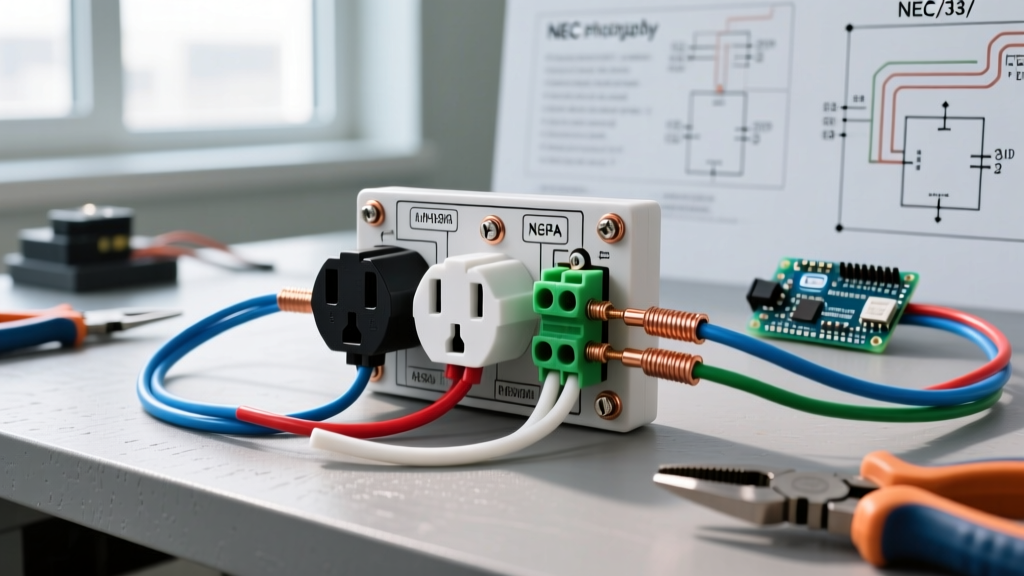
When homeowners and DIYers refer to an English electrical outlet, they are referencing the BS 1363 standard—the ubiquitous 13-amp, 230V switched socket used across the United Kingdom. Unlike North American NEMA receptacles, the English electrical outlet features built-in safety shutters, a rectangular pin configuration, and an integrated 13A fuse within the plug itself. This design allows the socket to be wired on a 32A ring final circuit or a 20A radial circuit, protected by a miniature circuit breaker (MCB) or RCBO at the consumer unit.
Replacing or installing a new BS 1363 socket is a common home improvement task. However, working with 230V AC requires strict adherence to safety protocols and an understanding of modern harmonized cable colors. In this comprehensive guide, we will walk through the exact procedure for installing a premium English electrical outlet, specifically using the industry-standard MK Logic Plus 13A 1-Gang Switched Socket as our reference model.
Safety, Compliance, and Part P Regulations
Before touching any screwdriver, you must understand the legal and safety framework governing electrical work in England and Wales. Under Part P of the Building Regulations, any electrical work in kitchens, bathrooms, or outdoors must be notified to your local building control body unless carried out by a certified competent person. Replacing an existing socket in a standard living room or bedroom on an existing circuit is generally considered non-notifiable minor work, provided you do not alter the circuit's fundamental design.
Expert Warning: Never rely on a standard digital multimeter to verify a dead circuit. Multimeters can have blown internal fuses or be set to the wrong range, giving a false 'dead' reading. Always use a dedicated, GS38-compliant voltage indicator.
Furthermore, all installations must comply with BS 7671 (The IET Wiring Regulations, 18th Edition). This dictates everything from cable sizing and routing to terminal torque specifications and earth loop impedance limits.
Required Tools and Materials Matrix
To achieve a professional, code-compliant installation, you need the right equipment. Below is a breakdown of the specific tools required for wiring an English electrical outlet in 2026, along with estimated retail pricing.
| Item Category | Recommended Brand / Model | Estimated Cost (GBP) | Purpose |
|---|---|---|---|
| Socket Outlet | MK Logic Plus K9901 WHI (13A) | £7.50 - £9.00 | High-impact, UV-resistant BS 1363 socket |
| Voltage Tester | Martindale EZ150 (GS38 Compliant) | £28.00 - £32.00 | Safe isolation and dead-circuit verification |
| Screwdrivers | Wiha VDE Insulated Set (1000V) | £25.00 - £40.00 | Prevents shock and prevents terminal damage |
| Wire Strippers | Knipex MultiStrip 10 (12-1000) | £55.00 - £65.00 | Strips 2.5mm² T&E without nicking copper |
| Earth Sleeving | Green/Yellow PVC (4mm ID) | £3.00 per roll | Mandatory insulation for bare CPC wire |
Step-by-Step Installation Guide
Follow this precise sequence to ensure your English electrical outlet is wired safely, securely, and in compliance with the 18th Edition Wiring Regulations.
Step 1: Safe Isolation Procedure
- Locate the MCB/RCBO: Identify the correct breaker at your consumer unit. If the socket is on a ring final circuit, turn off the 32A MCB. If it is a radial circuit, turn off the corresponding 16A or 20A breaker.
- Prove the Tester: Test your Martindale voltage indicator on a known live source (like a proving unit or a verified live socket) to ensure the tester's battery and neon/LED indicators are functioning.
- Test for Dead: Insert the tester probes into the Live and Neutral slots of the target English electrical outlet. Verify zero voltage. Test between Live and Earth, and Neutral and Earth.
- Re-Prove: Test the voltage indicator on the known live source again to confirm it did not fail during the testing process.
- Lock Off: Place a physical padlock on the consumer unit breaker and attach a warning tag to prevent accidental re-energization.
Step 2: Removal and Inspection
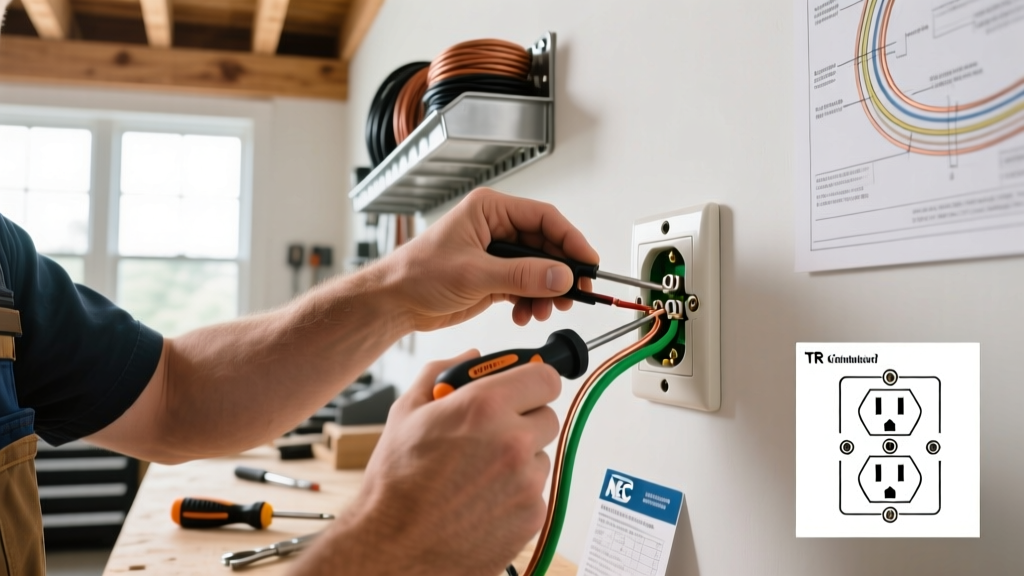
Unscrew the front plate of the existing socket. Gently pull it forward to expose the backbox and wiring. Inspect the 2.5mm² twin and earth (T&E) cable. If the PVC insulation is brittle, cracked, or shows signs of thermal damage (browning around the terminals), you must cut back the damaged section and pull fresh cable from the wall cavity, or consult a certified electrician.
Step 3: Cable Preparation and Sleeving
The Circuit Protective Conductor (CPC), or earth wire, in standard UK T&E cable is bare copper. It is a severe safety defect to terminate bare earth wire into a socket terminal.
- Cut a piece of green/yellow PVC sleeving and slide it over the bare earth wire, pushing it all the way down to the outer grey sheath of the cable.
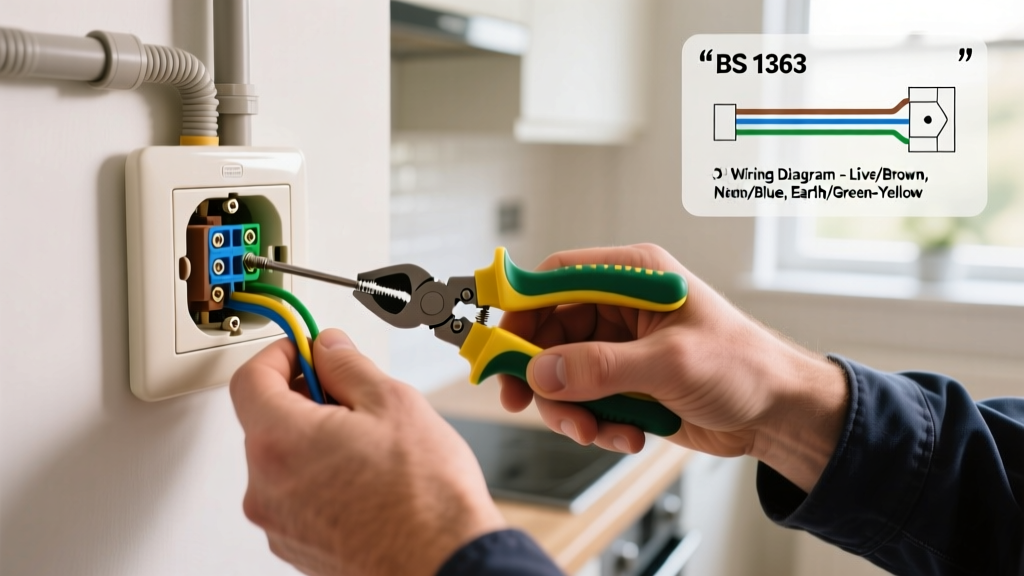
- Using your Knipex wire strippers, remove exactly 12mm to 14mm of insulation from the Brown (Live), Blue (Neutral), and Green/Yellow (Earth) wires. Exposed copper outside the terminal block is a major fault; insulation trapped inside the terminal causes a high-resistance connection and subsequent arcing.
Step 4: Termination Sequence
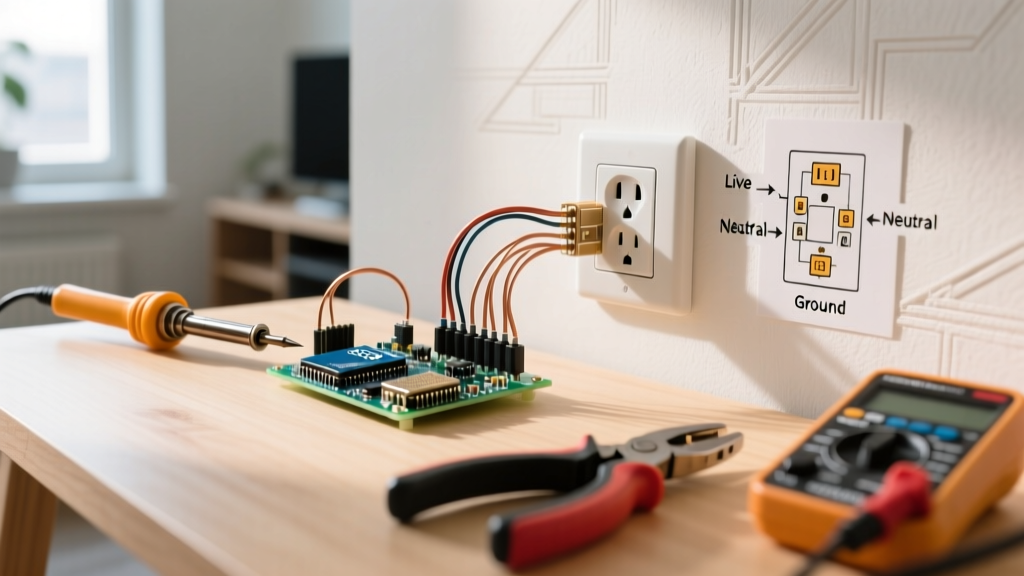
Wire the MK Logic Plus socket according to the harmonized color codes mandated for all English electrical outlets:
- Earth (E): Connect the Green/Yellow wire to the top center terminal. This must be connected first and left slightly longer than the L and N wires so that if the cable is pulled, the earth disconnects last.
- Neutral (N): Connect the Blue wire to the bottom left terminal.
- Live (L): Connect the Brown wire to the bottom right terminal (usually marked with a fuse symbol or red indicator).
Pro-Tip: Tighten the terminal screws firmly. If using a torque screwdriver, set it to 1.2 Nm to 1.5 Nm (check the manufacturer's spec on the back of the socket). Over-tightening will shear the 2.5mm² stranded copper, reducing the cross-sectional area and creating a hot spot.
Step 5: Mounting and Leveling
Fold the wires neatly into the 25mm or 35mm steel backbox. Use a 'snake' folding technique rather than cramming them in, which can pinch the insulation against the sharp metal edges of the backbox. Align the front plate, insert the two M3.5 machine screws, and use a small spirit level to ensure the socket is perfectly horizontal before fully tightening.
Step 6: Final Live Testing
Remove the lockout tag, re-energize the MCB at the consumer unit, and switch on the new English electrical outlet. Use a dedicated socket tester (such as the Martindale EZ Socket) to verify correct polarity, earth presence, and proper RCD tripping times.
UK vs. North American Outlet Comparison
For expats or DIYers working on international properties, it is vital to understand how the English electrical outlet differs from the standard US/Canadian receptacle. The architectural and safety philosophies are entirely different.
| Feature | English Electrical Outlet (BS 1363) | North American Outlet (NEMA 5-15) |
|---|---|---|
| Voltage / Frequency | 230V / 50Hz | 120V / 60Hz |
| Standard Rating | 13 Amps (Fused at plug) | 15 Amps (Breaker protected) |
| Circuit Topology | 32A Ring Final or 20A Radial | 15A/20A Branch Radial |
| Safety Shutters | Mandatory internal mechanical shutters | TR (Tamper Resistant) required in new builds |
| Wire Colors (Modern) | Brown (L), Blue (N), Grn/Yel (E) | Black (L), White (N), Bare/Grn (E) |
Troubleshooting and Common Failure Modes
Even experienced DIYers make mistakes when wiring an English electrical outlet. According to data published by Electrical Safety First, poor DIY electrical work is a leading cause of domestic fires. Watch out for these specific failure modes:
- Thermal Runaway from Loose Neutrals: If the blue neutral wire is not seated fully in the terminal, the increased resistance generates heat. Over time, this melts the PVC insulation and the socket's thermoset plastic, leading to a short circuit or fire. Always perform a 'pull test' on each wire after tightening.
- Missing Earth Sleeving: Leaving the bare CPC exposed inside the backbox or terminal is an immediate fail on an Electrical Installation Condition Report (EICR). It risks shorting against the metal backbox or the Live terminal if a wire slips.
- Daisy-Chaining on Radials: While 'ring' circuits allow for spurring and looping, adding multiple sockets in series (daisy-chaining) on a 16A radial circuit without calculating the total load can easily overload the cable, as 2.5mm² wire clipped direct is only rated for roughly 27A. Always verify the circuit design before adding new outlets.
- Cracked Plaster / Backbox Misalignment: If the drywall around the backbox is crumbling, the M3.5 lugs on the socket will not grip. Use specialized drywall socket repair clips or apply a fast-setting bonding compound (like Polyfilla OneFill) around the backbox edges to stabilize the mounting surface before screwing the faceplate down.
Final Thoughts on Quality Components
When sourcing an English electrical outlet, avoid unbranded, ultra-cheap imports found on online marketplaces. Premium brands like MK (Eaton), Crabtree, and BG Electrical use high-grade urea-formaldehyde or polycarbonate faceplates that resist yellowing and impact, and their internal brass terminal tubes provide superior clamping force on stranded copper. Spending an extra £3 per socket is a negligible cost for decades of safe, reliable operation in your home.