
The Professional's Toolkit for Wiring an Electrical Outlet
When it comes to wiring an electrical outlet, the margin for error is zero. A poorly executed connection can lead to voltage drops, arcing, or catastrophic electrical fires. While many DIY guides focus solely on the step-by-step wiring process, the foundation of a safe, code-compliant installation lies in using the correct, professional-grade tools and materials. In 2026, with the widespread adoption of the latest National Electrical Code (NEC) standards, understanding the precise specifications of your components is just as critical as knowing how to strip a wire.
This comprehensive tool and material guide cuts through the fluff, providing exact model numbers, current pricing, and engineering insights to ensure your next receptacle installation is both safe and durable.
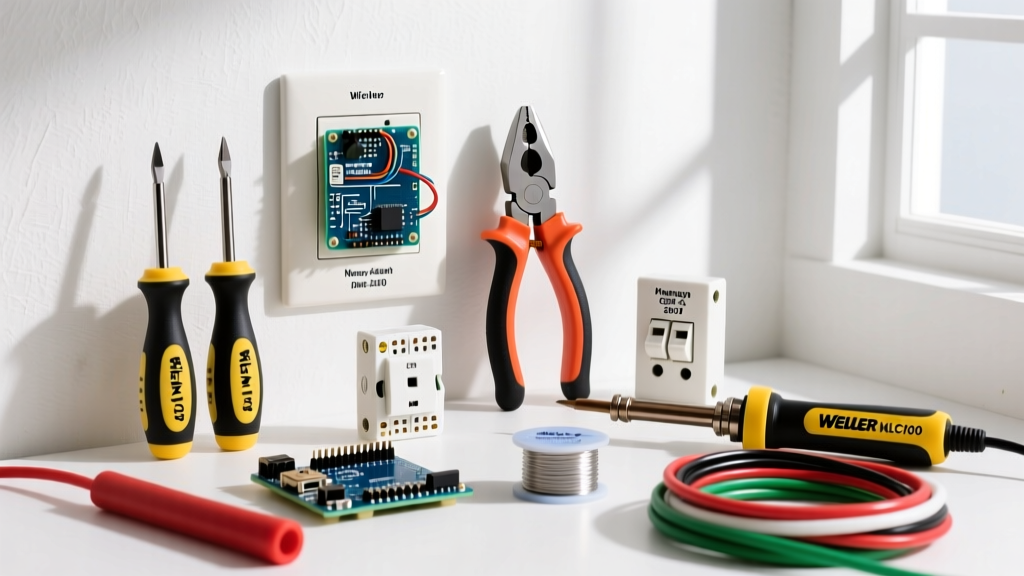
Core Hand Tools: Precision Over Price
Cheap tools damage conductors and compromise safety. When wiring an electrical outlet, you need tools that offer ergonomic control and precise calibration.
1. Wire Strippers and Cutters
Do not use a utility knife or uncalibrated pliers to strip NM-B (Romex) cable. Nicks in the copper conductor create localized hot spots under load, leading to premature failure.
- Top Pick: Klein Tools 11063W Katapult Wire Stripper ($28 - $32)
- Why it matters: This model cleanly strips 10-20 AWG solid and stranded wire without scoring the copper. The shearing mechanism cuts cleanly, and the built-in hole for bending wire loops ensures your terminal hooks are perfectly shaped for side-wiring.
2. Insulated Screwdrivers
Standard hardware store screwdrivers can transfer voltage if the shaft contacts a live terminal. Always use VDE-certified, 1000V-rated insulated drivers.
- Top Pick: Wiha 32090 Insulated Slotted/Phillips Set ($35 - $45)
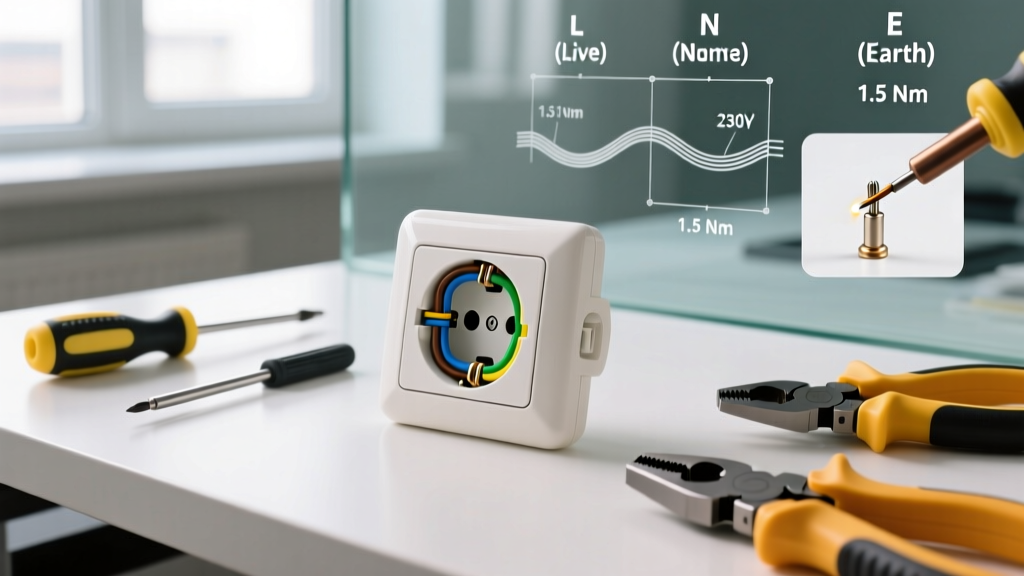
- Pro Tip: For commercial or high-end residential work, the 2023/2026 NEC increasingly emphasizes manufacturer torque specifications. Investing in a calibrated torque screwdriver, like the Klein Tools 60176 ($110), ensures terminal screws are tightened exactly to the receptacle's listed inch-pound rating, preventing thermal creep.
3. Cable Ripper
Scoring the PVC jacket of a 12/2 or 14/2 NM cable with a blade often slices into the paper separator or the wire insulation itself.
- Top Pick: Ideal 45-122 Reflex T-Handle Cable Ripper ($12 - $15)
- Usage: This tool uses a concealed, spring-loaded blade that slits the outer jacket lengthwise without ever touching the internal THHN/THWN conductors.
Essential Testing & Safety Equipment
Before exposing a single wire, you must verify the absence of voltage. Relying solely on the main breaker panel labeling is a fatal mistake; circuits are frequently mislabeled or shared across multiple breakers.
Non-Contact Voltage Tester (NCVT)
The Fluke 2AC VoltAlert ($35) is the industry standard. It detects AC voltage from 90V to 1000V without requiring direct metallic contact. Always test a known live circuit first to verify the tool's battery and functionality before testing the target outlet.
Digital Multimeter (DMM)
For verifying exact line voltage (expect 120V ±5%) and checking ground continuity, a True-RMS multimeter like the Fluke 117 ($200 - $220) provides the low-impedance (LoZ) mode necessary to eliminate ghost voltage readings on long wire runs.
Material Selection: Receptacles, Boxes, and Wire
Selecting the right materials ensures compliance with the National Fire Protection Association (NFPA) NEC guidelines and guarantees long-term reliability.
1. The Receptacle: Tamper-Resistant (TR) Mandates
Per NEC Article 406.12, all 15A and 20A, 125V and 250V receptacles installed in dwelling units must be Tamper-Resistant (TR). The U.S. Consumer Product Safety Commission (CPSC) highlights that TR receptacles feature internal shutters that only open when equal pressure is applied to both slots simultaneously, preventing children from inserting foreign objects.
- 15-Amp Standard: Leviton T5262-E Tamper-Resistant Duplex ($2.50 - $3.00 per unit). Features brass face contacts and a steel strap for superior ground retention.
- 20-Amp Heavy Duty: Hubbell 5262-I (Hospital Grade). Priced around $14.00, this is necessary for kitchen small-appliance branches or laundry circuits where high continuous draws (like microwaves or space heaters) are expected.
2. Wire Gauge and Type
- 15-Amp Circuits: Require minimum 14 AWG copper. However, many pros exclusively pull 12 AWG Southwire SIMpull ($0.75/ft) even on 15A breakers to reduce voltage drop on long runs and allow for future breaker upgrades.
- 20-Amp Circuits: Strictly require 12 AWG copper. Never use 14 AWG on a 20A breaker; it is a severe fire hazard and an immediate code violation.
3. Electrical Boxes and Fill Calculations
NEC Article 314.16 dictates box fill capacities. A standard single-gang receptacle (1 device), with one 12/2 cable entering (2 conductors), plus the internal clamp and grounding wires, requires a minimum box volume of 18 cubic inches for 12 AWG wire. Using a shallow 14 cu. in. box will result in overcrowded wires, crushing insulation and causing short circuits.
Wire Connectors: Wago Lever-Nuts vs. Traditional Wire Nuts
How you splice your pigtails to the outlet is critical. The industry is rapidly shifting from twisted wire nuts to lever-actuated push-in connectors.
| Feature | Wago 221 Series (Lever-Nuts) | Ideal WireNut (Twist-On) |
|---|---|---|
| Model | 221-413 (3-Port) | 74B (Blue) / 75B (Yellow) |
| Cost per Unit | $0.55 - $0.70 | $0.10 - $0.15 |
| Installation Speed | Extremely Fast (Strip and clamp) | Moderate (Requires twisting torque) |
| Connection Integrity | Gas-tight, constant spring pressure | Relies on installer torque and friction |
| Verifiability | Transparent housing, visible strip length | Opaque, requires tug-test |
Expert Insight: When wiring an electrical outlet in a tight, deep box, Wago 221 connectors are vastly superior. They eliminate the physical bulk of twisted wire nut clusters, making it significantly easier to fold the wires into the back of the box without stressing the terminal screws.
Common Failure Modes & Tool-Related Mistakes
Even with the right tools, improper technique leads to callbacks and hazards. Be aware of these specific failure modes:
1. The 'Backstab' Trap
Many budget receptacles feature push-in 'backstab' terminals on the rear. Never use these. They rely on a small internal spring clip that bites into the wire. Under continuous loads (like a 12A space heater), thermal expansion and contraction cause the spring to lose tension over time, resulting in a high-resistance connection, arcing, and melted plastic. Always use the side-screw terminals or, preferably, a Wago pigtail connection.
2. Over-Stripping and Exposed Copper
Using the wrong gauge hole on a wire stripper often results in removing too much insulation. If bare copper is visible outside the receptacle terminal housing, the exposed conductor can arc against the metal box or adjacent grounds. Maintain a strict 3/4-inch strip length for standard side-wiring.
3. Reversed Polarity and Open Grounds
Always wire the brass (hot) terminal to the black wire, and the silver (neutral) terminal to the white wire. Reversing these leaves the internal fuse or switch mechanism of plugged-in appliances energized even when turned off. Verify your work using a 3-prong receptacle tester (e.g., Gardner Bender GRT-501, $12) immediately after restoring power.
Estimated Budget for a Pro-Grade Single Outlet Install
If you are upgrading your toolkit specifically for residential wiring, here is what you should expect to invest in 2026 for a professional, single-outlet replacement job (excluding the initial purchase of bulk tools like multimeters).
| Item | Specification | Estimated Cost |
|---|---|---|
| Receptacle | Leviton 15A TR Duplex | $2.75 |
| Connectors | Wago 221-413 (x3 for Hot/Neutral/Ground) | $1.80 |
| Pigtail Wire | 12 AWG THHN (approx. 18 inches total) | $0.40 |
| Wall Plate | Leviton Decora Plus (Screwless) | $3.50 |
| Total Materials | Per Outlet | $8.45 |
Final Safety Directives
Electrical work demands respect for the physics of current and resistance. Always lock out and tag out (LOTO) the breaker at the main panel before beginning work, as mandated by Occupational Safety and Health Administration (OSHA) guidelines for electrical safety. Verify the circuit is dead with a calibrated NCVT and multimeter. By investing in the precise tools and NEC-compliant materials outlined above, you ensure that the outlet you wire today will safely serve its purpose for decades to come.