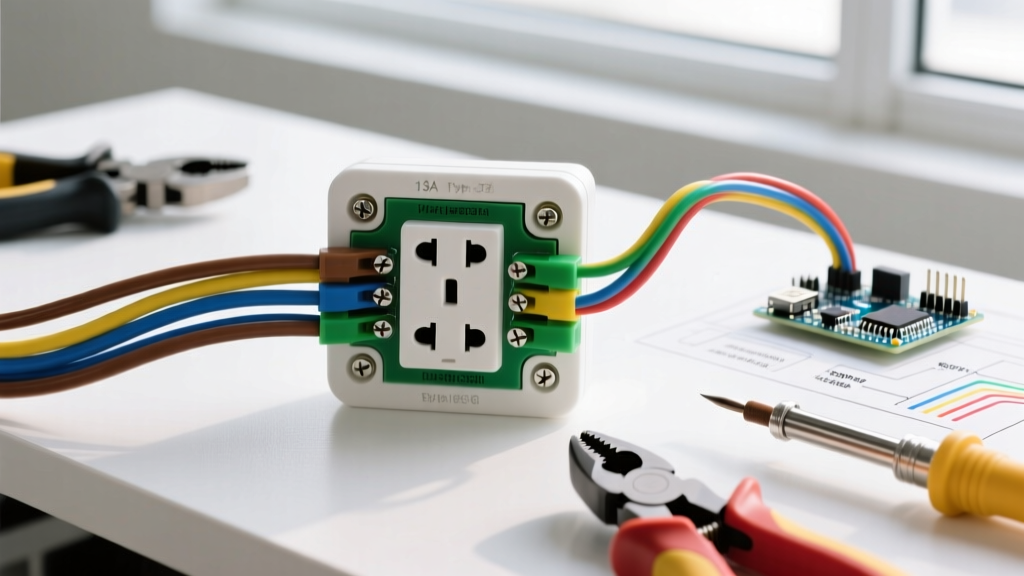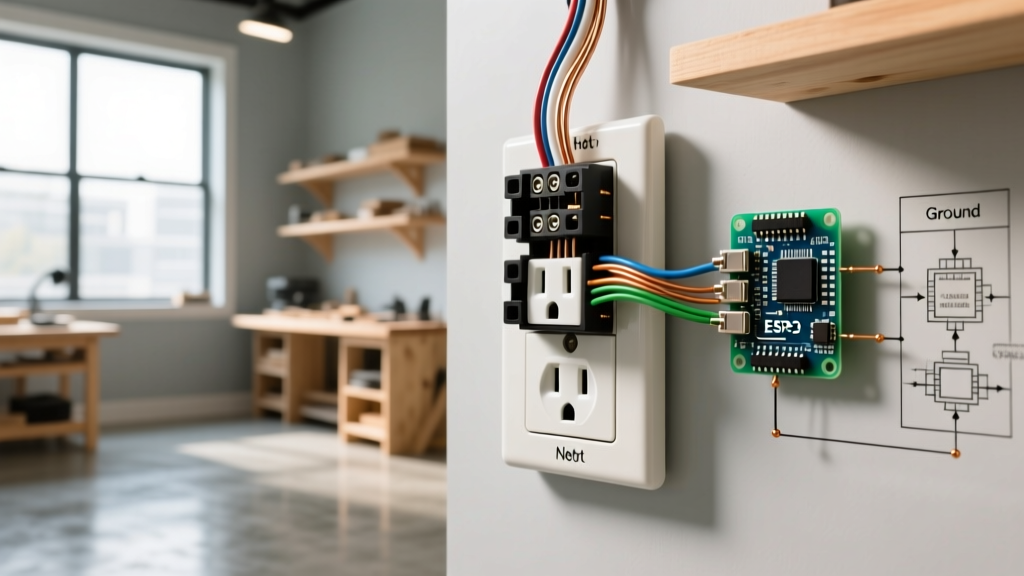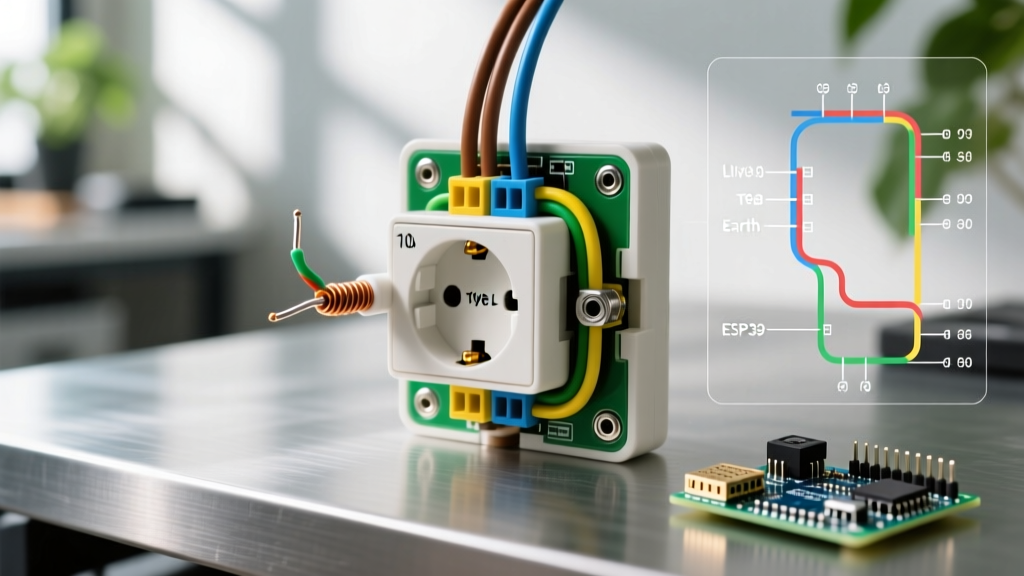

Decoding the Italy Electrical Outlet Type (CEI 23-50 Standard)
When tackling electrical renovations in Italy, upgrading a historic property, or installing specialized European equipment, understanding the Italy electrical outlet type is non-negotiable. Unlike the standardized Type F (Schuko) used across most of mainland Europe, Italy relies on its own unique CEI 23-50 standard, universally known as Type L. For beginners, the presence of three inline pins—and the historical split between 10-amp and 16-amp circuits—can be deeply confusing.
This beginner installation tutorial will demystify the Italy electrical outlet type, guiding you through the physical differences, wiring color codes, and step-by-step installation procedures using modern Italian flush-mount systems. Whether you are replacing a damaged receptacle or wiring a new scatola da incasso (flush-mount box), this guide provides the exact specifications you need for a safe, code-compliant installation in 2026.
10A vs 16A vs Bipasso: Which Receptacle Do You Need?
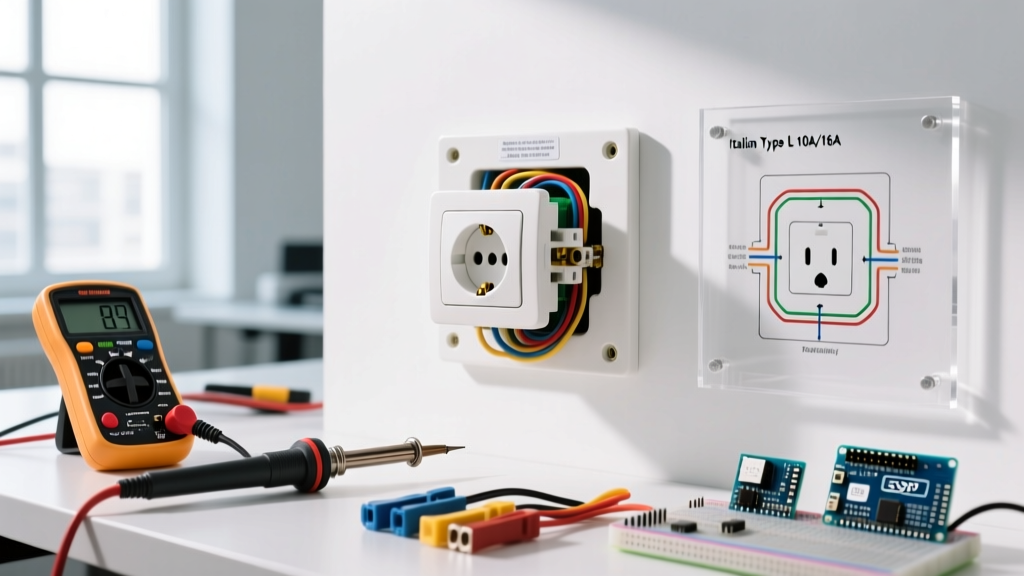
Historically, Italy utilized two distinct plug and socket sizes based on the amperage of the circuit. Plugging a 16A appliance into a 10A socket was physically impossible, leading to widespread frustration. Today, the industry standard is the Bipasso (or Schuko/Type L hybrid) outlet, which accepts multiple plug types. According to the IEC World Plugs database, Type L features three round pins in a straight line, with the center pin dedicated to earth grounding.
| Outlet Variant | Pin Diameter | Pin Spacing | Max Load | Best Application |
|---|---|---|---|---|
| 10A (CEI 23-16) | 4.0 mm | 19 mm | 2300W | Lighting circuits, small appliances, TVs. |
| 16A (CEI 23-16) | 5.0 mm | 26 mm | 3680W | Washing machines, ovens, HVAC units. |
| Bipasso / Schuko | Accepts 4mm & 5mm | 19mm / 26mm | 3680W | General purpose, modern renovations, travel adapters. |
Expert Tip: For any new installation in 2026, always purchase Bipasso receptacles with integrated Schuko compatibility (often branded as 'Multistandard'). This ensures compatibility with both native Italian appliances and imported German/EU Schuko plugs.
Essential Tools and Materials
Before opening your electrical panel, gather the following specific tools. Do not use standard hardware store screwdrivers; Italian electrical codes require proper insulation and torque.
- VDE Insulated Screwdrivers: Rated for 1000V (Flathead 3.5mm and Pozidriv PZ1/PZ2).
- Wire Strippers: Calibrated for 1.5 mm² and 2.5 mm² solid copper wire.
- Voltage Tester: A non-contact voltage detector or a digital multimeter (e.g., Fluke 117).
- The Receptacle: A modern Bipasso module. The BTicino Living Now K4003N or Vimar Arké 20558 are premium, widely available choices in Italy, typically costing between €6 and €12 per module.
- Phase/Neutral/Earth Wires: 2.5 mm² for 16A circuits; 1.5 mm² for 10A lighting circuits.
Step-by-Step Installation Tutorial
Installing the Italy electrical outlet type requires strict adherence to local color codes, which align with IEC standards but may differ in older, unrenovated Italian homes.
Step 1: Power Isolation and Box Preparation
- Locate your main electrical panel (quadro elettrico) and switch off the specific breaker for the room you are working in. In Italy, breakers are often labeled by room (e.g., 'Cucina', 'Notte') rather than by amperage.
- Test the existing outlet with your multimeter to confirm zero voltage.
- Unscrew the faceplate and extract the existing module from the wall box. Italian homes typically use rectangular 3-module boxes (503 standard) or round boxes (scatola rotonda) in older masonry walls.
Step 2: Wire Stripping and Preparation
Modern Italian receptacles like the BTicino Living Now series utilize either screw-clamp terminals or push-in quick-connect terminals.
- For Screw Terminals: Strip exactly 12mm of insulation. Do not leave bare copper exposed outside the terminal block, as this creates a shock hazard and violates CEI 64-8 standards.
- For Push-In Terminals: Strip exactly 14mm of insulation to ensure the internal brass catch fully engages the copper core.
Step 3: Terminal Wiring (Phase, Neutral, Earth)
The inline configuration of the Italy electrical outlet type means the earth pin is always in the center. However, the placement of Phase and Neutral on the left and right is a frequent point of confusion.
⚠️ CRITICAL SAFETY WARNING: While the CEI standard does not strictly mandate Phase on the left or right for standard Type L sockets, it is universal Italian best practice to wire Phase (L) on the LEFT and Neutral (N) on the RIGHT when facing the socket. The Earth (E) always goes to the CENTER pin. Reversing Phase and Neutral will not stop a basic lamp from working, but it will leave appliance internal circuitry energized even when switched off, creating a severe shock hazard during maintenance.
| Terminal | Modern Wire Color (IEC) | Legacy Wire Color (Pre-1990s) | Symbol on Outlet |
|---|---|---|---|
| Phase (Line) | Brown (or Black/White) | Red, Purple, or Grey | L |
| Neutral | Light Blue | Blue or Black | N |
| Earth (Ground) | Yellow / Green Stripe | Yellow / Green Stripe | ⏚ (Center Pin) |
Insert the wires into the designated terminals. If using screw terminals, tighten them to a maximum torque of 0.8 Nm. Give each wire a firm tug to ensure it is seated properly.
Step 4: Mounting and Faceplate Installation
Push the wires neatly into the back of the scatola 503 (wall box). Use the lateral expansion claws or the provided M4 machine screws to secure the outlet module to the box. Snap on the decorative faceplate and restore power at the main breaker. Test the outlet using a standard Italian appliance or a socket tester.
Navigating Italian Wall Boxes (Scatole da Incasso)
One of the most common hurdles for beginners working with the Italy electrical outlet type is the wall box itself. Unlike the US, which uses standard rectangular nail-on boxes, or the UK, which uses deep square drywall boxes, Italy predominantly uses shallow, rectangular brick-mount boxes.
- Scatola 503 (3-Module Box): The standard rectangular box measuring roughly 90mm x 42mm. It holds exactly three standard modules (e.g., two outlets and one switch, or one Bipasso outlet and two blank covers).
- Scatola 504 (4-Module Box): Slightly wider, used when a 4th module (like a USB charger or smart home relay) is needed.
- Scatola Rotonda (Round Box): Found in homes built before the 1970s. If you are replacing an outlet in a round box, you must use a specialized round-to-rectangular adapter frame (adattatore per scatola rotonda) to mount modern 3-module Italian faceplates.
Common Beginner Mistakes and Troubleshooting
Even with careful preparation, beginners often encounter specific edge cases when wiring Italian receptacles. Here is how to troubleshoot them:
1. The RCD (Salvavita) Trips Immediately
In Italy, the main breaker panel includes an RCD (Residual Current Device), colloquially called the Salvavita. If it trips the moment you plug in an appliance or flip the breaker, you have likely swapped the Neutral and Earth wires, or a bare copper strand is touching the metal wall box. Turn off the power, open the outlet, and verify that the Blue wire is strictly on 'N' and the Yellow/Green is strictly on the center '⏚' pin.
2. The Plug Feels Loose or Falls Out
This occurs when a 10A plug (4mm pins) is inserted into a worn-out 16A-only socket (5mm pin holes). As noted by World Standards, older 16A sockets lack the internal leaf springs required to grip smaller 10A pins. The only safe fix is to replace the receptacle with a modern Bipasso module, which features dual-tension internal contacts designed to grip both 4mm and 5mm pins securely.
3. Shallow Box Wire Crowding
Italian 503 boxes are notoriously shallow (often only 45mm deep). If you are running 2.5 mm² stiff copper wire, bending it to fit behind the outlet can push the module out of the wall. Solution: Use a slightly deeper 'scatola da incasso' during the rough-in phase, or use a specialized wire-folding tool to create tight, flat zig-zag bends rather than looping the wire, which takes up too much volume.
Frequently Asked Questions
Can I install a standard German Schuko outlet in Italy?
Yes, but it requires a specific mounting frame. Because Schuko outlets are round and deeper than Italian modules, you cannot drop them into a standard Italian 503 box. You must use an adapter frame (like the BTicino Matix adapter) that allows a round Schuko socket to mount onto a rectangular Italian faceplate. However, for aesthetic consistency, a Bipasso outlet is highly recommended.
Do I need a permit to replace an Italy electrical outlet type?
Under Italian law (Decreto Ministeriale 37/08), any modification or expansion of an electrical system requires a certified electrician and a Declaration of Conformity. However, simple maintenance—such as swapping a broken outlet for an identical replacement without altering the wiring or adding new circuits—can legally be performed by a homeowner. If you are adding a new outlet or running new wire, you must hire a licensed professional.
Where can I find the official CEI wiring standards?
The definitive guide for Italian electrical installations is the CEI 64-8 standard. For a comprehensive breakdown of the physical plug and socket dimensions, refer to the CEI 23-50 standard documentation. Always ensure any receptacle you purchase bears the CE mark and the IMQ (Istituto Marchio di Qualità) certification logo, which guarantees it has passed rigorous Italian safety testing.