
Mastering the GFCI Electrical Outlet Installation: A Pro’s Tool & Material Guide
Swapping a standard receptacle for a GFCI electrical outlet is one of the most critical safety upgrades you can perform in a modern home. Ground Fault Circuit Interrupters monitor the balance of electrical current moving through a circuit, cutting power in as little as 1/40th of a second if a ground fault is detected. However, the physical installation requires more than just a standard screwdriver and a pair of pliers. Because GFCI devices are bulkier and feature complex line/load terminal requirements, using the correct tools and materials is non-negotiable for a safe, code-compliant result.
Safety & Code Context: According to the National Electrical Code (NEC), GFCI protection is mandatory in kitchens, bathrooms, garages, crawlspaces, and outdoor areas. As of 2026, most municipalities have adopted the 2023 NEC updates, which further expanded GFCI requirements to include all 125V through 250V receptacles supplied by single-phase branch circuits in these hazardous locations.
According to the Consumer Product Safety Commission (CPSC), GFCIs have prevented thousands of electrocutions over the last four decades. To ensure your installation meets these life-saving standards, you need a specialized toolkit. Below is the definitive guide to the tools, materials, and specific receptacle models required for a flawless installation.
The Core Component: Selecting the Right GFCI Receptacle
Not all GFCI receptacles are created equal. Modern code requires Tamper-Resistant (TR) shutters in almost all residential applications to prevent children from inserting foreign objects. Furthermore, modern units feature auto-monitoring (self-testing) capabilities as mandated by UL 943 standards.
| Brand & Model | Amp Rating | Estimated Price (2026) | Key Features & Best Use Case |
|---|---|---|---|
| Leviton GFNT2-W | 20A | $22 - $26 | Self-testing, TR, slim profile for easier box fitment. Ideal for kitchen countertops. |
| Eaton TRGF20W3 | 20A | $19 - $24 | High-impact thermoplastic, side-wiring clamps. Excellent for high-traffic commercial or garage use. |
| Pass & Seymour 2095TRW | 20A | $24 - $29 | Auto-monitoring, patented reset lockout (prevents reset if GFCI is compromised). Best for bathrooms. |
| Leviton GFWT2-W | 20A | $32 - $38 | Weather-Resistant (WR) rated with UV-stabilized polymers. Mandatory for outdoor patio installations. |
Essential Hand Tools for GFCI Wiring
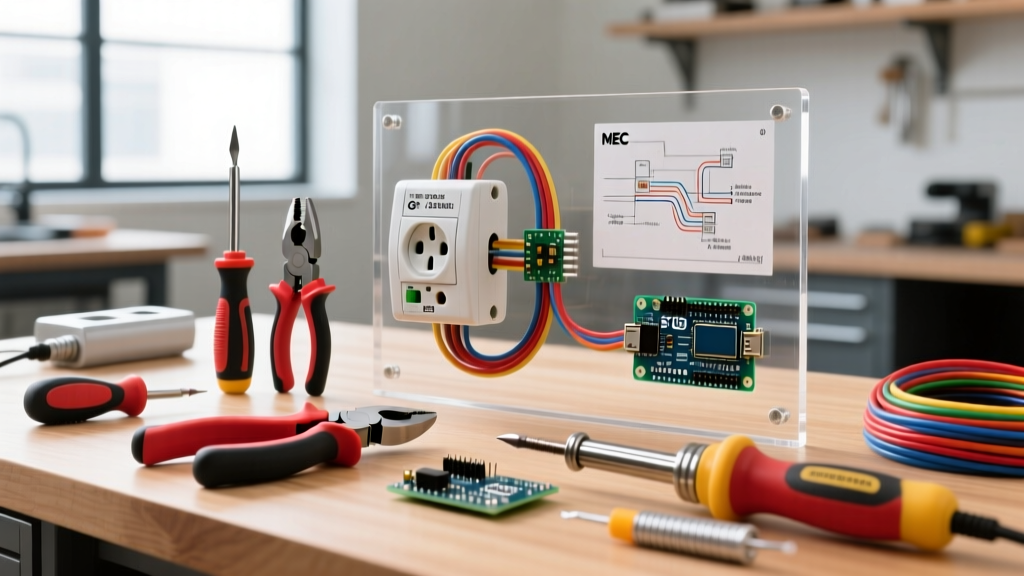
The physical depth of a GFCI electrical outlet (often exceeding 1.75 inches) and the strict terminal torque requirements mean your standard household toolbox won't suffice. Here are the specific tools professional electricians use.
1. Non-Contact Voltage Tester (NCVT)
Never rely solely on the breaker panel labeling. You must verify the absence of voltage at the point of work. The Klein Tools NCVT-2 ($28) is the industry standard because it tests both standard (12-1000V AC) and low-voltage (70-1000V AC) ranges. Always test a known live source before and after testing your target outlet to verify the tool's battery and functionality.
2. Precision Wire Strippers
Damaging the copper conductor while stripping insulation creates a weak point that can snap under terminal torque. The Klein Tools 11055 ($35) features precision-machined stripping holes for 10-18 AWG solid and stranded wire. For 12 AWG wire (standard on 20-amp kitchen/bathroom circuits), use the exact 12 AWG hole to avoid nicking the copper.
3. Insulated Screwdrivers
While the power should always be off, insulated drivers protect against accidental contact with adjacent live circuits in crowded gang boxes. The Wiha 32090 Insulated Set ($45) provides VDE-rated protection up to 1000V. You will primarily use a #2 Phillips and a 3/16-inch slotted head for the brass and silver terminal screws.
4. Torque Screwdriver (The 2026 Code Essential)
Since NEC 2017 (and heavily enforced in 2023/2026 adoptions), terminals must be tightened to the manufacturer’s specified torque to prevent arcing and fires caused by loose connections. The Klein Tools 706/1 or a dedicated Wiha TorqueVario ($85-$120) set to the Leviton/Eaton spec (typically 14-16 inch-pounds for 12 AWG wire) is a mandatory investment for serious DIYers and pros alike.
Consumable Materials & Hardware
Beyond the receptacle itself, the following materials ensure a secure, long-lasting installation that passes inspection.
- Ideal PowerGrip Wire Connectors (Yellow/Red): Standard smooth-shell wire nuts often fail to grip 12 AWG solid copper securely. The Ideal Twister PowerGrip features a coiled steel insert that bites into the copper, ensuring a rock-solid pigtail connection. ($6 for a 50-pack).
- 3M Super 33+ Electrical Tape: While modern GFCIs feature screw-plate clamping (eliminating the need to loop wires around screws), if you must use the side-terminal loop method, wrapping the base of the terminal with 3M Super 33+ prevents accidental shorting against the metal gang box. ($4 per roll).
- C.R. Laurene Nylon Outlet Shims: GFCI outlets are incredibly deep. When installed in older plaster rings or shallow boxes, the yoke (mounting strap) often fails to sit flush against the drywall, causing the receptacle to rock or crack the cover plate. Nylon shims ($3 for a 10-pack) bridge this gap perfectly without compressing over time like cardboard.
- 12/2 or 12/3 NM-B Cable (If extending): If you are adding downstream load protection, ensure you are using 12 AWG cable for 20A circuits. Southwire Romex SIMpull is the standard ($45-$60 per 50ft coil).
Critical Edge Cases & Troubleshooting
Even with the right tools, GFCI installations frequently fail due to specific wiring anomalies. Understanding these edge cases separates amateurs from experts.
The Line vs. Load Reversal
The most common failure mode in GFCI installation is reversing the Line (power from the panel) and Load (power continuing to downstream outlets) wires. If reversed, the GFCI will power the receptacle and allow you to reset it, but it will not provide ground fault protection, and downstream outlets will remain dead. Always use your NCVT and a multimeter to positively identify the Line wires before connecting them to the black 'LINE' terminals.
Multi-Wire Branch Circuits (MWBC)
If your gang box contains two hot wires on different phases sharing a single neutral (an MWBC), you cannot use the downstream Load terminals on a standard GFCI electrical outlet. The opposing magnetic fields from the two phases will cause the GFCI's internal current transformer to detect a false imbalance, resulting in constant, un-resettable tripping. In an MWBC scenario, you must pigtail the neutral and hot wires, protecting only the single receptacle, or use a specialized 2-pole GFCI breaker in the main panel.
Box Fill Capacity Violations
GFCI bodies consume significant space. According to NEC Article 314.16, each 12 AWG conductor counts as 2.25 cubic inches. A standard GFCI device counts as two conductors (4.5 cubic inches). If your box contains four 12 AWG cables (8 wires) plus grounds and clamps, you need a minimum box volume of 27 cubic inches. Attempting to cram a GFCI into a standard 18 cubic inch 'old work' box will damage the wire insulation and violate fire codes. Always upgrade to a deep 22.5 or 24 cubic inch box when retrofitting.
Pre-Installation Material Checklist
Before turning off the breaker, verify you have the following staged at your workspace:
- Verify GFCI model matches circuit amperage (15A or 20A) and environment (Indoor TR vs. Outdoor WR).
- Confirm deep gang box capacity (minimum 22.5 cubic inches for 12 AWG).
- Stage Klein NCVT-2 and Wiha insulated drivers.
- Pre-cut yellow Ideal PowerGrip pigtails (6 inches long) with 3/4 inch of stripped insulation.
- Set torque screwdriver to 14 in-lbs (or manufacturer spec printed on the device).
- Have nylon shims and extra-long 6-32 mounting screws ready for deep-box installations.
For more comprehensive safety data and troubleshooting guidelines, always refer to the Electrical Safety Foundation International (ESFI) resources on ground fault protection. By combining NEC-compliant materials with precision tools, your GFCI electrical outlet installation will provide decades of reliable, life-saving protection.