
Introduction to Irish Electrical Upgrades
Ireland's housing stock is incredibly diverse, ranging from heritage Georgian townhouses to the rapid-build suburban estates of the 1970s and the modern, high-BER (Building Energy Rating) homes of today. If you live in a property built before the year 2000, there is a high probability that your wall sockets are outdated, unswitched, or lacking modern safety protections. Upgrading an electrical outlet in Ireland is not just an aesthetic choice; it is a critical safety intervention. With the widespread adoption of high-draw appliances and USB-C PD (Power Delivery) charging, legacy sockets are struggling to keep up with modern electrical demands.
In this comprehensive 2026 guide, we will break down the technical, legal, and practical aspects of replacing and upgrading wall sockets in the Republic of Ireland. We will cover the transition to the I.S. 10101:2020 wiring rules, compare top-tier brands available from Irish electrical wholesalers, and provide a meticulous step-by-step replacement protocol.
⚠️ Irish Legal & Safety Notice: Under Irish law, specific electrical works are classified as "Restricted Works" and must be carried out by a registered electrical contractor (REC). While replacing a like-for-like socket faceplate in a standard room is generally considered non-notifiable maintenance, any alteration to circuit wiring, addition of new outlets, or work in special locations (like bathrooms) requires a certified professional registered with Safe Electric Ireland. Always prioritize safety and legality over DIY ambition.Understanding the Irish Standard: I.S. 10101:2020
The cornerstone of all electrical work in the Republic of Ireland is the I.S. 10101:2020 (National Rules for Electrical Installations). Published by the NSAI (National Standards Authority of Ireland), this document replaced the legacy ET101:2008 standard. When upgrading your sockets, you must ensure your installation aligns with the 2020 revisions.
Key Changes Affecting Socket Replacements
- Enhanced RCD Protection: I.S. 10101 mandates that all socket outlets rated up to 32A intended for general use by ordinary persons must be protected by a 30mA Residual Current Device (RCD). If your older home relies solely on MCBs (Miniature Circuit Breakers) without RCD or RCBO protection, upgrading the socket faceplate is insufficient; the distribution board (DB) must also be upgraded.
- USB Socket Regulations: With the rise of integrated USB-A and USB-C sockets, the standard specifies that the USB transformer module must not compromise the earth continuity of the socket. Always purchase ASTA-approved or equivalent certified USB sockets from reputable Irish suppliers.
- Fire Sealing: When cutting into plasterboard for dry-lining boxes, fire-rated hoods or intumescent seals are now strictly enforced to maintain the fire rating of partition walls.
Top Outlet Brands for Irish Homes (2026 Matrix)
The Irish market is dominated by a few key manufacturers that produce BS 1363 (Type G) compliant sockets. Below is a comparison of the most specified brands by Irish electrical contractors in 2026.
| Brand & Model Range | Type / Configuration | Avg. Price (EUR) | Best Application |
|---|---|---|---|
| MK Logic Plus | 2-Gang 13A Switched | €14.00 - €18.00 | The gold standard for Irish homes. Features neon indicators and robust, deep terminals for easy 2.5mm² ring wiring. |
| Schneider Electric Clic | 2-Gang Switched / USB-C PD | €18.00 - €35.00 | Modern aesthetic with tool-free cover plates. Their 65W USB-C PD models are ideal for home offices. |
| Crabtree (by Eaton) | 2-Gang Unswitched | €10.00 - €14.00 | Budget-friendly replacements for older unswitched legacy sockets in low-visibility areas. |
| Hager Symphony | 2-Gang Switched with LED | €16.00 - €20.00 | Premium finish, highly resistant to UV yellowing, favored in high-end residential builds. |
Step-by-Step Replacement Guide (For Competent DIYers)
Disclaimer: This guide is for educational purposes. If you are unsure about the condition of your wiring or lack a calibrated voltage tester, hire a RECI-registered electrician.
- Isolate the Circuit: Locate your main Distribution Board (DB). Switch off the specific MCB or RCBO controlling the socket circuit. Never rely solely on turning off the socket's local switch.
- Verify Dead: Use a CAT III or CAT IV approved two-pole voltage indicator (e.g., Fluke T5-1000 or Martindale VI-137) to test between Line and Neutral, Line and Earth, and Neutral and Earth. Confirm the socket is completely dead.
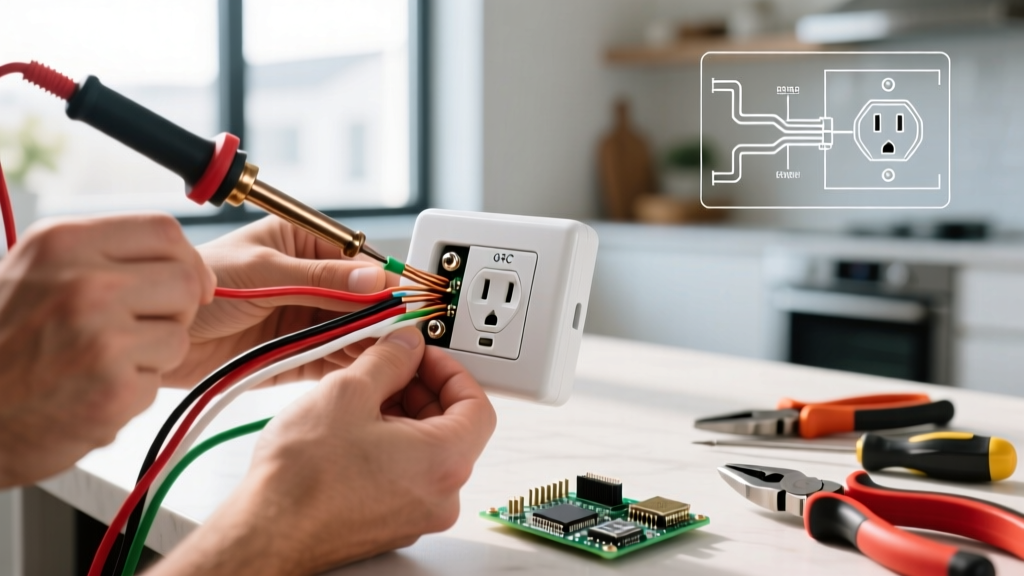
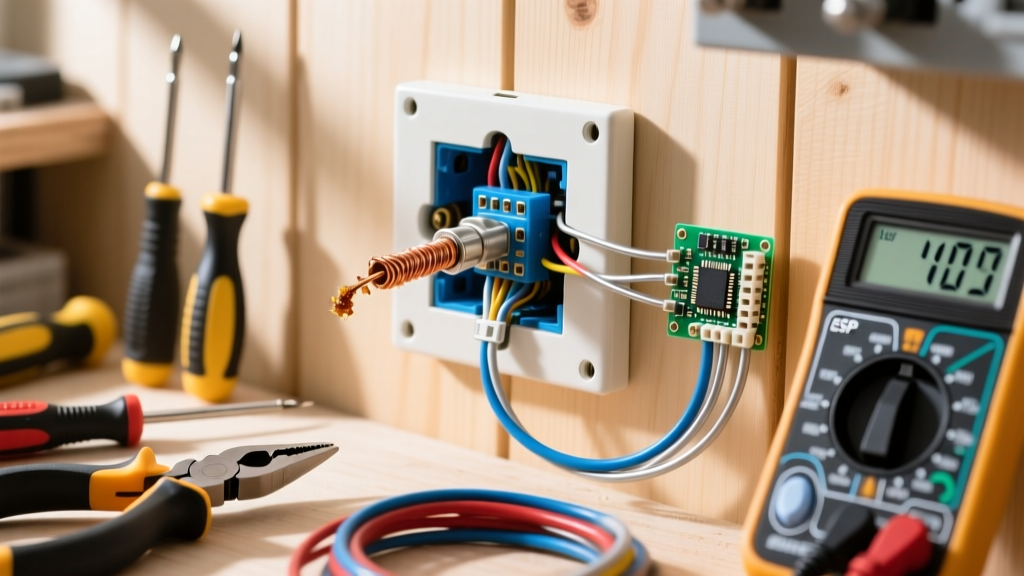
- Remove the Legacy Faceplate: Unscrew the two 3.5mm faceplate screws. Gently pull the socket forward. Inspect the cables immediately.
- Inspect for VIR Wiring: If you see black rubber insulation crumbling to the touch instead of modern grey/white PVC, you have Vulcanized Indian Rubber (VIR) wiring. Stop immediately. Cap the ends safely and call an electrician; the entire house likely requires a rewire.
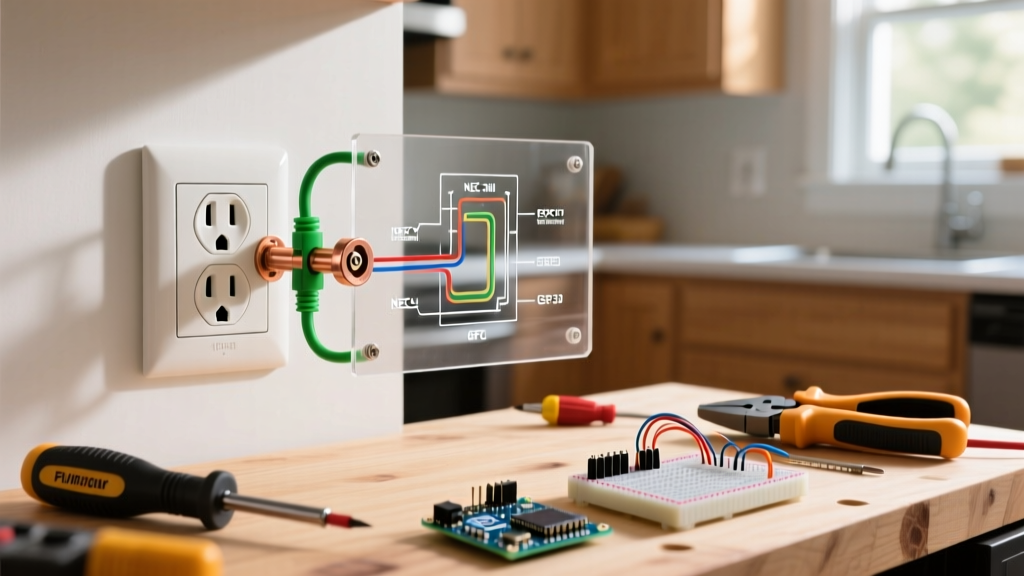
- Prepare the Cables: For standard 2.5mm² twin and earth PVC cables, ensure the outer sheath enters the backbox but does not extend into the terminal. The earth wire must be covered with green/yellow PVC sleeving right up to the terminal. Naked earth wires are a severe violation of I.S. 10101.
- Terminate the New Socket: Connect Line (Brown) to 'L', Neutral (Blue) to 'N', and Earth (Green/Yellow) to 'E'. If it is a ring final circuit, you will have two sets of cables. Ensure no copper strands are exposed outside the terminal brass.
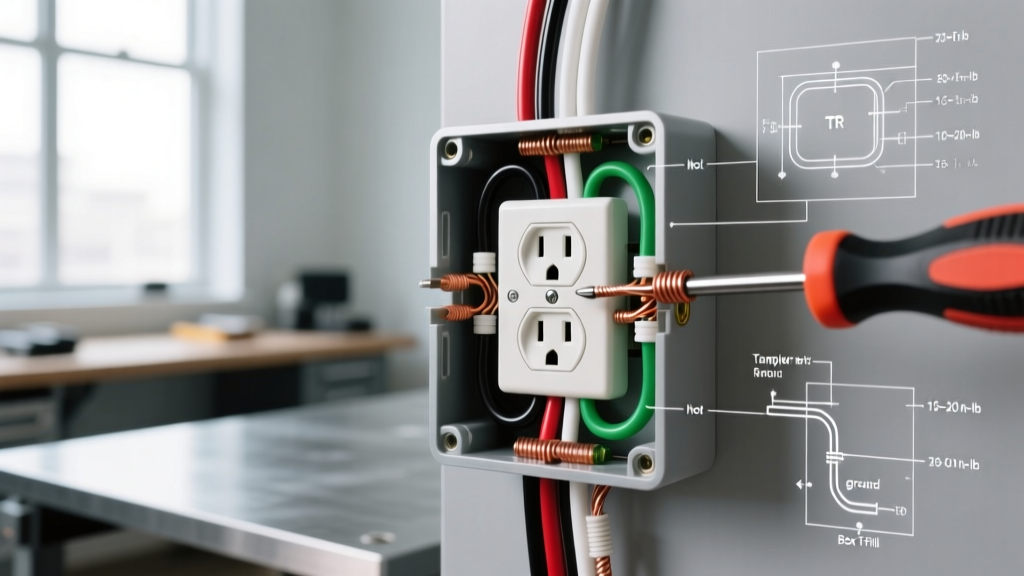
- Torque and Secure: Tighten the terminal screws firmly. Over-tightening can shear the brass screw; under-tightening causes high-resistance arcing and fires. Push the cables neatly into the backbox and secure the faceplate.
- Test: Restore power at the DB. Use a socket tester (e.g., Martindale EZ150) to verify correct polarity and test the RCD trip function.
Edge Case: Upgrading to USB-C PD Sockets in Kitchens
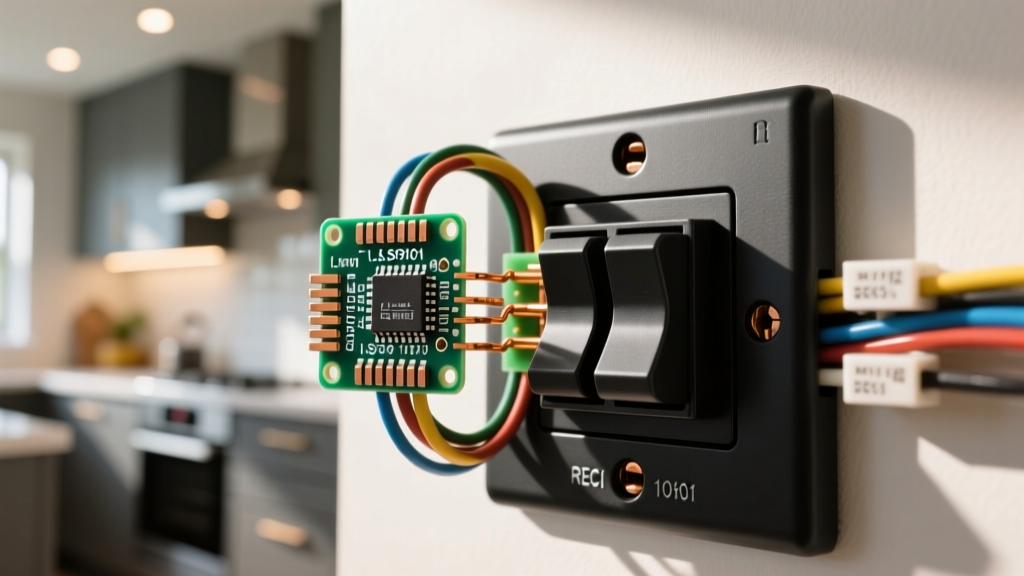
In 2026, the demand for integrated USB-C Power Delivery (PD) sockets has surged. However, installing these in Irish kitchens requires careful consideration. Kitchen sockets are often on a dedicated 32A ring or radial circuit. When adding a USB-C socket (which contains a built-in 230V to 5V/20V switch-mode power supply), ensure the unit has adequate thermal dissipation. If the socket is installed behind a fridge or in a confined, insulated cavity, the transformer can overheat, leading to premature failure. Always choose models with built-in thermal cutoffs, such as the MK K992DPV series.
Cost Analysis: DIY vs. RECI Registered Electrician
Understanding the financial landscape of electrical upgrades in Ireland helps homeowners budget effectively. Below is a realistic breakdown of costs you can expect in 2026.
| Service / Material | Estimated Cost (EUR) | Notes |
|---|---|---|
| DIY Material (Standard 2-Gang) | €12.00 - €20.00 | Purchased from wholesalers like Hickey's or City Electrical Factors (CEF). |
| DIY Material (USB-C PD Socket) | €35.00 - €55.00 | High-wattage (65W+) models command a premium. |
| Electrician Call-Out Fee | €70.00 - €95.00 | Covers the first hour and standard testing equipment. |
| Labor: Single Socket Swap | €90.00 - €130.00 | Total cost including call-out and one standard socket. |
| Labor: Whole House Swap (15-20) | €25.00 - €35.00 per socket | Day rate or bulk pricing applies. Excludes DB upgrades. |
Frequently Asked Questions (FAQ)
Do I need a Safe Electric completion certificate for changing a socket?
According to Safe Electric Ireland, replacing a damaged socket faceplate with a like-for-like equivalent in a standard living area is considered maintenance and does not require a Completion Certificate. However, if you are adding a new socket to an existing circuit, or moving a socket to a new location (which involves extending cables), this is classified as Restricted Works and legally requires a certificate from a registered REC.
Can I replace an unswitched socket with a switched one?
Yes. Older Irish homes (pre-1980s) frequently feature unswitched 2-gang sockets. Upgrading to a switched socket (where each outlet has its own isolated rocker switch) is highly recommended for safety and convenience. The internal wiring terminals are identical; the switch simply breaks the Line (Brown) connection internally.
What is the standard ring circuit cable size in Ireland?
The standard cable for a 32A socket ring final circuit in Ireland is 2.5mm² flat twin and earth (PVC insulated and sheathed). If your home uses a radial circuit protected by a 20A MCB, 2.5mm² is also standard. For 32A radial circuits, 4.0mm² cable is typically required. Always verify the cable size and the corresponding breaker size before undertaking any work.
Final Thoughts on Irish Outlet Upgrades
Upgrading your home's electrical infrastructure is an investment in both safety and modern convenience. Whether you are swapping out yellowed, unswitched legacy units for sleek Schneider Clic models, or integrating high-power USB-C PD sockets into your home office, adherence to I.S. 10101:2020 is non-negotiable. For further technical reading and to verify the credentials of your local electrical contractor, always consult the National Standards Authority of Ireland (NSAI) and the Register of Electrical Contractors of Ireland (RECI). Stay safe, test before you touch, and never compromise on the earth connection.