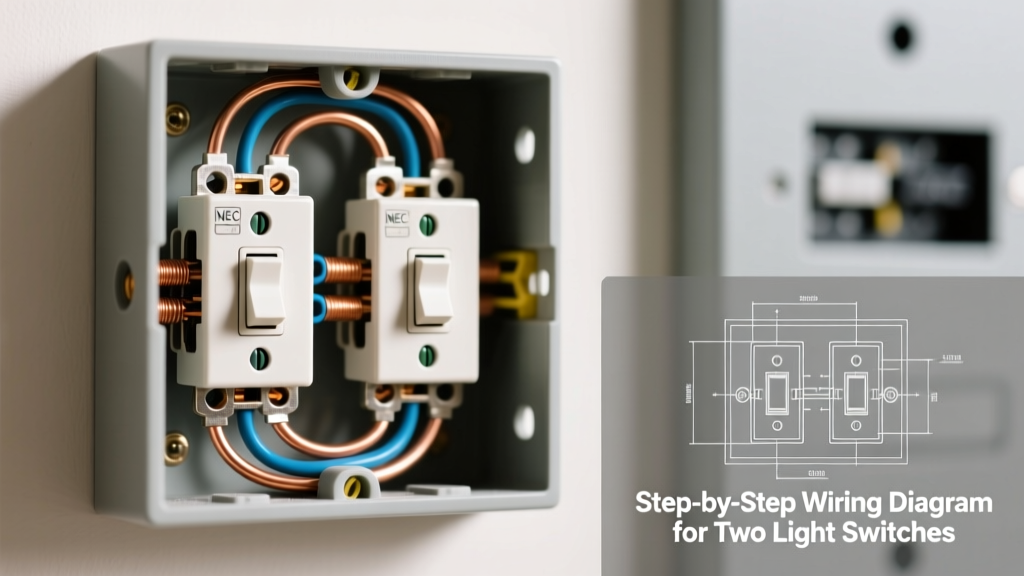

The Problem with Standard Outlets Behind Wall-Mounted TVs
Mounting a modern OLED or QLED television—like the ultra-slim 2026 LG G4 or Samsung S90D—creates a stunning, gallery-like focal point in your living room. However, nothing ruins that aesthetic faster than a tangled nest of power and HDMI cables dangling down the wall. While many beginners attempt to solve this by simply fishing the TV's factory power cord behind the drywall, this is not only dangerous but also a direct violation of the National Electrical Code (NEC).
Furthermore, standard duplex receptacles (such as the common Leviton 5320-W) protrude roughly 1.1 inches from the wall plate. When you mount a TV on a low-profile bracket that leaves only 1 to 1.5 inches of clearance, the plug head gets crushed against the screen's back panel. This creates a severe fire hazard, damages the TV's internal power supply, and prevents the TV from sitting flush against the wall.
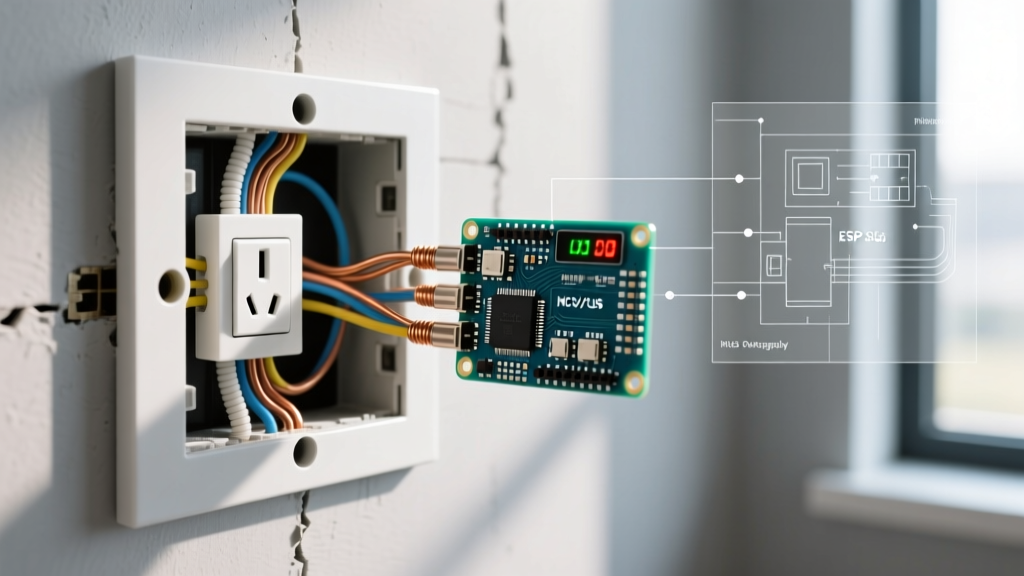
The professional solution is to install a recessed wall mount TV electrical outlet. This specialized receptacle sits inside the wall cavity, providing up to 2 inches of vital clearance for bulky power adapters and HDMI cables.
NEC Code Compliance: What You Can and Cannot Hide
Before picking up a drywall saw, you must understand the legal and safety boundaries of in-wall wiring. According to the National Fire Protection Association (NFPA), NEC Article 400.8 explicitly forbids using flexible cords (like your TV's power cable) as a substitute for fixed wiring inside walls, ceilings, or floors.
Code Warning: Never run a standard TV power cord or a cheap extension cord inside your wall cavity. These cords lack the fire-retardant jacketing of Romex (NM-B) cable and can easily overheat, causing a catastrophic electrical fire. For more on residential electrical fire prevention, refer to the Consumer Product Safety Commission (CPSC) Electrical Safety guidelines.
The Compliant Methods:
- Method 1 (This Tutorial): Extend an existing branch circuit using NM-B (Romex) cable to a new, code-compliant recessed receptacle mounted directly behind the TV.
- Method 2: Use a UL-listed In-Wall Power Relocation Kit (e.g., Legrand CMK200), which uses in-wall rated wiring and short, code-compliant pigtails outside the wall.
Tools and Materials Required (2026 Pricing)
To execute this beginner-friendly installation safely, you will need specific tools. Do not substitute a non-contact voltage tester with a multimeter if you lack electrical experience; the Klein NCVT-2 is highly reliable for this application.
| Category | Specific Item / Model | Purpose | Est. Cost (2026) |
|---|---|---|---|
| Receptacle | Pass & Seymour TR5362-W | Recessed, Tamper-Resistant Duplex | $14.50 |
| Wall Box | Carlon SC100RR (Old Work) | Deep 1-gang box for recessed depth | $3.25 |
| Wiring | Southwire 14/2 NM-B (15ft coil) | Line voltage power (for 15A circuits) | $12.00 |
| Testing | Klein Tools NCVT-2 | Dual-range non-contact voltage tester | $24.95 |
| Cutting | Stanley 6-inch Drywall Saw | Cutting the old-work box opening | $8.50 |
| Termination | Wire strippers & Phillips #2 | Stripping and securing connections | $15.00 |
Step-by-Step Installation Tutorial
Step 1: Identify the Source Circuit and Kill the Power
Locate an existing outlet on the wall below where the TV will be mounted. Ensure it is on a standard 15A or 20A receptacle circuit (avoid extending from kitchen, bathroom, or dedicated appliance circuits). Turn off the breaker at the main panel. Use your Klein NCVT-2 to verify the power is dead at the source outlet. Insert the tester into both slots; it should remain completely dark.
Step 2: Cut the Drywall Openings
Hold the Carlon SC100RR old-work box against the drywall behind the TV mount location. Trace the inside edge with a pencil. Use your drywall saw to cut out the rectangle. Pro Tip: Angle the saw blade outward slightly to avoid cutting the paper face of the drywall on the front side. Repeat this process for the source outlet location below.
Step 3: Fish the Romex Cable
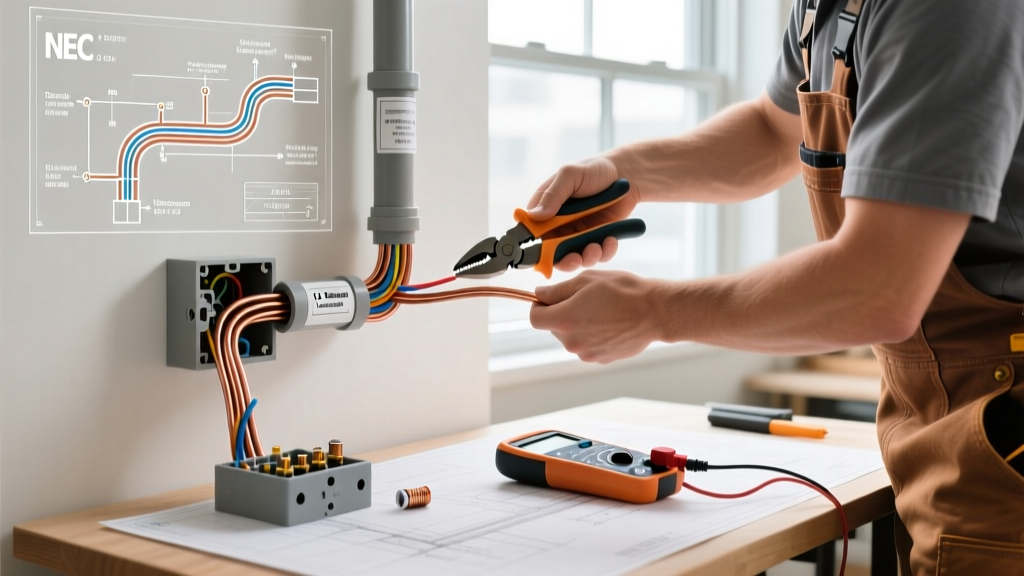
Feed the 14/2 NM-B cable (use 12/2 if extending a 20A circuit) from the bottom hole up to the top hole. Use a fiberglass fish tape if the cavity has fire blocks or insulation. You need about 8 inches of cable protruding from each hole. Secure the cable to the studs inside the wall using nail plates if the cable is within 1.25 inches of the stud face, per NEC 300.4(D).
Step 4: Wire the Recessed Receptacle
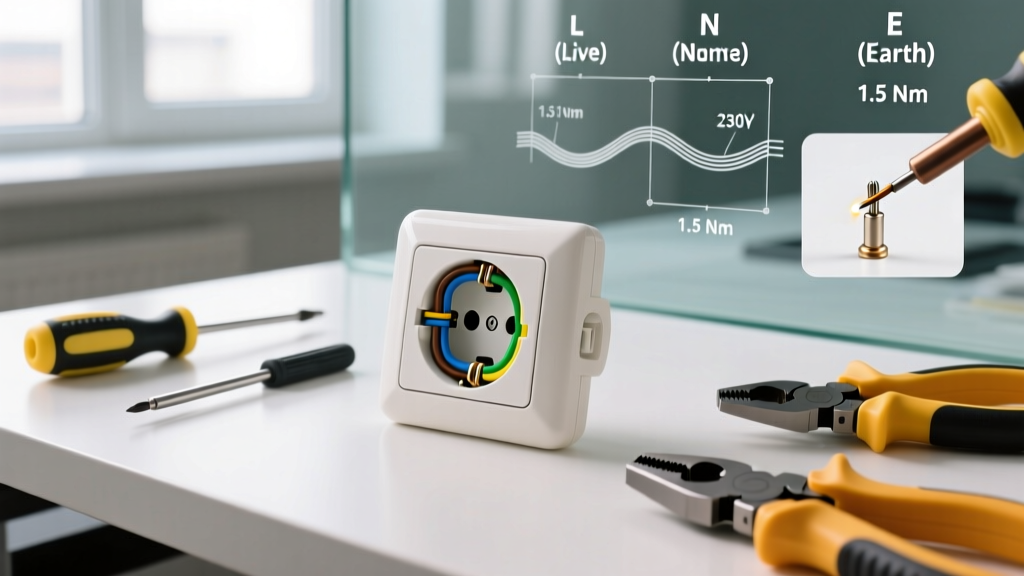
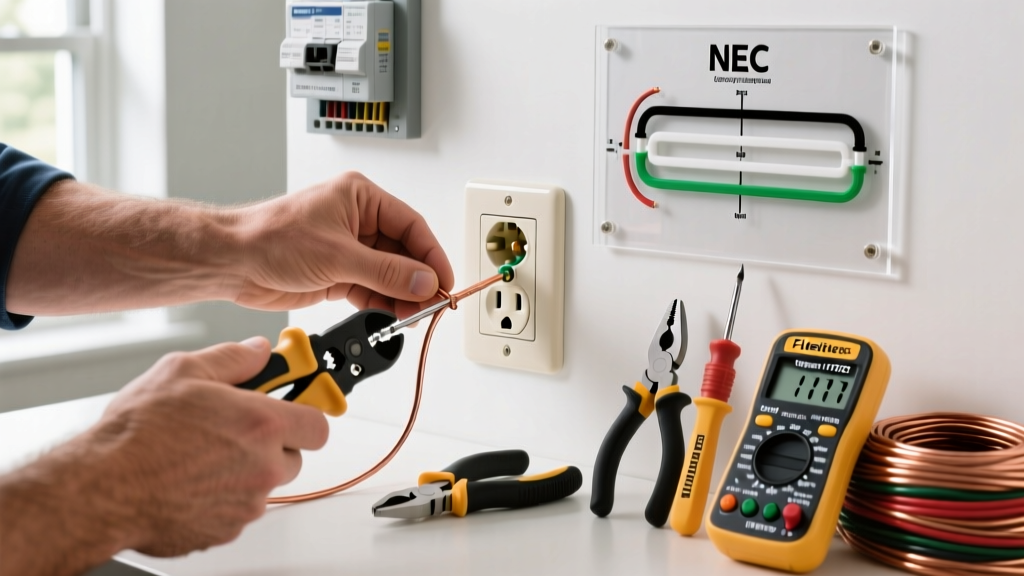
Strip off 3/4 inch of insulation from the black and white wires using your wire strippers. Connect the wires to the Pass & Seymour TR5362-W recessed receptacle as follows:
- Ground: Loop the bare copper wire around the green ground screw and tighten firmly.
- Neutral: Insert the white wire into the quick-wire hole on the back of the receptacle (or loop it around the silver screw). Ensure the connection is tight.
- Line (Hot): Insert the black wire into the quick-wire hole next to the brass screw (or loop it around the brass screw).
Note: Always connect the incoming power to the "LINE" terminals, not the "LOAD" terminals, unless you are intentionally daisy-chaining GFCI protection downstream.
Step 5: Mount the Box and Secure the Device
Push the wires neatly into the back of the Carlon box. Insert the box into the drywall hole and tighten the mounting screws; the internal flanges will flip and clamp tightly against the back of the drywall. Push the recessed receptacle into the box and secure it with the provided long screws. The faceplate will sit flush, while the plug receptors sit nearly an inch inside the wall.
Troubleshooting Common Beginner Mistakes
Nuisance Tripping on AFCI Breakers
If you extended a circuit from a bedroom or living room built after 2014, the breaker is likely an Arc Fault Circuit Interrupter (AFCI). A loose neutral wire at the source outlet or the new TV outlet can cause the AFCI to detect an "arc" and trip. Ensure all wire connections are pulled tight and no bare ground wires are touching the silver neutral screws.
Hitting a Stud or Fire Block
If your drywall saw hits wood immediately, you are cutting into a stud. Patch the small hole with spackle, move your cutout 4 inches to the left or right, and use a stud finder (like the Franklin Sensors ProSensor 710) to map the cavity before cutting again.
Frequently Asked Questions
Can I just use a standard outlet and a flat plug adapter?
While flat plug adapters (like the Sleek Socket) exist, they still protrude roughly 0.5 inches and add a point of failure. A recessed receptacle is the permanent, code-compliant, and safest solution for high-end TV installations.
Do I need a permit to add a single TV outlet?
In most municipalities, adding a single receptacle to an existing circuit does not require a permit, but local codes vary. Always check with your local building authority or consult the Department of Energy's electrical safety resources for best practices in your region.
How do I hide the HDMI and optical cables?
Low-voltage cables (HDMI, Ethernet, optical audio) are allowed inside walls, provided they are CL2 or CL3 rated. You can install a low-voltage mounting bracket next to your new electrical box and fish these cables directly through the wall cavity to your media console below.