
Diagnosing Why My Electrical Outlet Is Not Working
When you plug in a device and nothing happens, the immediate question is: why my electrical outlet is not working? While a dead receptacle might seem like a minor inconvenience, it can be a symptom of a serious wiring fault. According to the National Fire Protection Association (NFPA), electrical failures or malfunctions are a leading cause of home structure fires. Ignoring a dead outlet or repeatedly resetting a tripped breaker without finding the root cause is a dangerous gamble.
In 2026, modern homes are equipped with complex Arc Fault Circuit Interrupters (AFCIs) and Tamper-Resistant (TR) mechanisms that can complicate troubleshooting. This guide moves beyond basic advice and dives into the exact wiring scenarios, multimeter readings, and hardware failures that cause an outlet to die, providing actionable fixes for each.
The Essential Diagnostic Toolkit
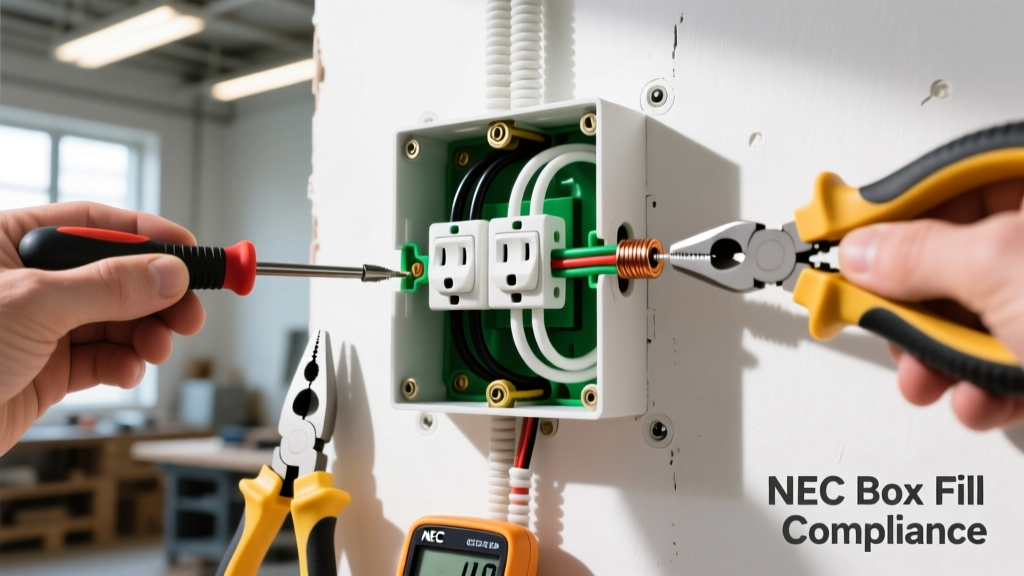
Before opening any junction box, you need the right tools to verify the absence of voltage and pinpoint the fault. Do not rely on cheap neon voltage testers; they lack the sensitivity for modern diagnostics.
- Non-Contact Voltage Tester: Fluke 1AC-II VoltAlert (approx. $35). Essential for verifying the breaker is off before touching wires.
- Digital Multimeter (DMM): Klein Tools MM400 (approx. $45). Required for measuring exact voltage drops and identifying open neutrals.
- Torque Screwdriver: Klein Tools 650 (approx. $110). Crucial for terminating wires to manufacturer specifications (usually 14 in-lbs).
- Wire Strippers: Klein 11055. Ensures you strip exactly 3/4 inch of insulation for side-wire terminal connections without nicking the copper.
Safety Warning: Always turn off the circuit breaker and verify zero voltage at the receptacle using a non-contact tester and a multimeter before removing the faceplate. The Consumer Product Safety Commission (CPSC) warns that even a brief contact with a live 120V circuit can cause fatal ventricular fibrillation.
Scenario 1: The Backstabbed Wire Failure (Push-In Terminals)
The Failure Mode
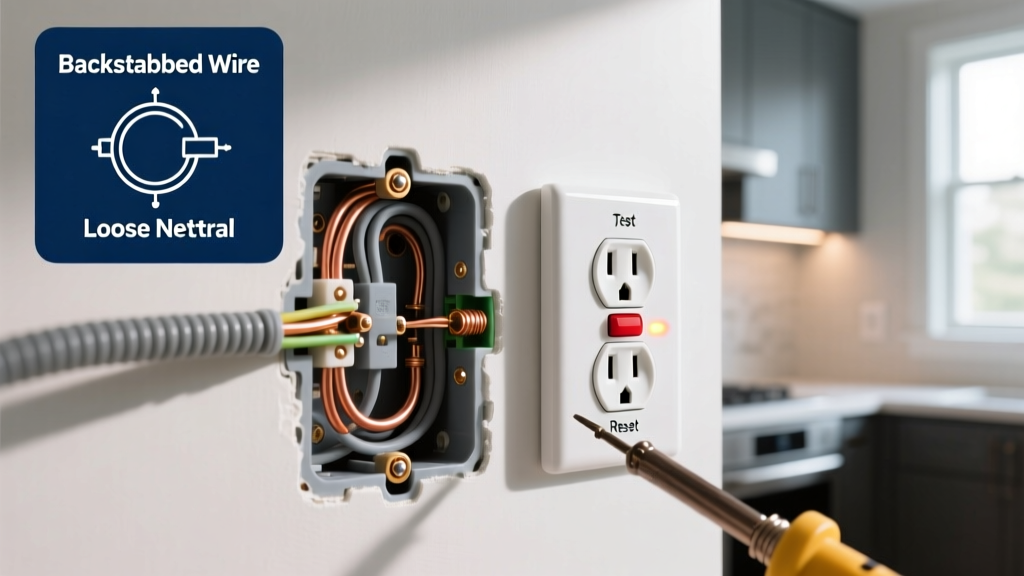
If your home was built or renovated between 1990 and 2015, there is a high probability your receptacles were wired using "backstab" push-in connectors. These terminals rely on a tiny internal brass spring to grip the 14 AWG or 12 AWG copper wire. When a high-draw appliance (like a 1500W space heater pulling 12.5 amps) is used, the wire heats up. Over years of thermal expansion and contraction, the brass spring loses its tension, leading to a high-resistance connection or a complete physical disconnect behind the faceplate.
The Fix
- Remove the receptacle from the box.
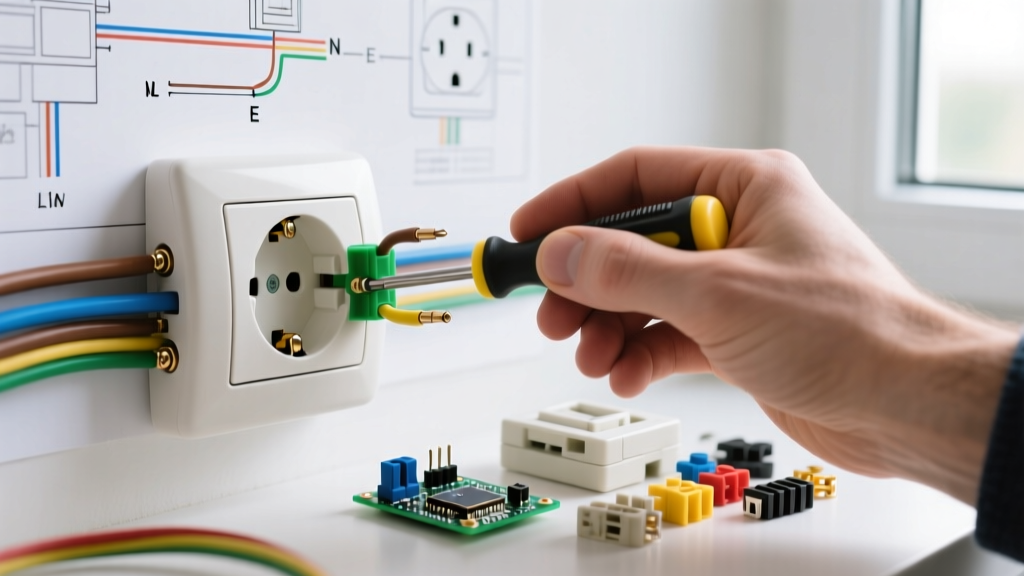
- Release the backstabbed wires by inserting a small flathead screwdriver into the release slot, or simply cut the wires back.
- Strip exactly 3/4 inch of fresh insulation.
- Loop the wire clockwise around the brass (hot) and silver (neutral) side terminal screws.
- Tighten the screws to 14 in-lbs of torque to ensure a gas-tight connection that will not arc.
Scenario 2: The Upstream GFCI Trip
The Failure Mode
Homeowners often ask why a standard living room or bedroom outlet is dead, completely unaware that it is wired downstream from a Ground Fault Circuit Interrupter (GFCI). The National Electrical Code (NEC) requires GFCI protection in kitchens, bathrooms, garages, and outdoor areas. To save money, builders often wire standard indoor outlets to the "LOAD" terminals of a single garage or bathroom GFCI. If that upstream GFCI trips due to a minor ground leakage (even from humidity in the garage), your indoor outlet dies.
The Fix
Map your circuit. Check all GFCI receptacles in the garage, exterior walls, and bathrooms. Press the "RESET" button firmly until it clicks. If the GFCI immediately trips again, you have a hard ground fault downstream. You will need to disconnect the LOAD wires at the GFCI and test continuity to find the short.
Scenario 3: The Open Neutral Condition
The Failure Mode
This is one of the most dangerous and confusing wiring faults. An "open neutral" means the hot wire (black) is delivering 120V to the outlet, but the return path (white neutral wire) is broken or disconnected at a wire nut upstream. Because the circuit is incomplete, a lamp or TV will not turn on. However, if you touch the hot wire and a ground, you will still receive a lethal shock.
Multimeter Diagnostic Matrix
Set your Klein MM400 to AC Voltage (V~) and test the following points at the dead receptacle:
| Test Points | Normal Reading | Open Neutral Reading | Meaning |
|---|---|---|---|
| Hot to Neutral (Short Slot to Long Slot) | 120V | 0V | Circuit incomplete; neutral path broken. |
| Hot to Ground (Short Slot to Round Hole) | 120V | 120V | Power is present at the outlet. |
| Neutral to Ground (Long Slot to Round Hole) | 0V - 2V | 0V | Neutral is floating, not bonded to ground. |
The Fix
Trace the circuit back to the previous working outlet in the daisy chain. Open the junction box and inspect the white wire nuts. A common failure is a wire nut that was not twisted tightly enough, allowing the neutral wire to slip out. Strip the wires, align them perfectly, and use a fresh, UL-listed wire connector (such as an orange Ideal Wire-Nut or a grey Wago 221-413 lever connector) to secure the splice.
Scenario 4: AFCI Nuisance Tripping
The Failure Mode
If your outlet is dead and the corresponding breaker in the panel has tripped to the "middle" position, you might be dealing with an Arc Fault Circuit Interrupter (AFCI). Modern AFCI breakers (like the Eaton BR115AF or Siemens Q115AFC) are highly sensitive to series arcs. Plugging in an older vacuum cleaner, a drill with brushed motors, or even a faulty laptop power brick can create electrical noise that the breaker misinterprets as a dangerous parallel arc fault, causing a nuisance trip.
The Fix
First, unplug all devices on the circuit. Reset the breaker by turning it fully OFF, then firmly ON. If it holds, plug devices back in one by one to identify the offending appliance. If the breaker trips immediately with nothing plugged in, you have a physical wiring fault (like a nail through a cable or a pinched wire in a junction box) that requires professional cable tracing.
Receptacle Grade Comparison: What Should You Install?
When replacing a dead outlet, the hardware you choose dictates the lifespan and safety of the repair. Avoid the cheapest options in the bin.
| Grade | Model Example | Avg. Price (2026) | Terminal Type | Expected Lifespan |
|---|---|---|---|---|
| Builder Grade | Leviton 5252-W | $1.20 - $1.80 | Push-in / Light Side Screw | 5 - 10 Years |
| Spec Grade | Leviton 5362-W | $3.50 - $5.00 | Heavy Side Screw / Backwire | 20+ Years |
| Hospital Grade | Hubbell 8300 | $12.00 - $18.00 | Massive Screw / Brass Strap | 50+ Years |
Expert Recommendation: Always install Spec Grade receptacles. The extra $3 per outlet pays for itself by utilizing thick brass internal contacts that maintain tight grip on plug blades, preventing the arcing that causes fires.
Code Compliance: Tamper-Resistant (TR) Requirements
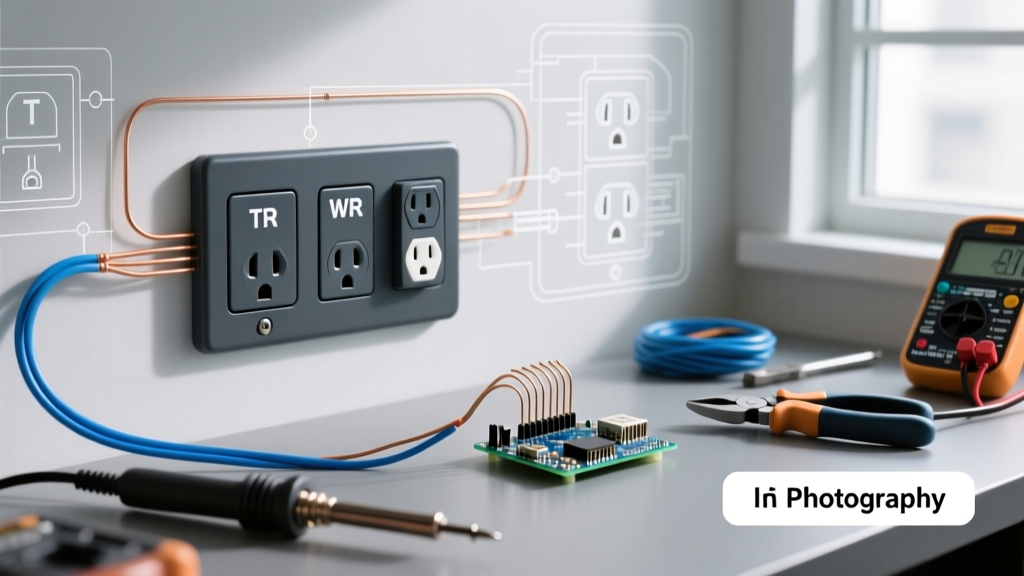
If you are replacing an outlet in 2026, you must adhere to NEC Article 406.4(D). All 15A and 20A, 125V and 250V receptacles installed in dwelling units must be Tamper-Resistant (TR). These outlets feature internal plastic shutters that only open when equal pressure is applied to both slots simultaneously (like a standard plug). Do not attempt to bypass these shutters or install older, non-TR receptacles, as this will fail a home inspection and void your homeowner's insurance in the event of an electrical fire.
Final Troubleshooting Checklist
- Verify the breaker is fully reset (OFF then ON).
- Check all upstream GFCIs in wet areas and garages.
- Test for an open neutral using a digital multimeter.
- Inspect for backstabbed push-in wires and move them to side terminals.
- Ensure all splices are secured with lever connectors or properly twisted wire nuts.
By systematically working through these common wiring scenarios, you can confidently answer why my electrical outlet is not working and restore safe, reliable power to your home. For more complex panel upgrades or persistent short circuits, always consult a licensed master electrician.