
The Code-Compliant Guide to Extending a Receptacle Circuit
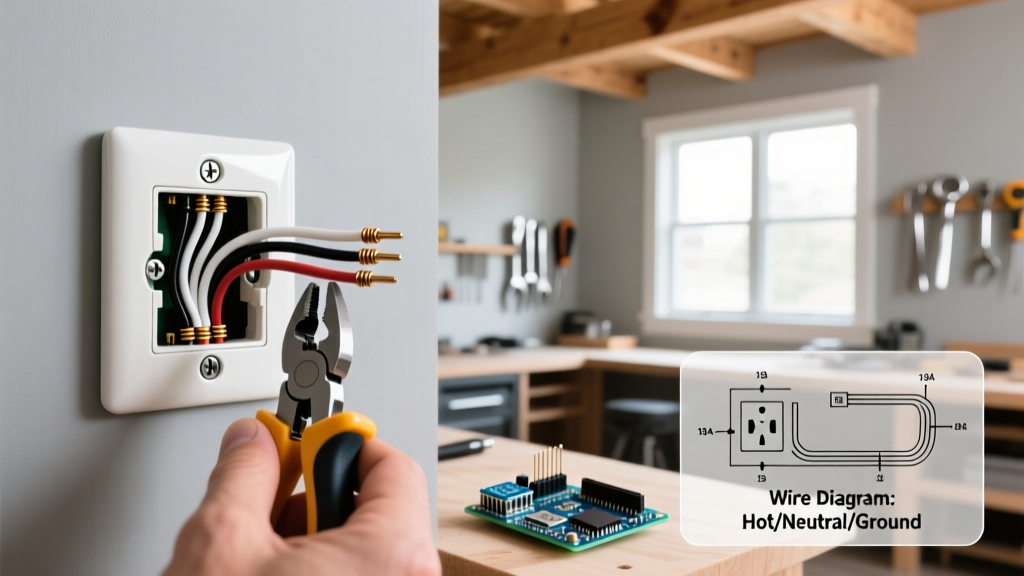
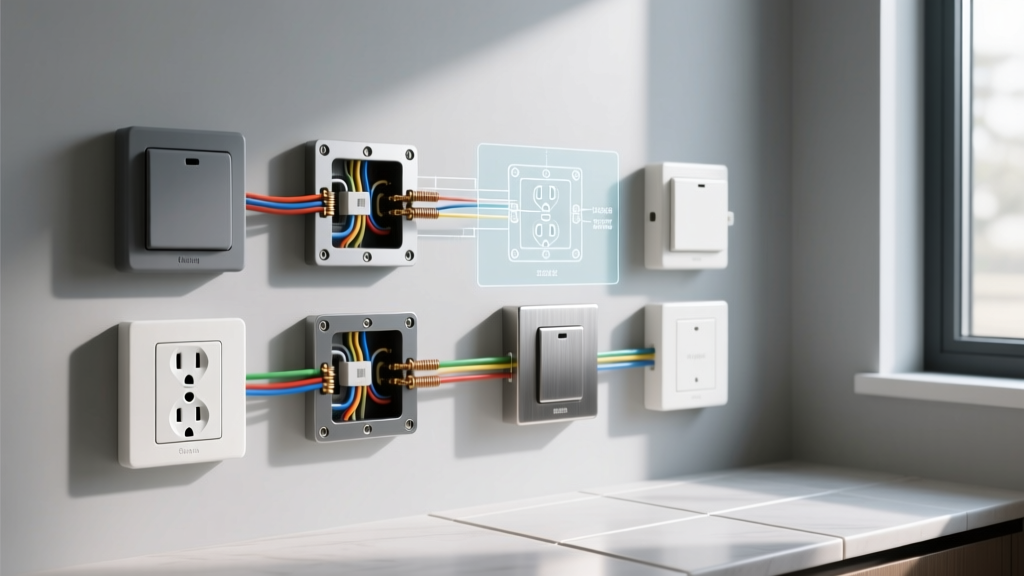
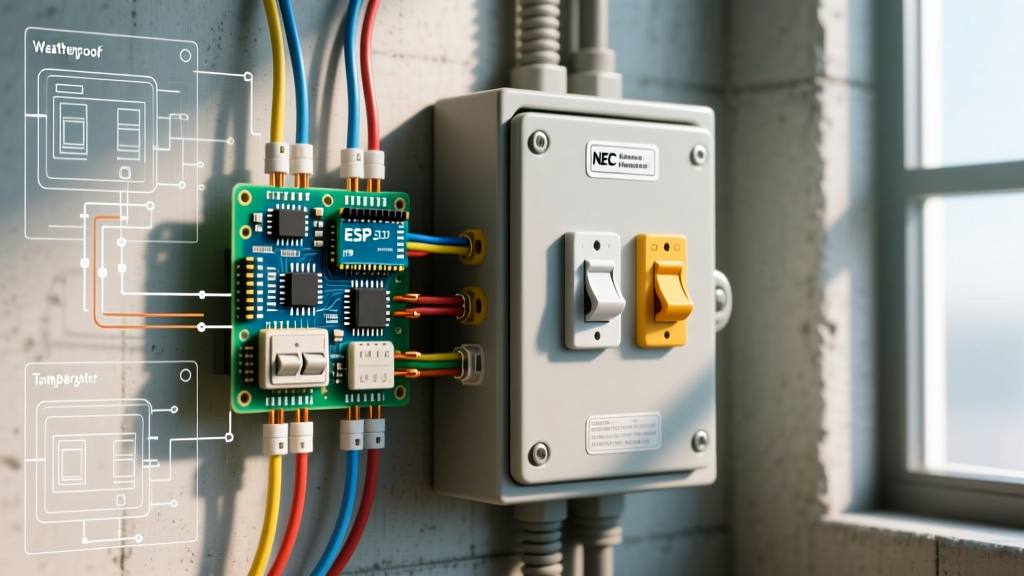
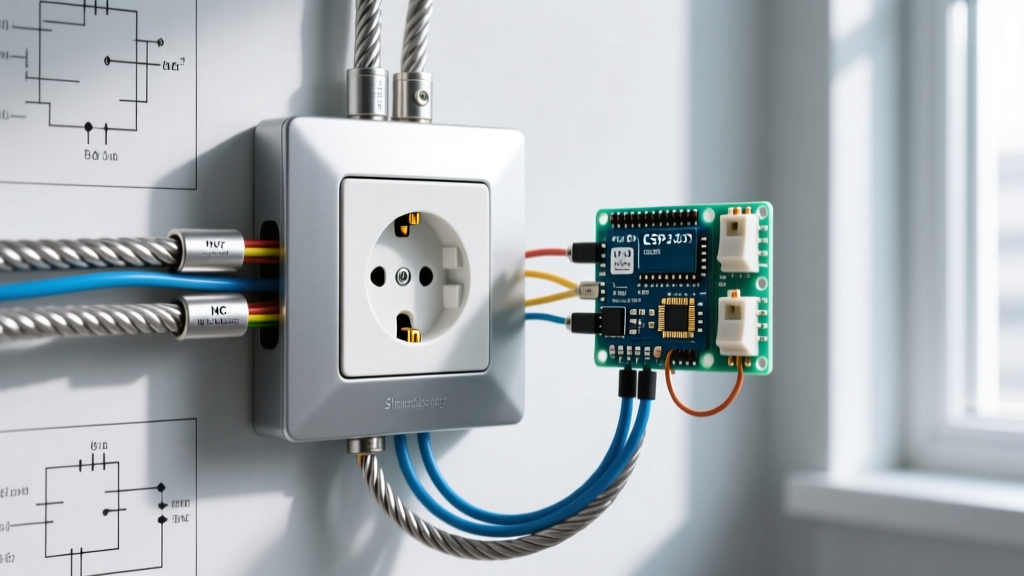
When homeowners research how to install electrical outlet from existing outlet, they are usually looking for a simple wiring diagram. However, as an electrical professional, I can tell you that the physical wiring is only 20% of the job. The other 80% is ensuring your extension complies with the National Electrical Code (NEC). Daisy-chaining receptacles—technically known as extending a branch circuit—triggers specific code requirements regarding box fill, circuit ampacity, and fault protection.
According to the National Fire Protection Association (NFPA), electrical failures or malfunctions are a leading cause of home structure fires. Improperly extended circuits that violate box fill capacities or overload breakers are prime culprits. Furthermore, the Electrical Safety Foundation International (ESFI) emphasizes that DIY electrical work must strictly adhere to modern grounding and fault-interruption standards to prevent fatal shocks. This guide breaks down the exact NEC articles you must follow to add a new outlet safely, legally, and to a professional standard.
Step 1: Verify Circuit Capacity and the 80% Rule
Before you cut any drywall or strip any wire, you must determine if the existing circuit has the thermal and electrical headroom to support an additional outlet. NEC Article 210.23 governs permissible loads on branch circuits. You cannot simply add outlets to a circuit that is already nearing its maximum amperage.
Calculating Your Available Headroom
Most residential general-purpose circuits are either 15-amp (14 AWG wire) or 20-amp (12 AWG wire). The NEC mandates that continuous loads (those expected to run for 3 hours or more) cannot exceed 80% of the breaker's rating. While a standard duplex receptacle isn't a "load" itself, the devices plugged into it are.
| Breaker Size | Wire Gauge Required | Max Total Wattage (120V) | Continuous Load Limit (80%) |
|---|---|---|---|
| 15 Amp | 14 AWG Copper | 1,800 Watts | 1,440 Watts |
| 20 Amp | 12 AWG Copper | 2,400 Watts | 1,920 Watts |
Pro Tip: Use a plug-in ammeter (like the Kill A Watt P4400) on the existing outlet to measure the current draw of devices already on the circuit. If a 15A circuit is already powering a 1,200W space heater and a 300W TV, adding a new outlet that will host a 500W desktop computer will trip the breaker and violate code.
Step 2: Master NEC Box Fill Calculations (Article 314.16)
The most common reason DIY outlet extensions fail municipal inspections is box fill violation. NEC Article 314.16 dictates exactly how many wires and devices can safely fit inside an electrical box. Cramming too many wires into a standard box causes heat buildup and can crush wire insulation, leading to short circuits.
The Box Fill Math Formula
Every conductor, clamp, and device yoke takes up a specific volume based on the wire gauge. Here are the NEC volume allowances per unit:
- 14 AWG Wire: 2.0 cubic inches per conductor
- 12 AWG Wire: 2.25 cubic inches per conductor
- Device (Receptacle): Counts as 2 volumes (based on the largest wire connected to it)
- All Ground Wires Combined: Counts as 1 volume
- All Internal Clamps Combined: Counts as 1 volume (0 if using old-work boxes with external clamps)
Real-World Calculation Example
Imagine you are extending a 12 AWG circuit. The existing box has one incoming 12 AWG cable (hot, neutral, ground) and one duplex receptacle. You want to add a second 12 AWG cable to feed your new outlet.
- Existing Setup: 2 current-carrying wires + 1 ground volume + 2 device volumes = 5 volumes. (5 x 2.25 = 11.25 cu. in.)
- Adding New Cable: Adds 2 more current-carrying wires (hot and neutral). Grounds are already counted. This adds 2 volumes.
- New Total: 7 volumes. (7 x 2.25 = 15.75 cubic inches required).
A standard single-gang old-work box (like the Carlon B114R) only holds 14 cubic inches. You cannot use it. You must upgrade the existing box to a deep single-gang box (like the Carlon B120R, which holds 22.5 cu. in.) to legally and safely make this extension.
Step 3: AFCI and GFCI Code Mandates
When you extend a circuit, the new outlet must meet the same fault protection standards as if it were a brand-new installation under the current NEC cycle.
Ground-Fault Circuit-Interrupter (GFCI)
Per NEC 210.8, if the existing outlet is in a kitchen, bathroom, garage, unfinished basement, crawlspace, or outdoors, the new outlet must also be GFCI protected. You do not need to buy a second GFCI receptacle; you can wire the new standard receptacle to the "LOAD" terminals of the existing GFCI to extend the protection downstream.
Arc-Fault Circuit-Interrupter (AFCI)
NEC 210.12 requires AFCI protection for almost all 120V, 15A and 20A branch circuits supplying outlets in living rooms, bedrooms, hallways, and closets. If you are extending an outlet in a bedroom, the circuit breaker in the main panel must be an AFCI breaker. If the existing breaker is an old standard thermal-magnetic breaker, extending the circuit legally requires upgrading the breaker to an AFCI model (e.g., Square D HOM115AFIC) to protect the entire run.
CRITICAL SAFETY WARNING: Never extend a circuit from a bathroom or kitchen small-appliance branch circuit to a general living area. NEC 210.11(C) strictly prohibits using these dedicated 20A circuits to power outlets in other rooms.
Step 4: Step-by-Step Execution and Splicing Standards
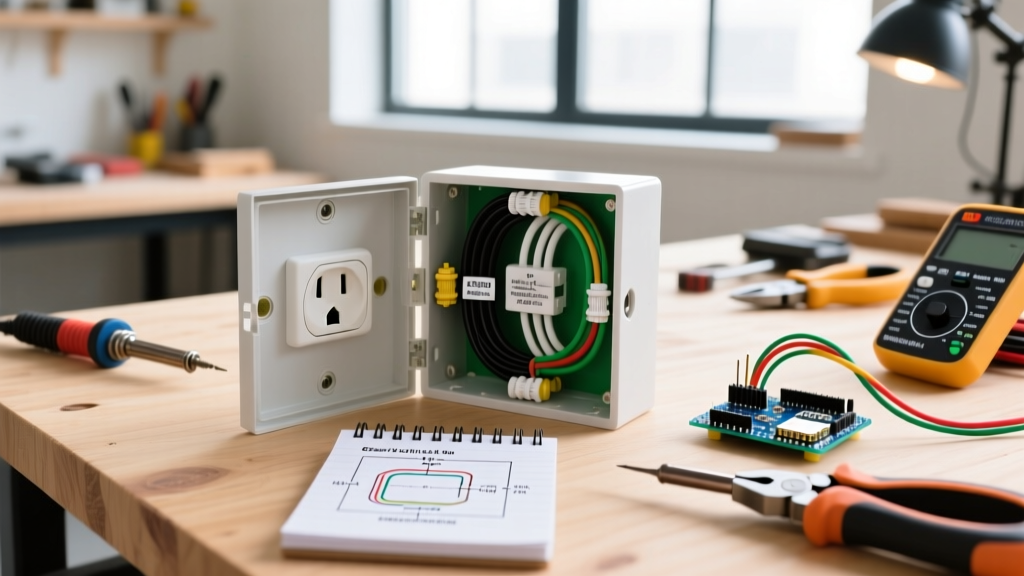
With your capacity verified and box fill calculated, you are ready to execute the physical installation. NEC Article 110.14 requires all splices to be made using identified connectors, and all terminal screws to be torqued to manufacturer specifications.
- Kill the Power and Verify: Turn off the breaker. Use a non-contact voltage tester (like the Klein Tools NCVT-3) on the existing outlet. Test a known live circuit first to ensure your tester's battery is functioning.
- Remove and Upgrade the Box (If Needed): If your box fill math requires a larger box, carefully cut the drywall around the old box, detach it, and install a deeper retrofit box.
- Run the New Cable: Fish a new length of NM-B (Romex) cable from the existing box to the new outlet location. Ensure the cable is secured within 8 inches of the box per NEC 300.11.
- Strip and Splice (The Pigtail Method): Do not use the receptacle's screw terminals to pass power through to the next outlet. While technically allowed for the hot wire, it is a major failure point. Instead, use the pigtail method. Strip 3/4 inch of insulation using Klein Tools 11055 wire strippers. Connect the two hot wires and a 6-inch pigtail using a WAGO 221-413 lever nut (superior to twist-on wire nuts for tight box spaces). Repeat for the neutrals and grounds.
- Terminate and Torque: Attach the pigtails to the brass (hot), silver (neutral), and green (ground) screws on a Tamper-Resistant (TR) receptacle. Use a torque screwdriver (like the Wiha 32090) set to 14 in-lbs (or the manufacturer's printed spec) to tighten the terminal screws. This prevents loose connections that cause arcing.
- Final Test: Restore power and test the new outlet with a Gardner Bender GRT-501 receptacle tester to confirm correct wiring and ground continuity.
Common Code Violations to Avoid
When figuring out how to install electrical outlet from existing outlet, avoid these frequent amateur mistakes that violate the NEC and endanger your home:
- Mixing Wire Gauges: Never connect a 14 AWG wire to a 20A circuit, even if the existing outlet is on a 20A breaker. The entire run must be 12 AWG.
- Overfilling the Box: Ignoring the 314.16 box fill calculations. If the wires are bulging out and you have to force the receptacle in, you are violating code and risking a fire.
- Reverse Polarity on GFCI LOAD: When extending from a GFCI, mixing up the LINE and LOAD terminals will result in an outlet that has power but zero ground-fault protection, creating a lethal shock hazard.
- Missing TR Markings: Since the 2008 NEC cycle, all 15A and 20A receptacles in dwelling units must be Tamper-Resistant (TR). Standard non-TR outlets are illegal for new extensions in living spaces.
Frequently Asked Questions
Can I extend an outlet using the push-in backstab connectors?
No. While UL-listed, push-in backstab connectors are notorious for losing tension over time, leading to high-resistance connections and melted receptacles. Furthermore, they only accept 14 AWG solid wire. For a code-compliant, long-lasting installation, always use the side screw terminals or, preferably, the pigtail method with lever nuts.
How far apart do outlets need to be spaced?
NEC 210.52(A) requires that no point along the floor line in any wall space is more than 6 feet from a receptacle. This effectively means outlets must be spaced no more than 12 feet apart on standard walls. When extending a circuit, ensure your new outlet helps meet this spacing requirement rather than clustering outlets in one area while leaving another dead zone.