
Importing high-end European appliances—like a La Marzocco espresso machine, a Smeg refrigerator, or an Italian-manufactured woodworking tool—requires more than just a cheap plastic travel plug. Italy operates on a 230V/50Hz electrical grid utilizing the unique Type L plug standard. If you are living in North America (120V/240V, 60Hz) and need to power these devices, relying on a standard 15A wall outlet with a step-up transformer is a severe fire hazard for high-wattage gear.
This beginner installation tutorial will guide you through safely adapting your home's electrical system. We will cover how to install a dedicated 240V circuit wired to a hardwired Italian electrical outlet adapter receptacle (Type L), ensuring your expensive imported equipment runs safely, efficiently, and up to code.
Decoding the Italian Type L Standard (CEI 23-50)
Before cutting any drywall or running wire, you must understand the physical geometry of the Italian plug. According to the International Electrotechnical Commission (IEC), Italy primarily uses the Type L standard, which features three round pins in a straight line. However, there are two distinct variations that cause endless frustration for DIYers:
| Specification | Type L (10A) | Type L (16A) |
|---|---|---|
| Pin Diameter | 4.0 mm | 5.0 mm |
| Pin Spacing (Center to Center) | 19.0 mm | 26.0 mm |
| Max Safe Load | ~2300 Watts | ~3680 Watts |
| Common Appliances | Coffee makers, small electronics | Heaters, large kitchen gear, AC units |
Expert Tip: Modern Italian wall plates often feature a 'Bipasso' or 'Schuko/Type F' hybrid receptacle that accepts both 10A and 16A pins, as well as standard Europlugs. When purchasing your hardwired adapter receptacle for your US workshop or kitchen, ensure you buy a 16A-rated Type L receptacle to accommodate larger appliance plugs.
The 240V Wiring Topology Warning
Here is where most beginner electricians make a critical error. In Italy, a 230V outlet consists of one Hot (Line), one Neutral, and one Ground. In North America, a 240V circuit (like a dryer or baseboard heater) consists of two Hot legs (each 120V to ground, 240V across) and a Ground. There is no Neutral.
CRITICAL SAFETY NOTICE: When you wire a US 240V circuit to an Italian Type L receptacle, you are connecting Hot Leg 1 to the Line pin, and Hot Leg 2 to the Neutral pin. The appliance will receive 240V and operate perfectly. However, the 'Neutral' pin on your Italian plug is now carrying 120V to ground. If the appliance uses a single-pole internal switch, it will only disconnect one hot leg, leaving internal components energized even when turned 'off'. Always unplug the device before performing internal maintenance, and ensure your receptacle is properly grounded.
For comprehensive safety guidelines on adapting foreign appliances and managing high-voltage circuits, refer to the National Fire Protection Association (NFPA) electrical safety resources.
Step-by-Step: Installing the 240V Type L Receptacle
To safely install your Italian electrical outlet adapter setup, you will be running a dedicated 20A, 240V circuit. Do not use a 15A circuit, as the inrush current on Italian appliance compressors and heating elements will trip standard breakers.
Step 1: Run the Correct Cable
Run 12/2 NM-B (Romex) cable from your main electrical panel to the desired outlet location. The 12-gauge wire is rated for 20 amps. You will use the black wire, the white wire (re-identified as hot), and the bare copper ground. Do not use the white wire as a neutral.
Step 2: Install the Double-Pole Breaker
- Turn off the main power to your panel.
- Snap in a 20A double-pole breaker (e.g., Eaton BR220 or Square D QO220, depending on your panel brand).
- Connect the black wire to one pole and the white wire to the other pole.
- Code Requirement: Wrap both ends of the white wire with black or red electrical tape, or use heat-shrink tubing, to permanently mark it as a hot conductor.
- Connect the bare ground to the panel's ground bus bar.
Step 3: Wire the Italian Type L Receptacle
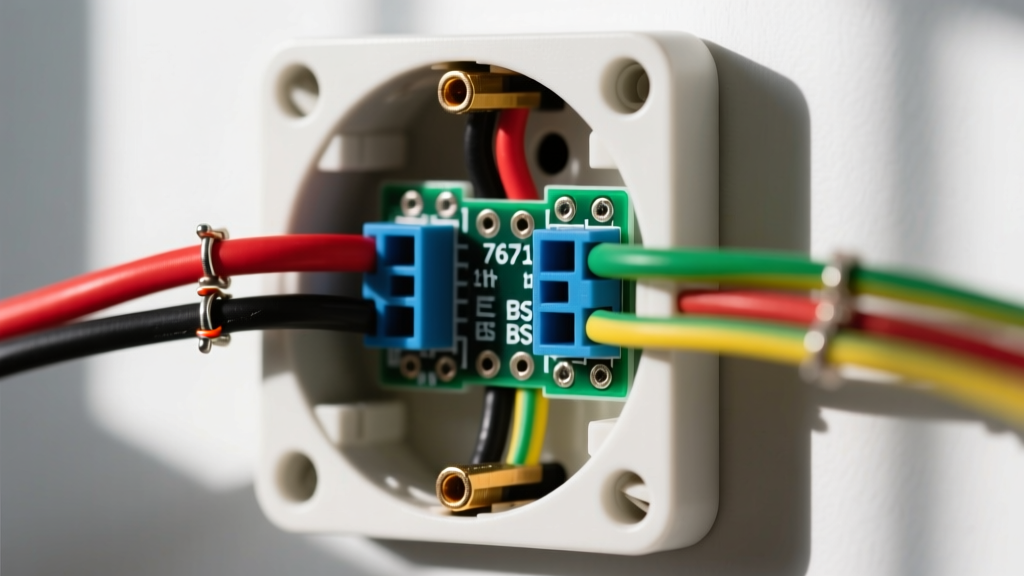
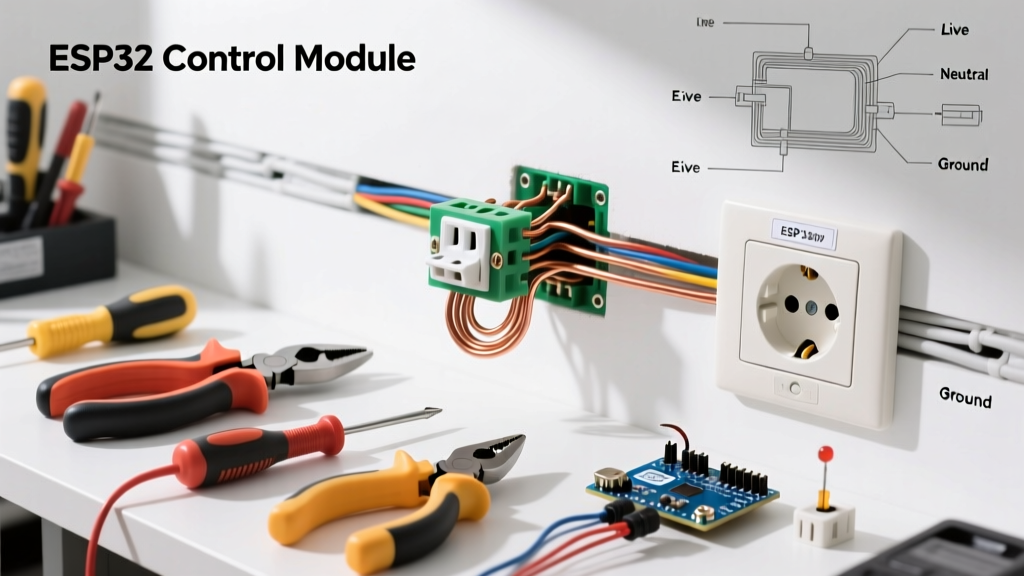
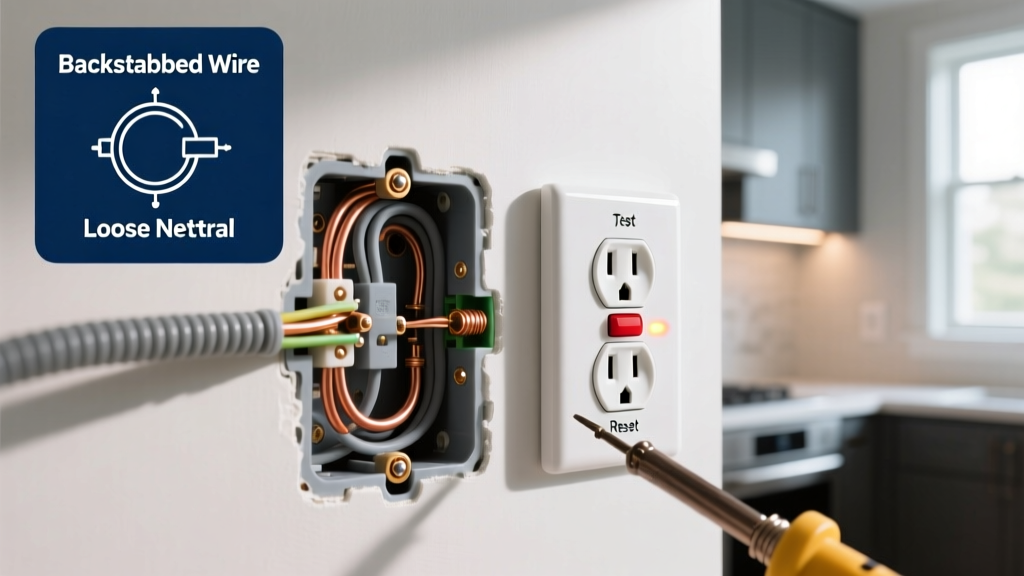
Mount a standard single-gang or double-gang old-work box into your drywall. Strip your wires and connect them to your CEI 23-50 Type L receptacle:
- Line Pin (Right): Connect the Black wire.
- Neutral Pin (Left): Connect the White wire (marked with black tape).
- Ground Pin (Center): Connect the Bare copper wire.
Secure the receptacle to the box, attach your wall plate, and restore power at the main breaker.
Alternative: Building a Hardwired Step-Up Adapter Box
If you are renting or cannot run a dedicated 240V line, and your appliance draws under 1500W, you can build a safe adapter box using a heavy-duty step-up transformer. Do not use cheap, plastic, ungrounded travel adapters.
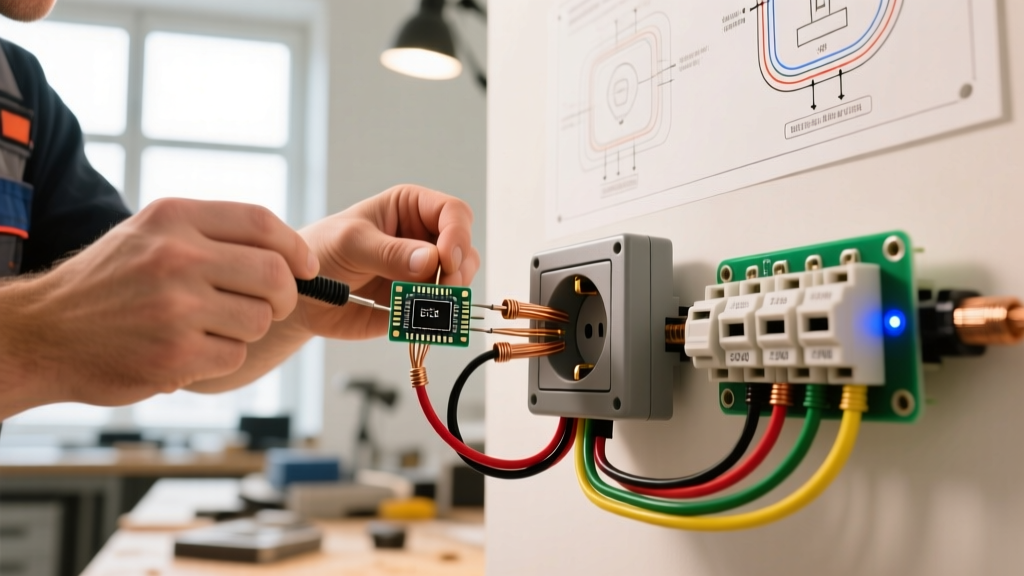
Purchase a NEMA 6-15P to Type L heavy-duty adapter cable, or wire a 1500W continuous-duty step-up transformer (120V to 240V) into a steel junction box equipped with a Type L socket. Mount the transformer securely to the wall to prevent strain on your standard 120V NEMA 5-15 wall receptacle. This prevents the melting of standard US 15A wall contacts, which is the leading cause of fires when using imported kitchen gear.
The 60Hz vs. 50Hz Frequency Mismatch
Voltage is only half the battle; frequency is the hidden variable. Italy operates at 50Hz, while North America operates at 60Hz.
- Heating Elements (Espresso boilers, toasters, ovens): Unaffected. A 230V heating element will produce the exact same wattage and heat at 60Hz as it does at 50Hz.
- AC Motors (Pumps, compressors, clocks): An AC synchronous motor designed for 50Hz will run 20% faster on a 60Hz US grid. For an Italian espresso machine with a rotary vane pump, this means higher water pressure and increased wear. You may need to adjust the pump's bypass valve to lower the pressure back to the standard 9 bars.
Frequently Asked Questions
Can I just use a Schuko (Type F) adapter instead?
Many modern Italian appliances actually ship with a Schuko (Type F) plug or a hybrid plug. If your appliance has a Schuko plug, you must wire a 240V NEMA 6-15R or 6-20R receptacle and use a high-quality, grounded Schuko adapter. Never use an ungrounded 'Europlug' adapter for high-wattage devices.
Do I need a GFCI breaker for this setup?
Under the 2023 and upcoming 2026 NEC (National Electrical Code) guidelines, GFCI protection is required for 125V through 250V receptacles supplying single-phase, 150A or less, in areas like kitchens, garages, and outdoors. If you are installing this Italian outlet adapter receptacle in a kitchen or garage, you must use a 20A double-pole GFCI breaker to ensure code compliance and personal safety.
By taking the time to properly install a dedicated 240V circuit and the correct Type L receptacle, you protect your investment in premium European appliances and ensure your home's electrical system remains safe and up to code.