
Navigating Electrical Outlet Installation in Chesapeake, VA
When planning an electrical outlet installation in Chesapeake, VA, homeowners and DIYers must navigate a unique intersection of national safety standards, state-specific building codes, and local environmental challenges. Chesapeake’s location in the Hampton Roads region means dealing with high humidity, a high water table, and proximity to the Elizabeth River and the Great Dismal Swamp. These factors dramatically influence how electrical receptacles must be selected, installed, and protected against ground faults and arc faults.
This comprehensive safety and code compliance guide breaks down the exact requirements for installing electrical outlets in Chesapeake, ensuring your project passes local inspections, protects your family, and withstands the coastal Virginia climate.
The Virginia USBC and NEC Compliance
All electrical work in Chesapeake is governed by the Virginia Uniform Statewide Building Code (USBC). The USBC adopts the National Electrical Code (NEC) with specific state amendments. As of the current code cycle, Virginia enforces stringent AFCI (Arc-Fault Circuit Interrupter) and GFCI (Ground-Fault Circuit Interrupter) requirements that go beyond older legacy systems.
According to the Virginia Department of Housing and Community Development, any new outlet installation or circuit modification must comply with the latest adopted NEC standards. This means you cannot simply swap a two-prong ungrounded outlet for a standard three-prong receptacle without addressing the lack of an equipment grounding conductor, nor can you install standard receptacles in areas now mandated for advanced fault protection.
Mandatory Protection Matrix: Where GFCI and AFCI are Required
The NFPA 70 (National Electrical Code) outlines specific zones where life-saving protection is non-negotiable. Below is the compliance matrix for Chesapeake residences:
| Location / Room | GFCI Required? | AFCI Required? | Specific Code Notes for Chesapeake Homes |
|---|---|---|---|
| Kitchens (Countertops) | Yes | Yes | Must be 20A small-appliance branch circuits. No lighting on these circuits. |
| Bathrooms | Yes | No | Must be 20A. No other outlets (lights/fans) on this circuit unless serving the same bathroom. |
| Living Rooms / Bedrooms | No | Yes | AFCI protection must be at the breaker panel (Dual-Function breakers recommended). |
| Garages & Outbuildings | Yes | Yes | All 125V/250V receptacles up to 50A now require GFCI protection. |
| Crawlspaces & Basements | Yes | Yes | Critical in Chesapeake due to damp soil and high water tables. Must use weather-resistant models if exposed. |
| Outdoors (Exterior Walls) | Yes | Yes | Must use WR (Weather-Resistant) rated receptacles and extra-duty while-in-use covers. |
The Chesapeake Factor: Coastal Humidity and Salt Air
Standard indoor receptacles will rapidly corrode if used in exterior or damp crawlspace applications in Hampton Roads. The salt air and intense summer humidity accelerate galvanic corrosion on standard brass terminal screws and steel mounting straps.
Material Selection for High-Moisture Zones
- Receptacle Type: Always specify WR (Weather-Resistant) receptacles for outdoor and damp locations. Models like the Leviton T5280-W or Hubbell WR20TR feature UV-resistant faceplates, nickel-plated brass terminal screws, and stainless steel mounting straps to resist rust.
- Enclosures: The NEC requires extra-duty, weatherproof covers for outdoor outlets in damp or wet locations. The TayMac MM410W non-metallic extra-duty cover provides 2-3/4 inches of depth, allowing bulky transformer plugs (like those for holiday lighting or power tool chargers) to remain plugged in while the cover is fully closed and latched.
- Conduit: For exterior runs, avoid EMT (metal) conduit near the ground, as it will rust through within a few years in the coastal VA climate. Use Schedule 80 PVC conduit for physical protection above grade, transitioning to Schedule 40 PVC or direct-burial UF-B cable below grade.
Permitting in Chesapeake: What You Need to Know
A common mistake DIYers make is skipping the permitting process. The City of Chesapeake Department of Development & Permits requires a Residential Electrical Permit for the following scenarios:
- Installing a brand-new circuit from the main service panel.
- Extending an existing circuit to add new receptacles.
- Upgrading or replacing the main electrical service panel.
- Converting a garage, basement, or attic into conditioned living space (which triggers full code compliance for all new outlets).
Note: A simple like-for-like replacement of an existing, damaged receptacle generally does not require a permit, provided you are not altering the wiring or adding new locations.
Permit Costs and Inspection Timelines
As of 2026, electrical permit fees in Chesapeake typically start at a base fee of approximately $65, plus an additional $10 to $15 per new circuit or opening. Once your rough-in wiring is complete, you must call the city inspection line to schedule a rough-in inspection before closing the drywall. A final inspection is required after the receptacles are terminated and faceplates are installed. Failing to pull a permit can result in stop-work orders, fines, and severe complications when selling your home, as unpermitted work is often flagged during real estate disclosures.
Step-by-Step: Installing a Code-Compliant Outdoor Receptacle
To demonstrate proper safety and code compliance, here is the professional procedure for adding a new 20-Amp GFCI-protected outdoor receptacle to an existing Chesapeake home.
Phase 1: Panel Work and Circuit Extension
- De-energize and Verify: Turn off the main breaker. Use a non-contact voltage tester and a multimeter to confirm zero voltage at the panel bus bars.
- Install a Dual-Function Breaker: Because outdoor outlets now require both AFCI and GFCI protection under the latest NEC, install a Eaton BRCAF120DF (Dual Function) 20A breaker. This provides arc-fault protection for the entire wiring run, while the GFCI receptacle at the point of use provides localized ground-fault protection.
- Run the Wiring: Use 12 AWG THHN/THWN wire pulled through 3/4-inch PVC conduit. Ensure the conduit is buried at least 18 inches deep in the trench, as per NEC Table 300.5 for PVC conduit under residential driveways or yard areas.
Phase 2: Termination and Torque Specifications
Most residential electrical fires stem from loose connections that create high-resistance arcing points. The Electrical Safety Foundation International (ESFI) emphasizes the importance of proper termination.
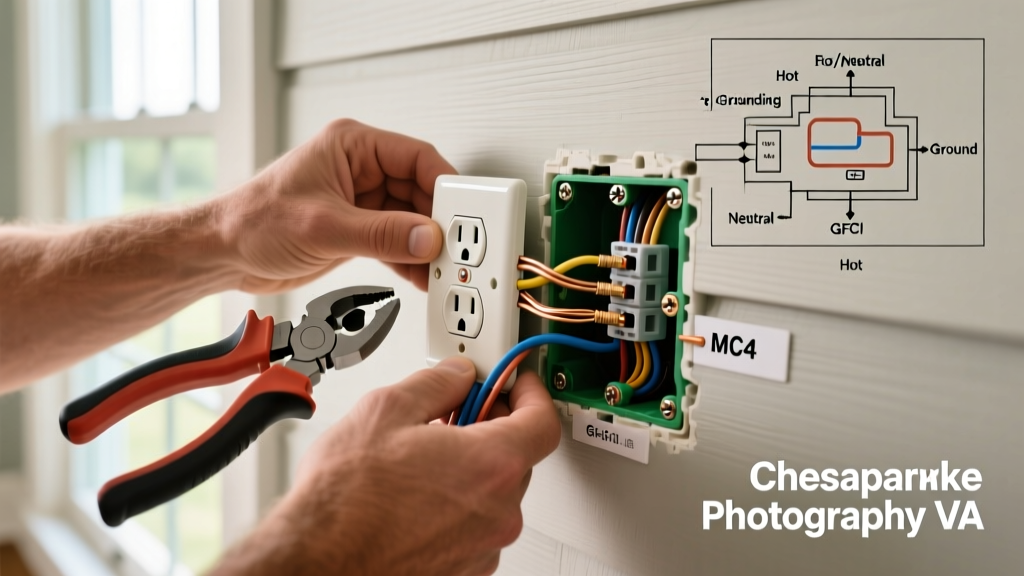
- Wire Stripping: Strip exactly 3/4-inch of insulation from the 12 AWG solid copper wire. Do not nick the copper conductor, as this creates a mechanical weak point.
- Back-Wire vs. Side-Wire: Always use the back-wiring holes (which utilize a internal screw-driven clamp plate) rather than wrapping the wire around the side terminal screw. Back-wiring provides a superior, more consistent mechanical grip.
- Torque Screwdriver: This is the most skipped step by amateurs. Use a calibrated torque screwdriver set to the manufacturer’s specification (typically 14 in-lbs for Leviton and Hubbell 20A receptacles). Overtightening strips the screw; undertightening causes thermal expansion and contraction to loosen the wire over time.
DIY vs. Hiring a Licensed Chesapeake Electrician
While replacing a single indoor receptacle is a manageable DIY task, running new circuits, trenching conduit, and navigating the Chesapeake permit portal requires advanced expertise. Below is a cost and liability matrix to help you decide.
| Factor | DIY Installation | Licensed Hampton Roads Electrician |
|---|---|---|
| Hourly / Project Rate | $0 (Labor) + $150-$300 (Materials/Permits) | $125 - $175 per hour (Typical 2026 local rates) |
| Permit Acquisition | Homeowner must apply in person/online and pass exams if required. | Contractor pulls permit under their master/journeyman license. |
| Code Liability | Homeowner assumes 100% liability for fire or shock hazards. | Electrician carries liability insurance and bonds; work is guaranteed. |
| Inspection Pass Rate | Variable; high risk of failing due to nuanced USBC amendments. | Near 100%; pros know local Chesapeake inspectors' specific preferences. |
Critical Safety Warning: Never bypass the equipment grounding conductor to 'make an outlet work' in an older Chesapeake home with legacy knob-and-tube or ungrounded BX cable. If a ground wire is not present, the NEC allows you to install a GFCI receptacle and label it 'No Equipment Ground', but you must not connect a fake ground to the plumbing or gas lines. This creates a lethal shock hazard for anyone touching the plumbing system.
Final Thoughts on Electrical Safety in Coastal Virginia
Successful electrical outlet installation in Chesapeake, VA, requires more than just connecting black to brass and white to silver. It demands a rigorous adherence to the Virginia USBC, an understanding of how coastal humidity degrades substandard materials, and a commitment to using torque-calibrated tools and dual-function protection devices. Whether you are adding a single weather-resistant receptacle for your dock de-icer or rewiring a historic home in South Norfolk, prioritizing code compliance is the only way to ensure long-term safety and reliability.